Top

First spot bitcoin ETF filed in Hong Kong

Policy & Regulation·January 30, 2024, 1:36 AM

Hong Kong is gearing up for the potential approval and implementation of both bitcoin exchange-traded funds (ETFs) and stablecoin regulations in 2024, with further progress achieved through the first filing of a spot bitcoin ETF in the Chinese autonomous territory.
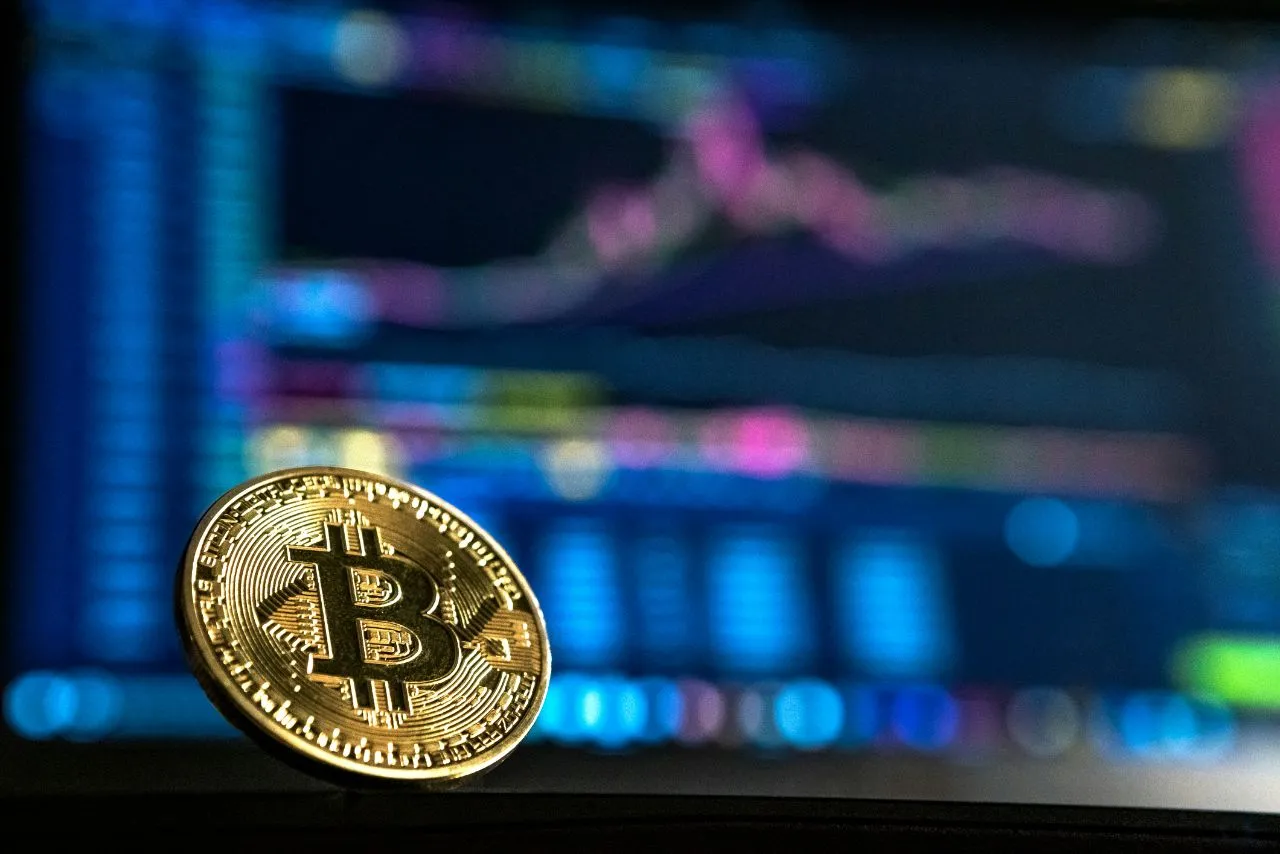
https://asset.coinness.com/en/news/54aa518b6d0e361797e540eac30922fa.webp
Photo by André François McKenzie on Unsplash

Harvest Fund files

Harvest Fund (HFM), a major asset manager based in China, has taken the lead by filing for a spot bitcoin ETF with the Hong Kong Securities and Futures Commission (SFA), as reported by Tencent News.


While details on the Harvest Fund bitcoin ETF remain limited, the company is hoping for its debut on or after the Lunar New Year holiday, which lands on Feb. 10. Reports suggest that Hong Kong's regulatory body may follow a path similar to the U.S. SEC, approving multiple spot bitcoin ETF applications to ensure fair market access. Although Harvest Fund was the first to apply, other regional financial institutions have expressed interest in launching similar products within the year.


Livio Weng, Chief Operating Officer of crypto exchange HashKey, revealed that approximately ten asset management firms are developing spot crypto ETFs for Hong Kong, with applications already submitted to the Hong Kong Securities Regulatory Commission. Earlier this month, Venture Smart Financial Holdings (VSFG) announced its plan to launch a spot bitcoin ETF within the first quarter of this year, contributing to the growing momentum.


Stablecoin interest

In tandem with the push for spot crypto ETFs, there is a rising interest in stablecoins. Multiple Hong Kong companies, including Harvest Global Investments, RD Technologies and VSFG, are reportedly engaging in discussions with the Hong Kong Monetary Authority (HKMA) about potential stablecoin trials. These trials aim to explore use cases ahead of anticipated stablecoin regulations in Hong Kong.


The HKMA's December consultation paper outlined licensing requirements for fiat-pegged stablecoins, positioning them as a bridge between traditional finance and crypto markets. Sean Lee, senior advisor and head of stablecoin at VSFG, told The Block that it is committed to applying for sandbox inclusion, along with consortium partners, to showcase the potential of programmable digital money while meeting prudential requirements.


An HKMA spokesperson confirmed ongoing preparations for the imminent launch of the stablecoin sandbox arrangement. The key criterion for applicants is a demonstrated commitment to a reasonable plan for issuing fiat-reference stablecoins (FRS) in Hong Kong. FRS refers to fiat-reference stablecoins pegged to the value of a fiat currency and backed by a government-issued currency, aligning with the most common stablecoin model.


Eddie Yue, CEO of the HKMA, highlighted the potential of stablecoins, stating they could serve as the interface between traditional finance and the virtual asset market. The parallel development of spot crypto ETFs and stablecoin regulations underscores Hong Kong's commitment to fostering digital assets while ensuring investor protection through effective market oversight. Crypto ETFs offer expanded access, while stablecoin trials enable controlled experimentation, establishing gateways between traditional finance and the emerging crypto sectors.



More to Read
View All
Web3 & Enterprise·

Dec 29, 2023

Filipino exchange Coins.ph adds BRC-20 support

Coins.ph, the leading crypto exchange in the Philippines, has announced its support for BRC-20 tokens. As part of that move, the exchange has successfully integrated the ORDI token, thereby becoming the inaugural platform in the country to embrace the BRC-20 standard. The platform clarified its support for BRC-20 in a recent blog post, which it published to its website. Coins.ph revealed its intention to expand its services further by adding support for additional BRC-20 tokens, showcasing a forward-looking approach to cater to the evolving needs of its user base. BRC-20 is a standard facilitating the creation of fungible tokens on the Bitcoin blockchain. The inclusion of this technical standard allows for the minting of tokens with unique features, introducing a new dimension to the capabilities of the world's flagship cryptocurrency.Photo by Kanchanara on UnsplashORDI memecoin additionORDI stands out as one of the most popular BRC-20 tokens, gaining traction and reaching an all-time high above $81 earlier this week. This surge in value followed the addition of trading support by crypto exchange Binance in early November, underscoring the influence of strategic partnerships and market dynamics on token performance. Wei Zhou, CEO of Coins.ph, expressed the company's commitment to staying at the forefront of digital asset innovation through this strategic move. Highlighting the remarkable growth in BRC-20 activity since its launch earlier in the year, Zhou emphasized the importance of enabling users to participate in these opportunities. He mentioned the recent listing of $ORDI and hinted at future product offerings enabled by the BRC-20 standard. Industry trendWhile coins.ph may have been the first exchange in the Philippines to introduce BRC-20 support, it's not the first mover in the broader Asian region. Back in May, leading crypto exchange OKX decided to support the BRC-20 standard through its OKX Wallet product. The company’s support of the standard was validated more recently when it emerged that BRC-20 support played a large role in OKX NFT Marketplace taking top rank as the NFT marketplace with the greatest trading volume earlier this month. Seychelles-based crypto derivatives platform Bitget has also identified the associated growth potential. Earlier this week, the platform unveiled a plan to support development within the Bitcoin ecosystem, inclusive of BRC-20. The fusion of ordinals and BRC-20 enables users to embed images, texts or audio, among other data, into satoshis—the smallest units of BTC. Bitcoin community controversyAmidst these developments, concerns have been raised by Bitcoin core developer Luke Dashjr. On Dec. 6, Dashjr disclosed that developers are working to remove Bitcoin inscriptions before the v27 update scheduled for the next year. This would imply the elimination of ordinals and BRC-20 from the Bitcoin landscape. Dashjr clarified that Bitcoin Core has allowed users to set limits on extra data size in transactions since 2013 through the "datacarriersize" setting. Despite this, inscriptions have found a way to bypass the limit by obfuscating their data as program code. He reassured the community that a recent bug in Bitcoin Knots v25.1 has been fixed, addressing concerns about vulnerability.

news
Policy & Regulation·

Oct 22, 2025

Singapore launches BLOOM initiative to advance digital finance infrastructure

The Monetary Authority of Singapore (MAS) has unveiled a new initiative aimed at enhancing the nation’s financial infrastructure through the use of stablecoins and tokenized commercial bank money. Announced on Oct. 16, the project, known as BLOOM, short for Borderless, Liquid, Open, Online, Multi-currency, brings together 16 financial sector participants, including Anchorage Digital, Ant International, Circle, Coinbase, and DBS Bank. According to MAS, BLOOM is open to additional participants through a registration form available on its official website.Photo by Jason Leung on UnsplashBuilding on Project OrchidBLOOM operates under Project Orchid, a digital Singapore dollar initiative launched in 2021 to explore potential applications of central bank digital currency (CBDC) in strengthening Singapore’s financial ecosystem. Through BLOOM, it will examine use cases involving G10 and Asian currencies, covering both domestic and cross-border payments, as well as wholesale financial transactions. The project’s focus includes coordinating interoperability between different networks to enable the distribution and clearing of settlement assets. It will also explore automated compliance checks and study methods to make wholesale settlements more efficient and cost-effective. Artificial intelligence (AI) agents are expected to play a supporting role, executing transactions automatically within predefined limits and regulatory parameters. Expanding stablecoin usage in SingaporeThe MAS initiative comes shortly after the listing of XSGD, a Singapore dollar–backed stablecoin, on the U.S.-based crypto exchange Coinbase on Oct. 1. XSGD is issued by StraitsX, a digital payments provider, and is fully backed by reserve assets held with DBS Bank and Standard Chartered. Stablecoin payments have gained traction in Singapore’s retail sector as well. StraitsX recently began supporting settlements in USDT and USDC through OKX Pay. Consumers can use SGQR codes at participating GrabPay merchants to make everyday purchases, such as coffee, with transactions settled directly in Singapore dollars into merchant accounts. Rising local interest in digital assetsSingapore’s growing engagement with digital assets reflects a broader trend of public interest. A report from ApeX Protocol, cited by Cointelegraph, ranked Singapore as the world’s most “crypto-obsessed” nation, awarding it a composite score of 100. The ranking considered ownership rates, adoption growth, search activity, and ATM availability. The study found that 24.4% of Singapore’s population holds cryptocurrency, ahead of the United Arab Emirates (UAE), which scored 99.7 despite a 25.3% ownership rate. In a separate development, Channel News Asia reported that three Singaporeans have been implicated in a large-scale fraud scheme linked to Cambodia’s Prince Group. The U.S. Department of Justice recently confiscated 127,271 Bitcoin tied to the operation—the largest seizure in its history. Following the investigation, the U.S. Department of the Treasury’s Office of Foreign Assets Control imposed sanctions on the three individuals as well as 17 Singapore-registered entities. The sanctions block access to any property in their possession and prohibit U.S. persons from engaging in transactions with them, citing risks to U.S. national security and foreign policy interests. 

news
Policy & Regulation·

Mar 06, 2024

Taiwan’s FSC plans crypto draft regulations by September

The Financial Supervisory Commission (FSC) of Taiwan has disclosed its intention to introduce a fresh draft of digital asset regulations for the nation come September 2024. The forthcoming draft bill seeks to establish more robust regulations for digital asset markets, prioritizing investor safety, as announced by Huang Tien-mu, the chairman of FSC. That’s according to a March 4 report by local media outlet, United Daily News (UDN).Photo by Kelly Sikkema on UnsplashAddressing customer protectionIn October, Taiwanese legislators introduced the Virtual Asset Management Bill to parliament, a move aimed at fortifying customer protection and ensuring effective industry supervision. The bill encompasses provisions that could impose fines ranging from two million Taiwanese dollars ($63,000) to 20 million Taiwanese dollars on unlicensed virtual asset service providers (VASPs). Around that time, the authorities had a particular concern with regard to the operation of foreign and offshore VASPs within the Taiwanese market. Like Hong Kong, Taiwan also had seen some negative impact due to the fraudulent activity of the Dubai-based JPEX crypto platform.The FSC has already barred foreign VASPs from operating in Taiwan without requisite approvals from the regulator. These measures were instituted following the establishment of a self-regulatory association by major cryptocurrency exchanges in the country, aiming to foster collaboration with regulators. Stricter regulationsPer the latest report, Chairman Huang Tien-mu outlined the FSC's plan to propose a draft bill targeting virtual currencies in September of the current year. This initiative seeks to bolster investor safeguarding and enhance regulatory oversight over the virtual currency sector. Concern has also been raised relative to native exchanges, in addition to offshore VASPs. In November, an investigation was opened into the Bitgin exchange, amid alleged money laundering activity. Shortly afterwards, another probe was launched into the ACE Exchange, amid allegations of money laundering and fraud. Highlighting the imperative for stricter regulations, Huang underscored the potential fraud risks tied to digital currencies. He issued a stern warning, signaling severe administrative penalties for merchants engaged in fraudulent activities aimed at investors. Moreover, the regulator expressed concerns about the growing interconnection between digital assets and the conventional financial system. He emphasized the need for laws to shield the stability of traditional financial systems from the inherent risks posed by digital assets. Addressing apprehensions regarding the misuse of virtual currencies for fraudulent endeavors, Huang cautioned of stringent administrative penalties awaiting both domestic and foreign currency traders found guilty. ETF considerationsTaiwan's Chamber of Commerce is poised to unveil a study on Bitcoin exchange-traded funds (ETFs) in April. Gao Jingping, Deputy Director of the Securities and Futures Bureau at the Financial Supervisory Commission, indicated Taiwan's contemplation of endorsing spot Bitcoin ETFs under regulatory oversight. However, he advised against investing in foreign crypto-based exchange-traded products. Reports from local media in December suggested that the FSC will closely monitor Bitcoin ETFs to assess their potential and gauge public demand. The FSC intends to release research findings in April, which will influence the fate of Bitcoin ETFs in Taiwan. Positive findings may pave the way for Taiwanese investors to resume acquiring overseas Bitcoin ETFs. This initiative unfolds amid heightened global demand for Bitcoin ETFs, which recently contributed to Bitcoin's surge to almost $69,000.

news
Loading