Top

WEMIX PLAY Launches NFT Auction Service

Web3 & Enterprise·September 25, 2023, 7:38 AM

WEMIX PLAY, the global blockchain gaming platform operated by South Korean gaming publisher Wemade, has officially launched its non-fungible token (NFT) auction service dubbed “Drops”.

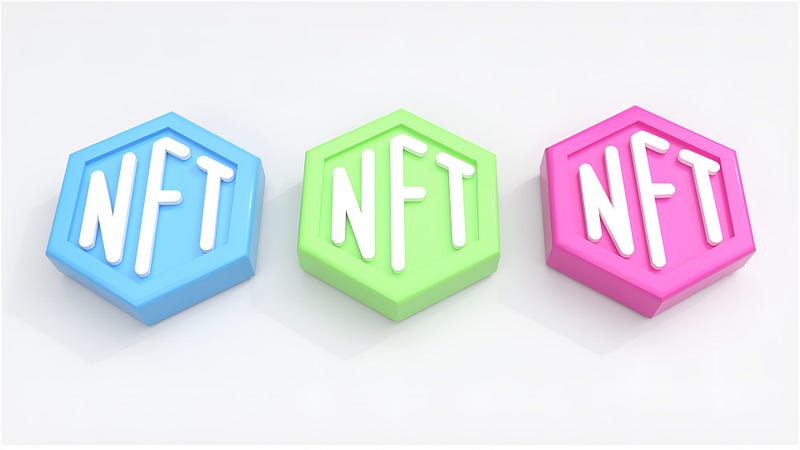
Photo by Choong Deng Xiang on Unsplash


NFT bidding

Drops will serve as a platform for auctioning game NFTs and special NFTs, catering to the growing demand for unique digital collectibles. Auctions on Drops will follow an English auction format where the highest bidder wins, which is also used on NILE, a decentralized autonomous organization (DAO) and NFT platform based on the company’s decentralized blockchain network WEMIX3.0. Users can participate using WEMIX dollars (WEMIX$), the official stablecoin issued on the WEMIX3.0 mainnet.

The first three games to launch NFTs on Drops are Melting Earth, Ballies, and Yield KingZ. Melting Earth collections are currently available for sale online, and the latter two will be released soon, according to WEMIX PLAY.


Revolutionizing GameFi

The company’s introduction of Drops reflects the growing popularity and value of NFTs within the gaming world, providing gamers and collectors with an opportunity to acquire unique and rare in-game assets through an accessible and transparent auction platform, thus offering a more interactive gameplay experience while leading innovation in the gaming finance (GameFi) sector.

More to Read
View All
Policy & Regulation·

Jun 06, 2025

Hong Kong gearing up to give crypto derivatives the go-ahead

Hong Kong regulator, the Securities and Futures Commission (SFC), which oversees Hong Kong’s securities and futures markets, is understood to be planning to give the go-ahead for crypto derivative products to be offered to professional investors within the Chinese autonomous territory. Chinese English-language newspaper China Daily reported on June 4 that the proposed move forms part of Hong Kong’s efforts to expand its digital assets-related product offering in order to further bolster its position as a leading regional hub for the sector. Christopher Hui, Hong Kong’s Secretary for Financial Services and the Treasury, told the publication that the SFC will open up crypto derivatives trading to professional investors in the city “in an orderly, transparent and secure manner.”Photo by Florian Wehde on UnsplashBoosting liquidity to spot marketsChina Daily claimed that the SFC outlined that the crypto derivatives product will enable efficient risk transfers, while boosting the liquidity of the underlying spot markets. TokenInsight data suggests that the global crypto derivatives market has reached $21 trillion in trading volume over the course of Q1 2025. By comparison, derivatives trading dwarfs spot trading, given that spot trading weighed in at just $4.6 trillion over the same period. Liquidity in the underlying spot markets can be enhanced by a broadening of crypto derivatives product offerings in instances where digital assets are traded for immediate payment and delivery. Their availability will also appeal to professional traders and investors who need access to derivatives as part of their overall strategies in order to hedge positions and add leverage when required. Industry interestReaction to news of the Hong Kong SFC’s plans has largely been positive. Back in February, Jean-David Péquignot, chief commercial officer (CCO) with the world’s largest crypto derivatives exchange Deribit, told the South China Morning Post that opening up availability of crypto derivatives products was the one item missing from Hong Kong’s push towards development as a hub for the digital assets sector. At the time, he stated:“Hong Kong is this central financial hub in the world and a big one in Asia. If regulators can solve the derivatives piece, it is a place where we love to be.” On that basis, Péquignot suggested that Deribit, headquartered in Dubai, would be interested in establishing itself in Hong Kong, suggesting that “Asia is a big market for derivatives.” He added:“We want to be in Asia. We just need to find the right place and time to engage with regulators and get a regulatory framework to work with.” The company’s acquisition by Coinbase was announced last month for $2.9 billion. Regulatory approach questionedWhile many see the move towards the approval of crypto derivatives in Hong Kong as bullish, not everyone perceives the regulator’s approach in this instance to be positive. Pseudonymous crypto trader “Pickle Cat” outlined on X that “opening crypto derivatives only to 'professional investors' isn’t progress.”  The trader points out that good regulation would concentrate on controlling issuance and not circulation. Suggesting that the SFC has missed the point in its approach, the trader claims that the regulator would serve the crypto derivatives market best by verifying what backs such products while not restricting how such tokens move. 

news
Web3 & Enterprise·

May 10, 2023

OmniBOLT to Support BRC-20 Tokens on Lightning

OmniBOLT to Support BRC-20 Tokens on LightningSingapore’s OmniBOLT, a project that’s developing technological solutions within bitcoin’s layer two network environment, has outlined that it will support BRC-20 tokens on Lightning Network.Before we consider precisely what OnmiBOLT's decision to support BRC-20 tokens means, let’s cover the backstory.Photo by Sander Weeteling on UnsplashBRC-20BRC-20 is an experimental token standard which was created by an anonymous developer with the handle “Domo”, and username ‘@domodata’ on Twitter. A token standard governs how and where a cryptocurrency can be used. The approach has been pioneered by developers on the Ethereum blockchain who created the ERC-20 standard a number of years ago, relative to the Ethereum network.A bitcoin evolutionIn this instance, BRC-20 is a fungible token standard designed for the bitcoin blockchain. Bitcoin development is very slow and conservative, and deliberately so, in an effort to put network security first. However, it has had two major upgrades over the course of the last few years, namely SegWit and Taproot.Many in crypto have been critical of the bitcoin project on the basis of it being a pet rock that lacked features and the flexibility to use it in other ways aside from as a store of value or means of exchange. However, those protocol upgrades have led to further development that is expanding bitcoin’s use case and versatility.SegWit and Taproot enabled the development of Bitcoin Ordinals in January 2023. Ordinals provide a means to create Bitcoin non-fungible tokens (NFTs), by attaching data to individual satoshis, the smallest denomination of Bitcoin. NFTs created this way are immutable as they’re not created on side chains but on the bitcoin blockchain itself.In a fast moving scenario, the development of Ordinals led two months later to the emergence of the BRC-20 standard. BRC-20 tokens can be stored on the bitcoin base-chain, built with the assistance of Ordinals. BRC-20 is an exciting development as it stands to enable smart contract capabilities relative to bitcoin.Solving the bitcoin fee issueMany see this development as a solution for the longer term fees issue that the bitcoin blockchain will have to overcome. Bitcoin miners are compensated in mining rewards but the level of rewards is being cut in half every four years. The concern is that in the longer term, there may not be enough revenue for miners to continue to secure the network effectively.With the development of Bitcoin Ordinals, more fees are generated, and so this is seen as a means through which the network can sustain itself over the longer term.Mempool backlogSo what’s not to like? The issue that has arisen over the past few days is that bitcoin transaction fees have hit a two year high. Over the past few days, there have been in excess of 400,000 unconfirmed bitcoin network transactions sitting in the mempool. The mempool is a mechanism within the bitcoin protocol that stores the data relative to a queue of transactions that are waiting to be confirmed.Relieving pressure on bitcoinThat brings us back to the significance of the Singaporean team of developers at OmniBOLT deciding to support BRC-20 tokens on the lightning network. That move can relieve the pressure on the bitcoin mainnet. The project is being backed by Waterdrip Capital, Danhua Capital, Redline DAO and others.Bitcoin has been a boring protocol and many have celebrated that fact as a feature and benefit for a network that serves a couple of vitally important use cases exceptionally well. However, development never stops and it’s fascinating to see another side to the protocol unfold, and all the while, it’s not entirely clear where it will end.

news
Web3 & Enterprise·

Aug 03, 2023

Huobi Anticipates Break-Even in Q3 Following Consecutive Losses

Huobi Anticipates Break-Even in Q3 Following Consecutive LossesCryptocurrency exchange Huobi, under the guidance of its advisor and Tron Founder Justin Sun, has reported losses over consecutive recent quarters and is now eyeing a break-even point in the current quarter.Photo by Brands&People on UnsplashThree quarters of lossesIn a tweet posted by Sun on Tuesday, the Tron Founder revealed that Huobi hadn’t registered a profit from the third quarter of 2022 through the second quarter of this year. While exact loss figures were not disclosed, Sun attributed these financial challenges to excessive spending on marketing, advertising, and employee salaries. Notably, Huobi has since reined in these expenses, positioning itself for a potential return to profitability by the fourth quarter.Looking at the overall financial performance of Sun’s crypto entities, Huobi and Tron, the group appears to be on an upward trajectory. Sun’s tweet indicated a combined profit of $85 million, derived from $193 million in revenues and $108 million in expenses.Notably, the Q2 profit saw a substantial increase of 183% compared to the $30 million profit in Q1. Sun’s projections suggest that Q3 could see revenue reach $200 million, expenses remain at $100 million, resulting in a projected profit of $100 million for the quarter.Improved financial outlookSun highlighted on Twitter Huobi’s improved financial outlook, projecting a break-even status for Q3 and a modest profit for Q4 based on conservative estimates. Earlier in the year, Huobi implemented a 20% reduction in its workforce as a response to the cryptocurrency market’s bearish trends.Established in 2013, Huobi had maintained consistent profitability until the last few quarters, according to Sun. He clarified that despite reports linking him as the core investor through the M&A fund that acquired a stake in Huobi, he is merely an advisor to the exchange.Exchange business challengesHuobi’s struggles and subsequent efforts to regain financial stability mirror the broader landscape of cryptocurrency exchanges navigating a volatile market. No major exchange has been unaffected by a challenging business and regulatory environment over the past year.US exchange Coinbase is in a legal battle with the Securities and Exchange Commission (SEC) in the United States. A report by Semafor on Wednesday suggests that the US Department of Justice is planning on bringing fraud charges against Binance, who is already fighting an action taken by the SEC. Binance has also been forced out of key four important European markets over the course of the past three months.Meanwhile, it has been claimed that KuCoin has been executing a layoff plan, something the company itself denies. In March, the company faced an action brought by the New York Attorney General on the basis of a failure to register as a securities and commodities broker-dealer.Huobi’s difficulties serve as a testament to the challenges and opportunities presented to all of the major international cryptocurrency exchange businesses.The company’s recent financial trajectory, marked by consecutive losses, has caught the attention of the industry. Justin Sun remains one of crypto’s most controversial figures, but with his guidance, the exchange will be working towards rebounding and returning to profitability in the coming quarters.

news
Loading