Top

Bybit Denies Plans to Leave UK Market

Web3 & Enterprise·September 16, 2023, 12:00 AM

Reporting related to Dubai-based crypto exchange Bybit had suggested in recent days that the firm was leaving the UK market. However, the company has since responded to state that it has strongly reaffirmed its commitment to the UK market and its dedication to collaborate with regulators to find mutually agreeable solutions.
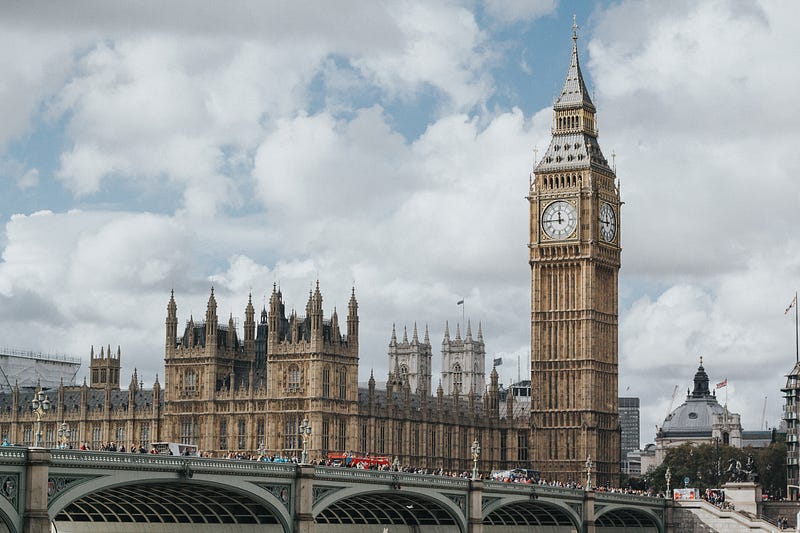
Photo by Marcin Nowak on Unsplash


Company clarification

That speculation had arisen in the first place on the basis of difficulties the business may experience as a consequence of the upcoming implementation of new strict marketing rules for crypto firms in the UK. Taking to social media on Thursday, the company stated:

”At Bybit, we consider the UK to be a highly important market for the advancement of crypto and blockchain technologies. Our commitment to this market is unwavering, and we intend to maintain our presence in the UK for the long term. Meanwhile, we are dedicated to working collaboratively with regulators upon the new law to ensure the responsible and secure development of the industry.”

The reports published earlier in the week had fueled speculation that Bybit might exit the UK market, along with other jurisdictions characterized by rigorous crypto regulations. The concerns primarily centered around the UK’s recently introduced financial promotion rules, designed to bolster customer protection and enhance understanding of crypto investments.

Ben Zhou, Co-Founder and CEO of Bybit, commented on the situation, underscoring the exchange’s unwavering commitment to regulatory compliance. Zhou confirmed that ongoing discussions with UK regulators aimed to find mutually beneficial solutions, aligning the interests of all stakeholders involved. He emphasized Bybit’s commitment to keeping its community well-informed about the progress of these discussions.


Regulatory changes

The recent move by Bybit is in direct response to regulatory changes introduced by the UK’s Financial Conduct Authority (FCA) in June. These changes were implemented to improve transparency and enhance customer protection within the crypto sector, with a particular focus on ensuring that UK customers have a clear understanding of the risks associated with crypto investments. The FCA also outlined various pathways for asset promotion, including those involving FCA-authorized personnel or crypto companies registered with the FCA.

Exchanges have been very much under the cosh in 2023 when it comes to regulatory pressures. Bybit, accompanied by MEXC Global, Bitforex, and Bitget, were all issued with a warning by the Japanese regulator, the Financial Services Agency (FSA), in April on the basis that the exchanges were running unregistered crypto asset exchange business operations within Japan. In May Binance left the Canadian market.

In the months that followed, the leading global crypto exchange was forced out of markets in Germany, Belgium, The Netherlands, and Cyprus due to regulatory pushback. In May Seychelles-based Huobi was ordered to cease its business offering in Malaysia by the local regulator.


Moving forward

Despite these setbacks, Bybit has been making efforts to move the business forward. In May it obtained approval from the authorities in Kazakhstan to offer its services within the country. Some weeks prior, it announced that it had chosen Dubai as the global exchange’s headquarters.

The firm also introduced TradeGPT recently, an AI-powered educational tool designed to enrich traders’ engagement with the crypto market.


More to Read
View All
Web3 & Enterprise·

Nov 12, 2024

QCP Trading takes significant step towards full licensing in Singapore

QCP Trading, the trading arm of Singaporean crypto market maker and broker dealer QCP Group, has taken a significant step towards full licensing in Singapore, having been awarded in-principle approval (IPA) for a Major Payment Institution (MPI) license by local regulator, the Monetary Authority of Singapore (MAS). Regulated spot tradingIn a press release published by PR Newswire on behalf of QCP Trading Pte. Ltd. on Nov. 11, the company outlined further details on the receipt of the preliminary license. The company confirmed that the IPA represents an “essential step towards full licensing,” enabling it to prepare to offer regulated spot trading service facilities relative to digital payment tokens. QCP Trading is geared towards facilitating a broad range of crypto spot trading, including the trading of stablecoins and major digital asset tokens. The company offers on/off ramps into and out of cryptocurrency positions via multiple fiat currencies. Photo by Guo Xin Goh on UnsplashOperational expansionDarius Sit, founder of QCP Trading, commented on the development, stating that as the firm continues its pursuit of a full trading license, the focus remains on supporting Singapore’s reputation as a leader in digital asset regulation. Sit added that the company is proud of its “ability to remain agile and responsive to both global and local market conditions,” suggesting that this approach is the key to success in the rapidly evolving crypto sector. QCP Trading intends to continue to build a local team in Singapore and with that it is hiring in order to enable operational expansion. Melvin Deng, the company’s CEO, said that the firm is aiming “to champion robust governance frameworks,” and that its “early recognition of the critical role of regulation has proven to be a strategic foresight." Global expansionThe QCP Group appears to be pursuing a global expansion strategy as back in May, group company QCP Capital received IPA for regulated digital asset trading activities from the Financial Services Regulatory Authority (FSRA), the regulator within the Abu Dhabi Global Markets economic zone in the United Arab Emirates (UAE). In doing so, it became the first Singapore-headquartered crypto broker and market maker to receive preliminary approval within the Middle East region. At that point, QCP had 70 employees, with plans to relocate some of them to Abu Dhabi. In the lead-up to that IPA licensing award in Abu Dhabi, QCP had partnered with Further Ventures as part of its efforts in expanding into the Middle Eastern market. On Nov. 11, QCP Capital put out a warning via its Telegram channel, informing market participants that given the rise in the unit price of Bitcoin in recent days, it is necessary to be mindful of the risk of pullbacks, which will be required in order to account for the use of leverage within the market. In recent weeks, Fly Wing Technologies, a subsidiary of cryptocurrency service provider Matrixport, and the Singaporean subsidiary of American crypto exchange Gemini have received IPA approval with respect to MPI licensing in Singapore. At the beginning of September, crypto exchange OKX received full MPI approval. 

news
Markets·

Nov 10, 2025

Bitcoin pullback tests sentiment as analysts revisit long-term targets

Despite Bitcoin’s recent decline, a South Korean analyst says investors’ trust in the market remains intact. He added that a U.S. crypto market structure bill, which Congress could approve as early as December, may give investors a chance to buy the dip ahead of a potential rebound. According to Etoday, Hong Sung-wook of NH Investment & Securities, one of South Korea’s major brokerage firms, noted that the crypto market has given back all gains made since mid-October, with Bitcoin briefly slipping below $100,000. Most altcoins also saw steep declines, erasing the advances they posted following roughly $19 billion in liquidations around Oct. 10. In this environment, Solana’s year-to-date performance has turned negative despite the recent launch of spot Solana ETFs in Hong Kong and the U.S., while Ethereum has similarly surrendered its earlier gains.Photo by Michael Förtsch on UnsplashContext from past declinesHong framed the latest pullback in a historical context. Since 2018, Bitcoin has recorded a daily closing price drop of more than 20% on seven occasions. The latest decline of about 21% from peak to trough, he said, is broadly in line with previous downturns. He added that Bitcoin is now less likely to experience the extreme volatility seen in earlier years, citing growing institutional participation and its increasing use in so-called “debasement trades,” or hedges against fiat currency inflation. Building on this, Hong attributed the recent weakness primarily to the liquidation wave and the temporary hit to sentiment. However, he argued that confidence could recover faster than in past stress events, emphasizing that trust in the market has not been fundamentally damaged, unlike in prior downturns triggered by unexpected “black swan” shocks. Policy progress could lift market moodIn the near term, Hong pointed to progress on the U.S. crypto market structure bill as a potential catalyst. Further movement on the bill, he said, could help improve sentiment, similar to the supportive reaction seen around the passage of the stablecoin GENIUS Act. Other market observers have expressed a comparable view on Bitcoin’s outlook. BeInCrypto underscored three key factors supporting its stance in an analysis published on FXStreet. First, citing Glassnode’s Accumulation Trend Score, it noted that Bitcoin has managed to hold above the $100,000 level thanks to a balance between whale sell-offs and continued accumulation by other investors. Second, expectations for U.S. interest rate cuts projected for December are seen as another supportive element. Third, Bitcoin continues to trade above its 50-week moving average (WMA), a technical level that has underpinned the market since BTC moved above it in 2023; even when brief sell-offs have pushed prices below this line, buyers have stepped in to restore it by the weekly close. Warning signs of weakening momentumAt the same time, signals of moderating momentum have emerged. Another BeInCrypto report pointed to CryptoQuant’s Bitcoin Bull Score, an on-chain metric that gauges the asset’s upside potential, which fell to zero on Nov. 6, its lowest level since January 2022, just before the market entered its last major bearish phase. This more cautious tone is reflected in institutional forecasts as well. Crypto financial services firm Galaxy Digital last week lowered its year-end price target for Bitcoin from $185,000 to $120,000. The firm cited heavy whale sell-offs, shifting investor focus toward AI, gold, and stablecoins, and the weak performance of Bitcoin-focused digital asset treasury (DAT) companies as key reasons for its downgrade. Even so, Galaxy Digital said it continues to view Bitcoin as a structurally strong asset.From a longer-term perspective, some high-profile experts have also trimmed their expectations. According to Decrypt, Ark Invest CEO Cathie Wood told CNBC she now sees Bitcoin reaching about $1.2 million in a bullish scenario by 2030, down from her previous $1.5 million target. She attributed the revision mainly to the rapid growth of stablecoins, which are expanding faster than Bitcoin and emerging as a new payment method, a trend she suggested could dilute some of Bitcoin’s potential price momentum over time.

news
Policy & Regulation·

May 27, 2023

Gulf Binance Secures Thai Digital Asset License

Gulf Binance Secures Thai Digital Asset LicenseBinance, one of the world’s leading cryptocurrency exchanges, has secured a digital asset operator license in Thailand, paving the way for the launch of a new crypto exchange and broker. The license, granted by the Ministry of Finance of Thailand and overseen by the Southeast Asian country’s Securities and Exchange Commission (SEC), ensures that the upcoming platform will operate in compliance with regulatory requirements.Photo by Markus Winkler on UnsplashLicense awardThe license was awarded to Gulf Binance, a joint venture between Binance and Gulf Innova Co., Ltd., a subsidiary of Gulf Energy Development PCL. It marks a significant milestone in Binance’s expansion efforts. The partnership was initiated through a memorandum of understanding signed in January 2022, as both parties recognized the potential of establishing a digital asset exchange in Thailand.Richard Teng, the head of Asia, Europe, and MENA at Binance commented on the development: “By harnessing Binance’s expertise together with Gulf’s established local presence and network, Gulf Binance aims to showcase the full potential of blockchain technology to meet the needs of Thai users. Local users can expect access to a trusted and regulated service that prioritizes user security alongside compliance with local regulations.”Combined expertiseGulf Innova, as a prominent player in the Thai business landscape, brings extensive expertise and experience in the digital asset trading sector to the joint venture. The conglomerate, headed by billionaire Sarath Ratanavadi, operates in various industries, including energy production, telecommunications, and digital businesses.By combining Binance’s unparalleled growth and expertise in the digital asset space with Gulf’s established presence and knowledge in Thailand, the partnership aims to create a powerful synergy that drives innovation, fosters growth, and provides exceptional value to users in the digital asset ecosystem.Q4 launchThe new crypto exchange is expected to commence operations in the fourth quarter of 2023, although further details about the platform will be disclosed closer to the launch.Often criticized for its opaque structure, Binance is showing renewed commitment to transparency and regulatory compliance. As regulatory frameworks are put in place in varying jurisdictions, global crypto businesses are having to change corporate structures in order to meet these changing requirements. That’s evidenced by Binance’s Thai joint venture, its launch of a separate corporate entity in the form of Binance Japan and a similar move by crypto exchange BitMEX in Hong Kong.Thailand has emerged as a significant cryptocurrency hub in Southeast Asia, with its capital city, Bangkok, ranked 10th globally in The Crypto Readiness Index published by Recap, a cryptocurrency tax software company. Despite the ban on cryptocurrencies as a payment method, Thailand continues to flourish as a hub for trading and investment activities in the crypto space.That ban on cryptocurrency payments, implemented by the SEC in April 2022, aimed to safeguard the stability of the financial system and mitigate potential risks to the economy. The SEC identified price volatility, cyber theft, and personal data leakage as concerns associated with cryptocurrencies. However, the regulatory measures did not impede trading or investment activities, allowing the crypto industry to thrive.Chainalysis, a leading blockchain analysis company, ranked Thailand 8th in its Global Crypto Adoption Index for 2022, surpassing countries like Russia, China, Nigeria, Turkey, Argentina, and the UK. This recognition highlights Thailand’s progressive stance toward digital assets and its growing adoption within the country.

news
Loading