Singapore Elects Crypto Skeptic as President
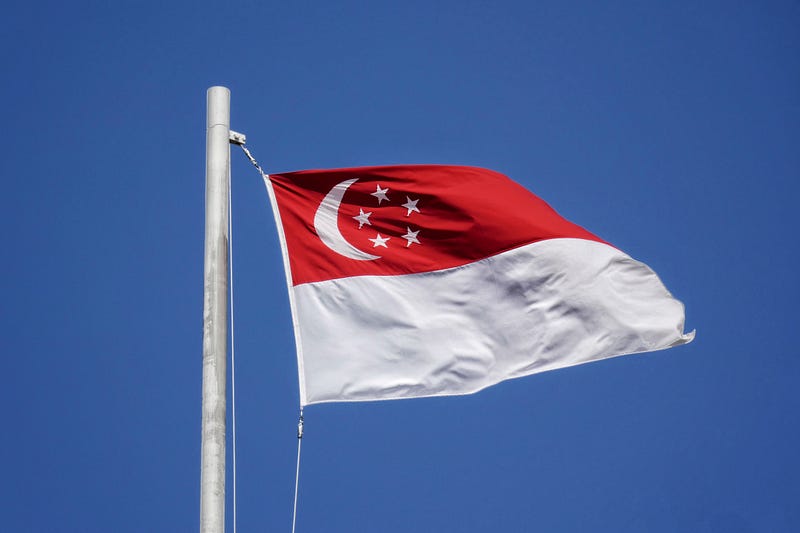
Garnering 70.4% of all votes cast on Saturday, Singaporeans chose to elect Tharman Shanmugaratnam as their next president, a move that may have implications for Singapore’s outlook when it comes to digital assets.
While many had hoped that he would be the nation’s first non-Chinese prime minister, the crypto industry has greeted his rise to this largely ceremonial role with mixed feelings. Shanmugaratnam’s previous stances on cryptocurrency and digital assets have been predominantly critical.
Former MAS Chairman
In the past, the president-elect has referred to cryptocurrency as “slightly crazy” and “purely speculative.” His ascent to the presidency comes after a distinguished career that includes serving as the former finance minister, deputy prime minister, and chairman of the Monetary Authority of Singapore (MAS), the country’s central bank, from 2011 to 2023.
Crypto platform collapses
It was during his tenure at MAS that two prominent crypto companies, Three Arrows Capital (3AC) and Terraform Labs, faced catastrophic collapses.
The demise of Terraform Labs, along with its TerraUSD (UST) stablecoin, triggered a severe “crypto winter” in May 2022, from which the industry is still struggling to recover. This downfall wiped out a staggering $500 billion in value over just two weeks, devastating the portfolios of numerous retail investors.
The ripple effect of TerraUSD’s fall also engulfed 3AC, a significant cryptocurrency hedge fund headquartered in Singapore. The contagion spread across the cryptocurrency market, leading to the downfall of other major entities like crypto lending platforms Celsius Network and Voyager Digital, alongside Singapore-based Hodlnaut.
Given that these catastrophic events unfolded during Shanmugaratnam’s tenure at MAS, it’s plausible that he bore the brunt of the consequences. That might explain why in speaking on the subject in 2021, he appeared to be more accommodative, suggesting that there may be a useful role that crypto could play and highlighting that Singapore had allowed crypto businesses to develop within the city-state.
In June of last year, MAS reprimanded 3AC for providing misleading information and exceeding the allowed assets under management (AUM) threshold, thereby breaching its status as a registered fund management company.
In January, Shanmugaratnam said that regulating the crypto sector would give credibility to speculation and on that basis, it would be best to leave it unregulated. He went on to suggest that crypto should be subject to existing regulation as laid down for traditional finance.
Early stage concerns
Back in 2018, when he was Singapore’s finance minister, Shanmugaratnam questioned the wisdom of broad regulation potentially legitimizing a speculative and “slightly crazy” market. During the 2018 World Economic Forum, he emphasized the importance of anti-money laundering measures and advocated for educating consumers about the risks inherent in the unregulated crypto sector.
Although he acknowledged blockchain’s potential to enhance global payment systems, Shanmugaratnam favored integrating existing traditional payment mechanisms as an alternative to blockchain innovations.
Singapore’s new president brings with him a history of skepticism towards cryptocurrency and digital assets. However, with a largely ceremonial role relative to day-to-day governance, he’s not in a position to take direct action that could hold the sector back although he will have the power to initiate corruption investigations upon the advice of the Singaporean cabinet.