Top

KuCoin Report Points to Marked Increase in Crypto Investors in Turkey

Policy & Regulation·September 01, 2023, 1:16 AM

As part of its “Into The Cryptoverse: Understanding Crypto Users” series, Seychelles-based crypto exchange KuCoin published a report on Thursday that identifies a significant increase in the number of crypto investors in Turkey over the course of the past eighteen months.
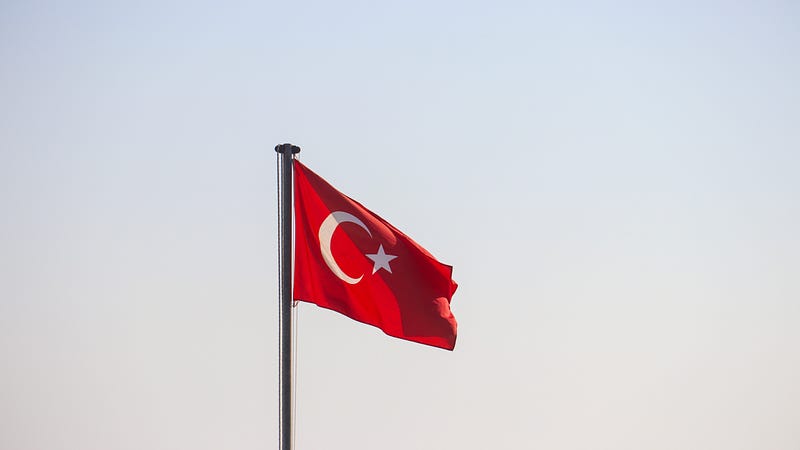
Photo by Dima Rogachevskiy on Unsplash


Crypto adoption surge

The report, the fifteenth such report produced by KuCoin as part of this series, reveals that there has been a substantial surge in crypto adoption among Turkish adults, with an impressive 52% of the adult population participating in crypto investments.

Since November 2021 there has been a 12% increase in the number of crypto investors aged 18 to 60. These statistics underscore the growing interest and acceptance of cryptocurrencies in Turkey. It’s not likely to be a coincidence that this surge in adoption has come about against the backdrop of the local currency, the Turkish lira, losing more than 50% of its value against the US dollar.

Here are some of the key insights that the report identified:

Growing Crypto Adoption Among Turkish Adults: The survey indicates a significant upswing in the number of Turkish adults investing in cryptocurrencies. The percentage of adults embracing crypto has surged from 40% to 52% over the last year and a half, despite the overall crypto market finding itself in the doldrums within that time frame.

Increased Female Participation: While male investors continue to dominate at a rate of 57%, the survey points to a notable trend of increasing participation among women, particularly in the younger age brackets. Approximately 47% of female crypto investors are between the ages of 18 and 30.

Youth-Driven Growth: Younger generations are leading the crypto adoption charge, with investors aged 31 to 44 constituting the largest group at 48%. Furthermore, a significant proportion of investors under 30 joined the market within the past year, indicating the influence of youth within the crypto space.

Many have expressed the view that crypto adoption will come about through the younger demographic. It’s a factor that has not gone unnoticed by crypto platforms, including fellow Seychelles-based exchange Bitget.

Motivations for Crypto Investments: The report delves into the motivations behind crypto investments among Turkish adults. A substantial 58% express the desire to create long-term wealth, transcending generational boundaries. This suggests a widespread belief in crypto’s potential as a tool for financial freedom.

Popular Cryptocurrencies: Bitcoin remains a favored choice, capturing 71% of overall investor interest. Ethereum follows closely with 45% interest, while stablecoins garnered the attention of 33% of surveyed participants.

Crypto Trading Dominates: A significant 70% of Turkish participants use crypto for trading, indicating the prevalent use of cryptocurrencies as investment instruments. Meanwhile, 22% have ventured into buying NFTs.

Influence of Personal Connections: Personal relationships play a pivotal role in driving crypto adoption in Turkey. About 57% of participants learned about crypto through family and friends, highlighting the significance of these connections in introducing newcomers to the crypto world.

This finding resonates with a similar finding relative to a recently published report covering crypto adoption in Vietnam.

The report has been based upon online surveys carried out by KuCoin between May 5 and May 12 of this year.


More to Read
View All
Markets·

Oct 07, 2023

BitMEX Co-Founder Forecasts $750K to $1 Million Bitcoin Price by 2026

BitMEX Co-Founder Forecasts $750K to $1 Million Bitcoin Price by 2026In a recent interview with YouTuber Tom Bilyeu, Arthur Hayes, Co-Founder of the Seychelles-registered cryptocurrency exchange and derivative trading platform BitMEX, has expressed his bullish outlook on Bitcoin’s future price, projecting a valuation of $750,000 to $1 million for the leading cryptocurrency by the year 2026.Photo by Kanchanara on UnsplashFinite supply to drive price dynamicHayes’ optimism is rooted in several factors that he believes will shape the next Bitcoin cycle. One of the key factors driving Hayes’ projection is Bitcoin’s limited supply. With a maximum cap of 21 million coins, Bitcoin’s scarcity is expected to propel the unit price of the asset in tandem with growing demand as more investors seek to secure a piece of this finite resource.The idea that Bitcoin’s scarcity will drive its value higher has been a fundamental tenet of the cryptocurrency since its inception. In 2010 the leading cryptocurrency’s pseudonymous Founder stated: “When someone tries to buy all the world’s supply of a scarce asset, the more they buy the higher the price goes.”ETF potentialHayes also highlighted the potential for Bitcoin spot exchange-traded funds (ETFs) to become available in major regulated markets. The introduction of Bitcoin ETFs could attract institutional investors and provide a more accessible way for the broader public to invest in Bitcoin, further boosting its demand.However, Hayes also speculates about the risks associated with a Bitcoin ETF. He stated: “Are we inviting in something that’s going to fundamentally change what Bitcoin is?”Geopolitical factorsGeopolitical uncertainty plays a significant role in Hayes’ forecast also. As global economic and political instability persists, investors may turn to Bitcoin and other alternative assets as hedges against traditional financial instruments.However, it’s important to note that Hayes contextualized his Bitcoin price prediction within a larger bullish macroeconomic environment. From his perspective the surge in asset prices will not be limited to cryptocurrencies alone. He anticipates a substantial boom in financial markets, with not only Bitcoin but also traditional assets like stocks experiencing substantial price growth.Hayes stated: “I think it will be the biggest boom in financial markets we have ever seen in human history. Bitcoin will have a ridiculous price, Nasdaq will have a ridiculous price, S&P will have a ridiculous price.”Known for his thoughtful and insightful writings on the subject area, Hayes wrote in July that he believes that Bitcoin will be the currency of choice when it comes to the growing need for artificial intelligence (AI) to work directly with a means of payment.$1 million BTC by 2026While Hayes’ projection of a $1 million Bitcoin price by 2026 may seem ambitious, his short-term predictions are more moderate. He foresees Bitcoin trading in the $30,000 range for the current year. Building upon that thesis, he maintains that the possibility exists of it reaching $70,000 by 2024.This aligns with the views of other industry analysts who anticipate challenges and headwinds in the near term. There’s little doubt that recent platform failures and speculation with regard to the health of other leading crypto platforms have been retarding market performance more recently.While the road ahead may hold fluctuations and challenges, many experts believe that Bitcoin’s long-term trajectory remains promising, driven by its unique attributes and the changing dynamics of global finance.

news
Policy & Regulation·

Jan 12, 2024

Turkey nears completion of newly crafted crypto regulations

The Turkish government is on the verge of finalizing comprehensive regulations for the cryptocurrency market. It has been known for a number of months that Turkey had been working towards the production of a regulatory framework for crypto, with the primary objective of securing the country’s removal from the Financial Action Task Force’s (FATF) "grey list." According to revelations from Minister of Treasury and Finance Mehmet Simsek, who participated in an interview with the Anadolu Agency on Wednesday, those regulations are now nearing completion.Photo by Emre on UnsplashFramework in advanced stagesSimsek disclosed key elements of the forthcoming regulations, emphasizing the government's commitment to legally defining critical concepts in the crypto space, licensing trading platforms and aligning with the standards set by FATF. The crypto framework tailored for the Turkish market is in the advanced stages of development, with a meticulous evaluation of its technical aspects underway, noted Simsek. The overarching goal is to mitigate the risks associated with crypto trading, especially for ordinary investors, aligning with international standards to facilitate the country's removal from the FATF's grey list. Licensing and defined termsSimsek outlined the forthcoming guidelines, stating that crypto platforms will be mandated to acquire licenses from Turkey's Capital Markets Board (CMB). A number of months ago, Bora Erdamar, the director of the BlockchainIST Center, an Istanbul-based university research and development center for blockchain technology, had underscored the importance of establishing licensing standards as part of the new crypto framework. Erdamar claimed that would be necessary in order to “prevent abuse of the system.” Erdamar is of the view that any such regulatory framework may include digital security protocols, advanced custody services, compulsory proof of reserves and capital adequacy requirements. It’s understood that the regulations will provide legal definitions for essential terms such as "crypto assets," "crypto wallets," "crypto asset service providers," "crypto asset custody service" and "crypto asset buying and selling platforms." As an example, Simsek clarified the definition of crypto assets as "intangible assets that can be created and stored electronically using distributed ledger technology or a similar technology, distributed over digital networks, and capable of expressing value or rights." While emphasizing the reduction of risks in crypto trading, Simsek clarified that the regulations would not encompass the specific tax regime for virtual assets. The proposed regulations have long been under consideration as Turkish authorities aim to bring clarity to the crypto market. The Minister assured that the crypto legislative proposals would be finalized this month, preceding the FATF evaluation scheduled for February. Notably, between July 2022 and June 2023, Turkey ranked fourth globally in raw crypto transaction volumes, recording approximately $170 billion in activity, trailing behind the United States, India and the United Kingdom, as reported by the blockchain analytics firm Chainalysis. A report by KuCoin last year identified a marked increase in adoption in Turkey.  It’s believed that wayward inflation over recent years relative to the Turkish lira is playing a large part in that trend. In recent weeks the Turkish president took the step of appointing an expert in blockchain and crypto assets to the central bank’s rate-setting committee. 

news
Markets·

Sep 12, 2024

India tops global crypto adoption despite regulatory hurdles: Chainalysis report

India has once again emerged as the global leader in cryptocurrency adoption for the second consecutive year, according to the latest Chainalysis Global Crypto Adoption Index for 2024. Despite strict regulations, including high taxes and restrictions on foreign exchanges, India continues to see widespread participation in digital assets, showcasing resilience in the country’s growing cryptocurrency ecosystem.Photo by Jovyn Chamb on UnsplashIndia leads in crypto adoptionIndia ranked first out of 151 countries in the 2024 Chainalysis report, maintaining its top position from 2023. Indian investors have continued engaging with both centralized and decentralized finance (DeFi) platforms despite regulatory challenges such as the 30% capital gains tax and a 1% tax deducted at source (TDS) on crypto transactions. This activity highlights the country's strong interest in digital assets. India received $143 billion in crypto inflows from July 2023 to June 2024, placing second in the Central and Southern Asia and Oceania (CSAO) region behind Indonesia, which received $157 billion. CSAO as a whole accounted for $750 billion in crypto assets over the same period, making up 16.6% of global crypto activity. Offshore exchange restrictions and workaroundsIn December 2023, India’s Financial Intelligence Unit (FIU) issued show-cause notices to nine offshore cryptocurrency exchanges, including Binance, Kraken and KuCoin, for non-compliance with anti-money laundering laws. The FIU also blocked access to these platforms for Indian users. However, many investors found ways to bypass these restrictions, continuing to access these exchanges via pre-downloaded apps. Despite these regulatory hurdles, Binance and KuCoin have since re-entered the Indian market after paying fines and complying with local laws. Binance settled a $2.25 million fine in June 2024, while KuCoin resolved a $41,000 penalty in March 2024. Indonesia’s rapid growth in cryptoIndonesia on the other hand has emerged as the fastest-growing crypto market in the CSAO region, climbing four places to third in the global rankings. The country experienced a nearly 200% year-over-year increase in crypto activity, driven primarily by retail investors seeking alternative investments such as meme coins. Indonesia received $157.1 billion in crypto inflows during the 12-month period, reflecting strong engagement with decentralized finance services. Broader regional trendsSeven of the top 20 countries in Chainalysis’ adoption index come from the CSAO region, including Vietnam, the Philippines and Pakistan. This growth is fueled by investment opportunities and an embrace of digital assets as new financial tools. Countries with lower purchasing power tend to have higher adoption rates, with retail-sized transactions making up a significant portion of activity.India’s resilient crypto marketDespite regulatory challenges, India’s crypto market continues to thrive. The government's strict policies have done little to dampen enthusiasm for digital assets. Chainalysis found that investors remained committed to crypto, even as the country enforces strict tax policies. India’s high adoption rate reflects strong demand and adaptability in the market. Future outlook for India’s crypto ecosystemIndia’s leadership in crypto adoption is expected to continue. The FIU is reviewing applications from more foreign exchanges, with at least two expected to be approved by the end of 2025. As the regulatory landscape evolves, clearer guidelines could encourage further growth and innovation in the digital asset space.

news
Loading