Top

Regulatory Pressure Sees Binance Cease Card Offering in the Middle East

Policy & Regulation·August 25, 2023, 12:02 AM

Leading global crypto exchange Binance has announced the discontinuation of its card services in the Middle East.

Users hailing from the region will have until September 21 to maximize the utility of their Binance cards before the product will no longer be available to them. Latin America is another region which will be similarly affected by the decision. Binance Customer Support stated: “The Binance Card will regrettably no longer be accessible to users based in Latin America and the Middle East.”

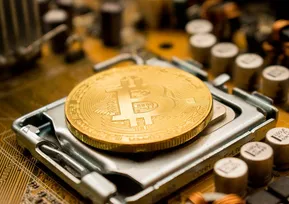
Photo by rupixen.com on Unsplash


Enabling crypto spending

Distinct from conventional debit cards, these Binance cards have offered users the convenience of settling day-to-day expenses with crypto assets. However, this unique feature is now set to become a relic as the exchange shifts its strategy in response to evolving regulatory dynamics.

It’s worth noting that this product curtailment will only impact less than 1% of users situated in these regions. Other Binance services around the world will continue unimpeded. That said, products like this one are significant as they help to bridge the gap between the crypto sphere and conventional commerce.

As a substitute, Binance is actively championing its “Binance Pay” platform, touting it as “an advanced cryptocurrency payment solution that is both contactless and internationally accessible.”


Checkout.com setback

Financial pundits are speculating that this strategic move could be closely intertwined with recent realignments in Binance’s corporate partnerships. Notably, the UK-based payment processor, Checkout.com, severed its connections with Binance earlier this month amidst mounting regional regulatory interventions and concerns.

Responding to this severed partnership, Binance has indicated a contemplation of legal recourse against Checkout.com’s decision. The backdrop of this collaboration has been problematic since its inception in 2020. Initial troubles surfaced when the absence of the 3-D Secure system facilitated a criminal syndicate to conduct a $10 million transaction spree on Binance.


Clash with global regulators

Recent months have seen Binance find itself entangled in a web of legal battles. The US Securities and Exchange Commission (SEC) leveled allegations against Binance, accusing the exchange of deceiving regulatory bodies and mishandling customer funds.

Meanwhile, French authorities have intensified their scrutiny, suspecting Binance of potential involvement in money laundering activities. As a domino effect, Binance had to exit numerous markets due to its inability to meet the stringent compliance criteria. Over the course of just three months, the company has lost its ability to trade in Germany, Canada, Belgium, the Netherlands, and Cyprus.


Asian pivot

As the company comes under pressure in Western markets, it has focused on furthering its offering in the Asian region. In May, its subsidiary, Gulf Binance, successfully acquired a trading license in Thailand. Later that month, the company announced plans for a dedicated platform for Japanese customers.

Parrot Capital, a decentralized hedge fund, has issued a direct recommendation to Binance Card users in response to the news:

“Check your daily limits. Withdraw via ATM all your funds or spend them ASAP or risk losing them for good.”

This sustained and pervasive scrutiny underscores the formidable challenges faced by the leading crypto exchange. As the regulatory landscape evolves, exchanges like Binance are being forced to re-calibrate in order to navigate an ever-changing environment.


More to Read
View All
Web3 & Enterprise·

Jun 03, 2023

Bitcoin Miners Likely Selling at $28K Level, Says Matrixport

Bitcoin Miners Likely Selling at $28K Level, Says MatrixportAccording to a report by Singapore-headquartered digital asset financial services provider Matrixport, Bitcoin (BTC) is facing selling pressure at the $28,000 price level, possibly due to miners offloading their newly mined coins.The report, cited by CoinDesk on Friday, suggests that miners are being compelled to liquidate their inventory as profit margins have contracted in recent weeks.Photo by Pixabay on PexelsHashrate all-time highMining has become an intensely competitive and often unprofitable endeavor due to the ongoing rise in Bitcoin miner difficulty. The hashrate, or measure of how easily miners can discover a new block of Bitcoin reached an all-time high earlier this week. Markus Thielen, Head of Research at Matrixport, noted that given the current input cost and potential revenue expectations, most machines produced before 2022 appear to be unprofitable.“At the current input cost and potential output revenue expectations, most of the machines produced before 2022 appear to be unprofitable,” Thielen wrote.Forced sellingConsequently, miners are forced to sell their inventory at the current level rather than holding out for higher prices, which Matrixport anticipates. The report highlights the significant upside potential for miners if Bitcoin prices were to increase by 10% or more, as profitability could quadruple.The narrowing profit margins for miners reflect the challenges they face in a highly competitive market. As mining difficulty continues to rise, miners must allocate more resources and computing power to mine new coins, reducing their profitability. The situation is particularly tough for miners operating older machines, which are less efficient and more costly to run.The selling pressure exerted by miners can have a short-term impact on Bitcoin’s price. However, Matrixport’s analysis suggests that if Bitcoin experiences a notable price increase, miners could see a substantial improvement in their profitability. This potential upside convexity creates an incentive for miners to continue their operations and withstand the current market conditions.Ordinals bring increased feesOn the other hand one recent development that is assisting miners is the increase in transaction fees, with the development of Bitcoin Ordinals and BRC-20 tokens over the course of the past six months. That interest seems to be ongoing, and if anything we’re likely to see further development of tokens running on top of the Bitcoin blockchain. On Thursday, Seychelles-based crypto trading platform OKX proposed a new BRC-30 token standard which would enable staking of those tokens, alongside staking of bitcoin.Singapore-based Matrixport is a portfolio company of crypto investment venture capital firm Foresight Ventures, which is also headquartered in Singapore. The firm provides a suite of products that it is positioning to be innovative and easy to use, offering an all-in-one crypto financial services platform, enabling users to earn, invest, loan, and trade digital assets.The Matrixport report indicates that miners are likely selling their Bitcoin at the $28,000 level due to squeezed profit margins. While this selling pressure may affect short-term price dynamics, the potential for increased profitability if Bitcoin prices rise significantly provides miners with an optimistic outlook for the future.

news
Policy & Regulation·

Jul 25, 2025

Hong Kong criminalizing promotion of unlicensed stablecoins

The CEO of Hong Kong’s central banking institution, the Hong Kong Monetary Authority (HKMA), has outlined that the introduction of the Chinese autonomous territory’s Stablecoins Ordinance on Aug. 1 will criminalize the unlicensed promotion of stablecoins. In an article published on the HKMA website on July 23, CEO Eddie Yue stated:”According to the Ordinance, starting from the commencement date, it will be illegal for any person to offer any unlicensed fiat-referenced stablecoin (FRS) to a retail investor, or actively market the issue of unlicensed FRS to the public of Hong Kong.”Photo by Manson Yim on UnsplashSubject to fine & imprisonmentIf an individual is found to have promoted an unlicensed stablecoin, they will be subject to a fine of HK$50,000 ($6,400) and imprisonment of up to six months. Yue warned the public to remain vigilant and to exercise caution if they come across marketing material related to an unlicensed stablecoin offering. The HKMA CEO is conscious of the fact that stablecoins are an emerging payment instrument that is being gradually integrated into the mainstream financial system. However, he feels that some discussion on stablecoins has been overly idealistic. Yue outlined that interactions with the few dozen institutions that have reached out to the HKMA with regard to stablecoin licensing have led him to believe that “many proposals remain conceptual.” He claimed that many of the institutions putting forward these proposals “fail to put together viable and concrete plans as well as implementation roadmaps, let alone demonstrate their awareness of risks and competence in managing them.” Limited license issuanceYue believes that in many instances, these institutions would be better served to collaborate with stablecoin issuers rather than becoming stablecoin issuers themselves. It’s on that basis that the HKMA will only grant a handful of stablecoin issuer licenses. Bloomberg reported that in the region of 50 companies have been seeking to apply for stablecoin licensing in the city, with the HKMA likely to approve around 10 licenses. It referenced particular interest from Chinese brokerages and a related move recently by asset management firm ChinaAMC in launching a yuan-denominated tokenized money market fund that facilitates subscriptions via stablecoins.  Significant Chinese businesses such as JD.com and Ant Group have been preparing to acquire stablecoin licensing in Hong Kong. Chinese stablecoin urgencyIn its Asia Morning Briefing, CoinDesk pointed out that in 2021, the Chinese authorities had been critical of the development of global stablecoins, preferring instead to concentrate on their own central bank digital currency (CBDC), the digital yuan. However, it asserts that “Beijing’s caution on stablecoins is giving way to a sense of urgency.” Animoca Group President Evan Ayuang told the publication that China’s interest in stablecoins is on the rise. Ayuang asserted that actions taken by the Trump administration in the U.S. related to stablecoin policy are “pressuring China to act a lot faster.” Developments in Hong Kong are relevant in the context of China’s newfound interest in stablecoins. Lily King, chief operating officer (COO) at crypto custodian Cobo, stated recently that Hong Kong continues to be a testing ground for mainland China.  In keeping with that outlook, analysts at Morgan Stanley recently asserted that yuan-denominated stablecoin projects launched in Hong Kong would potentially serve as a developmental stablecoin sandbox for mainland China.

news
Web3 & Enterprise·

Jun 24, 2025

Nano Labs lines up $500M to fund BNB treasury

Nano Labs, a Web3-focused semiconductor design company listed on the Nasdaq (NA) and headquartered in Hangzhou, China, has arranged $500 million in financing to fund a BNB treasury. In a press release published on the company’s behalf by GlobeNewswire on June 24, Nano Labs outlined that it has entered into a convertible notes purchase agreement with a number of investors. Convertible promissory notes to the value of $500 million will be issued. Holders of the notes, which mature in 360 days, have the option to convert them to Class A ordinary shares at an initial conversion price of $20 per share. Unconverted notes will not accrue interest, but will be repaid in line with the initial principal amount at maturity. 5%-10% of BNB’s total supplyNano Labs asserted that the agreement “marks an important step in the company’s strategic growth.” It stated that as part of the initiative it plans to conduct an in-depth assessment of the BNB token, the native token of the BNB Chain ecosystem. The token enables transactions on the BNB Chain and access to various services and decentralized applications (DApps) that run on the blockchain network. In the initial phase of the initiative, Nano Labs plans to acquire $1 billion worth of BNB through convertible notes and private placements. In the long term, the firm plans to build up a holding equal to 5% to 10% of BNB’s total circulating supply. On X, @Whdysseus, the pseudonymous founder of Asian Web3 and crypto financial media project BroadChain Finance, commented on Nano Labs' BNB reserve initiative, considering it to be a BNB version of the Bitcoin treasury strategy pioneered by American firm Strategy (formerly MicroStrategy).Photo by Vadim Artyukhin on UnsplashShare price surgeChangpeng Zhao (CZ), the co-founder and former CEO of Binance, who has been heavily involved in the development and overall vision of BNB Chain, outlined on X that Nano Labs’ share price “went through the roof” following the announcement. He added that none of his affiliated entities participated in the funding that Nano Labs has put in place. At the time of writing, Nano Labs stock (NA) was trading at $14.85, up 36.36% over the course of 24 hours. Nano Labs isn’t the only corporate entity to declare an interest in holding BNB. According to a report published by Bloomberg on June 23, former executives at Coral Capital, a Japanese venture capital firm, are understood to be in the process of raising $100 million through a newly formed entity called Build & Build Corporation, in order to launch a crypto treasury that will invest in BNB. In another positive development, on-chain analytics firm Nansen highlighted last month that the BNB Chain had seen active addresses double to two million.  Earlier in May, Geoff Kendrick, head of digital asset research at Standard Chartered, outlined in a research report that the BNB token could reach a unit price of $2,775 by 2028. Kendrick maintained that the deflationary nature of the token, together with its ties to the Binance exchange platform, are factors that support its long-term value.

news
Loading