Top

OKX Wallet to Support BRC-20 Tokens and Bitcoin Ordinals

Web3 & Enterprise·May 17, 2023, 12:23 AM

In a press release published on Tuesday, Seychelles-based cryptocurrency spot and derivatives exchange OKX announced that it is in the process of enabling an Ordinals marketplace on the OKX Wallet, which will enable customers to mint and trade BRC-20 tokens.
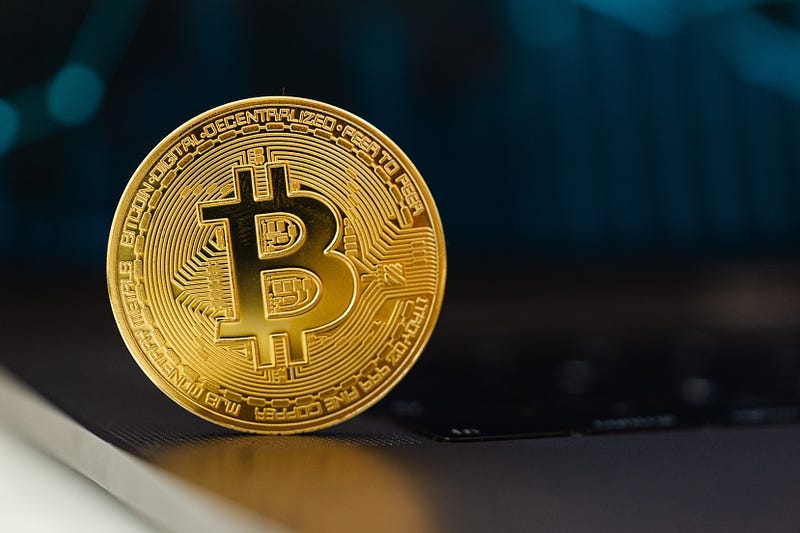
Photo by Karolina Grabowska on Pexels


Rising BRC-20 market cap

The move will also enable users to inscribe non-fungible token (NFT)-based digital content on the Bitcoin blockchain by way of ordinal inscriptions. The market capitalization of BRC-20 tokens has been rising exponentially over the course of the past few weeks despite only being in existence since March.

BRC-20 is an experimental token standard which was created by an anonymous developer with the handle “Domo” and username ‘@domodata’ on Twitter. A token standard governs how and where a cryptocurrency can be used. The approach has been pioneered by developers on the Ethereum blockchain who created the ERC-20 standard a number of years ago, relative to the Ethereum network.

OKX has clearly identified a rising trend and wants to be an early adopter in benefiting from it. In their short existence, BRC-20 tokens have mainly implicated meme tokens but as more experimentation follows, use cases that rely on the token standard are likely to expand.

Binance has signaled a similar intent, having stated last week that before the month is out, Bitcoin Ordinals will be added to its NFT marketplace. Ordinals preceded the development of the BRC-20 standard by a couple of months, with over five million of the inscriptions having been generated since they emerged. It’s believed that the minting of those Ordinals has generated fees to the value of around 1,000 BTC (or $27 million as per the BTC/USD price at the time of publication).


Growing pains

While the emergence of the BRC-20 standard and Bitcoin Ordinals brings quite a lot of excitement to a bitcoin blockchain that many found to be boring and lacking diversity in terms of potential use cases, it’s not been without its problems. On the one hand, these tokens and inscriptions make use of unused block space on the network.

They also offer a solution to the longer term issue of a reduction in fees. The bitcoin blockchain in-built subsidy to miners is halved every four years, meaning that there will be a need for fees to sustain the incentive to miners to continue to secure the network.

The downside to these recent developments is that the new tokens are going beyond using up unused block space. Instead, they’ve been responsible for driving Bitcoin transaction fees up to uncomfortable levels over the course of the past two weeks. It’s still early days in terms of this development, so there is every hope that developers can find solutions to the issue.

Last week, Singapore-based project OmniBOLT announced that it will support BRC-20 tokens on Lightning Network. Taking some of this activity away from the bitcoin mainnet will serve to dampen excessive transaction costs and transaction delays due to an excessively long queue of transactions within the bitcoin mempool.

The recent transaction cost difficulty relative to Bitcoin has prompted Binance to respond by stating its intention to add support for Lightning Network transactions in the not too distant future. OKX already supports Lightning transactions but not from within its wallet. As part of this announcement, the company stated that Lightning support will be coming to its wallet in the near future.

More to Read
View All
Policy & Regulation·

Jun 09, 2025

Pakistan’s crypto minister pursues talks & partnerships in the U.S.

Pakistan’s newly appointed Minister of State for Crypto and Blockchain, Bilal bin Saqib, has been spending time in the United States recently with a view towards collaborating with the Trump administration and Wall Street on matters related to digital assets and digital asset regulation. Pakistani TV channel 24 News HD reported on June 4 that bin Saqib met with Bo Hines during a visit to the White House in Washington, D.C. Hines was appointed by U.S. President Donald Trump earlier this year as the executive director of the President’s Council of Advisors on Digital Assets. Ways to broaden cooperation between Pakistan and the U.S. with regard to the digital assets sector were a primary topic covered during their meeting. Consideration was given to the potential for future partnerships between the two nations, with a particular emphasis on strategic alignment on digital asset policy.Photo by Kanchanara on UnsplashStrategic Bitcoin ReserveBitcoin was also a topic of conversation during the meeting. Last week, bin Saqib, who also heads up the South Asian nation’s newly formed Pakistan Crypto Council (PCC), appeared at the Bitcoin 2025 conference in Las Vegas to announce that “the Pakistani government is setting up their own government-led Bitcoin Strategic Reserve.” In his keynote address, he stated that Pakistan would hold Bitcoin in a national wallet and would “never ever sell them.” Following his meeting with Hines, bin Saqib took to X, stating:”We’re building strong bridges with the U.S. on Bitcoin reserves, stablecoins, and digital asset frameworks.” Responding to bin Saqib’s X post, Faizan Siddiqi, a Pakistani expat and COO of Canadian advertising services firm, MonetizeMore, underscored the importance of the meeting for an emerging generation in Pakistan inspired “to believe in a brighter, decentralized future.” In addition to meeting with Hines, bin Saqib also met with officials from the White House Counsel’s office, engaging with them on blockchain governance and legal framework matters. New York meetingsFollowing his meeting in Washington, D.C., bin Saqib moved on to New York. A video clip posted by the PCC to the X social media platform on June 6 showed bin Saqib meeting with New York City Mayor Eric Adams. The Pakistani minister thanked Adams for all he is doing for the crypto ecosystem, while inviting him to visit Pakistan and to consider a partnership between New York and the PCC. While in New York, bin Saqib also met with Brandon Lutnick, chairman of global financial services firm Cantor Fitzgerald and son of former Cantor Fitzgerald Chairman Howard Lutnick, who was appointed by U.S. President Donald Trump to the position of secretary of commerce back in February.  While Cantor Fitzgerald is a well-established traditional finance (TradFi) firm founded in 1945, the company has embraced digital assets more recently. Cantor has taken on leading stablecoin issuer Tether as a client, having also invested in the company. Last month, the firm launched its first Bitcoin fund. It’s understood that bin Saqib discussed tokenization, Bitcoin mining, the future of Web3 in Pakistan and potential for collaboration with Lutnick. Last month, Pakistan allocated 2,000 MW of surplus electricity to Bitcoin mining and AI data centers.

news
Web3 & Enterprise·

Nov 11, 2023

UBS extends crypto ETF access to clients in Hong Kong

UBS extends crypto ETF access to clients in Hong KongMultinational investment bank UBS Group AG has followed suit with competitors like HSBC, enabling its wealthy clients in Hong Kong to engage in the trading of select crypto-linked exchange-traded funds (ETFs).Photo by Pierre Borthiry — Peiobty on UnsplashRegulatory approval to offer three ETFsThis move, reported by Bloomberg on Thursday, aligns with Hong Kong’s efforts to establish itself as a prominent digital asset hub. Citing an undisclosed source, Bloomberg outlined that three crypto ETFs, namely the Samsung Bitcoin Futures Active, CSOP Bitcoin Futures and CSOP Ether Futures, have received approval from the Securities and Futures Commission (SFC) and will be available on UBS’s Hong Kong platform starting this Friday.The inclusion of these ETFs allows UBS clients to diversify their investment portfolios, offering exposure to the dynamic crypto market. Educational materials will also be accessible to clients, aiding in their understanding of associated risks. While UBS declined to comment on this development, it marks a strategic move by the Swiss bank to tap into the growing demand for crypto-related investment products.In June, Hong Kong’s largest bank, HSBC, moved to expand its offering to include crypto ETFs. It has made available the very same crypto ETFs as UBS is about to offer.Hong Kong’s crypto credentialsHong Kong introduced a comprehensive digital asset regulatory regime on June 1, aiming to safeguard investors while fostering the Chinese autonomous territory’s emergence as a digital financial center. The SFC permits retail investors to trade major tokens on licensed exchanges under these regulations.Despite these regulatory advancements, Hong Kong faced setbacks, notably with the recent issues surrounding the unlicensed JPEX exchange, which led to increased scrutiny. The establishment of a joint task force between the SFC and the police aims to monitor and prevent suspicious activities within the crypto industry.Globally, financial institutions remain cautious about compliance risks in the crypto sector. However, signs of increased engagement are emerging. DBS, Singapore’s largest bank, has expressed its intention to seek a license to offer crypto services to Hong Kong customers. ZA Bank, the largest virtual bank in Hong Kong, plans to provide token-to-fiat currency conversions over licensed platforms. Furthermore, SEBA Bank, backed by the Julius Baer Group, has obtained a license for its unit to offer crypto services in Hong Kong.Unlocking ETF potentialA report published by the Hong Kong Stock Exchange in April claimed that crypto ETFs possess the potential to unlock the next phase of digital asset expansion in Asia. Earlier this week, it emerged that regulators were open to the notion of allowing retail access to spot crypto ETFs in Hong Kong, provided that the necessary regulatory approvals and checks were in place.The inclusion of the CSOP Bitcoin Futures and CSOP Ether Futures funds on UBS’s platform highlights the gradual recovery of the crypto sector from the market rout experienced in 2022. Despite the previous market challenges and collapses, the prospect of the U.S. allowing its first spot Bitcoin ETFs has contributed to a resurgence in the largest token’s price this year. The move by UBS aligns with the broader trend of financial institutions cautiously embracing the crypto economy, indicating a shifting attitude toward these digital assets in the financial mainstream.

news
Web3 & Enterprise·

Aug 25, 2023

NFT Seoul Conference 2023 to Picture the Future of Digital Innovation

NFT Seoul Conference 2023 to Picture the Future of Digital InnovationArt Token, a South Korean company that operates non-fungible token (NFT) marketplace 2R2, has made an announcement regarding the upcoming NFT Seoul Conference 2023, scheduled to take place at COEX on September 1. This conference is poised to provide insights into the future trajectory of the ever-evolving digital landscape.According to a local news outlet, the event is co-hosted by Art Token, along with The Korea Herald, an English-language newspaper in Korea, and Soongsil University. Noteworthy support is also coming from Crypto.com, a crypto exchange headquartered in Singapore.Photo by Riza Gabriela on UnsplashNFTs as economic vehiclesHong Ji-sook, CEO of Art Token, shared the motivation behind orchestrating this NFT-focused conference. According to her, the event focuses on the future of NFTs, which are anticipated to serve as economic vehicles in the emerging Web3 digital ecosystem. Hong added that the conference is designed to provide strategic responses to the burgeoning concepts in the expansive digital realm such as decentralization, decentralized autonomous organizations (DAOs), and crypto rewards.Highlighting the pivotal role of NFTs in embracing necessary digital innovations across the domains of art and finance, she emphasized that the conference agenda will showcase sessions and programs that foster a dynamic exchange of ideas. This collaborative environment is anticipated to pave the way for novel opportunities and solutions that hold relevance across blockchain technology, the tech industry, and the artistic landscape.Web3, NFT art, and security tokensThe in-person conference will be structured around three main themes: Web3, NFT art, and security token offerings (STOs). The keynote speakers will delve into the future trends of NFTs and their potential in the Web3 era. They will also analyze the utilization and significance of NFTs in the realm of art. Lastly, the presenters will assess the current state of the Korean security token market and discuss the diverse industrial applications of security tokens. Meanwhile, visitors will have a chance to glean insights from other separate sessions that shed light on the evolving global landscape.

news
Loading