Top

Korean Blockchain Startups to Showcase Products in KINTEX in November

Web3 & Enterprise·July 07, 2023, 4:24 AM

South Korean blockchain startups are set to benefit from increased opportunities to participate in exhibitions organized by the Korea International Exhibition Center (KINTEX) in Ilsan, located northwest of Seoul, the nation’s capital.

According to a report by local news outlet Dailian, KINTEX recently announced a collaboration with Onoffmix, a social gathering platform, with the aim of expanding exhibitions and bolstering the startup ecosystem.

Under the newly signed agreement, KINTEX and Onoffmix will leverage the latter’s startup business network and event platform to encourage startups to take part in more than 20 exhibitions organized and hosted by KINTEX. Onoffmix, boasting a subscriber base of 1.45 million, will serve as a valuable resource in this partnership.
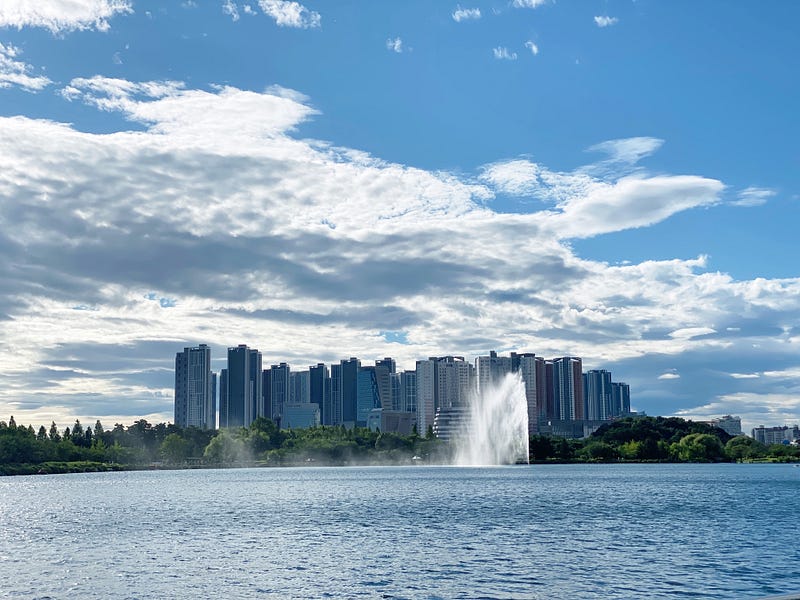
Photo by Seungwon Lee on Unsplash


Global trend

This move aligns with the global trend of increasing startup participation in exhibition shows. One notable example is the Consumer Electronics Show, a prominent annual tech trade show in the United States that features Eureka Park, an event for startups to showcase their products. With 1,340 startups participating this year, Eureka Park has been witnessing consistent growth in participation year after year.

Another instance is 4 Years From Now (4YFN), the startup event held during the annual mobile tech show, Mobile World Congress. 4YFN offers opportunities for over 2,000 startups to connect with potential buyers and investors.


Startup exhibition in November

In line with this global shift, KINTEX and Onoffmix aim to assist local startups in exhibiting their cutting-edge technologies, establishing connections with industry experts and investors, and participating in conferences and pitching events. One of their first such endeavors is the Digital Media Tech Show (DMTS) scheduled for November. DMTS will showcase innovative products in various tech areas such as metaverses, non-fungible tokens (NFTs), and blockchain. In addition to the exhibition, conferences will be held to facilitate knowledge sharing among startups regarding industry trends, business ideas, and investment opportunities.

Lyu Jaewon, the Chief Business Officer at KINTEX, said that this partnership will contribute to the convention center’s expansion of exhibitions and promotion of sustainable growth.

Onoffmix CEO Yang Joon-cheol highlighted the company’s commitment to collaborating with KINTEX to expedite the growth of local startups and support their expansion into overseas markets.


More to Read
View All
Policy & Regulation·

Sep 15, 2023

Singapore’s Regulator Imposes 9-Year Ban on 3AC Founders

Singapore’s Regulator Imposes 9-Year Ban on 3AC FoundersSingapore’s central bank and financial regulator, the Monetary Authority of Singapore (MAS), has handed down a nine-year prohibition order to Kyle Davies and Su Zhu, co-founders of the failed crypto hedge fund Three Arrows Capital (3AC).Photo by Swapnil Bapat on UnsplashSevere restrictionsThe penalty relates to alleged violations of the city-state’s securities laws. The prohibition order came into effect on Wednesday, carrying severe restrictions for Davies and Zhu.During this nine-year period, Davies and Zhu are prohibited from engaging in any regulated activities in Singapore. They are also barred from managing, serving as directors, or holding substantial shares in any capital market services business within the territory of Singapore.Loo Siew Yee, the Assistant Managing Director of Policy, Payments, and Financial Crime at MAS, emphasized the seriousness of the violations in a statement released by the central bank on Thursday. Yee stated:“MAS takes a serious view of Mr. Zhu’s and Mr. Davies’ flagrant disregard of MAS’ regulatory requirements and dereliction of their directors’ duties.” She further asserted that MAS would take action against senior managers who engage in such misconduct.Securities law violationsMAS’s decision to impose these sanctions on the 3AC co-founders was based on its findings of further securities law violations during investigations into 3AC and its founders. The regulatory authority accused Davies and Zhu of failing to inform MAS when 3AC hired a new business representative, providing false information to the regulator, and neglecting to establish an appropriate risk management framework.3AC’s troubles stemmed from the crypto market crash that occurred last year, triggered by the Terra ecosystem’s collapse. The hedge fund’s leveraged crypto positions exposed it to billions in loan defaults, resulting in significant financial losses. Its lack of risk management had a cascading effect in crypto. Lenders like Celsius and BlockFi had exposure to 3AC, leading to further collapses later in 2022 as a consequence.3AC’s creditors claim that the firm owes as much as $3.5 billion, and liquidators are now seeking to recover approximately $1.3 billion from Zhu and Davies, who allegedly incurred the debt when the firm was already insolvent.Regulatory reprimandsThis action by MAS follows last June’s reprimand of 3AC, which occurred just before the hedge fund filed for bankruptcy amid widely reported insolvency issues. At that time, MAS had criticized 3AC for providing false information, failing to report directorship changes involving Zhu and Davies, and exceeding the legal assets under management threshold.It’s just the latest reprimand the duo have received from a regulator this year, though. Zhu and Davies have been busy in trying to get another start-up off the ground. Earlier this year, they launched OPNX, a crypto bankruptcy claims trading platform. The venture is based out of Dubai, and the firm reported in April that it had gotten significant VC backing.Many of those that the company claimed were backing the venture disassociated themselves from those claims. The following month, the Dubai regulator, the Virtual Assets Regulatory Authority (VARA), reprimanded the OPNX founders, having issued an investor alert relative to the firm a few weeks prior to that. VARA's complaint was that the business had been operating without having acquired the appropriate licensing.

news
Policy & Regulation·

May 09, 2023

Bank of Korea Conducts Successful CBDC Pilot Test with Financial Institutions

Bank of Korea Conducts Successful CBDC Pilot Test with Financial InstitutionsThe Bank of Korea (BOK) announced yesterday in a press release that its central bank digital currency (CBDC) pilot program operated successfully in a practical setting involving multiple financial institutions.Testing environmentsPreviously, the CBDC system was tested in an isolated cloud environment. In this recent test, the system was installed on the servers of various financial institutions over a five-month period to evaluate its performance.The 1.2 billion KRW ($905,000) project included the participation of six companies, such as Kakao’s Krust Universe, KakaoBank, and KakaoPay, as well as 14 banks and the Korea Financial Telecommunications and Clearings Institute. Kookmin, Shinhan, and Woori were among the participating banks.Four scenariosThe BOK and financial institutions tested the system’s performance under four scenarios: increasing transaction requests per second, increasing the number of active users, reducing the transaction queue size, and adjusting the block generation time ratio.The increase in transaction requests led to a 10% decrease in transactions per second (TPS), from 2,100 TPS to 1,900 TPS, compared to the single cloud environment test. This result is still deemed acceptable, as the highest TPS recorded in the current small payment infrastructure network is 1,200, which occurs on paydays and other high-transaction days.Issues such as slower response times arose with higher transaction request volumes but were resolved by enlarging the transaction queue size and increasing the block formation time proportion in the block generation process. The block generation process involves two stages: block formation, where transactions are recorded, and block validation, where transactions are verified.Greater stabilityThe test demonstrated that transaction errors at individual institutions did not affect others, suggesting that a distributed ledger system offers greater management stability than a centralized system. However, institutional officers cited challenges in problem-solving and communication when using the distributed ledger system.The BOK plans to involve more institutions in ongoing experiments this year, supporting them in testing their smart contracts on the CBDC pilot system.Photo by Bundo Kim on Unsplash

news
Web3 & Enterprise·

May 29, 2023

Temasek Cuts Pay Following FTX Autopsy

Temasek Cuts Pay Following FTX AutopsySingaporean state-owned investment firm, Temasek Holdings, has announced a reduction in compensation for executives responsible for the company’s investment in the now-defunct cryptocurrency exchange FTX. Temasek, once the second-largest outside investor in FTX, faced scrutiny after the collapse of the exchange.Photo by Emilio Takas on UnsplashNo misconduct findingOn May 29, Temasek released a statement confirming the completion of its internal review of the $275 million investment loss incurred from FTX. The review determined that there was “no misconduct” within the company. However, both the investment team and senior management took “collective accountability” and experienced a reduction in their compensation.While acknowledging the inherent risks associated with any investment, Temasek emphasized the importance of continuing to invest in new sectors and emerging technologies to understand their potential impact on the business and financial models of existing portfolios. They recognized the need to adapt to an ever-changing world and explore avenues that could drive future value.It’s worth noting that the $275 million loss from the FTX investment constituted only 0.09% of Temasek’s portfolio value, which stood at over $293 billion at the time of the collapse.Temasek maintained that it conducted extensive due diligence before investing in FTX, emphasizing its commitment to a thorough review process. Chairman Lim Boon Heng stated in a May 29 interview with Bloomberg that there was fraudulent conduct intentionally hidden from investors, including Temasek. The negative outcome of the investment has been disappointing for the company and has had a significant impact on its reputation.Reputational damageSingapore Deputy Prime Minister Lawrence Wong echoed similar sentiments, highlighting the financial loss and reputational damage caused by the FTX collapse during a parliamentary meeting in November 2022.During the due diligence process, Temasek reviewed FTX’s financial statements, assessed regulatory risks related to financial service providers in the cryptocurrency market, and sought legal advice. The company also engaged with individuals who had firsthand knowledge of FTX, including employees, investors, and industry participants.In recent news, Temasek addressed and dismissed rumors about a $10 million investment in Array, a developer of algorithmic currency systems based on smart contracts and artificial intelligence. The company clarified that such reports were incorrect, refuting the circulating news articles and tweets.Temasek’s internal review process is certainly a move towards transparency and accountability. It indicates a willingness towards addressing the matter. That said, there are FTX creditor groups who fervently disagree with Temasek’s analysis.Class action lawsuitEarlier this year a number of FTX creditors filed a class action lawsuit against a number of venture capital (VC) firms, including Temasek. The FTX customers maintain that Temasek and others played a role in a conspiracy to defraud them. Venture capital firms have countered with the view that they themselves were victims as a consequence of the FTX collapse, suffering multi-million dollar losses.The fact remains that VCs get much further involved than merely handing over a check. They get involved with marketing, operations, and many other facets of the businesses of their portfolio companies. Meanwhile, other creditors suggest that Temasek has a responsibility to do right by the 1.4 million FTX creditors (a disproportionate number of them being Singapore-based) and to invest in a restructured FTX business, an option that represents the best opportunity for FTX customers to recover their funds.Temasek may have reached certain conclusions by way of their internal report on the matter but this is not likely to be the final analysis relative to its involvement in the fall of FTX.

news
Loading