Top

Regulatory Approval Sees Crypto.com Expand Services to Spain

Policy & Regulation·June 23, 2023, 11:41 PM

Singapore-based cryptocurrency exchange service provider Crypto.com has achieved a significant milestone by obtaining a virtual asset service provider registration from Spain’s central bank, the Bank of Spain.

The company announced the achievement via a statement published to its website on Friday. This regulatory approval grants Crypto.com the opportunity to offer a wide range of crypto-focused services to customers in Spain, a country that has recently shown a positive approach towards cryptocurrencies.

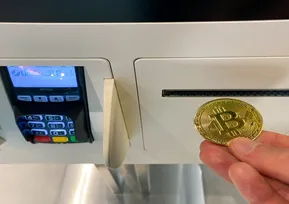
Photo by Pixabay on Pexels


Compliance review

In order to secure this approval, Crypto.com underwent a thorough review of its compliance with the Anti-Money Laundering Directive and ensured adherence to other financial crime laws. This recent regulatory success in Spain comes shortly after Crypto.com acquired a major payment institution license for digital payment token services from the Monetary Authority of Singapore, further cementing its position as a trusted and compliant player in the crypto industry.

Kris Marszalek, the CEO of Crypto.com, hailed the entry into the Spanish crypto market as a testament to the company’s commitment to compliance. He expressed enthusiasm about collaborating with the Bank of Spain and emphasized Crypto.com’s dedication to providing users with a comprehensive, safe, and secure crypto experience.


Global licensing accumulation

With the latest regulatory approval, Crypto.com establishes itself as a regulated platform in nearly a dozen countries. In addition to Spain, the company has obtained regulatory nods in prominent jurisdictions such as Singapore, France, the United Kingdom, Dubai, South Korea, Australia, Italy, Greece, and the Cayman Islands.

The journey of Crypto.com mirrors the growth trajectory of the crypto industry during the bull market of 2021–2022. Like many other crypto businesses, Crypto.com experienced remarkable expansion, forming strategic partnerships with mainstream entities and gaining regulatory approvals across multiple jurisdictions. One notable achievement was Crypto.com securing the naming rights to the renowned Staples Center in Los Angeles, a multipurpose arena that hosts a wide range of public events, including boxing and basketball competitions.


Market challenges

However, the recent bear market presented challenges for the platform. Decreased demand resulted in business difficulties, leading Crypto.com to make the strategic decision to close its institutional platform in the United States in early June.

Earlier this week, the company garnered adverse publicity when it was found that it has been using an internal market maker to trade against its own customers. Despite this setback, Crypto.com remains resolute in its mission to expand its presence and offer crypto services in new markets.

The regulatory approval in Spain marks a significant step forward for Crypto.com’s global expansion plans. As the crypto industry continues to evolve, regulatory compliance plays a pivotal role in building trust.

The development of digital assets has proven to be imperfect. Crypto.com’s experience appears to mirror that reality. Notwithstanding the market difficulties that the firm has experienced and some occurrences that serve to blemish its record, successfully obtaining regulatory approval in Spain is still a positive step for the company in further establishing itself as a global player in the retail crypto domain.

More to Read
View All
Web3 & Enterprise·

Aug 07, 2023

Klip Wallet’s WalletConnect Integration Includes Access to OpenSea NFTs

Klip Wallet’s WalletConnect Integration Includes Access to OpenSea NFTsGroundX, a blockchain subsidiary of the South Korean messaging app behemoth Kakao, has announced that its digital asset wallet, Klip, now supports WalletConnect, a protocol that enables seamless connections between mobile cryptocurrency wallets and decentralized applications (dApps).Photo by Mariia Shalabaieva on UnsplashAccess to OpenSea and beyondThis integration brings new benefits to Klip users, as they can now easily access various platforms, including the popular non-fungible token (NFT) marketplace, OpenSea. With WalletConnect, users can efficiently manage a wider range of digital assets, making their experience more comprehensive and convenient.PC and mobile compatibilityAnother advantage of Klip’s adoption of WalletConnect is that both PC and mobile users can now access Klip and other blockchain services through this protocol. This ensures a smooth user experience across different devices, allowing for greater accessibility and flexibility.GroundX’s expansion effortsGroundX has been working on improving Klip’s functionality and services. Recently, it forged a partnership with the 1inch Network, a decentralized finance (DeFi) aggregator that offers competitive token swap rates on various decentralized exchanges, enhancing Klip’s token exchange capabilities. Thanks to this collaboration, Klip users can not only exchange Klaytn-based tokens but also tokens based on the Ethereum and Polygon blockchains. This expanded compatibility adds further value to the Klip wallet, empowering users with more options and opportunities for managing their digital assets efficiently.A spokesperson from GroundX emphasized that these recent enhancements in the Klip wallet will enhance its usability and convenience for users. The spokesperson added that the inclusion of various NFTs and DeFi assets within Klip through WalletConnect will lead to the expansion of the Klip wallet’s ecosystem.

news
Web3 & Enterprise·

Sep 08, 2023

Grab Turns to Web3 With Crypto Wallet Integration

Grab Turns to Web3 With Crypto Wallet IntegrationGrab, the Singapore-headquartered Asian ride-hailing firm with a user base of 180 million people, is integrating a crypto wallet into its platform.That’s according to Chinese crypto reporter Colin Wu. Wu tweeted out news of the development on Thursday, including screenshots which he had obtained that provide further detail relative to Grab’s Web3 wallet.Often dubbed the “Uber of Southeast Asia,” Grab’s foray into Web3 technology could reshape how the region engages with cryptocurrencies. This move, initially available in Singapore, aligns with the city-state’s reputation as a fintech leader and developing crypto hub, suggesting it may serve as a testing ground for Grab’s crypto integration.Photo by Afif Ramdhasuma on UnsplashPolygon wallet integrationOne pivotal aspect of this integration is Grab’s support for the Polygon wallet, a layer-2 scaling solution for Ethereum. Known for its speed and low transaction fees, Polygon aids Grab’s venture into crypto, as these characteristics feed into its practicality for everyday crypto transactions. This strategic choice aims to make cryptocurrencies more accessible and usable for the masses.Venturing beyond paymentsIt seems like Grab’s ambitions extend beyond basic cryptocurrency payments. It is also setting the stage for users to explore non-fungible tokens (NFTs) and blockchain technology. The company has provided guidance content for wallets and NFTs which would suggest that Grab’s vision goes beyond mere transactions and that it sees the potential for NFTs in terms of transforming digital ownership and other such use cases.The Web3 wallet stands out in terms of user experience. Unlike traditional crypto wallets that are reliant on private keys, Grab employs a PIN password system. This simplifies the crypto experience. This is of particular importance when it comes to trying to find ways to bring Web3 and crypto into everyday use by the mass market.Additionally, Grab introduces an account recovery system based on questions and answers, in an effort to strike a balance between security and convenience.MAS collaborationAs part of the firm’s journey into Web3, it has been collaborating with the Monetary Authority of Singapore (MAS), the city-state’s central bank and financial regulator. Together, they’ve explored digital assets, central bank digital currencies, and innovative payment systems, and it also indicates that the company is working towards including a Web3 offering while remaining in regulatory compliance.According to the company’s Q2, 2023 results, Grab records an average of 34.9 million monthly transactions.By integrating a user-friendly crypto wallet, supporting Polygon, and exploring NFTs, it appears that Grab is aiming to empower its massive user base to participate in the digital asset revolution. With Singapore as the initial launchpad, Grab’s Web3 journey holds the potential to influence how the entire region embraces cryptocurrencies.In simplifying crypto access, supporting innovative technologies like Polygon, and educating users about NFTs and blockchain, the Singaporean firm is paving the way for a more inclusive and decentralized financial future in the region.

news
Policy & Regulation·

Sep 30, 2024

MiCA may force crypto firms into Middle East relocation

The European Union (EU) introduced its Markets in Crypto Assets (MiCA) regulation in June of last year, refining the EU bloc’s stance relative to digital assets. However, one crypto sector entrepreneur believes that the regulatory framework may force crypto startups to relocate to the Middle East. In an interview with Cointelegraph, Anastasija Plotnikova, co-founder and CEO of Fideum, a blockchain infrastructure company geared towards institutions, outlined that the application of this regulatory framework by EU member states may have some unintended consequences.Photo by Christian Lue on UnsplashCentralization concernsWhile Plotnikova welcomes the legitimization of crypto through regulation as a net positive for the sector, she warns that this particular regulatory framework could lead to consolidation among crypto firms. That would mean a reduction in the overall number of Web3 enterprises in Europe and as a consequence, increased risk of centralization in an industry that is supposed to be all about decentralization. Whilst the regulatory framework was introduced last year, it's not due to go into full effect until Dec. 30, 2024. Plotnikova believes that the framework doesn’t give crypto startups the wriggle room to scale whereas in the case of larger entities with much more assets under management, they will find it much easier to scale. French multinational financial services company Societe Generale, an entity with around $160 billion worth of assets under management and 126,000 employees, stands out as an example. It recently announced that SG Forge, a subsidiary company, would partner with Austrian crypto exchange Bitpanda to issue and list its EUR ConVertible (EURCV) euro-denominated stablecoin. Another European TradFi behemoth, Landesbank, Germany’s largest federal bank, announced earlier this year that it will launch crypto custody services. Global competitionSpeaking to the publication on the margins of the European Blockchain Convention in Barcelona earlier this week, Plotnikova stated: “I'm afraid it will lead to consolidation between European and American companies, and they will just move somewhere to the Middle East. The European Union had has done amazing things in harmonising legislation, but enforcement comes down to local and national authorities and they vary greatly.” There’s no doubt that various world centers and regions have been competing to varying extents to become innovative hubs relative to the development of blockchain-based enterprises. Plotnikova alluded to Europe losing out to the Middle East in this instance and principal among those nations in the region vying for a share of the business has been the United Arab Emirates (UAE).  The UAE itself, together with individual emirates such as Abu Dhabi and Dubai, has been putting in place a regulatory framework relative to crypto that has been broadly praised by the crypto sector. As recently as earlier last week, the Dubai regulator continues to fine tune its regulatory framework, tightening up requirements related to the marketing of crypto products and services. A recent report by Chainalysis found that the Middle East region accounted for 7.5% of global crypto trading volume, with the UAE and Saudi Arabia having been found to demonstrate a strong interest in decentralized platforms. 

news
Loading