Top

Spotlight on Daegu as Blockchain Strategy Forum Approaches

Policy & Regulation·May 12, 2023, 4:33 AM

The 2023 Blockchain Strategy Forum is set to take place in the South Korean city of Daegu on May 26, according to an announcement from crypto exchange operator Flata EX.

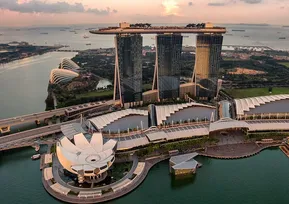
Photo by Shubham Dhage on Unsplash


Discussing strategic initiatives

The conference, jointly hosted by the city’s industry promotion institute Daegu Technopark, local newspaper Daegu Shinmun, and Flata EX, will invite leading experts from the blockchain industry to discuss strategic approaches and initiatives related to blockchain technology.


Incorporating blockchain

The primary focus of the conference will be to deliberate upon development and promotion strategies that can contribute to the growth of the Daegu economy. Special emphasis will be placed on discovering strategies for integrating blockchain technology into areas such as environmental, social, and governance (ESG) management, and administrative processes, thereby fostering a culture of innovation.


Diverse panel of experts

A diverse mix of participants from academia, legal, and government sectors are expected to attend the event, engendering a comprehensive dialogue on the subject. Key attendees will include Hwang Suk-jin, Chairman of the Korean Association for NFT; Jeong Jae-wook, a digital assets attorney at Joowon Law; and Ryu Dong-hyun, the head of Daegu City’s AI and Blockchain Department Division.


Beyond virtual assets

An official from Flata EX told Korea Economy TV that the upcoming forum will offer valuable insights into how blockchain technology can foster innovative work environments. The official added that the discussion will extend beyond the blockchain’s usage in virtual assets and delve into its potential to transform administrative systems and procedures.
More to Read
View All
Policy & Regulation·

Aug 29, 2023

OKX and Bybit Exclude Sanctioned Russian Banks from P2P Services

OKX and Bybit Exclude Sanctioned Russian Banks from P2P ServicesIn response to the mounting pressure on crypto firms to improve general compliance standards, prominent digital asset exchanges OKX and Bybit, based in the Seychelles and Dubai, have decided to delist sanctioned Russian banks from their peer-to-peer (P2P) services.Photo by Eduardo Soares on UnsplashThe move by the two exchange platforms, brought to light by Russian media reports, comes just days after Binance had done the same.Tinkoff Bank and Sberbank, two significant Russian financial institutions, have been expunged from the P2P platforms of OKX and Bybit. This effectively removes the option for Russian crypto users to exchange their assets for fiat through these banks. The decision sees the exchanges fall into line with Western sanctions imposed on the banks due to Russia’s actions in Ukraine.Enforcement difficultiesWhile the removal of these banks from the platforms is a significant step, the nature of P2P transactions introduces complexities in enforcing such bans comprehensively. Reports indicate that certain users are still engaging in P2P transactions with these banks through private channels, showcasing the challenges in regulating this decentralized method of exchange.In the case of OKX, at the time of publication, the platform still allows Russian users to receive fiat through accounts held with the Russian Standard Bank and the Russian branch of Raiffeisen Bank.This action aligns OKX and Bybit with Binance, which faced a similar scenario last week. Binance came under scrutiny when it continued to list the sanctioned banks as part of its payment methods. Following a report by The Wall Street Journal, Binance eventually removed the banks from its platform.Binance’s compliance effortsA spokesperson from Binance conveyed that while the banks have been delisted, the company remains committed to ensuring compliance by continuously updating its systems.“We regularly update our systems to ensure compliance with local and global regulatory standards,” they said. “When gaps are pointed out to us, we seek to address and remediate them as soon as possible.”Despite this stance and the latest action it has taken, users on Binance’s P2P platform are still posting ads for the sale of crypto using the “green bank,” referring to the sanctioned banks, as the preferred method of payment.Western-imposed sanctions have led to significant economic challenges in Russia, pushing individuals and institutions towards cryptocurrencies as a potential solution. In a country that has previously banned private cryptocurrencies, the attraction of decentralized digital assets has grown stronger as a means to break through the sanctions-induced financial stranglehold.Sanctions impactReports from Russian financial institutions reveal dramatic declines in profits, some as high as 90%, as they find themselves cut off from the global payments network SWIFT. Tinkoff Bank, for instance, reported a substantial decline of 67% in the second quarter of 2022, attributing the drop to escalating global tensions.In April, the Bank of Russia introduced a bill that could potentially allow cryptocurrencies to be used in international trade, a measure aimed at mitigating the impact of sanctions. While this could potentially open doors for cross-border transactions involving cryptocurrencies, the restrictions on local transactions remain intact.

news
Web3 & Enterprise·

Jul 07, 2023

Circle Considers Issuing Stablecoin in Japan

Circle Considers Issuing Stablecoin in JapanCircle, the US-headquartered payment services company and stablecoin issuer, is considering issuing a stablecoin in Japan following the implementation of new regulations on stablecoins.Jeremy Allaire, Co-Founder and CEO of Circle, expressed his interest in exploring partnerships in Japan due to the significant potential of the market under the new rules.Photo by Su San Lee on UnsplashGrowing importance of stablecoinsIn an interview with CoinDesk Japan recently, Allaire highlighted the growing importance of stablecoins in cross-border trade, foreign currency transactions, and global commerce. He believes that Japan, with its recently established framework for the use of overseas stablecoins, has positioned itself as a pioneering country in this regard. Allaire described the stablecoin bill as the Japanese government’s and the Financial Services Agency’s most significant achievement.The revised Payment Services Act in Japan recognizes stablecoins backed by legal tender as an “electronic payment method” and allows for their issuance. However, stringent rules are in place for stablecoin issuers.These include the requirement for stablecoins to be pegged to the yen or other legal tender and the guarantee of redeemability at face value for holders. Only licensed financial institutions, such as banks, registered money transfer agents, and trust companies, will be authorized to issue stablecoins.Breaking into AsiaAllaire emphasized Circle’s interest in establishing partnerships within Japan, a country he recently visited. Circle has already obtained a Major Payment Institution (MPI) license in Singapore, enabling the company to offer various digital payment services, cross-border money transfers, and domestic money transfer services.The Japanese market has witnessed major financial institutions exploring stablecoin initiatives. Mitsubishi UFJ Trust and Banking Corporation (MUFJ), for instance, announced its plans to launch its own stablecoin platform named Progmat last month. MUFJ also entered into a partnership with Japanese blockchain interoperability solutions provider, Datachain, recently. It’s thought that the move will facilitate both parties in undertaking further work on stablecoin-related initiatives.Circle’s consideration of issuing a stablecoin in Japan underscores the company’s recognition of the country’s regulatory advancements and the potential for stablecoin adoption. As stablecoins gain further traction globally, Japan’s new framework positions it as an important market for Circle and other players in the industry.It’s not just Japan that highlights the need for further stablecoin development. A new policy proposal was published in Hong Kong earlier this week that made a point of urging the Hong Kong authorities to issue its own Hong Kong dollar-backed stablecoin.The objective of such an initiative would be to compete on an international basis with leading US dollar stablecoins such as Circle’s USDC and USDT/Tether. By being proactive in the Asia-Pacific (APAC) region, Circle could head off rising potential challenges such as that suggested by these stablecoin researchers in Hong Kong.The partnership opportunities in Japan align with Circle’s mission to facilitate efficient and secure digital transactions, and it will be intriguing to observe how the company navigates this emerging landscape in the months to come.

news
Web3 & Enterprise·

Oct 12, 2023

CarrieVerse Token CVTX Listed on BingX

CarrieVerse Token CVTX Listed on BingXBlockchain-based Web3 metaverse platform CarrieVerse has recently listed its native token CVTX on the cryptocurrency exchange BingX.Photo by m. on UnsplashMultipurpose tokenBuilt on Polygon, CVTX is integrated into the tokenomics ecosystem of CarrieVerse and its card strategy role-playing game (RPG) SuperKola Tactics. It is also the governance token for the CarrieVerse blockchain gaming platform Cling. It is currently tradable on other international exchanges in addition to BingX, such as Gate.io, MEXC Global, BitMart, and ProBit Global, as well as the Korean exchange GOPAX. CVTX can be traded for USDT on all of the above exchanges except for GOPAX, which offers a CVTX/KRW pair. KRW stands for Korean won.“CVTX has expanded its global presence one step further. We will continue to strive for market expansion through listings on leading exchanges, building on the excitement inspired by gaming and staking,” said David Yoon, CEO of CarrieVerse.About BingXFounded in 2018, BingX is a Singapore-based digital asset exchange that offers spot derivatives, copy trading, and grid trading services to over five million users across 100 countries worldwide. Its spot trading volume over the past 24 hours at the time of publication, according to recent data from CoinMarketCap, stands at $602 million. Notably, it allows for easy transfer of assets between Korean exchanges Bithumb and Coinone, having passed their Travel Rules requirements last year.

news
Loading