Top

Animoca Brands Holding $3.4B in Cash and Reserves

Web3 & Enterprise·May 12, 2023, 12:44 AM

Digital entertainment, blockchain and gamification firm Animoca Brands provided an update on its financial position on Thursday, disclosing $3.4 billion in cash and assets as held on its balance sheet and in tokenized reserves as of April 30.
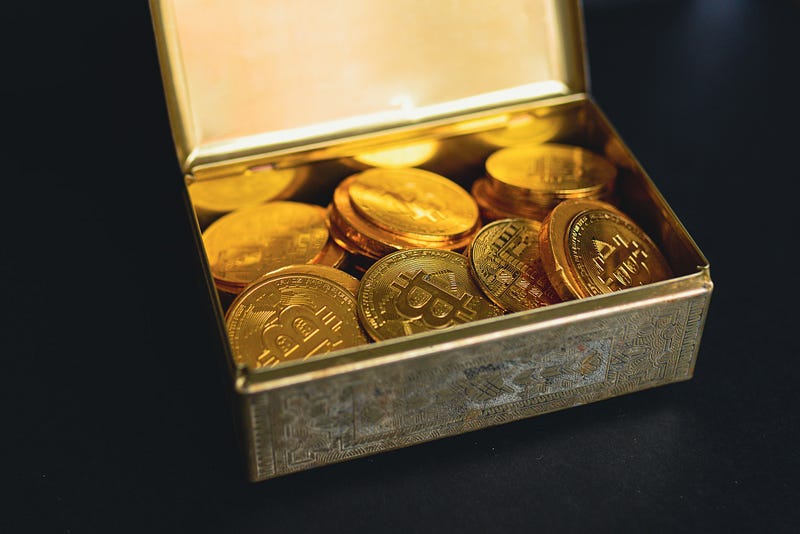
Photo by regularguy.eth on Unsplash


A financial breakdown

The Hong Kong-based Web3 firm published the interim financial report to its website. Breaking that down further, the company is holding $194 million in cash and stablecoin reserves. Additionally, $566 million is being held in liquid digital assets. This includes reserves of $SAND, the native token of the Ethereum-based Sandbox virtual metaverse.

Beyond this, Animoca holds $2.7 billion in a varied portfolio of digital asset reserves, linked to its majority owned Web3 subsidiaries and portfolio companies. The firm outlined that it intends to release additional financial updates in the near future. That will include an audited financial statement for 2020. Furthermore, a summary statement of business activity for 2022 will be released, together with similar business highlights pertaining to Q1, 2023.


Adjusting to changing market conditions

It’s likely that Animoca took the decision to release this data at this point to bolster confidence in the company, off the back of a number of announcements that may have led some in the industry to question the overall financial health of the company.

According to a report published in March by Reuters, Animoca Brands cut its target for its metaverse fund by 20% to $800 million. The scaling back was understood by many crypto sector commentators to be a reaction by the company due to changing market conditions within the crypto space. It was the second such adjustment the company made. In November 2022, the firm was working on the new fund, initially proposing a target of $2 billion. Once January came around, Animoca took the decision to scale that target back by half to $1 billion.

Subsequent to reports of the fund scale-back being published, Animoca Brands CEO Yat Siu reacted, telling one crypto media outlet that “the claim that the Animoca Capital fund target was ‘cut’ from $2 billion to $1 billion is not correct, because $1 billion has always been within the range declared.”

Playing down the news further, the company added: “There’s no doubt that the FTX and banking crises have had a serious impact on available venture capital, but fundraising for the Animoca Capital fund is in progress. When the raise is concluded, we will inform the market with the appropriate details, including the final size of this fund.”

Siu stated that as the source of that report was an unnamed source, it was difficult to figure out the agenda of that person in broadcasting that claim.

Animoca is perceived in the industry as a key player, particularly so when it comes to NFTs, blockchain-based gaming and the metaverse. The firm is classed as a Crypto Top 40 company by Forbes, while being a winner of Deloitte’s Technology Fast 50 award. Deloitte’s Technology Fast 50 program ranks fast growing companies based upon their percentage revenue growth over the course of three years.

More to Read
View All
Web3 & Enterprise·

Jan 24, 2024

Seoul Labs’ Web3 launchpad SLUSH attracts investors

South Korean blockchain solutions provider Seoul Labs has released SLUSH, an innovative launchpad built on its SASEUL blockchain designed to streamline and enhance the Web3 experience, according to a post on CoinMarketCap on Tuesday (KST).Photo by Shubham's Web3 on UnsplashPromoting sustainable ecosystem growthSeoul Labs explained that SLUSH is a solution to the setbacks of existing Web3 services and the difficulties that come with providing a comprehensive experience. As a hub within the SASEUL ecosystem, the launchpad allows users to access and manage a variety of services on a single platform. It will also serve as a medium for finding and supporting groundbreaking Web3 projects, offering safe and attractive investment opportunities in response to the current challenges posed by limited investment options and instabilities in digital asset trading. With a focus on long-term growth, SLUSH is designed to present users with tangible projects within the SASEUL ecosystem. Token sale successSLUSH is already off to a strong start, selling out one million SL tokens – Seoul Labs’ native token – in just 3 hours during its first pre-sale round on Jan. 16 and demonstrating investors’ interest in the service. The next round opened yesterday at an exchange rate of 1 SL to 0.1 USDT. Although the results have not been disclosed yet, if the second round also yields one million sold tokens, Seoul Labs will initiate a third. These pre-sales are expected to pave the way for onboarding various Web3 products and services onto the launchpad. The Seoul Labs team emphasized its commitment to funding blockchain projects, particularly dApps and Web3 projects, on SASEUL, thereby expediting their entry into the market. As the ecosystem’s growth accelerates, the team also plans to implement features like token swaps, NFTs and more.

news
Web3 & Enterprise·

Jan 29, 2024

Label Foundation to launch Web3 music streaming platform on LG Smart TVs

The Label Foundation is working with global electronics conglomerate LG Electronics to rollout its Web3 music streaming service, Tracks, on LG Smart TVs, according to an article by Bitcoinist on Monday (KST). The platform’s TV app will be available for free on the latest LG Smart TV models that support webOS22 and 23.Photo by Blaz Photo on UnsplashReinvented music streamingTracks is a music streaming service that allows users to enjoy free high-quality music and artistic visuals through their TVs. The platform leverages Web3 technology to offer a variety of rewards based on the amount of time spent listening. In particular, the Label Foundation aims to make Tracks easily accessible to Web2 users around the world to serve as a bridge between Web2 and Web3. “With the upcoming launch, numerous TV owners will be able to enjoy music for free, which resonates deeply with Label’s ethos, championing universal music accessibility without financial boundaries. We are happy that our collaboration with LG Electronics made this a reality,” Label Foundation said. Rapid riseSince its launch in July, Tracks has gained substantial popularity among younger generations, with its mobile app amassing over 150,000 users worldwide and more than 10,000 daily active users. The Label Foundation attributes this success in user acquisition to its user-centered approach, as opposed to the content provider-centered approach of traditional music streaming services.  As part of its monetization efforts, Tracks will also integrate a free advertising supported streaming television (FAST) service in the near future, which will allow users to access content like television programming and films without subscription fees.

news
Web3 & Enterprise·

Oct 27, 2023

Bithumb and Korbit Struggle to Gain Traction Despite Zero Trading Fees

Bithumb and Korbit Struggle to Gain Traction Despite Zero Trading FeesSouth Korean cryptocurrency exchanges Bithumb and Korbit have recently eliminated trading fees, but their bold decision hasn’t yielded much results. Bithumb was the first to implement this change and attracted users for about a week, but it is now seeing a loss in market share. Korbit, following Bithumb’s example, is also struggling to achieve meaningful outcomes.Photo by Alexander Grey on UnsplashLimited impactLocal media outlet Chosun Biz used data from crypto data platform CoinGecko to draw this conclusion. On October 26, Korbit’s daily trading volume represented 0.19% of the total trading volume among South Korea’s top five crypto exchanges (Upbit, Bithumb, Coinone, Korbit, and Gopax). This figure marked a 0.14 percentage point increase compared to the 0.05% recorded on October 19. Korbit had implemented a zero trading fee policy at 9 a.m. (KST) on October 20. Additionally, they launched a promotion offering KRW 5,000 ($3.69) worth of bitcoin to users who transferred virtual assets totaling KRW 1 million or more from Travel Rule-compliant exchanges to Korbit. While the promotion did contribute to Korbit’s market share, it still remains below 1%.Bithumb’s performance showed some improvement, albeit briefly. As of October 26, Bithumb’s market share stood at 18%, marking a 4.7 percentage point increase from its 13.3% share on October 3, the day before it eliminated trading fees. However, it’s worth noting that its market share had reached almost 30% shortly after the promotion’s launch. This indicates that its strategy is losing efficacy over time.The less-than-enthusiastic results from their daring marketing endeavors can be attributed to their inability to draw in retail investors. To begin with, Upbit, the leading player in the market, had already been providing a relatively low fee of 0.05%. Furthermore, adapting to new user interfaces on these exchanges posed a challenge. Zero trading fees weren’t attractive enough for crypto investors to leave their current platforms.Trading volume mattersIn the case of Korbit, its lower trading volume was a disadvantage when it came to attracting users. On crypto exchanges, a higher trading volume typically translates to faster trade executions. As a result, users of Korbit might experience delays in executing trades at their preferred price.Jeong Hye-won, a research associate at crypto data analytics platform Xangle, told Chosun Biz that users on exchanges with lower trading volumes tend to experience slippages due to slower transaction speeds and sparsely populated order books. A slippage means the difference between the initially placed order price and the executed order price. Jeong further explained that Korbit’s zero trading fee policy didn’t have a significant impact because it offers fewer listed tokens compared to Upbit and Bithumb.There is speculation that the free-trading fee promotions introduced by Bithumb and Korbit, despite their revenue sacrifices, might conclude sooner than initially anticipated due to their perceived ineffectiveness. Bithumb derives 99.95% of its revenue from trading fees, while Korbit relies on trading fees for 99.79% of its income. An industry insider has commented that trading fees play a vital role in an exchange’s revenue, and given Bithumb’s reported loss in earnings during the second quarter, there are concerns about their capacity to sustain this strategy.

news
Loading