Top

Buysell Standards and AGST collaborate to expand security token projects in Southeast Asia

Web3 & Enterprise·December 22, 2023, 4:02 AM

Buysell Standards, a South Korean company operating fractional investment platform Piece, is accelerating its expansion into the Southeast Asian market through a recent business collaboration.

A report from Korean news outlet Financial News indicates that the company has signed a memorandum of understanding (MOU) with AGST, a subsidiary of blockchain-focused investor Fundiant Holdings. This collaboration aims to launch security token projects within the Association of Southeast Asian Nations (ASEAN) region.
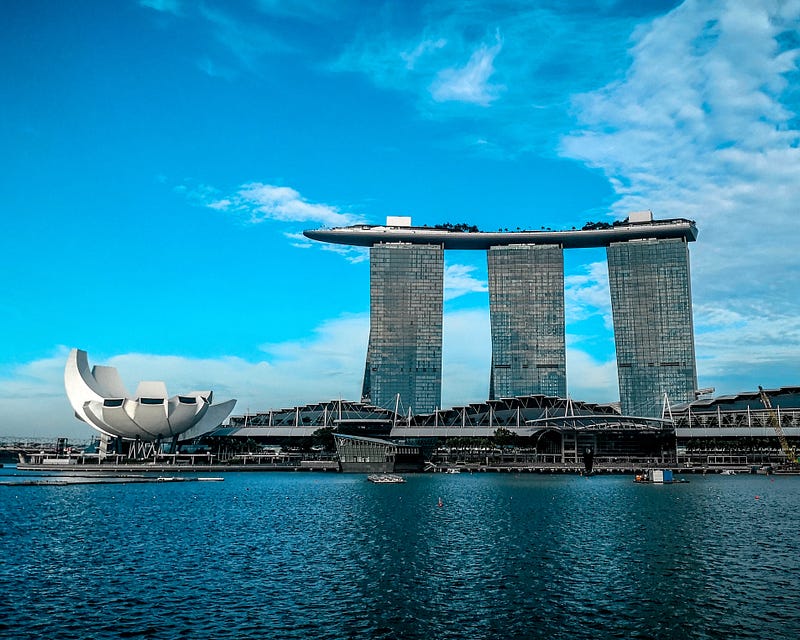
Photo by Kelvin Zyteng on Unsplash


Singapore in Q1 2024

As an asset manager in Singapore and Japan, AGST is set to play a pivotal role in the issuance and distribution of security tokens in these markets. Their strategy includes launching security token products in Singapore in the first quarter of next year. These products will be backed by assets from Buysell Standards.

The partnership between Buysell Standards and AGST is set to be multifaceted, encompassing several key areas of collaboration. Together, they will focus on developing new investment products and building the necessary infrastructure to support them. They will also focus on marketing and promotional efforts in the ASEAN region.


Anticipating regulatory exemption

Buysell Standards is among the seven companies that received approval from the South Korean Financial Services Commission to issue security tokens. The company is anticipating a regulatory exemption from the government, which would allow them to introduce fractional investment products linked to ship finance.

Buysell Standards expects that its partnership with AGST will facilitate quicker access to funding from international sources for high-quality investment products in South Korea. Meanwhile, AGST seeks to introduce a range of Korean assets to the global security token market.

Emphasizing the quick adoption of fintech by ASEAN investors and their fondness for South Korea, Shin Beom-jun, CEO of Buysell Standard, stated that the company is committed to actively promoting Korean security token products on the global investment stage.

Kim Chang-soo, Chairman of Fundiant Holdings, expressed his ambition to strengthen the Korean security token market. He observed that the market is currently in an early stage of development, leading to the undervaluation of underlying assets. He believes that introducing Korean security tokens to international markets will reciprocally aid in the expansion and maturation of the domestic market.


More to Read
View All
Policy & Regulation·

Aug 31, 2023

Report: Vietnamese Crypto Investors Rely Heavily on Referrals

Report: Vietnamese Crypto Investors Rely Heavily on ReferralsWhile Vietnam has been leading the way in terms of cryptocurrency adoption among ordinary people, the decision-making process of Vietnamese crypto holders also sets them apart, according to a new report.The report, a collaboration between Vietnamese venture capital firms Kyros Ventures and Coin68, in association with Hong Kong-based Web3 firm Animoca Brands, reveals a striking trend. 76% of Vietnamese crypto holders base their investment choices on recommendations from friends and acquaintances.Photo by Silver Ringvee on UnsplashThe importance of referralsReleased on Wednesday, the report relied upon a survey involving 3,300 participants. A staggering 75.5% of respondents admitted that their crypto investment decisions were significantly “influenced by recommendations or referrals.” This figure stands at 2.5 times the equivalent percentage reported in the United States.Aside from word of mouth, Vietnamese crypto investors rely heavily on self-study, community groups, and media news as primary sources of information relative to crypto. Nearly 50% of survey participants indicated their reliance on these methods for staying informed about the crypto market.Market sentimentThe “Vietnam Cryptocurrency Market Report” for the first half of 2023 also sheds light on the sentiments of the crypto community. It indicates that 70% of survey participants believed that the bear market has already concluded or is approaching its end.Notwithstanding that, another data point could be interpreted such that market participants are still exercising an abundance of caution. Around 60% of respondents confirmed that they hold stablecoins as a significant constituent of their portfolios. Stablecoins are widely used by traders when exercising risk-off positioning.Interestingly, another finding of the report is the fact that an overwhelming 75% of respondents expressed a desire for increased regulatory intervention within the crypto sector. It’s unlikely that this is coincidental, given the number of high-profile crypto platform failures that took place in 2022.Vietnam leading adoptionChainalysis data confirms Vietnam’s dominant position globally in terms of crypto adoption and its impressive second-place ranking in decentralized finance (DeFi) adoption. Remarkably, more than 19% of adults in Vietnam own digital assets while Vietnam ranks among the top five countries when it comes to trading volume on global crypto platform Binance.However, this level of adoption stands in contrast with the limited educational infrastructure supporting it. Only nine educational institutions in the country offer blockchain courses.The survey also probed into user behavior within various crypto domains. The findings show a significant engagement in DeFi activities, with nearly 90% of respondents participating. By the end of 2022, there were in excess of 200 active blockchain projects in operation within Vietnam.GameFi, non-fungible tokens (NFTs), centralized finance (CeFi), and SocialFi are also popular among the Vietnamese crypto community, with engagement rates of between 55% and 91%. The research also found that users maintain a balanced preference between centralized and decentralized exchanges.The report concludes by highlighting the rapidly evolving local tech landscape and its synchronization with global trends. Largely, the report points to a positive sentiment in Vietnam relative to the future of cryptocurrency and Web3 innovation in the country.

news
Policy & Regulation·

Jul 18, 2023

MAS Offers Guidelines for Banks Handling Crypto-Related Clients

MAS Offers Guidelines for Banks Handling Crypto-Related ClientsThe Monetary Authority of Singapore (MAS) has released a comprehensive set of guidelines to assist banks in managing clients who are involved in digital assets, such as cryptocurrency exchanges or individuals whose wealth is derived from cryptocurrencies.Photo by Meriç Dağlı on UnsplashIndustry working groupAccording to a report in local media source, The Straits Times, these non-mandatory guidelines, developed by an industry working group, aim to provide best practices for financial institutions to address concerns related to money laundering, terrorism financing, and sanctions risks associated with cryptocurrencies.The working group suggests that enhanced due diligence may be necessary for firms closely connected to facilitating crypto transactions. For instance, conducting site visits or walk-throughs of a client’s anti-money laundering and anti-terrorism financing processes and controls could be required.During the onboarding process, banks should request information documenting the customer’s crypto exposure and the intended usage of the account. Additionally, banks are advised to establish the source of the client’s funds or wealth.To evaluate the regulatory status of a merchant customer’s crypto-related counterparties, especially if they contribute significantly to the merchant’s transactions, banks should conduct thorough assessments.The working group also highlights the use of blockchain screening tools to review the on-chain activity of digital token payment service providers. Regular screening of new and existing wallet addresses owned or controlled by these providers against the sanctions list and designated wallets is also recommended.Comprehensive guidelinesLoretta Yuen, Head of Legal and Compliance at Oversea-Chinese Banking Corp (OCBC), a Singapore-headquartered bank, describes the guidelines as one of the most comprehensive in the world, providing insights into banks’ management of crypto-related money laundering, terrorism financing, and sanctions risks.She believes the guidelines will raise awareness among prospective customers regarding the key risk considerations banks prioritize and enable customers to proactively fulfill banks’ customer due diligence requirements during the onboarding process.Evy Theunis, DBS Bank’s Head of Digital Assets, views the guidelines as a codification of best practices across the industry, aligning with the bank’s existing protocols. United Overseas Bank (UOB) also acknowledges the benefits of the best practice paper, particularly given the diverse range of digital assets with varying levels of risk.Eight participating banksThe working group responsible for developing these guidelines includes representatives from eight banks, MAS, the Commercial Affairs Department, and Big Four audit firm Ernst & Young. Formed in August 2022 under the anti-money laundering and countering the financing of terrorism industry partnership (ACIP), the group aims to identify, assess, and mitigate money laundering and terrorism financing risks in Singapore through a collaborative private-public partnership involving the financial sector, regulators, law enforcement agencies, and other government entities.Singapore is vying to establish itself as a hub for digital asset business in Asia, alongside other centers such as Hong Kong. The Chinese autonomous territory has been making greater progress over the course of the past year.However, a report in The Wall Street Journal on Monday suggests that banking remains a difficulty for crypto businesses in Hong Kong. Hong Kong’s difficulty may be Singapore’s opportunity, given the work that this working group has carried out in smoothing the way for the banking of digital asset-related businesses.

news
Policy & Regulation·

Oct 04, 2023

Hong Kong’s Development as Crypto Hub May Soften Chinese Stance on Crypto

Hong Kong’s Development as Crypto Hub May Soften Chinese Stance on CryptoHong Kong is making waves in the crypto sector that could potentially signal a shift in China’s attitude toward digital assets. That’s a theory that has been given consideration by crypto analytics firm Chainalysis in a recently released report highlighting Hong Kong’s crypto transformation and suggesting a growing tolerance for crypto within China’s corridors of power.Photo by farfar on UnsplashOTC trade showing resilienceDespite China’s stringent regulations and the ongoing crypto market downturn, Hong Kong’s over-the-counter (OTC) crypto market has demonstrated remarkable resilience, with a transaction volume of $64 billion in the past year. While this is slightly less than China’s $86.4 billion, it’s a noteworthy achievement considering Hong Kong’s smaller population and the challenges facing the crypto industry.The close relationship between China and Hong Kong has led some industry commentators to speculate that Hong Kong’s rise as a crypto hub could indicate a shift in China’s stance on digital assets.The crypto-friendly environment in Hong Kong has not gone unnoticed. Merton Lam of Crypto HK, an OTC digital asset trading center in the city, notes that cryptocurrencies have become an integral part of investment portfolios for banks, private equity firms, and high-net-worth individuals in the region. Even Chinese state-owned businesses are launching cryptocurrency-focused investment funds.Hong Kong cornering institutional tradeWhat sets Hong Kong apart in the crypto landscape is its proficiency in large institutional crypto transactions, with 46.8% of its annual crypto trades exceeding $10 million. In contrast, retail trades under $10,000 accounted for just 4% of the city’s crypto volume, slightly below the global average of 4.7%. This institutional dominance distinguishes Hong Kong from other Asian regions.For comparison, South Korea heavily relies on retail trading on centralized exchanges, while Japan maintains a transaction breakdown that aligns closely with global trends, balancing centralized exchanges with DeFi protocols.A cautionary noteHowever, Dave Chapman of OSL Digital Securities offers a note of caution, suggesting that Hong Kong’s promotion as a crypto hub might be more exploratory, aimed at gaining a better understanding of digital assets without significantly loosening mainland policies.Despite the uncertainties, Markus Thielen, Head of Research and Strategy at Singapore’s Matrixport, believes that Hong Kong is acting as a “testing ground” for broader cryptocurrency adoption in China. The city’s unique position makes it an attractive destination for the crypto asset management industry, setting it apart from other jurisdictions that often view crypto firms as service providers rather than end-users.Hong Kong’s progress is particularly noteworthy when considering the broader context of East Asia’s crypto market. Chainalysis analysis reveals that East Asia’s share of crypto transaction value dropped from around 30% in 2019 to less than 10% by the second quarter of 2022 due to China’s crypto bans. Hong Kong’s recent surge could potentially act as a “tailwind” to reignite crypto activity in the region.The evolving relationship between the mainland and the autonomous territory of Hong Kong may hold the key to understanding the future of cryptocurrency in the region.

news
Loading