Top

Tether fueling Cambodia’s dark economy despite ban

Policy & Regulation·December 20, 2023, 1:17 AM

Despite being officially prohibited for trade in Cambodia, Tether (USDT), the leading USD stablecoin, has been found to be integrated into the Southeast Asian nation’s shadow economy.

That’s according to a report published by the South China Morning Post (SCMP) on Sunday. The publication cites security experts, who it claims have highlighted the pivotal role of USDT, emphasizing its low fees and unrestricted capability to expedite the movement, concealment and laundering of money.
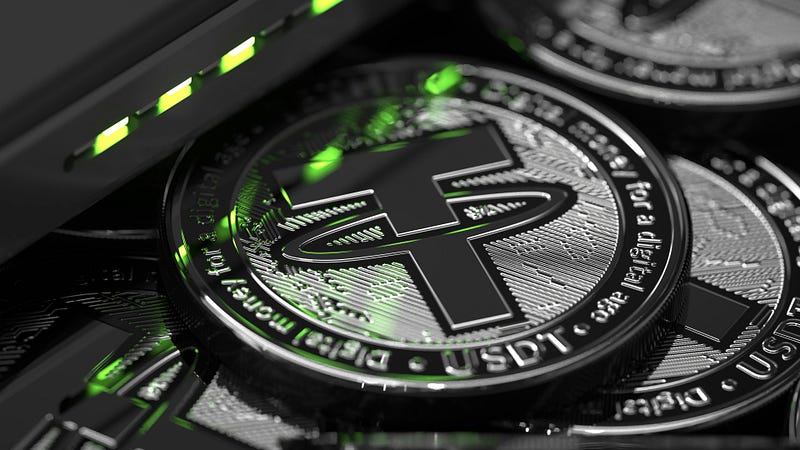
Photo by DrawKit Illustrations on Unsplash


Pig butchering

The U.S. Department of Justice’s November seizure of nearly $9 million traced to over 70 victims of online scams underscored Tether’s involvement. Collaborating with Tether Holdings and the crypto trading platform OKX, the investigation identified assets linked to “pig butchering” cyber scams in Southeast Asia, freezing an additional $225 million. While specific details regarding the origin of these assets remained undisclosed, Southeast Asia, including Cambodia, has emerged as a hub for money laundering related to online gaming and cyber scams.

Cybersecurity expert Ngo Minh Hieu from the Vietnamese government’s National Cyber Security Centre warned of the susceptibility of cryptocurrencies to scams and Ponzi schemes, particularly targeting less informed investors. This heightened risk has spurred a surge in money laundering and online scams, leading to a spike in arrests.


Official line versus reality

In many jurisdictions, the official line taken on cryptocurrency and digital assets doesn’t necessarily reflect the reality. China clamped down on crypto trading and mining a number of years ago. Despite that, a Wall Street Journal investigation earlier this year found that global crypto exchange Binance had a thriving China-centric business.

The same seems to be true in Cambodia with respect to its official ban on crypto. Owners of both physical and online crypto exchanges in Phnom Penh openly admit to providing a parallel financial service in the developing economy. The prevalence of neon signs advertising exchange rates in Chinese yuan for USDT underscores the widespread usage of Tether in the region, particularly within Cambodia’s dark economy.


Critics chime in

News of the illicit use of Tether in Cambodia has prompted a response from long-standing critics of the company. Tether’s harshest critic has been a pseudo-anonymous persona on the X platform with the username “Bitfinex’ed.” That account wrote:

”Tether. The choice for organized crime & criminals. Giancarlo Devasini once said, ‘We’re going to have to learn to bank like criminals.’”

Despite its role in facilitating illicit activities, the extent of Tether’s penetration into Cambodia’s economy remains challenging to ascertain. Globally, approximately 84 billion USDT is in circulation, with banks, exchanges and platforms flourishing, leveraging social media and encrypted channels to advertise seamless and reliable digital solutions for money flow challenges.

One such platform, Huione Pay, operates in a bank-like setting, engaging customers in discussions about USDT exchange options. A closer look at Huione’s publicly available USDT exchange activities reveals insights into Tether’s role in enabling transactions within Cambodia.

Some conversations in Chinese seek “pure white assets,” indicating funds from legitimate sources, while others do not request such provenance. These exchanges also advertise products and services crucial to scam operators, such as the sale of SIM cards from different countries.


More to Read
View All
Policy & Regulation·

Jan 20, 2025

Thailand’s SEC considers Bitcoin ETF approval

Thailand’s Securities and Exchange Commission (SEC), the Southeast Asian nation’s securities regulator, is believed to be considering moving towards approving spot Bitcoin exchange-traded fund (ETF) products.  In an interview with Bloomberg, the Thai SEC’s Secretary-General, Pornanong Budsaratragoon, said that the agency is weighing up whether to allow individual investors and institutions to access spot Bitcoin ETFs. Budsaratragoon stated: “We have to adapt and ensure that our investors have more options in crypto assets with proper protection.”Photo by Photo By: Kaboompics.com on PexelsMoving along with global crypto adoptionJanuary 10 marked the first anniversary of the approval of spot Bitcoin ETFs in the United States. Given that the U.S. is home to the world’s largest capital markets, that decision has had an impact internationally. That reality is borne out by one of Budsaratragoon’s comments. She stated: “Like it or not, we have to move along with more adoption of cryptocurrencies worldwide.” While the SEC Secretary-General’s comment suggests that she feels a compulsion to move forward in line with developments elsewhere, that wasn’t the agency’s position in January 2024 following spot Bitcoin ETF approval in the U.S.  Shortly afterwards, the regulator, alongside its regional counterpart in Singapore, outlined that it had no plans to approve the product in Thailand, stating: "The SEC has been following these developments closely but we do not have a policy to allow spot Bitcoin ETFs to be established in Thailand for the time being.” Initial access to overseas productsIn March of last year, the agency had warmed to the Bitcoin ETF product offering to a greater extent, by approving access to such products listed overseas to high-net-worth individuals and institutions. Off the back of that approval, One Asset Management (ONEAM) launched a fund of funds in June 2024, enabling Thai investors to gain exposure to Bitcoin ETFs which had been publicly listed overseas. Back in October, Nirun Fuwattananukul, CEO of Binance Thailand, stated in an opinion piece published by the Bangkok Post that he felt that the Thai crypto market was moving from retail towards a focus on the institutions. He stated:“By allowing more institutional funds to participate, the SEC is enabling a diverse range of investment strategies and helping digital assets gain broader acceptance in the mainstream.” Fuwattananukul suggested that the local regulator had made some changes on Oct. 9, paving the way for institutional-grade mutual and private funds to invest in crypto products. The approval of locally listed Bitcoin ETF products would broaden investor access to digital assets in Thailand, particularly in relation to institutional investors, which is in line with the thinking of the Binance executive. Earlier this month, Thailand’s Deputy Prime Minister, Pichai Chunhavajira, announced that a pilot program was being launched to help foreign tourists pay for goods and services using crypto within the Thai resort city of Phuket.  Meanwhile, former Thai Prime Minister Thaksin Shinawatra expressed a bullish view on crypto in a speech he made in Bangkok last week. Shinawatra called on the country’s institutions to be more open to cryptocurrency, while citing regulatory developments in the U.S. relative to the emerging asset class.

news
Policy & Regulation·

Jun 16, 2023

Tether Critics Point to Previous Chinese Securities Backing

Tether Critics Point to Previous Chinese Securities BackingUSDT stablecoin issuer Tether (USDT) has long faced persistent scrutiny and criticism due to the lack of transparency surrounding the assets backing their digital currencies. The latest allegations come in the form of a report by Bloomberg on Friday suggesting that the world’s largest stablecoin was once backed by securities issued by Chinese companies.Photo by Manuel Joseph on PexelsNYAG releases documentsThese findings were based on documents made public by the New York Attorney General (NY AG). The documents disclosed that Tether had listed securities issued by China’s state-owned Industrial and Commercial Bank of China, China Construction Bank, and Agricultural Bank of China as part of its reserves backing the USDT stablecoin.Rumors about USDT’s exposure to Chinese securities have circulated for a number of years. In 2021, a Bloomberg research report revealed that Tether’s reserves reportedly included billions of dollars in short-term loans to China-based companies, as well as a significant loan to the collapsed crypto lender Celsius Network.However, in February 2021, Tether reached a settlement with the NY AG’s office over accusations of providing misleading information about its reserves and losses. To address these concerns, Tether handed over documents such as letters, bank accounts, reserve holdings, and wallet addresses through the law firm Steptoe.Attestation reportTether’s latest attestation report for Q1 2023, released on May 10, offered further details about its reserves. According to the report, Tether’s reserves were valued at $81.8 billion at the end of the quarter, a significant increase from the earlier period of $14.8 billion. These reserves consisted of $53 billion in US Treasuries, $1.5 billion in Bitcoin, and $5.3 billion in loans described as “over-collateralized.”The disclosure of Tether’s previous backing by Chinese securities adds another layer of complexity to the stablecoin landscape, raising questions about the risk exposure and potential impact on the stability of these digital assets. Using Chinese commercial paper to back a US dollar stablecoin is a risky endeavor.It raises the same issues as we’ve seen with the plethora of crypto lenders that went bankrupt in 2022. In those cases, they were using customer money to speculate and turn a profit. That’s fine when it works but when it goes wrong, it is customers who suffer. In its defense, Tether has stated that it only held A1 rated banking sector Chinese commercial paper in 2022 in state-owned Chinese companies like Industrial & Commercial Bank of China Ltd., China Construction Bank Corp., and Agricultural Bank of China Ltd. It reduced this exposure to zero later that year.With the cryptocurrency community and regulators seeking greater transparency and accountability, the industry is likely to face increased scrutiny and calls for enhanced regulations to ensure the integrity of stablecoin operations moving forward.As regulators continue to assess and navigate the evolving crypto market, it remains to be seen how the industry will address these concerns and establish clearer guidelines for stablecoin issuers to ensure the trust and confidence of market participants.

news
Web3 & Enterprise·

May 17, 2024

Velo token gains momentum across Southeast Asia's crypto landscape

Velo Token (VELO) has experienced a significant surge in popularity within Southeast Asia's crypto market, drawing comparisons to established players like XRP. Market intelligence platform Santiment highlighted VELO's meteoric rise, noting a substantial 358% increase in price over the last six weeks. This remarkable performance has captured the attention of investors and analysts alike, leading to discussions regarding its potential to become the "XRP of Southeast Asia."Photo by Lucas George Wendt on UnsplashFactors driving VELO's growthThe primary factor fueling VELO's rapid ascent is its substantial trading volume, particularly in the Asian market. According to Santiment data, VELO's trading volume has surged to $95.95 million, a noteworthy figure for a token outside the top 100. This surge in volume reflects growing interest and confidence in VELO, attributed to its integration with leading blockchain platforms such as Solana (SOL) and Binance Smart Chain. VELO has demonstrated significant progress, with a 57% increase over the past seven days and an impressive 225.51% surge over the last 30 days. Despite recent market fluctuations, VELO has maintained a bullish trend, recording a 16.88% rise from a 24-hour low. Santiment's Weighted Sentiment metric indicates a bullish outlook for VELO compared to XRP, further bolstering investor confidence in VELO's potential. Contributing factors to VELO's successSeveral factors have contributed to the unprecedented surge in VELO's value. Notably, VELO tokens are stored in reputable self-custody wallets such as Ledger, Lobstr, and Freighter, enhancing their popularity among investors. Endorsements from crypto influencers, who have labeled VELO as the "XRP killer," have also amplified investor interest. Additionally, VELO's strategic partnerships with industry leaders like iRemit, Visa and Lightnet have expanded its regional market and validated its capacity to revolutionize cross-border payments and digital financing solutions. As a result, VELO has witnessed substantial growth in trading volume, with its price reaching $0.029 per token. VELO's rise signifies its potential as a catalyst for innovation in the cryptocurrency sphere, akin to XRP. Its unique combination of smart contracts, absent in the XRP blockchain, adds to its appeal for investors seeking efficiency and versatility in financial transactions. Velo Labs' focus on revolutionizing international remittance markets further solidifies VELO's position as a game-changer in the crypto landscape. With the possibility of expanding its popularity beyond Asia, VELO's market cap could experience significant growth, further cementing its presence in the cryptocurrency market. 

news
Loading