Top

Ripple APAC executive predicts institutional adoption surge in 2024

Policy & Regulation·December 20, 2023, 12:48 AM

Fiona Murray, the Managing Director overseeing the Asia-Pacific region (APAC) at enterprise blockchain firm Ripple, envisions a substantial uptick in institutional adoption of cryptocurrencies in the upcoming year.
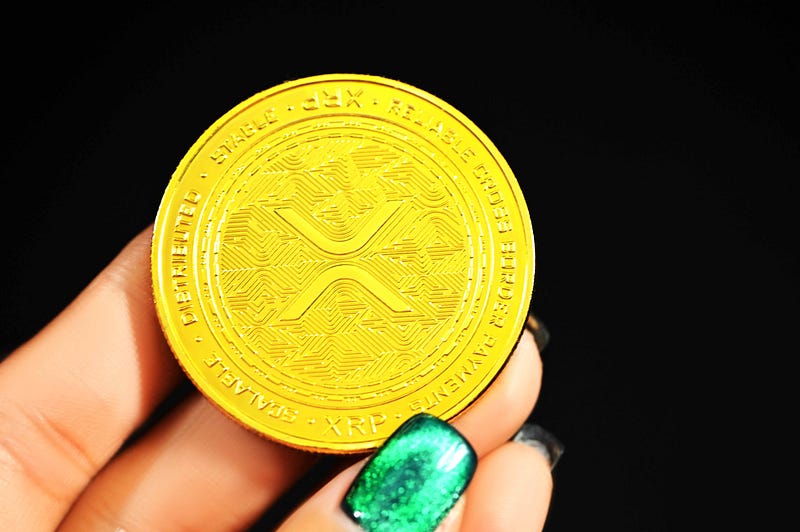
Photo by Kanchanara on Unsplash


Emphasis on Asia

Murray set out her predictions for the coming year in a thread of posts on the X social media platform on Monday. This foresight coincides with a notable upswing in interest from traditional financial institutions within the digital currency market, especially in the APAC region.

Murray predicts an unprecedented surge in cryptocurrency adoption within financial institutions, underscoring a shifting landscape where companies increasingly leverage cross-border payment solutions powered by blockchain technology. She wrote:

”Entering 2024, we are expecting to see a surge in institutional adoption of crypto by financial institutions, especially in the APAC region. This includes the greater usage of cross-border payments among companies.”


Web2 firms to integrate blockchain

This departure from traditional payment methods signifies a growing confidence in the security and efficiency offered by digital currencies. Ripple’s APAC executive emphasizes the escalating investments by well-established Web2 companies and legacy payment institutions as they integrate blockchain utility into their offerings.

“More than ever, leading Web2 companies and legacy payments institutions are investing resources to integrate blockchain utility into their services — ‘Nearly half of APAC finance leaders expect blockchain to have a significant impact on business in the next 3 years.’” she stated.

This positive outlook is reinforced by proactive measures taken by countries like Singapore and Hong Kong, positioning themselves as global leaders in cryptocurrency and blockchain adoption.


Crypto ETFs

The continued rollout of crypto exchange-traded funds (ETFs) adds to the level of institutional adoption that has occurred in 2023 and is likely moving forward into 2024. Hong Kong has been the regional leader in this regard within APAC. The Hong Kong Stock Exchange was the first platform in Asia to offer crypto asset exposure by way of an ETF in December of last year. Since then, several such ETFs have been listed within the Chinese autonomous territory.

Last month, multinational investment bank UBS joined industry peers like HSBC in following suit to offer institutional clients access to crypto-linked ETFs. Going into 2024, most industry commentators seem to be convinced that the emergence of BlackRock, the world’s largest asset manager, in promoting a spot bitcoin ETF in the United States means that approval is likely over the course of the next few months. That milestone will undoubtedly have positive reverberations for institutional digital asset adoption in the APAC region also.


Strategic importance of APAC

The APAC region holds strategic importance for Ripple’s expansion plans, given its rapid technological advancement and openness to innovation. In Singapore, the company received “in principle” approval from the Monetary Authority of Singapore in June. That was upgraded to full license approval in October.

Singapore and Hong Kong, among other countries in the region, have emerged as frontrunners in the global cryptocurrency market, fostering regulatory environments conducive to blockchain innovation.

These factors underscore the region’s crucial role in Ripple’s global strategy, aligning with the company’s vision and objectives as it seeks to grow its business.


More to Read
View All
Policy & Regulation·

Aug 22, 2024

China introduces legal framework to tackle crypto-linked money laundering

China's highest judicial authorities, the Supreme People's Court and the Supreme People's Procuratorate, have released a judicial interpretation that includes the use of virtual assets to transfer illicit funds as a recognized method of money laundering. This move aims to strengthen the legal basis for investigating and prosecuting cases linked to cryptocurrency and money laundering activities.Photo by Vidar Nordli-Mathisen on UnsplashClarifying the legal status of crypto transactionsThe new judicial interpretation classifies virtual asset trading as a potential channel for money laundering. It specifies that using virtual-asset transactions or financial-asset exchanges to transfer or convert the proceeds of crime falls under the act of “disguising or concealing the source and nature of criminal proceeds and their gains by other means” as outlined in the country’s criminal law. Liu Honglin, founder of the Shanghai-based Man Kun law firm, clarified in a social media post that the interpretation does not equate all cryptocurrency trading with money laundering. According to Liu, the directive is not intended to criminalize the possession or trading of cryptocurrencies domestically but to provide clear legal guidelines for prosecuting specific illegal activities linked to crypto transactions. Impact on crypto trading and enforcementShao Shiwei, a fintech lawyer based in Shanghai, suggested that this interpretation could pose challenges for stablecoin merchants and increase legal risks for those involved in receiving illicit funds through crypto trading. The interpretation is part of broader efforts to regulate the virtual asset space, following the comprehensive ban on crypto trading activities by the People’s Bank of China and other authorities in September 2021. Despite the ban, many investors have continued to find ways to engage in crypto trading, sometimes circumventing capital control measures. For example, in May, Chinese police dismantled an underground bank that utilized the USDT stablecoin for foreign currency exchanges involving over 13.8 billion yuan ($1.9 billion). This incident underscores the ongoing challenges in enforcing existing regulations against the backdrop of innovative methods to bypass legal restrictions. 

news
Policy & Regulation·

Jan 20, 2025

Thailand’s SEC considers Bitcoin ETF approval

Thailand’s Securities and Exchange Commission (SEC), the Southeast Asian nation’s securities regulator, is believed to be considering moving towards approving spot Bitcoin exchange-traded fund (ETF) products.  In an interview with Bloomberg, the Thai SEC’s Secretary-General, Pornanong Budsaratragoon, said that the agency is weighing up whether to allow individual investors and institutions to access spot Bitcoin ETFs. Budsaratragoon stated: “We have to adapt and ensure that our investors have more options in crypto assets with proper protection.”Photo by Photo By: Kaboompics.com on PexelsMoving along with global crypto adoptionJanuary 10 marked the first anniversary of the approval of spot Bitcoin ETFs in the United States. Given that the U.S. is home to the world’s largest capital markets, that decision has had an impact internationally. That reality is borne out by one of Budsaratragoon’s comments. She stated: “Like it or not, we have to move along with more adoption of cryptocurrencies worldwide.” While the SEC Secretary-General’s comment suggests that she feels a compulsion to move forward in line with developments elsewhere, that wasn’t the agency’s position in January 2024 following spot Bitcoin ETF approval in the U.S.  Shortly afterwards, the regulator, alongside its regional counterpart in Singapore, outlined that it had no plans to approve the product in Thailand, stating: "The SEC has been following these developments closely but we do not have a policy to allow spot Bitcoin ETFs to be established in Thailand for the time being.” Initial access to overseas productsIn March of last year, the agency had warmed to the Bitcoin ETF product offering to a greater extent, by approving access to such products listed overseas to high-net-worth individuals and institutions. Off the back of that approval, One Asset Management (ONEAM) launched a fund of funds in June 2024, enabling Thai investors to gain exposure to Bitcoin ETFs which had been publicly listed overseas. Back in October, Nirun Fuwattananukul, CEO of Binance Thailand, stated in an opinion piece published by the Bangkok Post that he felt that the Thai crypto market was moving from retail towards a focus on the institutions. He stated:“By allowing more institutional funds to participate, the SEC is enabling a diverse range of investment strategies and helping digital assets gain broader acceptance in the mainstream.” Fuwattananukul suggested that the local regulator had made some changes on Oct. 9, paving the way for institutional-grade mutual and private funds to invest in crypto products. The approval of locally listed Bitcoin ETF products would broaden investor access to digital assets in Thailand, particularly in relation to institutional investors, which is in line with the thinking of the Binance executive. Earlier this month, Thailand’s Deputy Prime Minister, Pichai Chunhavajira, announced that a pilot program was being launched to help foreign tourists pay for goods and services using crypto within the Thai resort city of Phuket.  Meanwhile, former Thai Prime Minister Thaksin Shinawatra expressed a bullish view on crypto in a speech he made in Bangkok last week. Shinawatra called on the country’s institutions to be more open to cryptocurrency, while citing regulatory developments in the U.S. relative to the emerging asset class.

news
Policy & Regulation·

Nov 02, 2023

Turkey crafts new crypto regulations with FATF grey list removal objective

Turkey crafts new crypto regulations with FATF grey list removal objectiveIn an effort to secure removal from the Financial Action Task Force’s (FATF) “grey list,” Turkey is in the process of crafting new regulations governing crypto assets.The FATF, established by the Group of Seven (G7) advanced economies, serves as a guardian of the international financial system. It’s an international organization dedicated to combating financial crimes, which added Turkey to its “grey list” in 2021. In 2019, it cautioned Turkey about significant deficiencies in procedures for freezing assets linked to terrorism and the proliferation of weapons of mass destruction.Photo by Michael Jerrard on UnsplashCrypto compliance for FATF upgradeTurkish Finance Minister Mehmet Simsek recently discussed this matter with a parliamentary commission, according to a report published by Reuters. Simsek highlighted the FATF’s evaluation of Turkey’s adherence to 39 out of the 40 standards set by the organization. The single outstanding issue pertains to crypto assets, and Simsek revealed plans to introduce a crypto assets law in parliament to address this concern. However, he did not delve into specific legal changes.The Turkish government is taking action to align with international standards and remove the shadow of the “grey list.” The Turkish Presidential Annual Program for 2024, as published in the Official Gazette of the Republic of Turkey on October 25, outlines a commitment to establish comprehensive cryptocurrency regulations in the country by the end of 2024. Within the extensive 500-page document, Article 400.5 sets the goal of providing clear definitions for crypto assets, potentially subjecting them to taxation in the future.Additionally, the document seeks to establish legal definitions for crypto asset providers, including cryptocurrency exchanges. However, it refrains from specifying the finer details of the upcoming regulatory framework.Crypto popularityTurkey has been an outlier in terms of cryptocurrency use by comparison with many of its international peers. A report by KuCoin earlier this year validated that reality, indicating a significant increase in the number of crypto investors in Turkey over the course of the previous 18 months. In the aftermath of a devastating earthquake which hit the country on Feb. 6, crypto was reported to have been used as a means to get aid to those affected quickly and easily.However, developments in the crypto space have also included difficulties. It was reported in July that the use of crypto for the earthquake relief effort in Turkey was also being used as a cover by an affiliate of the terrorist group ISIS to launder money and receive funding. Turkish users of the Thodex crypto exchange platform were the victims of fraud in 2021, with the founders of that business having been sentenced for that fraud in September. In 2021 the country moved to ban crypto payments against a background that has seen the Turkish lira experience hyper-inflation.CBDC developmentTurkey’s central bank has been making strides in the digital currency arena, successfully conducting the initial trial of its central bank digital currency (CBDC), the digital lira, by December 2022. The central bank has expressed its intention to continue testing and exploring digital currency development throughout 2024.The move to enhance regulation and compliance in the crypto sector in Turkey aligns with global efforts to ensure transparency and accountability in financial systems.

news
Loading