Top

Market speculates on Qatari investment driving bitcoin price surge

Markets·December 07, 2023, 2:06 AM

Rumors are circulating within the cryptocurrency space that Qatar’s sovereign wealth fund may have dabbled in investing in bitcoin, leading to the recent surge in the bitcoin unit price.

Such a move, while still an unconfirmed speculation, would be indicative of the increasing recognition of Bitcoin as a mainstream asset class. At the time of writing, bitcoin stands at $44,000. That represents a 16% increase over the space of the past week and a 166% increase since the beginning of the year.
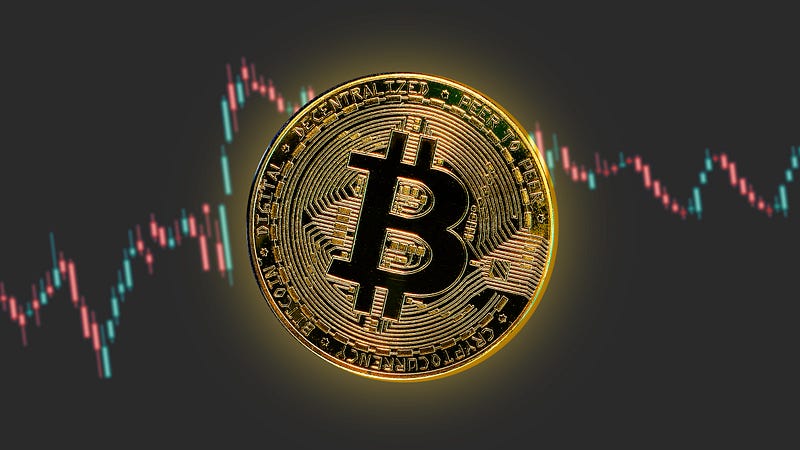
Photo by Yiğit Ali Atasoy on Unsplash


Keiser’s claim

According to outspoken Bitcoin advocate Max Keiser, Qatar’s sovereign wealth fund (QSWF), responsible for managing the nation’s significant oil and gas-generated wealth, is considering allocating up to $500 billion to the leading cryptocurrency.

To provide context, this investment would eclipse the publicly disclosed bitcoin holdings of MicroStrategy, founded by Michael Saylor, by an astonishing 671 times. MicroStrategy currently holds the position of the largest corporate holder of Bitcoin, with 174,530 BTC acquired in November.

Keiser speculates that the QSWF’s monumental investment could propel bitcoin’s price to new highs, reaching $100,000. Keiser tweeted:

“The God Candle, a $100,000 uptick in #Bitcoin is in play. It will shift the global axis of wealth and power in 1 tick.”

Custodia Bank Founder and CEO Caitlin Long shared a similar view on the X social media platform on Wednesday, pointing out that in September the Emir of Qatar had visited El Salvador and met with President Nayib Bukele. The inference is that it would have been an interest in bitcoin that may have provided the motivation for that visit, given that Bukele and El Salvador have adopted bitcoin as a sovereign currency.

However, not everyone is on board with this theory. Some have pointed out that the assertion that the QSWF will invest $500 billion into bitcoin is impossible, given that the fund has $475 billion under management.

Bitcoin advocate Luke Broyles weighed in on the rumor, emphasizing the crucial interplay between bitcoin’s supply and demand. Broyles highlighted the $76 billion worth of BTC still available on crypto exchanges, underscoring the fundamental principle of bitcoin’s fixed supply. According to Broyles, any substantial investment would inevitably drive prices higher.

However, Broyles remains skeptical of the Qatar news, deeming it a rumor, and expressed shock if it proves remotely true. That view has led many back to the original speculation in relation to this most recent price action, the illusive bitcoin spot exchange-traded fund (ETF) approval in the United States.

Some activity in recent days has suggested that BlackRock, the world’s largest fund manager, has been doing preparatory work for the launch of its iShares Bitcoin Trust ETF. Not everyone was positive on the topic of Bitcoin on Wednesday, however. Jamie Dimon, the CEO of JPMorgan Chase, testified before the U.S. Congress on Wednesday, stating “If I were the government I’d close [Bitcoin] down.”

More to Read
View All
Web3 & Enterprise·

Nov 23, 2023

Me2on launches P2E game ‘Solitaire Crypto War’ with crypto integration

Me2on launches P2E game ‘Solitaire Crypto War’ with crypto integrationMe2on, a Seoul-based game developer, revealed the launch of its new game, Solitaire Crypto War, a play-to-earn (P2E) tournament game developed internally and published by its subsidiary, Memoriki. This Android game will be available globally, excluding South Korea and China. Memoriki, established in 2009 and originally based in Hong Kong, was acquired by Me2on earlier this year, broadening Me2on’s reach in the gaming market.Photo by Erik Mclean on UnsplashPVP card gameSolitaire Crypto War, developed from Me2on Group’s Solitaire IP, is a card puzzle player-versus-player (PVP) game that has amassed over 130 million global downloads. Players can engage in the classic Solitaire game against multiple opponents, competing to achieve the fastest clear times. The game ensures fair competition by matching players under identical conditions, with the highest scorer emerging as the winner. Designed for fast-paced gameplay, it pairs players of similar skill levels. Additionally, each season introduces unique events like puzzle piece collecting, Monopoly, and Powerball games, offering various rewards.Available in both free and paid optionsSolitaire Crypto War is a free game, but it also offers a feature where users can opt to use cryptocurrencies like ETH, USDT, USDC, UNI, LINK, MATIC and MEV to participate in competitions against other players and win prizes. The game boasts a variety of modes, including PVP battles, challenges and tournaments, enhancing its appeal. Additionally, its integration with Face Wallet enables users to log in using their social accounts, eliminating the need for a separate wallet installation, thus simplifying the gaming experience.Event running until Dec 28In celebration of the official launch of Solitaire Crypto War, Me2on has planned an opening event running until Dec. 28, providing various benefits to its users. Everyone accessing the game during this event period will receive a welcome package. Additionally, players can engage in various activities such as the game review challenge, ticket triumph challenge, and community quest takedown to receive items daily, enhancing their gaming experience and rewarding their participation.Cho Choong-hyeon, who leads Me2on’s Blockchain Game Division, expressed that the company has integrated blockchain technology to bring the classic card game Solitaire into the Web3 realm. He emphasized that this move allows Solitaire to evolve into a play-to-own (P2O) game, where users can directly own their gameplay achievements. Cho also highlighted Me2on’s dedication to being at the forefront of the Web3 market, which he believes is set to transform the paradigm of the gaming industry.

news
Policy & Regulation·

Oct 27, 2023

Taiwan Advances Crypto Regulation with Initial Reading of Digital Asset Bill

Taiwan Advances Crypto Regulation with Initial Reading of Digital Asset BillTaiwan has furthered its efforts on the path of digital asset regulation, as the nation’s legislature introduced a cryptocurrency bill for its inaugural reading.The “Virtual Asset Management Ordinance Draft” bill represents a significant stride toward establishing a legal framework for digital assets in the country. The proposal passed its first reading at the Taiwanese state legislature, according to published parliamentary records.Photo by Ethan Lin on UnsplashBill objectivesThe primary objectives of the bill are to define virtual assets, establish operational standards for asset operators, enhance customer protection, and make it mandatory for industry players to join relevant associations and secure regulatory permissions.Up until now, Taiwan has maintained a relatively hands-off approach to the cryptocurrency sector. Its oversight was limited to existing know-your-customer (KYC) and anti-money laundering (AML) laws. However, this stance evolved following the collapse of the cryptocurrency exchange FTX in November. The platform’s popularity among Taiwanese users, owing to favorable US dollar interest rates compared to local banks, led to increased regulatory scrutiny.A member of Taiwan’s parliament, Yung-Chang Chiang, told The Block that “after the first reading of the bill, discussions on the regulatory framework for the virtual asset industry have progressed to the next stage.” Chiang added:“We hope that the Financial Supervisory Commission can also submit their version of a draft bill to the legislature, allowing various sectors of society to further consolidate consensus during the process.”In contrast to cryptocurrency regulations in neighboring Hong Kong, Taiwan’s bill does not adopt a strong stance on derivatives or stablecoins. Nevertheless, it recognizes that derivatives linked to virtual assets possess unique characteristics, with a specific mention of perpetual contracts. This recognition opens the door for the possibility of cryptocurrency derivative-specific regulation in future drafts.Importantly, the bill does not restrict the trading of virtual assets to professional investors, which allows broader participation in the digital asset market.Auditing and segregation of fundsUnlike Japan, which mandates the use of custodians for locally licensed exchanges, the draft bill in Taiwan only necessitates the segregation of customer assets from business funds. It does not explicitly require the involvement of third-party custodians.Under this legislation, exchange operators will be obliged to commission periodic reports from accountants regarding their operations and asset management. Additionally, regulators, such as the Financial Supervisory Commission (FSC), will have the authority to conduct regular inspections of exchange internal control and audit systems.Although this initial draft does not explicitly mention “Proof of Reserves,” it does indicate that the regulator will establish standards for asset ratios after consulting with industry stakeholders, with the expectation that licensed exchanges will adhere to these standards.Fostering self regulationTaiwan’s crypto industry stakeholders have expressed their support for formal regulatory oversight. Wayne Huang, co-founder and CEO of Taipei-based fintech company XREX, recently affirmed the industry’s willingness to collaborate with the FSC in defining regulatory operations.In tandem with the establishment of a regulatory framework, regulators have indicated that they want industry stakeholders to move towards some level of self-regulation. That led nine exchange businesses to form an industry association last month.The bill’s second reading is pending, and the FSC is anticipated to provide its input and recommendations before the next phase of the legislative process.

news
Web3 & Enterprise·

Nov 03, 2025

Kyobo Life Insurance joins Circle’s Arc testnet amid growing crypto interest in Korea

Kyobo Life Insurance, one of South Korea’s largest life insurers, has become a participant in the recently launched public testnet for Circle Internet Group’s Arc. This new open layer-1 blockchain network aims to serve a broad range of use cases, including lending, capital markets, foreign exchange (FX), and global payments.Photo by Kindel Media on PexelsNotable global participants in the Arc networkAccording to a press release from Circle, published on Oct. 28, multiple prominent banks and asset managers are also engaging with the Arc network. Kyobo Life stands as the only South Korean entity involved in the initiative. Other notable global participants include BlackRock, Deutsche Bank, Goldman Sachs, SBI Holdings, and Standard Chartered. This move comes on the heels of Kyobo Life’s earlier participation in a stablecoin project spearheaded by the Seoul-based Open Blockchain & Decentralized Identifier (DID) Association. This highlights the insurer’s growing interest in exploring business opportunities within the digital assets space. Korean crypto exchanges step up oversightAs cryptocurrencies gain increasing recognition as a new asset class, South Korean exchanges have become more vigilant in monitoring user activities, partly to curb potential criminal behavior. A report by Money Today revealed that over the past six years, local trading platforms have halted a total of 82.9 billion won ($58.1 billion) in crypto withdrawals. Among these, Bithumb accounted for the largest share, suspending withdrawals totaling 50.5 billion won ($35.4 million) from 2020 to September 2025. Upbit suspended 25.6 billion won ($18 billion) in the same period, while other exchanges like Coinone, Korbit, and Gopax reported more modest suspensions. These actions are largely in response to the Virtual Asset User Protection Act, which came into effect in July 2024. The Act aims to enhance oversight and safeguard consumers, reflecting the government’s intent to regulate the sector more tightly. Surge in Korea-Cambodia stablecoin tradingParallel to these regulatory developments, a dramatic surge in stablecoin trading volume has been observed between South Korea and Cambodia. According to data from the Financial Supervisory Service (FSS) reported by the Seoul Shinmun, transactions between five major South Korean exchanges and Cambodia’s Huione Guarantee skyrocketed to 12.8 billion won ($8.98 million) in 2024, marking a staggering 1,400-fold increase compared to just 9.22 million won ($6,500) in 2023. This rise in activity coincides with recently uncovered criminal cases originating from Cambodia and has raised concerns about illicit practices within the crypto market. In response to these concerns, crypto exchanges are bolstering their efforts to cooperate with law enforcement. Binance, the world’s largest crypto exchange by trading volume, was recently honored with a commendation by the South Korean Minister of the Interior and Safety for its contributions to enhancing cybercrime investigations and administrative capabilities. This accolade comes amid Binance’s increasing presence in South Korea. Binance, which had acquired Gopax ahead of regulatory approval, has now received clearance from local financial authorities to become the Korean trading platform’s largest shareholder. Public sentiment on Binance’s acquisition of GopaxA recent survey conducted by CoinNess and the community-voting app Cratos, which polled 2,000 South Koreans, provided insights into the public’s perception of Binance’s acquisition of Gopax. Among respondents, 38.8% indicated that their decision to use the rebranded platform would depend on the benefits it offered compared to other exchanges, while 23.6% said they were already planning to use it. Together, these figures suggest that 62.4% of participants are open to the platform, although some are conditioned on its advantages. However, 27.5% rejected the platform entirely, and 10.2% stated they do not use local exchanges at all. As South Korea deepens its role in the global digital asset ecosystem, its growing participation in initiatives like Circle’s Arc network reflects an ambition to align with international finance trends. At the same time, stricter oversight and cross-border monitoring signal a firm commitment to transparency. The balance it strikes between innovation and regulation will define its path in the global crypto arena. 

news
Loading