Top

Bitcoin records this year’s highest in Korean market, surpassing KRW 60M

Web3 & Enterprise·December 06, 2023, 3:38 AM

Bitcoin, the world’s largest cryptocurrency, exceeded the KRW 60 million (approximately $45,700) mark in the South Korean market on Wednesday (local time), reaching its highest value of the year.

So far today, the nation’s leading crypto exchange, Upbit, saw Bitcoin’s price soaring to a daily peak of KRW 60,642,000. Meanwhile, another major trading platform, Bithumb, observed Bitcoin’s value touching a daily high of KRW 60,775,000.
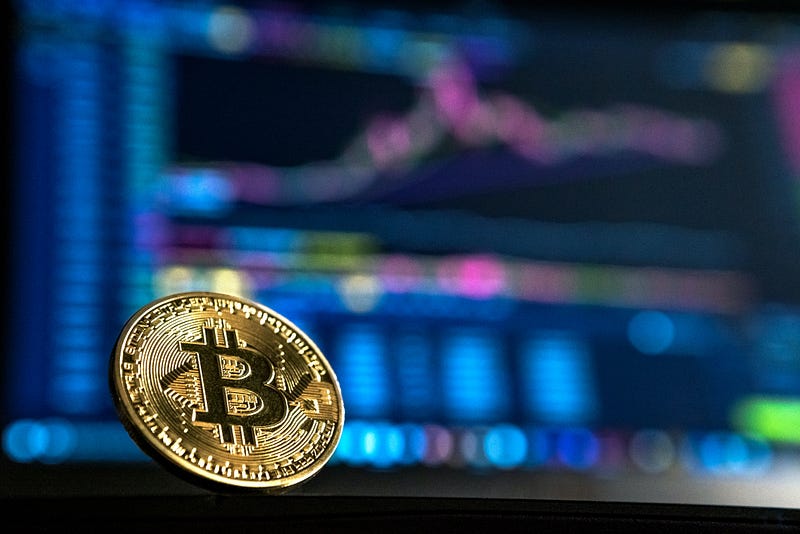
Photo by André François McKenzie on Unsplash


Highest since November 2021

This is the first time Bitcoin went above the KRW 60 million mark since November 2021. Amid this development, the Kimchi premium, a term indicating the gap in crypto prices between Korean exchanges and their foreign counterparts, has exceeded 4%. According to data from crypto information platform CoinNess, at the time of publication, the average price of Bitcoin on Korean platforms is KRW 59,986,250, while the average price of Bitcoin on foreign platforms is KRW 57,605,406.

Ethereum prices are also on the rise. On Upbit, Ethereum reached its highest point of the day at KRW 3,163,000, and on Bithumb, it peaked at KRW 3,162,000.


Rate hike halt and Bitcoin halving

The ongoing surge in Bitcoin’s value is widely believed to be influenced by a halt in global interest rate hikes and the anticipated Bitcoin halving event scheduled for April 2024. Additionally, the potential approval of spot bitcoin exchange-traded funds (ETFs) by the U.S. Securities and Exchange Commission is seen as another significant factor contributing to the rise in the digital currency’s prices.

Meanwhile, the Crypto Fear and Greed Index from software comparison platform Alternative.me currently indicates a sentiment of “Greed” with a score of 72. This index assesses various factors, including volatility, market momentum and volume, social media buzz, market dominance and trends. The scale ranges from 0 to 100, where 0 signifies “Extreme Fear” and 100 represents “Extreme Greed.” Scores nearer to 0 suggest increasing fear among investors, potentially signaling a buying opportunity. On the other hand, scores approaching 100 imply growing greed, hinting at the possibility of a market correction.


Korean won as the top fiat trading pair

During this latest Bitcoin rally, where the cryptocurrency climbed to over 50% of its highest price in almost two years, South Korean crypto traders have played a significant role, Bloomberg reported, citing data from CCData. In November, the South Korean won exceeded the U.S. dollar as the top fiat trading pair in the crypto market for the first time.


More to Read
View All
Policy & Regulation·

Nov 03, 2023

Abu Dhabi’s ADGM unveils DLT foundations regulations

Abu Dhabi’s ADGM unveils DLT foundations regulationsThe Registration Authority (RA) of Abu Dhabi Global Market (ADGM) has officially unveiled the Distributed Ledger Technology (DLT) Foundations Regulations 2023, marking yet another milestone in the evolution of digital assets regulatory frameworks both regionally and internationally.Photo by Kamil Rogalinski on UnsplashFramework for DAOs and foundationsThe new regulations were published to the ADGM website on Wednesday, with enactment occurring on Thursday. This legislative framework has been crafted to offer a comprehensive structure for DLT foundations and decentralized autonomous organizations (DAOs), addressing their unique operational needs within the blockchain sector. ADGM’s strategic vision to promote initiatives in the broader blockchain and digital asset sphere has culminated in the creation of this regulatory regime.As a global first of its kind, the DLT foundations regulation sets a precedent for blockchain foundations, Web3 entities, DAOs and traditional foundations seeking to enhance their operations through DLT. This forward-thinking framework is poised to provide a unified solution for digital asset-related activities and the broader foundations landscape, fostering transparency and efficiency.Establishing governance structuresThe ADGM DLT foundations regulation represents an effective means to establish governance structures while acknowledging the imperative decentralization characteristic of the industry. This regulatory development followed a robust public consultation process, actively involving stakeholders and industry participants to gather feedback and refine the regulations.In the realm of digital assets, ADGM continues to push towards taking leadership in regulatory standards, providing an attractive environment for Web3 startups. Ahmed Jasim Al Zaabi, Chairman of ADGM, emphasized the pivotal role that the DLT Foundations Regime plays in shaping the future of digital asset development. According to a press release on PR Newswire, Al Zaabi stated:“Abu Dhabi is rapidly emerging as the destination of choice for global players at the forefront of digital asset development. The introduction of the DLT Foundations Regime marks a revolutionary step forward, reinforcing ADGM’s commitment to a proactive approach rooted in extensive cross-industry dialogue and collaboration with various stakeholders. The new regime serves as a driving force for positive change in the digital assets sector. By transforming the blockchain and Web3 landscape, we are moving towards a future characterised by setting global benchmarks with enhanced transparency and efficiency.”Nurturing Web3 innovationOver the course of the past 12 months, the authorities in Abu Dhabi, alongside the United Arab Emirates (UAE) itself and other emirates such as Dubai, have been allocating resources towards developing the right conditions for the Web3 sector to flourish. In April of this year, a legislative framework was proposed by the ADGM.Recent months have seen a plethora of digital asset sector firms gain trading approval within the emirate. These included virtual asset firm M2, Standard Chartered digital asset subsidiary firm Zodia Markets and Laser Digital, the digital assets subsidiary of Japanese financial services conglomerate Nomura.By way of its DLT foundations regulations, the ADGM is attempting to go beyond simply creating a set of rules. The aspiration is to strive towards a future where the blockchain and digital asset industry operates within a transparent, efficient and globally respected framework. As blockchain technology continues to gain traction, Abu Dhabi’s ADGM is positioning itself to play a role in driving these advancements.

news
Web3 & Enterprise·

Sep 08, 2023

Grab Turns to Web3 With Crypto Wallet Integration

Grab Turns to Web3 With Crypto Wallet IntegrationGrab, the Singapore-headquartered Asian ride-hailing firm with a user base of 180 million people, is integrating a crypto wallet into its platform.That’s according to Chinese crypto reporter Colin Wu. Wu tweeted out news of the development on Thursday, including screenshots which he had obtained that provide further detail relative to Grab’s Web3 wallet.Often dubbed the “Uber of Southeast Asia,” Grab’s foray into Web3 technology could reshape how the region engages with cryptocurrencies. This move, initially available in Singapore, aligns with the city-state’s reputation as a fintech leader and developing crypto hub, suggesting it may serve as a testing ground for Grab’s crypto integration.Photo by Afif Ramdhasuma on UnsplashPolygon wallet integrationOne pivotal aspect of this integration is Grab’s support for the Polygon wallet, a layer-2 scaling solution for Ethereum. Known for its speed and low transaction fees, Polygon aids Grab’s venture into crypto, as these characteristics feed into its practicality for everyday crypto transactions. This strategic choice aims to make cryptocurrencies more accessible and usable for the masses.Venturing beyond paymentsIt seems like Grab’s ambitions extend beyond basic cryptocurrency payments. It is also setting the stage for users to explore non-fungible tokens (NFTs) and blockchain technology. The company has provided guidance content for wallets and NFTs which would suggest that Grab’s vision goes beyond mere transactions and that it sees the potential for NFTs in terms of transforming digital ownership and other such use cases.The Web3 wallet stands out in terms of user experience. Unlike traditional crypto wallets that are reliant on private keys, Grab employs a PIN password system. This simplifies the crypto experience. This is of particular importance when it comes to trying to find ways to bring Web3 and crypto into everyday use by the mass market.Additionally, Grab introduces an account recovery system based on questions and answers, in an effort to strike a balance between security and convenience.MAS collaborationAs part of the firm’s journey into Web3, it has been collaborating with the Monetary Authority of Singapore (MAS), the city-state’s central bank and financial regulator. Together, they’ve explored digital assets, central bank digital currencies, and innovative payment systems, and it also indicates that the company is working towards including a Web3 offering while remaining in regulatory compliance.According to the company’s Q2, 2023 results, Grab records an average of 34.9 million monthly transactions.By integrating a user-friendly crypto wallet, supporting Polygon, and exploring NFTs, it appears that Grab is aiming to empower its massive user base to participate in the digital asset revolution. With Singapore as the initial launchpad, Grab’s Web3 journey holds the potential to influence how the entire region embraces cryptocurrencies.In simplifying crypto access, supporting innovative technologies like Polygon, and educating users about NFTs and blockchain, the Singaporean firm is paving the way for a more inclusive and decentralized financial future in the region.

news
Web3 & Enterprise·

Apr 10, 2023

Major Korean Crypto Exchanges Strengthen on NFT Projects Despite Crypto Winter

Major Korean Crypto Exchanges Strengthen on NFT Projects Despite Crypto WinterDespite crypto winter, major Korean cryptocurrency exchanges Upbit and Bithumb strengthened on staff and included new non-fungible token (NFT) projects.US Tightening Policy Effects on Crypto MarketAccording to the electronic disclosure system operated by the Financial Supervisory Service, Upbit’s operator Dunamu saw a net income of 130.8 billion won last year, down by 94% from 2.21 trillion won. Bithumb also experienced a decline of 85% from 648.4 billion won to 95.4 billion won. This downturn is reportedly attributed to the tightening monetary policy by the US and weaker market sentiment on risky assets.Insights on Korean NFT MarketBoth exchanges, Upbit and Bithumb, having seen meager profitability in crypto trading, recruited more talent to embark on NFT projects. However, the picture is not so rosy for these new endeavors, considering the tepid NFT trade volume. According to The Block, the NFT trade volume last month reached $983.4 billion, which is lower than $1.4 trillion, the previous month’s record.The NFT trade volume on Upbit last month also experienced year-on-year and month-on-month decreases of 48.6% and 14.5%, respectively.Last week, Dunamu CEO Sirgoo Lee said in a shareholders’ meeting that its NFT projects are underachieving and that he is reconsidering the new projects from scratch. He added that Dunamu will build a solid foundation in Korea while promoting global businesses starting from the US through Levvels, a blockchain-based platform jointly established by Dunamu and the entertainment company HYBE.Outlook on the Korean MarketBithumb, on the other hand, will bolster new projects through Bithumb Meta and Rotonda. Bithumb Meta recently launched the beta service of its original metaverse Naemo Market where users can use NFTs to decorate their own personal digital space. Rotonda released Burrito Wallet last February to allow waller holders to store NFTs, cryptocurrencies, and fiat currencies.Meanwhile, there was a mixed outlook on the Korean crypto market. One person said in an interview with Hankooki that greater workforces in the country’s leading crypto exchanges could suggest the market’s growth, but also pointed out that their bigger sizes might hinder them from maneuvering when faced with other unexpected risks.

news
Loading