Top

Hong Kong’s HKVAC drops XRP from top 5 crypto index

Markets·January 16, 2024, 7:38 AM

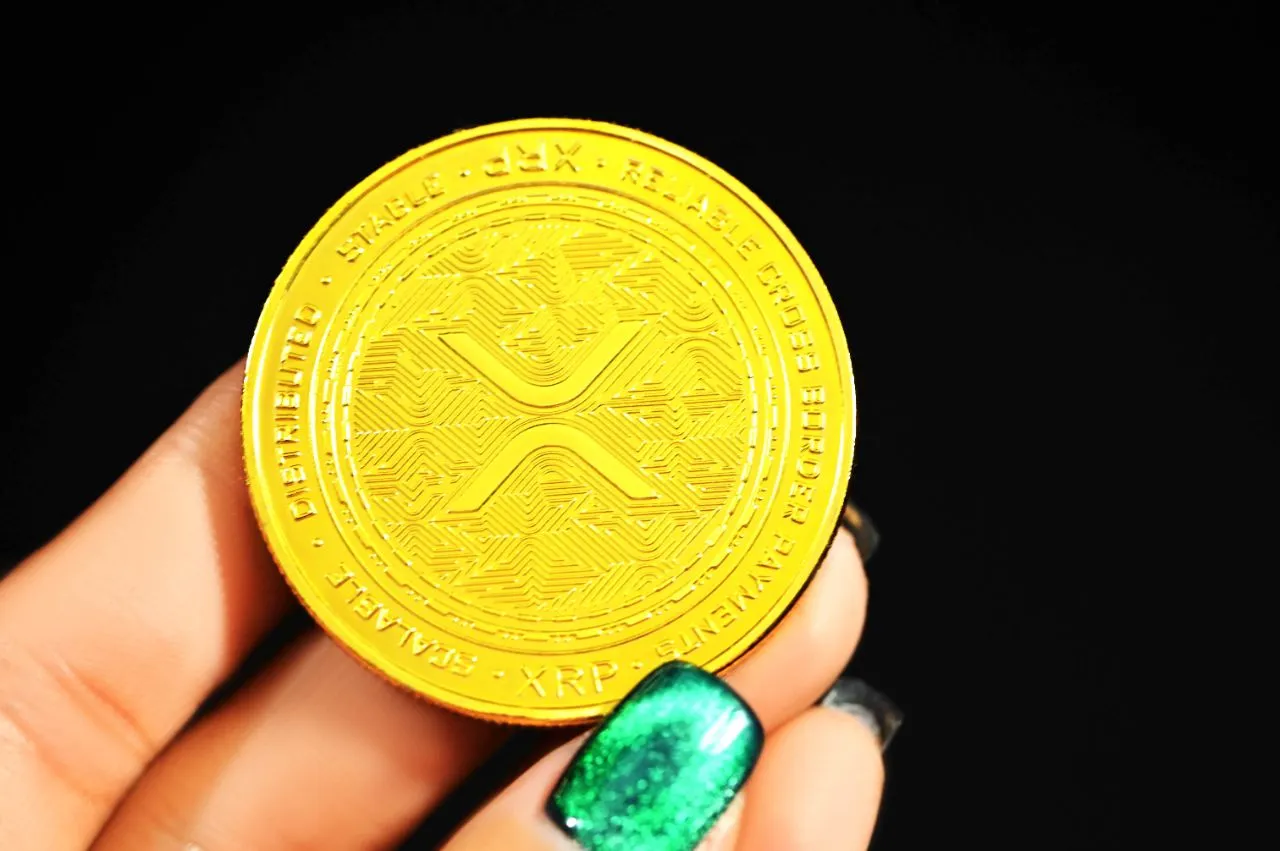
The Hong Kong Virtual Asset Consortium (HKVAC), a digital asset group in China's special administrative region, has announced modifications to its core cryptocurrency index, reshuffling the top contenders to the detriment of XRP, the payment solution token developed by Ripple Labs.
https://asset.coinness.com/en/news/89e98c2bec2b36b43ca45ef20278eb8b.webp
Photo by Kanchanara on Unsplash

Solana takes top 5 slot

Effective as of this Friday, HKVAC will replace XRP with Solana (SOL) in its Top 5 Large Cryptocurrency Index, signaling a shift in the composition of its benchmark index.


HKVAC is a collaborative effort between Hong Kong-based industry participants such as crypto exchanges and licensed ratings agencies. Its aim is to optimize the risk management capabilities of the crypto sector and in that way, assisting market participants including local regulatory bodies.


Crypto exchange platform HTX, previously known as Huobi, became the first member of HKVAC in 2023. It was joined by iPollo, KuCoin, LK Venture, Nano Labs, Purise, Wealthking Investment, G-Rocket Global Accelerator, Hong Kong Data Infinity Technology and others in making up the organization’s membership.


The HKVAC's Top 5 index reflects the global cryptocurrency ranking based on market capitalization, maintaining a pulse on the ever-evolving crypto landscape. However, beyond market cap, the digital asset group considers additional factors such as market valuation, investability and liquidity in its index rebalancing decisions.


Solana’s growth and progression

Solana, currently ranked as the fifth-largest cryptocurrency, has been making substantial strides in the market. Despite the 2022 collapse of the FTX crypto exchange, which significantly impacted SOL's price, the cryptocurrency has made an impressive recovery. Over the past year Solana has surged by 315%. Presently, SOL boasts a market cap of $41 billion, securing its position in the top echelons of the cryptocurrency market.


In contrast, XRP, the ousted cryptocurrency, has experienced a more modest price growth during the same period. As of the latest data, XRP holds the sixth position in the cryptocurrency ranking, with a valuation of $31 billion. The decision to remove XRP from the Top 5 index was met with a 3.9% decline in its value, settling at $0.57. XRP had moved within the Top 5 index in October of last year.


It was added to the index alongside SHIB in 2023. At the time of its formation, HKVAC emphasized that market capitalization was one of the primary criteria incorporated within the evaluation, which extends to 30 cryptocurrencies. A re-evaluation is carried out each quarter on the basis of that market cap criterion.


Crypto rating reshuffle

The HKVAC's reshuffling extends beyond the Top 5 index, impacting other leading cryptocurrencies. Notable changes include the removal of Filecoin (FIL), Binance USD (BUSD), Maker (MKR), Hedera (HBAR) and TrueUSD (TUSD) from the Global Large Cryptocurrency Index. These have been replaced by Near Protocol (NEAR), Internet Computer (ICP), Immutable (IMX), Optimism (OP) and Injective (INJ). Additionally, Avalanche (AVAX) is set to replace Tron (TRX) on the HKVAC Top 10 Global Large Cryptocurrency Index, effective this Friday.


These adjustments come amid Hong Kong's ongoing efforts to bolster the cryptocurrency industry within the region. In December, the financial regulator in Hong Kong signaled its readiness to accept spot crypto exchange-traded funds (ETFs). This move aligns with the United States Securities and Exchange Commission's review of 11 spot bitcoin ETF applications, ultimately approved on Jan. 10.



More to Read
View All
Web3 & Enterprise·

Jul 11, 2023

Crypto Exchange Loss Deters Temasek from Investing in Crypto Firms

Crypto Exchange Loss Deters Temasek from Investing in Crypto FirmsSingapore’s state-owned investor Temasek has ruled out investing in crypto companies for now, following a $275 million loss in the bankrupt US crypto exchange FTX.Photo by Plato Terentev on PexelsRegulatory uncertainty concernsTemasek’s Chief Investment Officer Rohit Sipahimalani said in a CNBC interview on Tuesday that the regulatory uncertainty in the crypto sector made it very difficult for the fund to make another investment in an exchange.“There’s a lot of regulatory uncertainty in this environment. And I do think that it will be very difficult for us to make another investment and exchange in the middle of all this regulatory uncertainty,” Sipahimalani said.He added that Temasek was not interested in investing in cryptocurrencies, but rather in exchanges that could generate fee-based revenue without taking balance sheet or trading risks. In May, it was reported that Temasek had invested in algorithmic currency system, Array. However, the global investment company was quick to deny those reports.“We’ve never been looking to invest in cryptocurrencies. Even the investment in FTX, we’ll be talking about investing in an exchange, which allowed us to get fee-based revenue without thinking [of] balance sheet risk or any trading risks,” he said. However, he said that Temasek would not be comfortable investing in exchanges given the way things are right now, and that it would depend on the right regulatory framework and investment opportunity.“If you have the right regulatory framework, and we are comfortable with it, and you have the right investment opportunity, there’s no reason for us to not to look at it,” he said. Temasek’s FTX investment was part of its early-stage investment strategy, where it invests in new disruptive technologies and tries to find the next winners, Sipahimalani said.But the strategy backfired when FTX filed for bankruptcy in November, with more than 1.4 million creditors and billions of dollars in liabilities, according to bankruptcy filings.Reputational damageTemasek wrote down its $275 million investment in FTX to zero soon after the collapse of the exchange. However, the bigger concern for the company is the posting of its worst returns since 2016 amid macroeconomic and geopolitical challenges. In the financial year ending in March 2023, the investing behemoth posted a $7.3 billion loss.The FTX loss sparked criticism from Singapore’s Deputy Prime Minister and Finance Minister Lawrence Wong, who called it “disappointing” and damaging for Singapore’s reputation. And that is the greater issue for Temasek relative to FTX.The amount of that particular loss is not that significant, given the size of the company and the scale of losses incurred elsewhere. The issue has been the reputational damage that the company has experienced as a direct consequence. Temasek maintains that it carried out competent due diligence, as have all of the venture capital investors who have all had their FTX investments wiped out.Further details on that due diligence are likely to emerge as Temasek, alongside many other leading investors in FTX, is being sued by creditors on the basis that they gave credence to what transpired to be a fraud. Temasek announced in May that it would cut the salaries of the staff responsible for the FTX investment, after conducting an internal review of the deal.

news
Web3 & Enterprise·

Jan 03, 2024

SBI and TradeFinex establish 'SBI XDC Network APAC'

Japanese financial services company SBI Holdings has successfully established "SBI XDC Network APAC" in Japan, following through on an intended joint venture with TradeFinex, the driving force behind the XDC Network.Photo by William Warby on UnsplashJV company formationAt the end of September, the two companies outlined the starting point of an intended collaboration. Only three months later, SBI has come back with an update, a press release published on Dec. 27, to detail the progress that has been made thus far. According to that document, the companies established joint venture corporate entity SBI XDC Network APAC Co. Ltd. on Dec. 18. Among the directors of the new company is the President of BITPoint Japan, a wholly owned subsidiary crypto exchange business of SBI. Majority stakeholderSBI will be the majority stakeholder in the venture, holding 60% of the company’s shares while Dubai-based TradeFinex will be the minor partner, with a 40% shareholding. The press release outlines that the stakeholders will “work to expand the use case using the blockchain technology of the XDC Network in global economic activities centered on trade finance and cross-border payments, not just the handling of tokens.” With that, this enterprise-focused blockchain initiative aims to elevate the efficiency of trade finance. Going forward, it endeavors to broaden the applications of XDC Network's blockchain technology in global economic activities, with the emphasis remaining on trade finance and cross-border payments. The XDC Network, inaugurated in 2017, is a community-driven platform tailored explicitly for trade finance and payments. It introduces a smart contract system that streamlines global trade operations by tokenizing real-world assets (RWAs) such as bonds, trade assets and trade documents. Operating on a high-speed, secure and cost-effective blockchain, XDC Network aspires to transform the landscape of trade finance. SBI Group has been actively involved in various services related to the XDC Network, including being the first exchange in Japan to handle XDC tokens. This was made possible through a partnership with SBI VC Trade, a company within the SBI Group specializing in crypto asset exchange services. Corda platform proof of conceptLogo design has been completed for the new entity, while a website has also been launched. Not wasting any time, the new company has already initiated a proof-of-concept (PoC) experiment. The experiment involves connecting the XDC Network with the Corda platform from SBI R3 Japan and the Corda Bridge from IMPEL GLOBAL. The PoC experiment revolves around conducting fiat payments generated by business-to-business transactions in XDC via Corda and the Corda Bridge. Leveraging a hybrid blockchain with both private and public characteristics, the objective is to attempt to offer a seamless one-stop service that settles both private and public aspects simultaneously. The company claims that this approach achieves an efficient and smooth payment method for cross-border transactions, including international trade, outshining conventional fiat currency transactions. 

news
Policy & Regulation·

May 03, 2024

Upbit executive: Establishing crypto regulations hinges on building trust

At the 'Beyond Coin: Brace for Digital Asset Super Cycle' conference held in Seoul on April 30, Lee Hae-bung, Head of Investor Protection Center at Upbit, said that it is significantly important for virtual asset service providers (VASP) to fulfill their responsibilities at a time when the government authority is laying the groundwork for crypto regulations, according to local media TECH M. Upbit is one of the few licensed cryptocurrency exchanges in South Korea. The conference was jointly organized by SEUM Law Firm and local media outlet TECH M.  During his speech at the conference, Lee stated that by adhering to industrial rules and meeting obligations, VASPs can protect not only crypto investors but also themselves. This is how the crypto industry can enhance the value of blockchain and build trust surrounding the cutting-edge technology, he asserted. Photo by Lukas on PexelsShifting paradigm Lee said everything created based on blockchain and ledger technology is now deemed assets and property in the modern world, warranting new regulations. This marks a contrasting shift from the past when only fiat currencies were considered assets and mediums of storage.  In the following sessions, he delivered presentations about cryptocurrency regulations in various countries such as the U.S., Singapore, Hong Kong and several EU member states. During his speech, four moral pillars – legal clarity, responsible innovation, accountability and resilience – were particularly highlighted as ethical requirements for VASPs.  Ten minus one equals zeroLee noted that Korea's crypto industry is currently going through transitional phases, during which the nationwide crypto craze disrupted the market and turned many good-willed investors into victims. The recent Bitcoin rally has lured many young Korean investors in their 20s and 30s to the crypto market, many of whom engaged in reckless investments with borrowed money.  The industry is now at a point where regulations are being laid out for investor protection, however, heading into a sustainable and healthy direction, he added.  "Ten minus one equals zero when it comes to regulating the crypto industry," Lee said, underscoring the significance of completing all the tasks related to establishing regulation in the local crypto space. “Transparency and accountability are the two most important values VASPs must safeguard on their journey to building trust. If VASPs fulfill these obligations, they should be able to gain the trust of users. Otherwise, they must bear liability for the consequences,” he added, citing the European Union’s Market in Crypto Asset (MiCA) Regulation as a model example that values transparency and accountability. The MiCA Regulation is currently being discussed by legislators from EU member states.  

news
Loading
