Top

Tax burden contributes to Indonesian crypto exchange trading slump

Policy & Regulation·January 18, 2024, 3:53 AM

While Indonesia has been recognized as one of the world's swiftest embracers of cryptocurrencies, it has faced a notable setback more recently, with a 60% decline in transaction volumes on local exchanges compared to the preceding year.


High taxes

In a recent report by CoinDesk Indonesia, the publication speculates that the imposition of high taxes may be a pivotal factor dissuading traders and impacting the overall market dynamics. Indonesia’s tax system treats crypto assets as commodities, with the burdensome taxes arising as a direct consequence of that classification.


The tax framework in Indonesia subjects crypto assets to both income tax and value-added tax (VAT), treating them akin to commodities. Leading crypto exchanges in the country reveal that the cumulative tax load on each transaction could surpass the trading fees imposed by exchanges, potentially discouraging users from engaging in crypto transactions.


Oscar Darmawan, the CEO of the leading Indonesian crypto exchange INDODAX, told CoinDesk that users bear an income tax of 0.1% and a VAT of 0.11% on every crypto transaction. Additionally, exchanges are required to remit a 0.04% fee to the recently established national crypto bourse.


Darmawan clarified that “this places a significant financial burden on the domestic crypto industry." expresses Darmawan in an interview with CoinDesk Indonesia, underscoring the challenges faced by the industry due to the current tax structure.

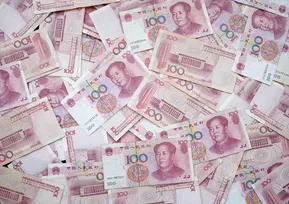
https://asset.coinness.com/en/news/e94a80d8c14da36f5c78fb2aee719cbd.webp
Photo by Nataliya Vaitkevich on Pexels

An international issue

The tax treatment of digital assets has been a bugbear for the crypto space on an international basis. In Japan, it arose last month that the country’s lawmakers were considering applying an exemption for companies from paying taxes on unrealized cryptocurrency gains. It has since transpired that such an amendment will be applied to its fiscal 2024 tax reform plan.


India has applied a heavy tax burden where crypto is concerned, with a 30% tax applied to capital gains relative to the sale of crypto assets. Additionally, 1% taxation applies by way of a tax deducted at source (TDS) on crypto transactions.


The use of cryptocurrency for the purchase of goods and services in the United States remains a stumbling block, given that the current tax code treats such a scenario as a taxable event. Last year, two U.S. senators attempted to address that issue, by including a $200 exemption for purchases made with cryptocurrency.


Calls for crypto asset reclassification

In response to this dilemma in Indonesia, some stakeholders within the local crypto industry advocate for a paradigm shift in the classification of crypto assets. They propose treating crypto as securities instead of commodities, anticipating that this alteration could alleviate the tax burden on users. Yudhono Rawis, the CEO of the exchange platform Tokocrypto, asserts:


"Both stocks and crypto are tradable assets with profit potential … Thus, implementing the same tax regime for both these investment instruments would be more equitable and consistent."


The industry anticipates regulatory changes in the near future, as crypto oversight in Indonesia is set to transition from the commodities regulator to the Financial Services Authority (OJK) in January 2025.




More to Read
View All
Markets·

Jul 18, 2025

ETH surge being led by Asian market

Over the course of the past two weeks, the unit price of Ethereum (ETH) has surged 32%, with a report from a Singapore-based crypto financial services firm asserting that the Asian market has had a large part to play in that increase. Taking to X on July 16, Matrixport, a crypto financial services platform, provided its daily analysis in which it suggested that “Ethereum’s recent outperformance appears to be heavily influenced by Asia.”Photo by DrawKit Illustrations on UnsplashAsian market influenceThe company included a graph in which it had plotted Ethereum’s recent performance during Asian trading hours, asserting that as much as 17% of the uptick in the Ether unit price can be accounted for by the actions of market participants within the Asian market. It added:"The influence of the Asian market in the pricing of crypto assets is continuing to rise, whether in terms of volatility or trading momentum.” ETH ETFs in Hong KongSpot ETH exchange-traded funds (ETFs) were approved in Hong Kong in April 2024. Hong Kong ETH ETF volumes have risen substantially in July, with significant inflows being recorded related to both retail and institutional investors.  In the past, many commentators have suggested that the addition of staking would be an attractive prospect for institutional investors who like the idea of accumulating an ongoing yield. With that, Asian investors may be enticed to delve further into Ethereum positions going forward, given that ETF issuers are trying to add that component to their offerings. Huaxia Fund, a subsidiary of China Asset Management (ChinaAMC), is preparing to launch staking as part of its ETH ETF. Another potential driver for ETH in Asia in the future lies with the ongoing enablement of trading via established institutions. Earlier this week, China Merchants Bank’s brokerage arm received a virtual asset license in Hong Kong to trade crypto assets. It’s the first mainland China-affiliated brokerage to be awarded such a license, with licensing enabling it to offer trading services related to assets like Ether. Global assetWhile Asia is playing a role in ETH’s recent move upwards, the asset is traded globally and with that, factors further afield are also playing a role. Tom Lee, founder of American financial research firm Fundstrat, pointed out on X that ETH had been range-bound since 2021. However, he believes that the rise of stablecoins, which by and large run on Ethereum, together with ongoing growth in the tokenization of real-world assets (RWAs), is driving demand for the digital asset. While Bitcoin treasury companies have played a significant part in driving Bitcoin in recent months, Ethereum is starting to see similar activity. Lee made the point that Strategy (formerly MicroStrategy) “set the standard for Treasuries,” but that now BitMine “wants to be the Microstrategy of Ethereum.” The crypto mining and treasury firm confirmed on July 17 that it now holds $1 billion worth of Ethereum. Arthur Hayes, co-founder of BitMEX and chief investment officer (CIO) at Hong Kong family office, Maelstrom, said that it was “ETH szn” and that the Maelstrom Fund is buying the digital asset. Tom Dunleavy, head of venture at Varys Capital, asserts that ETH will hit a unit price of $10,000 by the end of 2026.

news
Web3 & Enterprise·

Oct 21, 2023

UAE Emirate Launches Digital Asset Oasis Free Zone

UAE Emirate Launches Digital Asset Oasis Free ZoneRas Al Khaimah (RAK), one of the seven Emirates of the United Arab Emirates (UAE), has launched the RAK Digital Assets Oasis (RAK DAO), a free zone tailored exclusively for digital and virtual asset enterprises.Photo by Mostafa Ashraf Mostafa on UnsplashFrom conception to launchThe Emirate has been working on the RAK DAO project for some time, having enacted a law to establish the free zone in March of this year. In July it emerged that RAK Digital Assets Oasis had partnered with the HBAR Foundation, the project team behind the Hedera public ledger, with HBAR extending funding and resources to fuel the growth of free zone members.Having put in the hard yards to establish the free zone, RAK DAO, under the patronage of RAK Emirate ruler His Highness Sheikh Saud Bin Saqr Al Qasimi, had its launch event on Thursday. The event included a range of industry speakers including Ledger Chairman and CEO Pascal Gauthier, Animoca Brands Co-Founder and Executive Chairman Yat Siu, DFINITY Founder Dominic Williams, and TON Foundation President Steve Yun, among others.During the event, DAO creation and governance platform DeXe DAO Studio announced its partnership with RAK DAO.With an eye towards keeping the RAK Emirate ahead of the technological curve, RAK DAO aims for the digital assets oasis to become the world’s first free zone dedicated solely to digital and virtual asset companies. While RAK DAO is initially expected to focus on non-financial activities, it holds the potential to introduce financial activities at a later stage.Nurturing Web3 innovationThe mandate of RAK DAO is to provide robust support to companies engaged in cutting-edge technologies. This includes but is not limited to ventures in the metaverse, blockchain, utility tokens, virtual asset wallets, non-fungible tokens (NFTs), decentralized autonomous organizations (DAOs), decentralized applications (DApps), and various other Web3-related businesses.Entrepreneurs who establish their presence within the confines of this free zone will be granted the privilege of retaining 100% ownership of their enterprises. Moreover, they will benefit from innovative tax schemes and a regulatory framework that is tailored to the unique demands of the digital asset industry.Progressive approach to Web3The UAE, as a nation, has actively pursued and courted crypto and blockchain firms by cultivating a progressive regulatory environment. Dubai led the charge by introducing a virtual assets law and establishing the Virtual Asset Regulatory Authority.RAK is not the first Emirate to establish a free zone that caters to crypto and Web3 business within the UAE. The Emirate of Abu Dhabi has established the Abu Dhabi Global Market (ADGM) while the Dubai International Financial Centre (DIFC) established its own financial regulator in Dubai, paving the way for attractive free zones for digital asset businesses. The Dubai Virtual Assets Regulatory Authority (VARA) even took its commitment a step further by inaugurating its headquarters in The Sandbox in May 2022.Dubai has issued operational licenses to several crypto firms, including prominent names like Binance, Crypto.com, and Nomura’s Laser Digital and digital asset custodian Komainu. These licenses have further solidified the UAE’s position as a preferred destination for crypto, blockchain, and Web3 enterprises.

news
Markets·

Dec 15, 2023

PDAX gears up for trading surge amidst Binance market exit

PDAX gears up for trading surge amidst Binance market exitThe Philippine Digital Asset Exchange (PDAX), an order book exchange, is planning to take full advantage of Binance’s regulatory issues in the Philippines, with the expectation of an uptick in trading volume as a direct consequence.Photo by iSawRed on UnsplashMarket opportunityAccording to a Filipino English-language broadsheet publication, The Daily Tribune, PDAX CEO Nichel Gaba sees the exit of Binance, flagged by the Securities and Exchange Commission (SEC) as an unauthorized exchange in the Philippines, as a pivotal moment for local virtual asset service providers (VASPs) to expand their market presence. Gaba envisions that the anticipated migration of traders from Binance could propel the country’s cryptocurrency trading volume to an estimated $6 billion by 2024.Data from the Bangko Sentral ng Pilipinas (BSP) demonstrates that there are currently 17 VASPs in the Philippines, with 10 operational and seven inactive. As one of the operational ones, PDAX is preparing for the expected growth in the local sector.The SEC in the Philippines has been actively working towards imposing a ban on Binance, citing various issues both locally and internationally. Gaba predicts that this development will prompt a substantial number of Filipino cryptocurrency traders to seek alternative, legitimate trading platforms. Gaba stated:“Now that Binance is being banned, there are a lot of users wondering where they can go and the best option for them is to go to a licensed exchange like PDAX. Our strategy as a company is to focus on being the best alternative.”Binance ban countdownAccording to local news outlet BitPinas, the head of the Philippines SEC, Kelvin Lee, clarified that Binance and any other unregistered exchange issued with an advisory have three months before they are banned from the country.Addressing the confusion surrounding the ban during a panel discussion on Wednesday, Lee stated that the ban would be in effect three months from the issuance date of Nov. 29. In that way, time has been allowed for feedback and potential extensions.While the original recommendation was for a shorter transition period, Lee extended it, considering the upcoming Christmas holiday, stating, “Not to make it hard for Filipino investors during that time.”Two additional exchanges bannedIn addition to Binance, Lee mentioned that OctaFX and MiTrade, along with other exchanges that have received advisories for unregistered operations, will also face bans after three months. The local SEC disclosed having a sizable list of unregistered exchanges that will gradually emerge.Responding to criticisms of the ban, given that some users find Binance to be “cheaper” than other registered exchanges, Lee emphasized the importance of compliance costs and consumer protection. He urged local investors to “invest in registered entities” among the 17 VASPs registered in the country that offer fiat-to-crypto services.The BSP-regulated VASPs are expected to process crypto assets worth approximately $3 billion by the end of the year. However, this estimate does not take into account unregulated transactions occurring outside of VASP channels.

news
Loading