Top

3AC-founded OPNX Exchange announces closure

Web3 & Enterprise·February 03, 2024, 3:13 AM

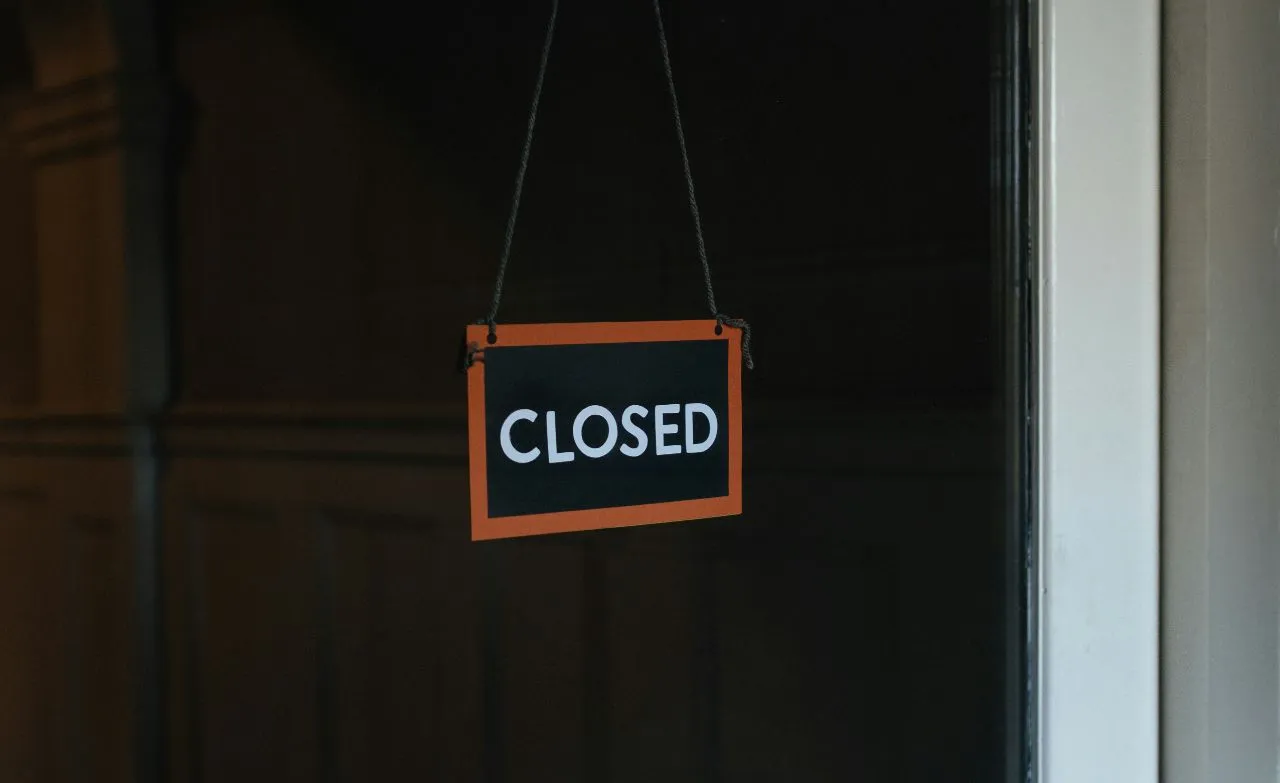
In a recent announcement OPNX, the Seychelles-incorporated cryptocurrency bankruptcy claims platform co-founded by the creators of the now-defunct hedge fund Three Arrows Capital (3AC), has revealed its decision to cease all operations.
https://asset.coinness.com/en/news/d10901ef092836a0c880a0a7968763cf.webp
Photo by Kelly Sikkema on Unsplash

February 14 shutdown

In a message to its users, subsequently shared on social media on Thursday, the OPNX team expressed its commitment to ensuring an orderly closure, urging users to settle all positions by Feb. 7 and withdraw their funds from the platform before Feb. 14, as all withdrawal functionality will be disabled thereafter. The team expressed gratitude to the OPNX community, acknowledging their dedication and trust throughout the platform's existence.


Short for "Open Exchange," OPNX served as both a hybrid bankruptcy claims platform and a crypto exchange, enabling users to trade creditor claims of bankrupt crypto companies.


The origin of OPNX can be linked to two defunct crypto entities — Coinflex and 3AC. Seychelles-based Coinflex was a crypto yield platform that was forced to suspend withdrawals in June 2022. It subsequently entered into a bankruptcy process. Coinflex co-founder Mark Lamb joined forces with 3AC’s Kyle Davies and Su Zhu to found OPNX. In October, Coinflex creditors sued Lamb, alleging that he had appropriated Coinflex's intellectual property, customer base, employees and technology to establish OPNX.


Mired in problems

Within its short existence, OPNX has been mired in problems. From the very outset, there was little goodwill for the new venture, given that many crypto sector participants took a dim view of Zhu and Davies due to the turmoil the collapse of 3AC caused within the industry.


In April of last year, OPNX claimed to have significant venture capital backing, only for many of the VC entities mentioned to quickly deny such claims subsequently. The following month, the local regulator in Dubai, the Virtual Assets Regulatory Authority, formally reprimanded the OPNX founders for promoting an unregulated business within the Emirate of Dubai. In August, it emerged that VARA had hit OPNX and its founders with a hefty fine.


Following the closure announcement, the native OX token of OPNX experienced a significant price decline. Over the course of the past 24 hours, the token unit price has fallen 13.6% to $0.007981.


The failure of 3AC led to Teneo, the firm responsible for liquidating 3AC's assets, subpoenaing Zhu and Davies for concealing details of their physical whereabouts through messages on social media platform X.


The closure of OPNX adds to the challenges faced by Zhu and Davies, as Teneo is actively seeking to recover $1.3 billion directly from the co-founders. The claim asserts that Zhu and Davies engaged in substantial leverage with investor funds after the insolvency of their hedge fund.


In September 2023, Singapore's central bank issued nine-year prohibition orders against Davies and Zhu, citing alleged violations of the country's securities laws at Three Arrows Capital.


All the while, crypto community sentiment remains negative where OPNX and its founders are concerned. Taking to social media, Ikigai Asset Management’s Travis Kling didn’t mince his words, stating:

”I mean it from the bottom of my heart when I say **** these criminals.”


As OPNX concludes its operations, the unfolding events surrounding its co-founders and their association with the failed hedge fund continue to draw attention to the need for the industry to raise its standards.




More to Read
View All
Policy & Regulation·

Jul 21, 2023

Myanmar Government in Exile Backs Crypto Bank Launch

Myanmar Government in Exile Backs Crypto Bank LaunchMyanmar is on the cusp of a financial revolution as the National Unity Government (NUG), the country’s exiled shadow government, introduces the Spring Development Bank (SDB), a crypto-based financial institution.With a mission to bestow long-awaited financial freedom and digitized sophistication upon the nation’s citizens, the SDB aspires to reshape Myanmar’s financial landscape.Built on PolygonThe bank derives its name from the Spring Revolution, an opposition movement that bravely challenges the ruling military junta. The goal of the SDB is to bring “freedom and democracy to the 55 million citizens of Myanmar,” a lofty ambition that reflects the NUG’s determination to empower its people through innovative means.Constructed on the Polygon Network, the SDB aims to revolutionize domestic and international payments, making them faster and more efficient. But the bank’s vision extends beyond just payments. Following a recent press conference, bank officials revealed plans to offer a diverse range of financial products, including fixed deposits, currency exchange services, cross-country remittances, and even digital gold savings options.Reaching the Burmese diasporaNotably, the SDB’s reach extends beyond Myanmar’s borders to the two-million-strong Burmese diaspora residing abroad. This diaspora frequently sends money back to their homeland, but the current remittance fees can soar as high as 30%. The bank intends to alleviate this burden, reducing the costs associated with sending money back to Myanmar.The Spring Development Bank operates under the licensing and regulation of the Interim Central Bank of Myanmar, which is under the control of the NUG. U Calvin, the bank’s CEO, emphasized that this launch marks the initial step towards restoring financial independence to Myanmar.The bank’s emergence comes amid Myanmar’s complex relationship with cryptocurrencies. While there is no specific legislation addressing cryptocurrencies, the Central Bank of Myanmar issued a ban on them in 2020, and the military junta later proposed a cybersecurity law that criminalized their usage in January 2022.Photo by Dan Gold on UnsplashJuly soft launchA soft launch of the SDB is scheduled for July 22, with 1,000 private beta users and 100 relationship managers. The bank expects to achieve a full launch in late August, with the goal of attracting 100,000 active users within the first six months of operation.Despite these regulatory challenges, Myanmar’s people have turned to cryptocurrencies as an escape from their dire financial situation. Since the February 2021 coup, the country’s economy has suffered significantly, with the World Bank estimating an alarming 18% annual contraction. Fading trust in the traditional banking system, controlled by the military, has further crippled the financial market.The Myanmar kyat (MMK) plummeted to an all-time low of 2,200 against the US dollar (USD) in September 2021, down from 1,330 in February 2020 (currently 1 USD = 2,100 MMK).The SDB’s arrival signals a glimmer of hope amidst these trying times, offering a beacon of financial opportunity for the citizens of Myanmar. With the support of the NUG, the bank is looking to take an innovative approach to better serve Burmese citizens, both at home and abroad.

news
Policy & Regulation·

Jan 03, 2025

INDODAX snags full licensing in Indonesia

INDODAX, Indonesia’s largest virtual asset trading platform by trading volume, has acquired full licensing in Indonesia from the local regulator. That’s according to a report published by local media outlet VOI. The license, a Physical Crypto Asset Trader (PFAK) license, has been awarded to the company by Indonesia’s Commodity Futures Trading Supervisory Agency, better known as BAPPEBTI.  The license will place INDODAX in a complaint position within the Indonesian market, relative to local regulations. The business has been issued certificate number 10/BAPPEBTI/PFAK/12/2024 by the regulator, its approval certificate as a Physical Crypto Asset Trader.Photo by Mark König on UnsplashMandatory registration requirementIn December 2023 the authorities in Indonesia set out a mandatory requirement for crypto trading entities to register with the Commodity Future Exchange (CFX). CFX is Indonesia’s national crypto bourse, while INDODAX is a member. As of April 2024, 35 crypto exchanges had been registered with the regulator. CFX has been given the mandate to monitor crypto exchange operations, to safeguard investors by ensuring exchanges abide by local regulations. Fendy Tan, chief financial officer (CFO) at INDODAX commented on the firm’s recent licensing milestone, stating: "We are grateful to BAPPEBTI and CFX for the trust given through this full license. The long process that must be passed reflects our commitment to providing the best protection for users. The license number 10 also has a special meaning, which symbolizes perfection, and symbolizes the 10-year journey of INDODAX in leading the crypto industry in Indonesia."  Liquidity and SOP requirementsIn order to acquire this license INDODAX had to comply with BAPPEBTI Regulation Number 8 of 2021 and Number 13 of 2022. It has also had to ensure a minimum paid-up capital of 100 billion Indonesian Rupiahs ($6,158,000), and a minimum equity of IDR 50 billion ($3,079,000). Furthermore, the company has had to implement a set of standard operating procedures (SOPs), together with achieving ISO certification in accordance with global security standards, with specific emphasis on complying with regulations to safeguard customer funds according to the balances held on account of fiat currency and digital assets by INDODAX customers. INDODAX is understood to have 7.1 million customers while a transaction volume of 109 trillion Indonesian rupiahs was reached for the period January to November 2024. BAPPEBTI had extended a deadline for the crypto licensing of exchanges late last year, a move welcomed at the time by INDODAX CEO Oscar Darmawan. Darmawan said that the move would strengthen the industry by ensuring that market participants were compliant with recently introduced regulations. While this licensing milestone is a positive for INDODAX, the firm had faced challenges in 2024. In September it emerged that the platform had been compromised with the loss of around $18 million in digital assets. Meanwhile, the authorities in Indonesia had planned to switch crypto market oversight from BAPPEBTI to the Financial Services Authority (OJK) by Jan. 12. However, a recent report published by the Jakarta Globe suggests that the Indonesian government has yet to finalize this regulatory transfer.

news
Web3 & Enterprise·

Jul 07, 2023

South Korean Firms Combine Strengths to Draw Hobbyists into the Metaverse

South Korean Firms Combine Strengths to Draw Hobbyists into the MetaverseCom2Verse, the metaverse subsidiary of South Korean game developer Com2uS, has formed a partnership with Somssidang, a leading hobby sharing platform, and Hana Bank, a prominent financial institution, to attract hobbyists to the metaverse.That’s according to a report by local news agency Newsis. This collaboration aims to create an infrastructure within Com2Verse’s metaverse that offers hobby classes and extends financial support to class providers.Photo by Steve Johnson on UnsplashSeminars and classes in metaverseThrough the combined expertise of the partnering companies, they strive to deliver engaging seminars and interactive classes in the metaverse, while actively promoting and expanding its ecosystem.Com2Verse plans to enable its metaverse users to partake in virtual as well as face-to-face courses offered by Somssidang. This will establish an environment conducive to the growth of hobby-related businesses, effectively bridging the gap between the physical and virtual realms. Somssidang, on its part, aims to expand its operations by providing high-quality content materials, such as classes by distinguished experts, to Com2Verse.Somssidang, boasting a user base of 1.2 million, stands as Korea’s largest hobby platform. The platform is currently offering a wide range of hobby classes, both online and in-person, across the nation. In addition to organizing lectures, Somssidang sells a wide range of do-it-yourself kits, as well as tickets for concerts, exhibitions, and tours. Furthermore, Somssidang provides specialized hobby workshops that are specifically tailored to meet the needs and preferences of business customers.Financial groundworkHana Bank, in collaboration with Com2Verse, will lay the financial groundwork necessary to support the metaverse. This partnership includes extending financial assistance to small business participants within the metaverse and promoting recreational activities for socially marginalized groups.CEO statementsCom2Verse CEO Lee Kyoung-Il expressed his conviction that the company’s metaverse will go beyond the traditional realm of online classes, offering educational courses that exceed expectations. He also emphasized the metaverse’s capacity to provide a diverse range of services, enabling users not only to enjoy their hobbies but also to achieve personal fulfillment. Somssidang CEO Jeong Myeong-won affirmed the platform’s commitment to developing content and services tailored specifically to the metaverse.Kim So-jung, Deputy President of Hana Bank, said this opportunity would converge cultural and financial sectors to realize our daily lives onto the metaverse. Kim added that Hana Bank is committed to ongoing strategic cooperation with the other two partners to deliver innovative financial services and fulfill its social responsibilities.

news
Loading