Top

Gate.HK ceases operations and withdraws license application in Hong Kong

Policy & Regulation·May 24, 2024, 8:38 AM

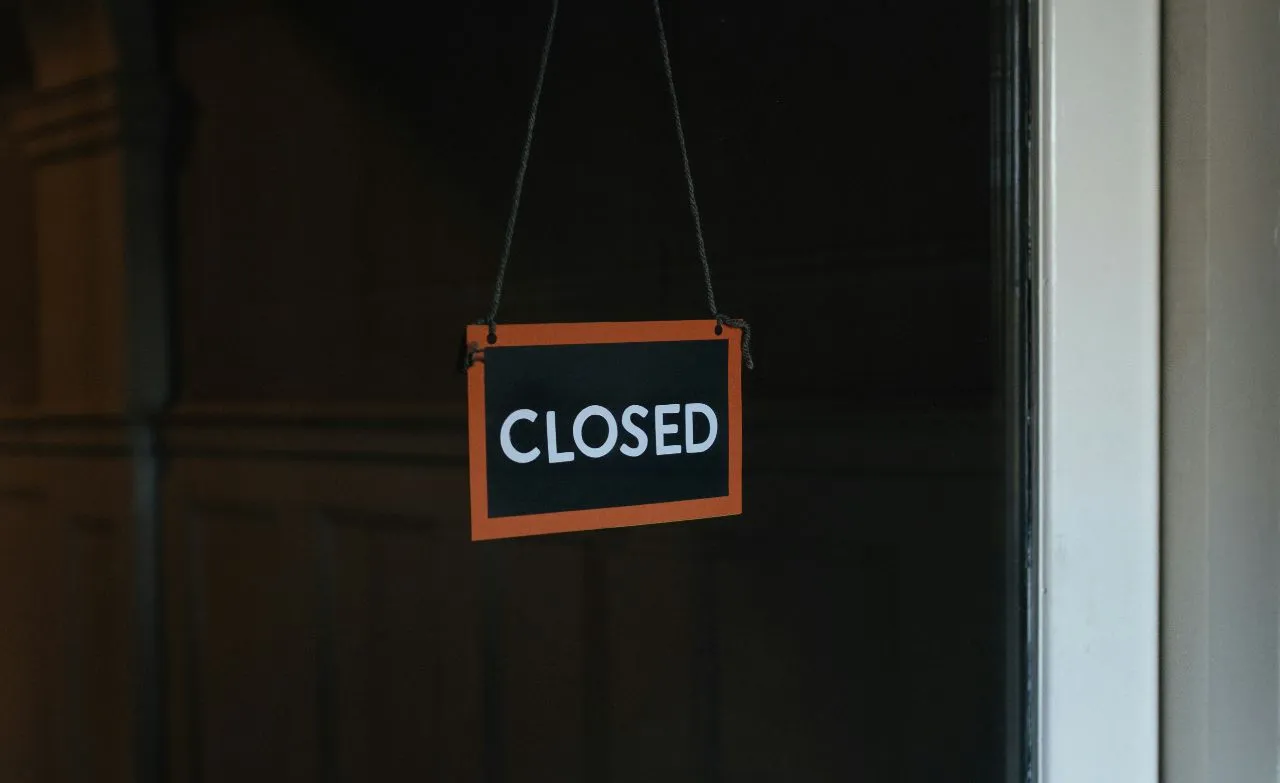
Gate.HK, cryptocurrency exchange Gate.io’s Hong Kong entity, is discontinuing its operations and has retracted its application for a crypto trading platform license with the local regulator. The company announced on Wednesday a planned "major overhaul" of its platform and has ceased new user registrations and deposits immediately. In compliance with local regulations, Gate.HK will delist all tokens—including major ones like Bitcoin, Ether and USDT—on May 28, urging users to withdraw their assets by August 28. The trading platform, which launched officially in May 2023, aims to re-enter the Hong Kong market in the future after securing the necessary approvals and contributing to the virtual asset ecosystem.

https://asset.coinness.com/en/news/6e8a3b247fa6273bc82c1ab2dad3a08b.webp
Photo by Kelly Sikkema on Unsplash

Regulatory environment and industry response

The withdrawal of the license application, initially submitted in February 2023, was noted on the website of the Hong Kong Securities and Futures Commission (SFC) on May 22, without a disclosed reason for the withdrawal. The SFC mandates that crypto trading platforms without a submitted license application by Feb. 29 must shut down by May 31 or within three months upon receiving further notice. This regulation has impacted several platforms, including HKVAEX and Huobi HK, both of which have recently withdrawn their license applications and ceased operations or faced operational uncertainties in the region. Currently, the SFC is reviewing applications from 20 crypto firms, indicating significant interest among global exchanges in securing retail trading licenses in Hong Kong.


More to Read
View All
Policy & Regulation·

Oct 31, 2023

Terraform Labs Co-Founder Daniel Shin Denies Wrongdoing in LUNA Collapse

Terraform Labs Co-Founder Daniel Shin Denies Wrongdoing in LUNA CollapseShin Hyun-seong, popularly known as Daniel Shin, has refuted accusations against him related to the $40 billion collapse of the stablecoin TerraUSD and its companion token, LUNA, according to a report by local news outlet Newspim. He presented this defense during his initial trial at the Seoul Southern District Court on October 30 (local time).Shin co-founded Terraform Labs, the company responsible for issuing TerraUSD and LUNA. His co-founder, Do Kwon, is currently serving a four-month prison sentence in Montenegro for passport forgery.Photo by Tingey Injury Law Firm on UnsplashProsecution’s allegationsKorean prosecutors allege that since 2018, Shin and his colleagues have concealed the fabricated nature of the “Terra project.” By manipulating trades and releasing misleading information, they purportedly misled investors into thinking the project was successful. It’s believed they sold off their tokens before the LUNA crash in May 2022, earning KRW 462.9 billion ($343.3 million) from these activities. They are suspected of personally taking KRW 376.9 billion from this amount.Prosecutors are focusing on Shin as the potential orchestrator of the LUNA crash. They speculate he began selling LUNA tokens around when Terraform Labs launched the Anchor Protocol in March 2021. This DeFi protocol increased the popularity and value of LUNA tokens. Before the crash, Shin is alleged to have gained at least KRW 154.1 billion.Defense argumentHowever, Shin’s legal team countered by asserting that Shin had cut ties with Kwon in 2020. They argued the decline of TerraUSD and LUNA was due to Kwon’s mishandling of the Anchor Protocol and an external attack, neither associated with Shin. Regarding the exploit, Terraform Labs has pursued legal action in the United States Southern District of Florida, claiming that American market maker Citadel Securities played a part in undermining TerraUSD in May 2022.Defending Shin, his lawyers emphasized that at the inception of the Terra project, there were no legal guidelines specifically for cryptocurrency transactions. Additionally, unlike Do Kwon who kept fleeing abroad, Shin willingly came back to Korea and has been cooperating with the investigation. They also noted he received only 32% of the 70 million LUNA tokens initially promised. Regarding classification, they stated LUNA isn’t legally recognized as a security.Shin’s lawyers further argued the prosecution hasn’t clearly identified victims or adequately outlined the components of fraud in this case. They said the prosecution’s case hinges on viewing LUNA as a security. However, Shin’s legal representatives maintained that under the Korean Capital Markets Act, LUNA isn’t a security, making its trades non-fraudulent.To counter a US court ruling the prosecution presented — that a token is a security — Shin’s defense highlighted that the verdict is from a lower court and remains contested. Earlier, prosecutors had cited a ruling from the United States Southern District Court of New York, which classified the XRP tokens sold to institutional investors as securities.

news
Web3 & Enterprise·

Aug 24, 2023

Maple Finance Secures $5 Million to Fund Asia Expansion

Maple Finance Secures $5 Million to Fund Asia ExpansionMaple Finance, a crypto capital network focused on institutional business, has recently concluded a funding round that raised $5 million, with a view towards using the funds to finance an expansion into the Asian market.Maple Finance operates as a platform that empowers lending pool delegates and credit professionals to establish their own credit facilities on the blockchain. These facilities cater to different borrowers who can draw from these pools.Notably, Icebreaker Finance initiated a $300 million lending pool on Maple to assist Bitcoin miners in 2022. Maple Finance functions as the infrastructure atop which these lending pools are built, with pool delegates and lenders independently evaluating and verifying their risk.Photo by Monstera on PexelsMaple Direct lendingThe capital infusion was led by Blocktower Capital and Tioga Capital, with participation from supporters including GSR Ventures, Cherry Crypto, Veris Ventures, and Spartan Capital. This funding will not only facilitate Maple Finance’s expansion endeavors but will also fuel the growth of its newly introduced pure-play lending division, Maple Direct.Maple Finance has spotted an opportunity that has opened up due to the collapse of lending giants like Genesis Lending, BlockFi, Voyager, and Celsius in the institutional lending space. In addition to its role as a platform for facilitating third-party pool creation, Maple Direct was launched in June. It offers overcollateralized loans secured by Bitcoin, Ethereum, and staked Ethereum as collateral.Sydney Powell, the firm’s Co-Founder and CEO explained that Maple Direct is designed to offer an over-collateralized lending product transparently on-chain, providing a differentiated approach in the market. Unlike other platforms, borrowed collateral isn’t rehypothecated for yield generation; instead, it is securely held with a qualified custodian. This strategy positions Maple Finance to cater to market demand while minimizing risk.Strategic expansionPowell told TechCrunch: “I think now is the time to do that because all the other competition exited, and so that’s created this opportunity for us to step in and offer a product.” He expanded further on how the company is thinking strategically, relative to the expansion of the services it is now offering: “Other players try to focus on just trying to build the technology, kind of like Uber and Airbnb. What we’ve tried to do is to act as an underwriter so we need to show credit expertise. I think it gives us a little bit more control over the outcome and it’s a little bit closer to Apple in that it’s more vertically integrated.”Pushing into AsiaThe newly raised funds are earmarked for global expansion, with a particular focus on the Asia-Pacific (APAC) region. This is a strategic move, considering that several jurisdictions in APAC, such as Singapore and Hong Kong, have adopted pro-crypto regulations.“In Asia, you have regulatory clarity, or rather, regulatory support, both coming out of Hong Kong and Singapore in terms of new legislation that’s come through, and you already have a very heavy trading focus over there,” Powell stated.Maple’s product development is ongoing. Earlier this month, the company launched a Treasury Bill Pool that provides accredited investors with access to US Treasury Bills with what it claims is a “risk-free rate” of return, given that the pool generates a yield of 4.67%.

news
Web3 & Enterprise·

Jan 24, 2025

Further Ventures invests $5M in GRVT

GRVT (Gravity), a self-custodial hybrid crypto exchange, has received $5 million in funding from Abu Dhabi-based venture capital firm Further Ventures. That’s according to a report published by The Block on Jan. 21. GRVT seeks to blend the benefits of both centralized exchanges and decentralized exchanges in a hybrid model built using ZKsync’s Validium ZK Chain. The platform offers off-chain order matching paired with on-chain settlement at a rate of 600,000 transactions per second (TPS). Settlements are secure and verifiable on the blockchain, while the user maintains custody of his/her assets, and the order book infrastructure is nevertheless centralized.Photo by Towfiqu barbhuiya on UnsplashEquity-based funding dealThis latest equity-based funding round ran from October until it was closed out in December. Further Ventures, an entity that specializes in early-stage startup funding, led the round, making this its latest investment into a crypto-sector startup.  Earlier this month, the venture capital firm led a funding round into Paris-based crypto wallet technology firm Dfns. Last year, it collaborated with Singapore-headquartered crypto trading firm QCP Capital, in facilitating its expansion in Abu Dhabi.  Other crypto-related investments include staking services provider Twinstake, crypto custodian Tungsten, blockchain infrastructure platform Fuze and crypto derivatives platform Kemet Trading.  Further Ventures counts ADQ, Abu Dhabi’s sovereign wealth fund, among its investors. In 2022, it established a $200 million fund, which was earmarked for investment into early-stage startups in the fintech, digital assets and supply chain sectors. In the past, Hong Kong-based GRVT has held pre-seed and seed funding rounds that involved GRVT token warrants. On this occasion, the funding deal was structured as equity. GRVT CEO Hong Yea explained that equity was chosen as it was felt that the GRVT token should be held in reserve for the community. Additionally, structuring the funding round around equity means that the holding company has the freedom to pivot or expand into alternative business lines in the future. $14.3 million in funding to dateBack in October 2023, the project raised $7.1 million in funding based on a $39 million valuation. That round was co-led by Matrix Partners alongside Delphi Digital, with further participation by Susquehanna Investment Group, CMS Holdings, ABCDE and Hack VC. Matter Labs, the developer of the ZKsync scaling network that GRVT runs on, was also a participant.  This latest funding round brings GRVT’s total capital raised to $14.3 million. In March of last year, the firm had raised $2.2 million from a private token sale. Expanding spot & options tradingIt’s understood that the new funding will be used to expand the platform’s crypto spot and options trading. Furthermore, the firm has plans to acquire an upgraded full Class F license from the regulator in Bermuda. Currently, the Bermudan authorities have issued the company with a modified Class M crypto business license. In an effort to unlock its offering to a broader global market, the company also has plans to pursue a Markets in Crypto-Assets (MiCA) license within the European Union and a virtual assets service provider (VATP) license from the Virtual Assets Regulatory Authority (VARA) in Dubai. 

news
Loading