Top

New Hong Kong dollar-linked stablecoin unveiled by Jingdong Coinlink

Web3 & Enterprise·July 26, 2024, 2:00 AM

Jingdong Coinlink Technology Hong Kong Limited, a branch of JD Technology Group, has declared its intention to launch a stablecoin tied 1:1 to the Hong Kong dollar (HKD). Despite its status as a sandbox participant under the Hong Kong Monetary Authority (HKMA), Jingdong Coinlink has clarified that this does not imply endorsement or licensure for stablecoin issuance. The company aims to offer this blockchain-based stablecoin as a solution for businesses seeking efficient, cost-effective and secure payment methods.

https://asset.coinness.com/en/news/90845ffd6dc8be8ca93852b392b9dc4a.webp
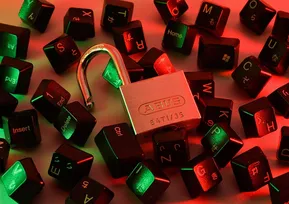
Photo by Ben Cheung on Pexels

The proposed stablecoin promises redemption on a 1:1 basis, supported by reserves of “highly liquid, highly-trusted assets” held in licensed financial institutions. Furthermore, Jingdong Coinlink commits to ongoing cooperation with global regulatory bodies to ensure compliance with existing and future legal frameworks.


Cryptocurrency developments in Hong Kong

This announcement comes amidst a series of significant cryptocurrency-related activities in Hong Kong. On July 23, CSOP Asset Management launched Asia’s first Bitcoin futures inverse product, following their successful Bitcoin Futures ETF in December 2022. Additionally, the cryptocurrency exchange HKX recently retracted its application for a license from the HK Securities and Futures Commission (SFC), advising users to withdraw their crypto assets. This withdrawal adds to the growing list of 12 other platforms that have either pulled back their license applications or had them returned by regulatory authorities.

 

More to Read
View All
Web3 & Enterprise·

Sep 25, 2023

CityLabs Secures 8.55% Stake in Gopax

CityLabs Secures 8.55% Stake in GopaxCityLabs, a company listed on the KOSDAQ stock exchange, has stepped in as a rescue investor for the South Korean cryptocurrency exchange Gopax.The company announced last Friday that it has acquired a total of 76,308 shares of Streami, the operator of Gopax, securing an 8.55% stake in the company. The investment amounts to a total value of KRW 5.4 billion (approximately $4 million).Photo by Precondo CA on UnsplashGopax’s turbulent historyGopax has recently been facing public and regulatory scrutiny due to its internal struggles, such as undergoing major changes in leadership earlier this year following its acquisition by Binance, with Lee Jun-haeng resigning and Binance’s Asia Pacific Head, Leon Sing Foong, taking over.After this event, Streami submitted reports to the Financial Intelligence Unit (FIU) under the Financial Services Commission (FSS) in line with requirements to inform the regulatory body about such changes. However, due to delays in the FIU’s approval process likely influenced by Binance’s various legal and regulatory challenges, there was yet another leadership transition — Foong stepped down, and Lee Joong-hoon, Gopax’s former Vice President, took over. Notably, Foong recently left Binance altogether amid regulatory crackdowns.During this process, Gopax also struggled to make principal and interest payments on its own decentralized finance (DeFi) service, GOFi, in the wake of last year’s FTX collapse. The amount of customer funds locked in GOFi totals KRW 56.6 billion, according to an announcement made by Gopax in April. Binance acquired a stake in Gopax on the condition that it would inject enough capital into Gopax to repay this amount in full.CityLabs steps inAs a result, there have been speculations that a Korean company would invest in Gopax and deliver the exchange from its woes. Some even predicted that this company might become a major shareholder, although CityLabs has acquired only an 8.55% stake due to the fact that the funds required to do so far exceed CityLabs’ annual revenue.Last year, CityLabs reported a consolidated revenue of KRW 28.4 billion and an operating loss of KRW 6.1 billion. Although its revenue increased by 2% compared to the previous year, operating losses grew by 46.9%. While the company may not have sufficient funds at present to become a major shareholder, there lies the possibility that it may increase its stake in the future.The acquisition seems to be driven by CityLabs’ interest in blockchain businesses and the crypto market. While it currently specializes in intelligent transportation systems (ITS), it was formerly Dayli Blockchain, which was affiliated with the crypto exchange Coinone and Dayli Financial Group (now known as Gowid). In 2017, Yellow Mobile became the largest shareholder of Dayli Financial, and in February 2018, it became the largest shareholder of DailyBlockchain, making Dayli Blockchain its subsidiary. Coinone was also a subsidiary of Yellow Mobile at the time. All of these ownership relations have now been restructured.CityLabs has thus been involved in the blockchain industry for some time now with previous connections to cryptocurrency exchanges while also offering decentralized identity (DID) and blockchain as a service (BaaS) products. Observations point to the possibility that its history has influenced its decision to invest in Gopax.“We acquired shares to secure an entry point into the crypto market and position ourselves as a major player,” the company said in a statement.Meanwhile, financial authorities are considering plans to examine the eligibility of major shareholders when reviewing applications from crypto businesses.

news
Web3 & Enterprise·

Jan 18, 2024

Night Crows pre-registration NFT collection sells out

South Korean gaming publisher Wemade opened sales for its “The Night is Coming” NFT collection on Jan. 11 to 12 to celebrate pre-registration for the global version of the massively multiplayer online role-playing game (MMORPG) Night Crows. All 341 NFTs were sold out, according to an official press release on Thursday (KST).Photo by Choong Deng Xiang on UnsplashUnveiling exclusive NFTsThe NFT Collection featured NFTs of different tiers, including Uncommon and Rare NFTs that went on sale on Jan. 11, as well as Epic, Legendary and Mythical NFTs that were available on NILE – short for “NFT Is Life Evolution,” a decentralized autonomous organization (DAO) and NFT marketplace on WEMIX3.0 – the next day. All NFTs were sold out within a day. Blockchain-backed fantasy gameBuilt on Unreal Engine 5, a three-dimensional computer graphics engine used for game and content development, Night Crows features high-quality graphics, an immersive world, realistic action and major in-game battles. It has topped the popularity and revenue charts on major app markets in South Korea since its launch in April last year. The global version of the game, which is scheduled for release in March, will harness blockchain technology and a multifaceted tokenomics system that tokenizes in-game items. It will also introduce character NFTs that keep character and player data in one place, connecting the game’s internal and external economies. Wemade also stated that owners of the NFTs can exchange them with CROW, the game’s native token, starting on April 1. The token’s value is stabilized by a minting process controlled by the Peg Stability Module (PSM), which allows users to swap a native stablecoin for other protocol-accepted stablecoins at a 1:1 rate.

news
Web3 & Enterprise·

Jan 04, 2024

BRC-20 token standard architect objects to proposed fork

Disagreement has emerged within the Bitcoin blockchain community, revolving around the BRC-20 token standard. Domo, the pseudonymous developer behind the creation of the token standard, has publicly expressed his opposition to an upcoming upgrade proposed by the Hong Kong headquartered project, UniSat Wallet.Photo by Kanchanara on UnsplashDue diligence concernsOn Tuesday Domo took to the X social media platform (previously Twitter) to articulate his concerns. He voiced apprehensions about hastily implementing updates in BRC-20, asserting that such a rush could potentially harm the broader BRC-20 user community. Domo's resistance is rooted in his belief that UniSat Wallet's proposed updates lack due diligence and are being introduced precipitously without considering potential repercussions. He wrote:”Recognizing the serious implications and valuations involved, I believe rushing these updates in BRC20 is reckless, disregards their peer indexers, and could potentially harm the broader community of BRC20 users.” ‘Split’ rather than ‘fork’Conversely, UniSat Wallet has declared its intention to “follow the Ordinals Jubilee upgrade, to confirm that BRC-20 is still on Ordinals without splitting into an isolated protocol." Described as a "split" rather than a "fork," UniSat Wallet's approach adapts to the Ordinals Jubilee upgrade, a transformative change in how the Bitcoin blockchain manages tokenized assets. In mapping the way forward its proposing to take, UniSat outlined that it would publish a whitepaper on Jan. 31, describing it as “the most significant present we are able to deliver” for BRC-20, Ordinals and Bitcoin. The crux of the matter lies in the method and pace of implementing these changes. Domo's concerns reflect a broader sentiment within the crypto community, where the rapid pace of advancements often collides with the need for stability and thorough vetting. UniSat Wallet's proposed changes, though innovative, may be viewed as potentially destabilizing by certain community members, especially those deeply entrenched in the current BRC-20 standard. Striking a balanceThis development is pivotal, highlighting the dynamic and occasionally contentious nature of blockchain technology and cryptocurrency standards. Web3 project incubator and investor TrustlessLabs summed up the matter in a social media post on Wednesday, drawing the following conclusions:”This situation encapsulates a critical challenge in blockchain protocol development: finding the right balance between preserving stability and embracing technological advancements.” As technology evolves, divergent opinions on the trajectory of these advancements are inevitable. The ongoing debate between Domo and UniSat Wallet serves as a microcosm of the larger conversations transpiring in the crypto space about how to strike the right balance between progress and stability. The BRC-20 token standard, an experimental fungible token standard on Bitcoin, draws inspiration from Ethereum's ERC-20 standard. It allows the creation of fungible tokens using Bitcoin’s Ordinals protocol, constituting a significant breakthrough in cryptocurrency by enabling novel forms of tokenization on the Bitcoin blockchain. This disagreement not only spotlights a critical debate in the crypto realm but also emphasizes the delicate equilibrium between innovation and stability.  

news
Loading