Top

Metaplanet aims for 10K Bitcoin stockpile

Web3 & Enterprise·January 08, 2025, 2:12 AM

Metaplanet, a Japanese Bitcoin treasury company listed on the Tokyo stock exchange, is targeting a holding of 10,000 BTC in 2025.

2025 target

Taking to the X social media platform on Jan. 5, the company’s CEO, Simon Gerovich, set out a number of objectives which the company will strive to reach in 2025. Among them is the objective to expand the company’s Bitcoin holdings to 10,000 BTC.


Gerovich said that the expansion of the firm’s Bitcoin holding would be achieved “by utilizing the most accretive capital market tools available to us.” He followed up on Jan. 6 with an announcement that Metaplanet has completed its 12th series stock acquisition rights. Gerovich claimed that the successful completion of the stock issuance marked “a milestone in Metaplanet’s financing and Bitcoin acquisition strategy.”


The 12th series stock issuance was first announced back in November, with a six-month exercise period opening on Dec. 17. Additionally, the company issued 4.5 billion yen ($28,562,451) and 5 billion yen ($31,736,057) in ordinary bonds, with a maturity date of June 2025.


Other objectives the company has set out for 2025 include enhancing transparency and shareholder engagement through new initiatives. Furthermore, Metaplanet intends to leverage its partnerships to advance Bitcoin adoption in Japan and further afield. Gerovich said that Metaplanet will explore innovative opportunities to grow the firm’s impact in Japan and within the Bitcoin ecosystem.
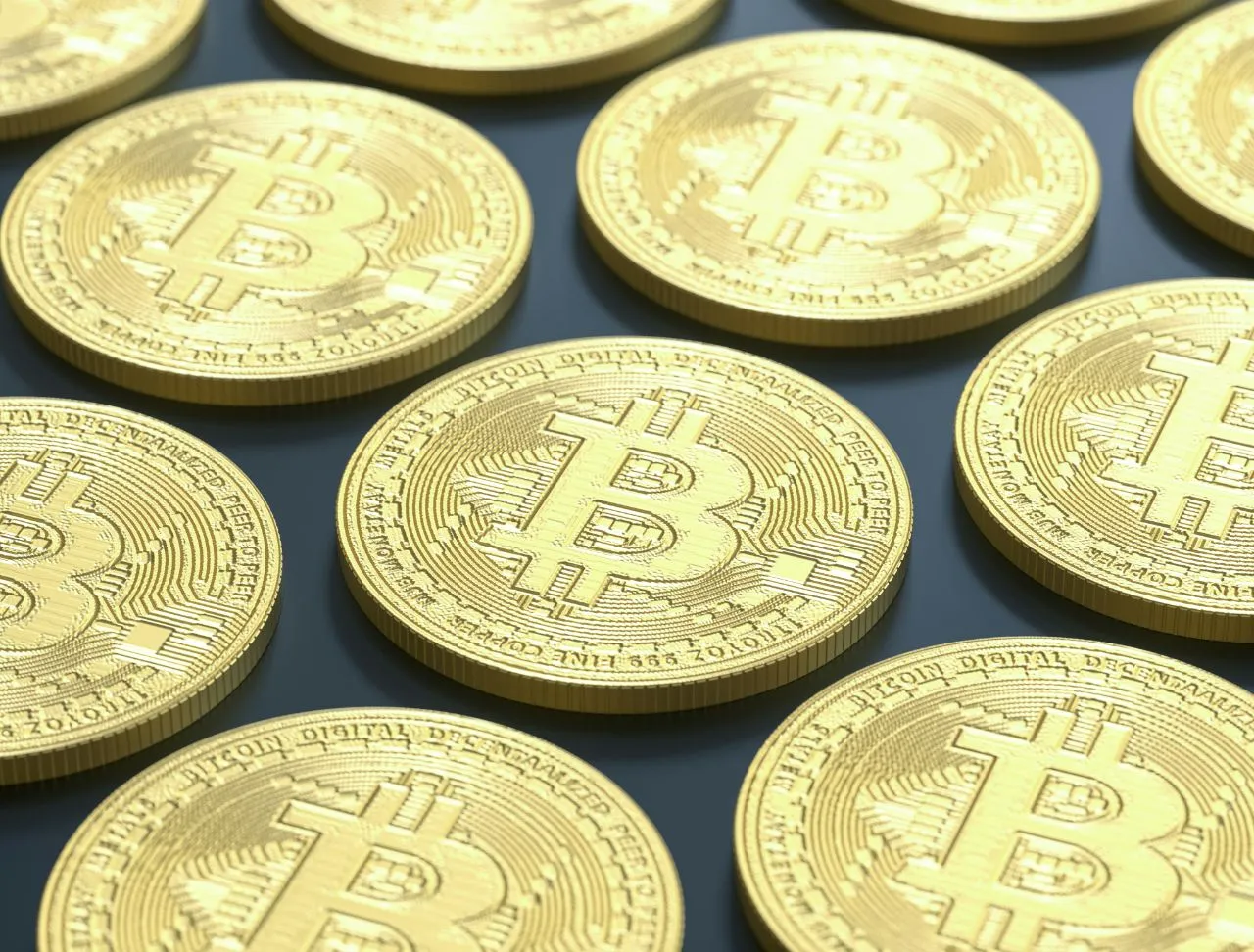
https://asset.coinness.com/en/news/2d3363e7bb016e0cb859c1f093bfd027.webp
Photo by Vasilis Chatzopoulos on Unsplash

2024 ‘transformational’

The Metaplanet CEO claimed that 2024 had been “transformational” for the company. He added: “We broke records, expanded our Bitcoin treasury, and reinforced our position as Asia’s leading Bitcoin Treasury Company.”


Shifting its attention to 2025, the firm is focused on its efforts to drive greater value for shareholders. Metaplanet’s fortunes are now heavily dependent upon the performance of Bitcoin. In an interview at a New Year’s Eve party held in Miami by Microstrategy founder Michael Saylor, Gerovich commented on Bitcoin adoption, stating:

"I’m slowly but surely seeing Bitcoin becoming a topic of discussion at the highest levels of government. Corporations around the world are beginning to adopt it as a Bitcoin standard."


The Metaplanet CEO is optimistic that the U.S. will adopt a strategic Bitcoin reserve once the Trump administration commences. Should that happen, he believes that other countries will follow. He sees Japan as one of those countries where they do look to the U.S. as a guide on such matters. “So I think if President Trump does adopt it as a strategic reserve, then Japan and many countries in Asia will do the same,” he stated.


Metaplanet is understood to be pursuing a business model very similar to the one pioneered by Microstrategy in the United States. The company increased the rate at which it acquired Bitcoin in H2 2024. Metaplanet made its first Bitcoin purchase in April 2024. At that time, its stock was trading at $1.90. Just as the Bitcoin unit price surged, so too did Metaplanet stock, closing the year at $22.05 per share.

More to Read
View All
Policy & Regulation·

Jul 20, 2023

China’s Crypto Crackdown Reveals Capital Control Loopholes

China’s Crypto Crackdown Reveals Capital Control LoopholesChinese authorities have been stepping up their efforts to crack down on cryptocurrency-related crimes, and with that, uncovering how digital currencies are being used to bypass strict capital controls imposed by Beijing.China may be a few years into a crackdown against the use of cryptocurrencies but despite that, their use and particularly their use for illicit purposes continue. That’s according to a report on Wednesday by the South China Morning Post (SCMP).Photo by Christian Lue on UnsplashCombating capital outflowsThe rising trend of capital outflows has prompted Chinese authorities to take action. Two prominent cases illustrate the extent of these illegal activities and the value of assets seized.In Jingmen, a city in Hubei province, police disclosed details of an online gambling case involving digital currencies used to evade regulation. The case has implicated over 50,000 individuals and a turnover of billions of dollars. Although the specific virtual currency was not mentioned, authorities revealed that they had frozen multiple accounts with a combined value of $160 million.Meanwhile, in Shanxi province, police solved a money laundering case linked to 380 million yuan worth of USDT, the US dollar stablecoin issued by Tether. China’s State Administration of Foreign Exchange is responsible for monitoring cross-border capital flows. Accordingly, it has taken steps to curb these illicit activities. Late last month, it fined ten firms in order to maintain order in the forex market.Digital yuan developmentThese recent cryptocurrency cases have exposed loopholes in China’s capital control system. Crypto mining and trading have long been banned by Chinese regulators. As an alternative, China has been actively developing its own central bank digital currency (CBDC), known as the digital yuan or e-CNY. 2023 has seen a raft of measures taken by various regional administrators throughout China to bring about further e-CNY adoption.However, the ban on cryptocurrencies and the launch of the e-CNY have driven many miners and traders underground or to overseas locations such as Hong Kong, which ironically, is vying to become a cryptocurrency hub. The continued depreciation of the yuan against the US dollar has intensified capital outflow pressures.Chinese bonds sell-offInternationally, fund managers have been selling significant amounts of Chinese securities since 2021. That goes against the current regional trend which sees emerging Asian markets experiencing substantial inflows of funds during the same period, according to the Institute of International Finance.That market activity has been in response to Chinese policies and escalating US-China tensions. An Atlantic Council report highlights that international institutional investors have been net sellers of approximately 1 trillion yuan in Chinese bonds since early 2022.China’s efforts to control capital outflows and stabilize the yuan’s value face ongoing challenges, as cryptocurrency-related crimes persist. While the crackdown exposes weaknesses in the country’s capital control system, it also underscores the difficulty authorities will have globally in trying to control digital currency use.

news
Web3 & Enterprise·

Jul 27, 2023

Kandle Secures Funding for Platform Development

Kandle Secures Funding for Platform DevelopmentSingapore-based crypto fantasy GameFi startup Kandle has recently secured $1.7 million in a seed funding round, with Saama Capital, a venture capital firm that invests in early and growth stage tech sector companies, leading the investment.Other participants in the funding round included PointOne Capital, Cloud Capital, Good Capital, Founder’s Room, Seeders Fund, and Sumit Gupta, CEO of crypto investment platform CoinDCX.The GameFi concept is an innovative fusion of blockchain technology, gaming, and decentralized finance, allowing players to earn cryptocurrency and non-fungible tokens (NFTs) while playing games on the platform. Additionally, GameFi enables the transfer of in-game items to the virtual world, enabling trade on NFT marketplaces and crypto exchanges.Photo by Towfiqu barbhuiya on UnsplashExpansion plansKandle stands out by offering fantasy games that incorporate crypto tokens, where players compete to win various rewards. Already gaining traction in Southeast Asian countries like Indonesia and Vietnam, as well as in burgeoning markets such as Nigeria and India, Kandle has ambitious plans to expand its footprint across Asia and North America.As part of its efforts to realize that expansion, funding is being used to build out the Kandle platform further, expanding its user base into the bargain. Founder Jaideep Yadav expressed enthusiasm about the potential of gaming and crypto coming together, positioning Kandle at the forefront of this evolving landscape.Yadav stated: “There is a massive opportunity at the intersection of gaming and crypto, and we’re excited to be at the forefront of this evolution in crypto fantasy gaming. Super grateful for the unwavering support of our investors as we forge ahead in bringing the vision of Kandle to fruition. “Project roadmapLooking ahead, Kandle aims to unveil its project roadmap, which will include token issuance, token utility, and a play-and-win model designed to reimagine the play-to-earn ecosystem. Notably, Kandle has taken a unique approach by prioritizing the development of a fully functioning, sustainable gaming product based on sound gaming principles rather than merely focusing on project tokens. The team plans to integrate smart contracts to ensure transparency, security, and fairness in the gaming experience.Ash Lilani, the Managing Partner at Saama Capital, commented on the importance of making the crypto industry safer for the next wave of users. He praised Kandle’s gamified approach for providing a secure and unique way for users to engage with crypto without taking direct exposure to any specific coins.Kandle’s funding success signifies the increasing interest and investment in the GameFi space, which merges the excitement of gaming with the possibilities offered by blockchain and cryptocurrencies. News of the investment comes within the same time frame as an announcement by Sky Mavis, the team behind Axie Infinity, which is also Singapore-headquartered, which sees it partner with CyberKongz, an Ethereum-based non-fungible token collection.The development of blockchain gaming has not progressed in a neat straight line. It’s been imperfect but ongoing activity in the sector suggests that ultimately, GameFi start-ups will continue to evolve until such time as a mass market breakthrough is made in gaming.

news
Web3 & Enterprise·

Jul 07, 2025

Bitstamp awarded MPI license in Singapore

Singaporean regulator, the Monetary Authority of Singapore (MAS), has awarded cryptocurrency exchange Bitstamp a Major Payment Institution (MPI) trading license.Photo by Julien de Salaberry on UnsplashExpanding into APACIn a blog post published on July 3, Bitstamp proclaimed that it is “globally trusted & now licensed in Singapore.” The company described the acquisition of the license as a milestone that “marks the start of [its] expansion into the APAC region.” It emerged in June 2024 that Bitstamp had been acquired by American trading platform Robinhood. The $200 million acquisition was finally completed last month. Bitstamp signaled last September that it planned to expand its institutional business across Australia and Asia. Earlier this year, parent company Robinhood outlined that it would use Bitstamp to crypto offerings in Singapore in 2025.Acquiring licensesAt that time, Johann Kerbrat, vice-president and general manager of Robinhood Crypto, said that “part of the reason why Bitstamp was attractive was because of their licenses with Singapore, in addition to its institutional business.” This latest license award strengthens the company’s efforts in gaining more traction in Asia. Licensing is all the more relevant given the recent actions of the Singaporean regulator. Last month, MAS set a June 30 deadline for unlicensed crypto firms operating out of the city-state and serving overseas customers to cease offering such services. Over recent years, Singapore has been striving towards establishing itself as a global hub for crypto startups. It has been successful in that endeavor insofar as a whole host of international crypto businesses have established a presence there.  However, its recent move to curb unlicensed firms working out of Singapore in providing services internationally has been interpreted as a much more cautious approach being taken by the Singaporean authorities. The regulator clarified its concerns recently:”MAS has set the bar high for licensing and will generally not issue a licence. The money laundering risks are higher in such business models and if their substantive regulated activity is outside of Singapore, MAS is unable to effectively supervise such persons. Without a licence, such DTSPs [Digital Token Service Providers] will have to cease their regulated activities.”Caution in Singapore to benefit Hong KongSingapore has been competing with cities like Hong Kong to develop and maintain that crypto hub status. Some commentators have expressed the view that Hong Kong will benefit from this latest move in Singapore.  Joshua Chu, a lawyer who co-chairs the Hong Kong Web3 Association, told the South China Morning Post (SCMP) recently that “this is likely to attract quality projects [to Hong Kong] looking for a compliant, liquid, and globally connected base.” In addition to licensing achieved in Asia, Bitstamp has acquired licensing in a number of European countries such as Italy, Spain, France and the Netherlands. Last month, Robinhood launched the trading of tokenized stocks and exchange-traded funds (ETFs) for users resident within the European Union (EU). It also revealed that it is in the process of building out a layer-2 network on top of the Arbitrum blockchain with a view towards using it to host tokenized real-world assets (RWAs).

news
Loading