Top

OKX relaunches in the United States

Web3 & Enterprise·April 17, 2025, 12:35 AM

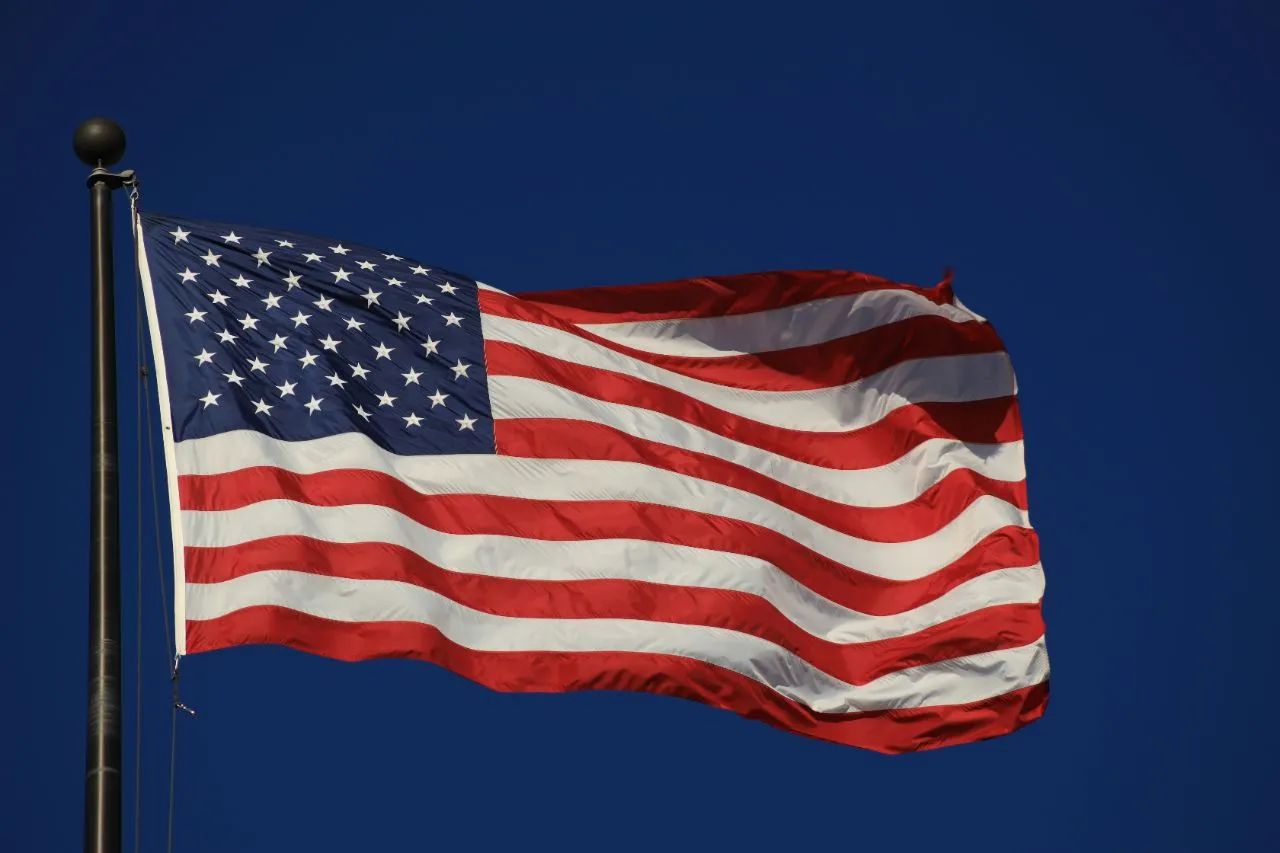
Global crypto exchange platform OKX has announced that it has relaunched its exchange services and Web3 wallet within the U.S. market.


In a press release published on April 15, the company said that customers can now access the platform in the United States, “with existing customers migrating seamlessly and new customers gradually gaining access ahead of a full nationwide launch.”
https://asset.coinness.com/en/news/3f51bd9772714e335e56260136e445ac.webp
Photo by Danny Burke on Unsplash

Onboarding OKCoin users

In terms of existing customers, the company is referring to users of OKCoin, the former name of OKX, who will now be onboarded onto the newly launched OKX exchange service.


The Seychelles-based company, which was originally founded and operated in China, has established its U.S. headquarters in San Jose, California. The company has appointed Roshan Robert, formerly an executive at Morgan Stanley and Barclays, as its U.S. CEO.


Commenting on the U.S. market relaunch, Robert stated:


"With the US advancing crypto regulatory clarity, we see tremendous opportunities to build trust and deliver secure, compliant digital asset solutions.”


Inflection point

In a blog post published to the firm’s website, Robert said that he had been watching the development of the industry since its earliest days, but that he thinks that the crypto sector has now reached “a critical inflection point.” He added that more so than ever before, the crypto sector is currently interacting more directly with traditional finance and capital markets. 


Referring directly to what platform users can expect from the relaunched service in the U.S., the OKX U.S. CEO said that the firm plans on rolling out new features throughout the year as part of its vision to build a crypto super app.


Rollout of the platform’s services in the U.S. will be carried out on a phased basis. The firm also intends to offer integrations with local banks, together with full support for major assets such as Bitcoin, Ethereum, USDC and USDT.


The OKX Wallet will be made available to U.S. users, supporting a range of digital assets across 130 blockchain networks. The wallet will enable users to access a number of Web3 dApps, facilitate the movement of digital assets between blockchain networks and include a number of tools to assist platform users with their trading activities.


Entering a ‘new era’

It’s likely that a change towards a more positive outlook where the crypto sector is concerned at government and regulatory levels in the U.S., together with a settlement reached with the U.S. Department of Justice (DOJ), has influenced OKX in relaunching its service stateside. 


The DOJ had opened an investigation into the company on the basis of allegations that it was operating a money-transmitting business on an unlicensed basis. In its settlement, the company paid fines and penalties totaling $500 million. With that settlement behind it and a more enlightened climate for digital assets having emerged in the U.S., OKX described the service relaunch as “a new era for OKX in the U.S.”

Yves La Rose, CEO of Web3 banking project, the Vaulta Foundation, said that OKX’s U.S. expansion is a signal, indicating that “a new era of compliant, wallet-led Web3 innovation is underway.” 

Diana Pires, an executive at crypto payments firm Beam, expressed a similar take, stating on X that OKX was relaunching “because the world’s largest economy is finally ready for crypto,” adding that “the floodgates are now open for international crypto companies.”
More to Read
View All
Policy & Regulation·

Jun 17, 2025

Vietnam legalizes crypto assets

Vietnam has moved to take a positive approach to crypto assets by passing legislation to legalize them. Last week, the Southeast Asian nation’s National Assembly passed the Digital Technology Industry Law, which takes effect on Jan. 1, 2026, according to a report published in the official online newspaper of the Vietnamese government. Photo by Daniel Bernard on UnsplashCategorizing digital assetsThe law sets out two categories of digital assets, virtual assets and crypto assets. The legislation frames virtual assets as digital assets used for exchange or investments. Meanwhile, crypto assets are to be regarded as digital assets utilized to validate transactions and confirm ownership while relying on the use of encryption technology. Neither category includes securities or digital versions of fiat currencies such as central bank digital currencies (CBDCs) or other financial instruments. The legislation gives the Vietnamese government the authority to define and apply specific regulatory conditions when it comes to items such as anti-money laundering (AML) measures and the inclusion of international cybersecurity standards. It is hoped that the law will pave the way for the development of home-grown technological enterprises within Vietnam, while also promoting a nationwide digital transformation process. Regulatory clarityThe legislation is significant as it clearly sets out the legal status of digital assets in Vietnam after years of uncertainty and regulatory ambiguity. Singapore-based blockchain-focused Business Strategist, Anndy Lian, said that such legal clarity could result in Vietnam becoming a regional hub for the crypto sector.  Anh Tran, who belongs to Superteam Vietnam, a community for Solana builders in Vietnam, said that the development was huge for founders, developers and investors in the crypto space in Vietnam. He stated: “For a country who has always been at the forefront of crypto adoption, [Vietnam] is now a 'green-lighted zone' in principle, but we're still waiting at the red light for operational rules.” He refers to the fact that Vietnamese regulators still have until Jan. 1, 2026, to flesh out the details in terms of defining who can issue, trade, custody or manage crypto, and how AML, cybersecurity and taxation are handled. Vietnamese officials are likely to give strong consideration to AML measures relative to crypto given that the Southeast Asian nation has been on the grey list of the Financial Action Task Force since 2023. Countries who appear on the grey list are under considerably more scrutiny with regard to AML matters. While another community member claimed that anywhere crypto regulation has been implemented, actual usage has declined, Tran maintained that regulation is inevitable and that “crypto doesn’t need to be lawless to be free.” Last October, Vietnam set out its blockchain strategy, aspiring to the goal of achieving regional leadership in the sector by 2030. In March, the country’s Prime Minister, Pham Minh Chinh, requested that a legal framework for cryptocurrencies be established.  According to Chainalysis’ 2024 Global Crypto Adoption Index, Vietnam ranks fifth in the world.

news
Web3 & Enterprise·

Sep 05, 2023

Real-World Assets Emerge as a Beacon of Hope for the Blockchain Industry Amid Crypto Winter

Real-World Assets Emerge as a Beacon of Hope for the Blockchain Industry Amid Crypto WinterIn the midst of a crypto winter that has cast a shadow over the blockchain industry, a new opportunity has come to light — the tokenization of real-world assets (RWAs), or tangible assets such as gold and real estate, on blockchain networks.Photo by Tierra Mallorca on UnsplashMajor blockchain companies and industry experts gathered at Klaytn Square Lounge 2023, a blockchain and Web3 event in Gangnam, southern Seoul on Monday to discuss how RWAs could overcome the limitations of the current blockchain market.The rise of RWAsRecently, platforms like RWA tokenization project Elysia and Klaytn Foundation have started to shift their attention to RWAs as a promising avenue in the blockchain market. According to a report by global consulting firm Boston Consulting Group, the total value of the global RWA market, which reached $310 billion last year, is projected to surge to a staggering $16 trillion by 2030.“During the ongoing crypto winter, we are witnessing not only new funds pouring into blockchain projects but also existing funds leaving the market. We see RWAs as a potential solution to this,” said Seo Sang-min, Representative Director at Klaytn Foundation.Seo went on to explain that currently, virtual assets dominate most of the assets on blockchain mainnets like Klaytn, but compared to RWAs such as gold, cash, and real estate, their scale is very small. “We need to expand the utility of RWAs by placing them on the blockchain. Once they are, transaction costs will significantly decrease, and anyone will be able to trade 24/7 worldwide,” he said.Other blockchain experts at the conference also shared this sentiment. “Tokenizing RWAs is crucial because it provides investment opportunities that do not require large sums of money or lengthy waiting periods,” Luc Falempin, CEO of Tokeny Solutions emphasized. Beyond tokenizing the assets themselves, legal contracts and information about the various stakeholders involved, such as asset issuers and investors, can be recorded and shared on the blockchain, which can prove to be very convenient for investors.Revolutionizing investmentAccording to Falempin, most derivative investments involve seeking investment opportunities, creating portfolios, and enduring complicated processes for recovering investment capital that can take over ten years to complete. Additionally, ordinary investors often struggle to raise the substantial funds required for investment, creating high entry barriers. Also, investment contracts were traditionally executed on paper, which is outdated and inconvenient. However, as blockchain technology enables the tokenization of assets, these processes become much simpler.“Through RWA-backed virtual assets, even dozens of individuals can easily participate in investment, eliminating the hassle of dealing with paperwork. Introducing blockchain as a new infrastructure allows all stakeholders to easily view relevant records within the blockchain network,” he stated.The role of DAOsSo, how can investment products like RWA tokens be effectively managed within the decentralized realm of blockchain? Yoon Kim, Chief Marketing Officer of Elysia, mentioned decentralized autonomous organizations (DAOs) as a fit solution.“DAOs are a realistic method that is crucial for implementing the RWA model effectively. All stakeholders within a DAO can make modifications and creations, providing an avenue for managing tokenized assets effectively without government intervention,” Kim said.Technical hurdlesHowever, RWA tokens face several technical challenges. RWA products, which integrate the real world with the blockchain realm, could suffer from the so-called oracle problem, which refers to the inherent inability of blockchains to access external data, leading to a lack of information transparency. Even if the assets are stable, their prices on the blockchain network may differ from those in the real market. Currently, there are no established technical solutions to address these issues.“Rather than getting directly involved, we aim to move in accordance with market prices, but also seek ways to minimize risks with the help of external entities in certain cases,” said James Lim, CEO of Creder.As the crypto winter persists, the blockchain industry is looking towards RWAs as a beacon of hope, offering the potential to bridge the gap between traditional assets and the decentralized world of blockchain, despite the challenges that lie ahead.

news
Web3 & Enterprise·

Sep 11, 2023

UAE’s Royal Office Visits Korea to Further Security Token Collaboration with AIITONE

UAE’s Royal Office Visits Korea to Further Security Token Collaboration with AIITONEAIITONE, a Korea-based augmented reality firm specializing in security tokens, invited journalists to showcase its strategy to foster business collaborations between South Korea and the United Arab Emirates (UAE) on the occasion of the Korean visit of the Private Office of His Highness Sheikh Ahmed Bin Faisal Al Qassimi.Photo by Ethan Brooke on UnsplashPrivate Office’s return visitThe Private Office is a Dubai-based corporate conglomerate that operates businesses in various areas including real estate, energy, and finance. This visit by the Private Office marks a return visit following AIITONE’s visit to the UAE in July.The conference took place at a hotel in Gangnam, Seoul, and was attended by Lee Jin-yeop, CEO of AIITONE; Bruce Jeong, Chairman of Middle East Investment; and H.H. Sheikh Ahmed Bin Faisal Al Qassimi.Security tokens, CBDCs, smart defenseChairman Jeong, leading AIITONE’s global initiatives, said that their primary endeavor is to set up a Korean branch of the Royal Office. This branch will function as an international business hub, facilitating collaborations across three key sectors: security tokens, central bank digital currencies (CBDCs), and smart defense ventures.The event also featured presentations by AIITONE officials who introduced the company’s focus areas.Kang Man-soo, who leads AIITONE’s defense unit, highlighted the company’s technical expertise in maintenance training equipment, interactive electronic technical manuals, and integrated system support. He pointed out that AIITONE has been actively involved in the development of technical manuals and training simulators for various defense assets, including warships, guided weapons, and fighter aircraft. Kang emphasized that AIITONE’s strategic partnerships with Korean defense firms have propelled their engagement in initiatives aimed at exporting these products to countries such as Indonesia, Malaysia, and Poland.Lee Joo-hyung, the head of AIITONE’s extended reality (XR) content division, revealed the company’s plan to create portable products that can replicate the physical sensations of the real world, including sensations like physical contact and heat. Additionally, Lee introduced MOUM, a metaverse platform that features blockchain-powered security functions and generative artificial intelligence (AI) capabilities.Park Sang-il, who is at the helm of the firm’s security token project, showcased AIITONE’s comprehensive security token platform, which enables users to both issue and distribute security tokens. Notably, the platform is compatible with hyperledgers Besu and Fabric.Since arriving in Korea last Wednesday, the Royal Office has met with representatives from Standard Chartered Bank Korea and lawyers from law firm Kim and Chang, as well as lawmaker Yang Hyang-ja. Additionally, the Royal Office made a visit to smart farms located in South Jeolla Province.H.H. Sheikh Al Qassimi expressed a high regard for South Korea, acknowledging its beautiful natural landscapes and significant economic development. He underlined that this visit serves as an opportunity for the Royal Office to strengthen cooperation between UAE companies and their Korean counterparts, further fostering economic exchanges between the two countries.

news
Loading