Top

XRP primed for institutional adoption in Asia via tracker fund launch

Web3 & Enterprise·April 22, 2025, 8:36 AM

XRP, the native asset of the XRP Ledger (XRPL), a blockchain network developed by Ripple Labs, is destined for further institutional adoption in Asia due to the launch of the region’s first XRP tracker fund.


Crypto-focused institutional asset manager HashKey Capital recently announced the launch of its HashKey XRP Tracker Fund, which has been devised to track the performance of what is the world’s fourth-largest crypto asset by market cap, after Bitcoin (BTC), Ether (ETH) and U.S. dollar stablecoin Tether (USDT).
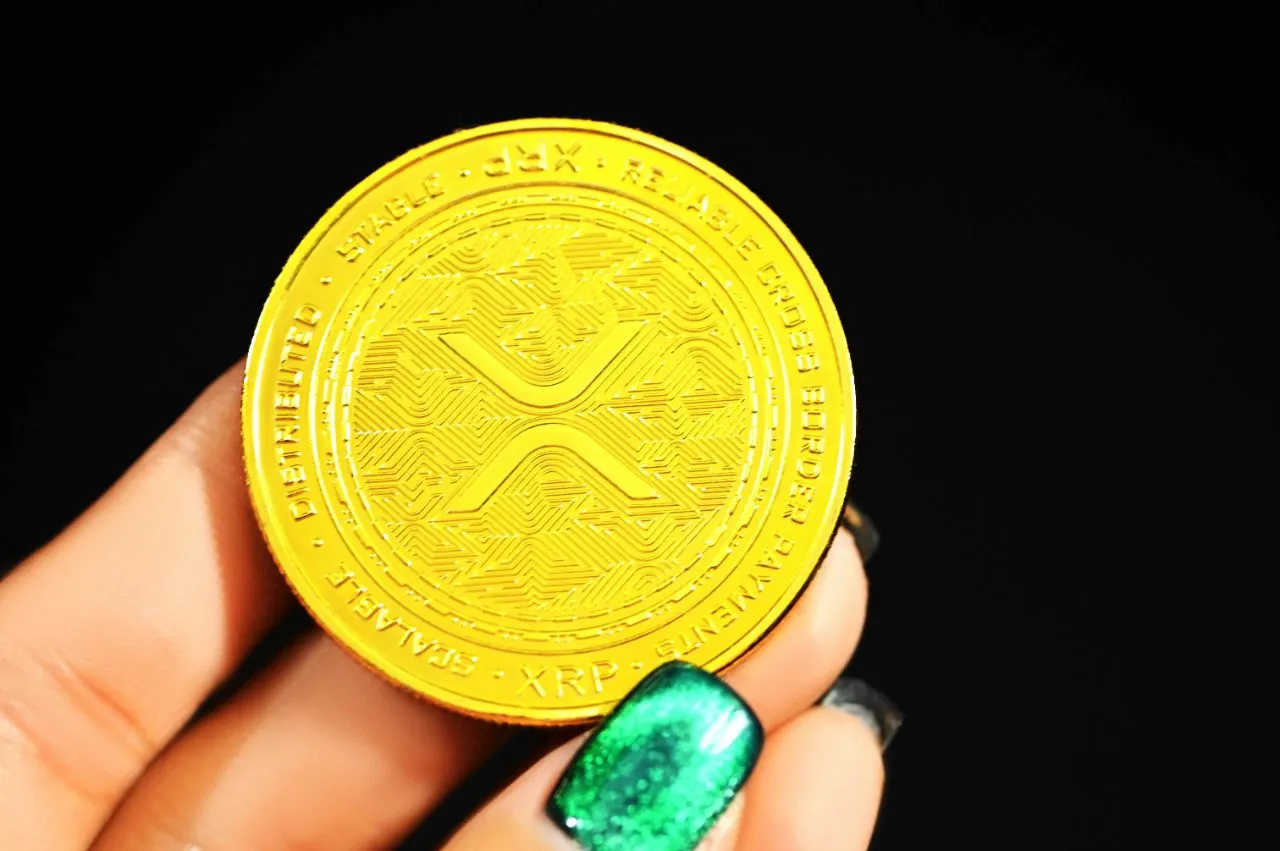
https://asset.coinness.com/en/news/99402d12198ff279c25518cd15e8a457.webp
Photo by Kanchanara on Unsplash

Enabling institutional access

The fund enables investors to gain exposure to XRP without having to take direct ownership and custody of the digital asset. Bitcoin and Ethereum exchange-traded funds (ETFs) have become popular in a number of markets, including the United States, as they allow institutional investors to gain exposure to these digital assets where they may have been uncomfortable with direct ownership due to concerns around custody and counterparty risk or regulatory concerns.


According to HashKey’s press release, investors can buy into the fund through cash or in-kind subscription and subscribe or redeem shares monthly. The fund will be measured and compared against a benchmark index provided by CF Benchmarks, a provider of crypto-related indices.


HashKey Partner Vivien Wong acknowledged the potential that XRP has in the market, stating:

“XRP stands out as one of the most innovative cryptocurrencies in today’s market, attracting global enterprises who use it to transact, tokenize, and store value.”

She added that the new fund simplifies access to XRP within the region, while catering to a growing demand for investment opportunities related to digital assets.

Potential ETF fund conversion

This marks HashKey’s third product that tracks digital asset pricing, with the company having launched both Bitcoin and Ethereum exchange-traded funds (ETFs) previously. On X, HashKey Capital outlined that the XRP Tracker Fund could potentially evolve into a fully fledged ETF, subject to regulatory approval, within the next 1-2 years.


The new fund, which was launched on April 18, also incorporates a strategic partnership with XRP developer Ripple Labs. In what is understood to be the first of a number of collaborations, Ripple will fulfill the role of being the fund’s anchor investor.

Ripple’s Managing Director for the Asia-Pacific (APAC) region, Fiona Murray, cited the development as proof that institutional adoption of digital assets continues to go from strength to strength. 


Ripple CEO Brad Garlinghouse stated last month that he expects a number of spot XRP ETFs to be approved in the United States later this year. Earlier in March, analysts at American investment bank JPMorgan had estimated that spot XRP ETF approval in the U.S. could result in net inflows of $8 billion into such products.

At the time of writing, XRP was trading at $2.09. The asset has increased in price by 300% over the course of the past 12 months, largely due to a changing regulatory environment in the United States and optimism that a settlement can be reached to end its multi-year legal battle with the Securities and Exchange Commission (SEC).


More to Read
View All
Policy & Regulation·

May 30, 2023

Bybit Gets Outline Approval to Operate in Kazakhstan

Bybit Gets Outline Approval to Operate in KazakhstanBybit, the cryptocurrency spot and derivatives trading platform, is expanding its operations with a recent “in-principle” approval from the Astana Financial Services Authority (AFSA) in Kazakhstan. This approval allows Bybit to operate as a digital asset trading facility and custody services provider at the Astana International Financial Centre (AIFC).Photo by Engin Akyurt on PexelsExpanding area of operationsBen Zhou, the co-founder and CEO of Bybit, expressed his belief in the promising potential of the Commonwealth of Independent States (CIS) region for the growth of the crypto industry. He also emphasized Bybit’s commitment to complying with local regulations, following the recent scrutiny the company faced in Japan for operating without proper registration.To obtain permanent authorization to serve the local market, Bybit must fulfill certain pre-conditions specified in the in-principle approval and complete the application process. In April, it emerged that the company had established its global headquarters in Dubai, where it has already secured “in-principle” approval to operate a virtual assets business. Bybit has also been active in Hong Kong and is in the process of obtaining a license to trade in the Chinese autonomous territory.Debit card and lending servicesAs well as a geographical expansion, in recent months Bybit has also been expanding its service offering. On May 2, the exchange announced the introduction of crypto lending services for its users. This addition allows users to lend and borrow cryptocurrencies through the Bybit platform, providing them with more opportunities to maximize their holdings.Earlier this year, Bybit collaborated with Mastercard to launch a new debit card tailored for cryptocurrency payments. This partnership aimed to bridge the gap between traditional financial systems and the growing crypto ecosystem, allowing users to spend their cryptocurrencies seamlessly in everyday transactions.Kazakhstan’s crypto strategyKazakhstan got off to a difficult start with crypto. Once crypto miners were banished from China, many of them moved operations to Kazakhstan, putting pressure on the local power grid.The local administration has since gotten to grips with the industry, restricting crypto miners’ access to cheap electricity. Bybit’s decision to offer services in Kazakhstan aligns with the country’s current efforts to position itself as a regional hub for crypto, mining, and blockchain.In February, local officials implemented a mandate that requires 75% of revenue generated from crypto mining to be sold through a crypto exchange, with the aim of combating tax evasion.CBDC developmentFurthermore, Kazakhstan has been actively exploring the development of a central bank digital currency (CBDC) and is currently in the pilot phase of its implementation. The introduction of a CBDC can potentially revolutionize the country’s financial landscape, offering faster and more efficient digital transactions while maintaining regulatory oversight.Bybit’s pre-approval in Kazakhstan signifies the company’s strategic expansion into a region with a favorable regulatory environment for cryptocurrencies. As the crypto industry continues to evolve, partnerships between traditional financial institutions and crypto exchanges, like the collaboration between Bybit and Mastercard, demonstrate the increasing integration and acceptance of digital assets in mainstream financial systems.

news
Web3 & Enterprise·

Aug 17, 2023

Nexon Korea Intensifies its Blockchain Focus with Nexon Universe

Nexon Korea Intensifies its Blockchain Focus with Nexon UniverseSouth Korean gaming giant Nexon Korea is moving its dedicated blockchain division to its recently renamed subsidiary, Nexon Universe. According to local news outlet Newsis, this subsidiary, initially known as Nexon Block and founded last year, will welcome approximately 80 employees from the parent company’s blockchain group. The leader at the helm of Nexon Universe will be Kang Dae-hyun, who serves as the Chief Operating Officer (COO) at Nexon Korea.Photo by Shubham Dhage on UnsplashNFT-powered MapleStory UniverseNexon Korea’s blockchain division has so far been overseeing the MapleStory Universe project, an NFT-powered ecosystem that utilizes MapleStory’s intellectual property.The objective of MapleStory Universe is to establish an environment that facilitates the seamless movement of NFTs, which represent in-game characters and items, throughout its ecosystem. Beyond this, the project is dedicated to forging connections with other NFT initiatives, aiming to become part of the broader global blockchain community.In August of last year, COO Kang participated in a blockchain conference to highlight Nexon’s ongoing transformative endeavors. The transition of offline games to online platforms marked Nexon’s first evolution, while the second ambition revolves around the expansion of its gaming ecosystem using the capabilities of Web3, Kang said.Turning in-game items into NFTsAmong these strategic moves is the development of MapleStory N, the first game within the MapleStory Universe. This desktop-based MMORPG is currently under development and incorporates blockchain technology. MapleStory N will allow gamers to earn items during gameplay, which can subsequently be transformed into NFTs. The fees collected from in-game economic interactions will be distributed as rewards to both contributors within the MapleStory Universe ecosystem and Nexon.Nexon’s blockchain collaborationsAs part of the MapleStory Universe creation, Nexon joined hands with Ethereum scaling blockchain protocol Polygon. In particular, Nexon employs a Polygon Supernet, which empowers developers to tailor a blockchain to suit their gaming requirements.Furthermore, Nexon made its entry into the realm of Japanese gaming blockchain Oasys in April, acting as a validator. Oasys, established in February of last year, aims to popularize play-to-earn (P2E) games. Notable validators include Bandai Namco Research, Sega, Ubisoft, Yield Guild Games, KDDI, and Softbank.Adding to its array of collaborations, Nexon forged a memorandum of understanding (MOU) with blockchain wallet company Haechi Labs in May, within the context of the MapleStory Universe undertaking. Nexon Korea’s strategy includes leveraging Haechi’s “face wallet,” which simplifies the process of establishing and overseeing blockchain wallets for users. This is expected to offer a seamless and user-friendly experience for newcomers to the field.

news
Web3 & Enterprise·

Feb 05, 2025

Metaplanet targeting 21K Bitcoin by 2026

Earlier this month Metaplanet, a Japanese Bitcoin treasury company, said that it was targeting 10,000 Bitcoin in 2025 but the company has raised the bar once again, planning on an acquisition of 21,000 Bitcoin by 2026. On Jan. 5, Metaplanet CEO Simon Gerovich set out a number of objectives for 2025. Among them was a goal for the company to acquire 10,000 Bitcoin in 2025. Gerovich explained that the firm intended to utilize “the most accretive capital market tools available” in order for Metaplanet to meet that target.Photo by André François McKenzie on Unsplash2025-2026 Bitcoin PlanAbout three weeks after the Metaplanet CEO announced that ambition, the company published a press release on Jan. 28 detailing its 2025-2026 Bitcoin Plan, which goes much further.  The plan outlines that 10,000 Bitcoin remains the target for 2025 but that the company has adopted the strategy to accumulate 21,000 Bitcoin by 2026. Gerovich stated that since Metaplanet embraced the Bitcoin Standard on April 8, 2024, the company has experienced exponential growth. Gerovich added: “The market has recognized Metaplanet as Tokyo’s preeminent Bitcoin company, and we are seizing this momentum to solidify our position as a global leader. Our vision is to lead the Bitcoin renaissance in Japan and emerge as one of the largest corporate Bitcoin holders globally. This plan is our commitment to that future.” Adopting MicroStrategy’s Bitcoin playbookMetaplanet has adopted the Bitcoin playbook first pioneered by U.S. business intelligence company turned Bitcoin development firm MicroStrategy. In short, that playbook involves financing Bitcoin purchases with debt. In this way, the company can capitalize on Bitcoin’s historical trend of positive returns over time, using convertible notes and equity to facilitate that.  The practice also creates a feedback loop in so far as MicroStrategy buys Bitcoin, resulting in the Bitcoin unit price increases. The MicroStrategy stock price goes up. Demand for MicroStrategy’s stock and debt goes up, enabling the company to buy more Bitcoin. In its press release, Metaplanet looked back on what had been achieved in terms of its Bitcoin strategy in 2024. In Q4 2024, the company achieved a Bitcoin yield of 309.82%, following on from a 41.7% Bitcoin yield in Q3.  At the close of the year, the Japanese Bitcoin treasury company held 1,761 Bitcoin, purchased at an average Bitcoin unit price of 11.85 million yen ($76,411). Shareholder growth has seen the company surpass 50,000 shareholders. Meanwhile, share trading volume has increased 430x, year-on-year. Since the firm adopted the Bitcoin Standard in April 2024, the company’s market capitalization has grown by 7,000%. Last month, the company celebrated the milestone of having reached a $1 billion market cap. Asia’s largest equity capital raise for BitcoinThe company has dubbed its new plan “The 21 Million Plan.” It will comprise the issuance of 21 million shares by means of moving strike warrants. Gerovich confirmed on X that at $750 million, the plan will involve Asia’s largest-ever public equity capital raise to buy Bitcoin.

news
Loading