Top

Affiliate of Chinese bank launches crypto trading services in Hong Kong

Web3 & Enterprise·August 20, 2025, 1:38 AM

CMB International Securities, the brokerage and investment banking arm of China Merchants Bank (CMB), has acquired a virtual asset trading license and rolled out related trading services in Hong Kong.
https://asset.coinness.com/en/news/a51b70a73c96c73ac6b53dc00248a1ce.webp
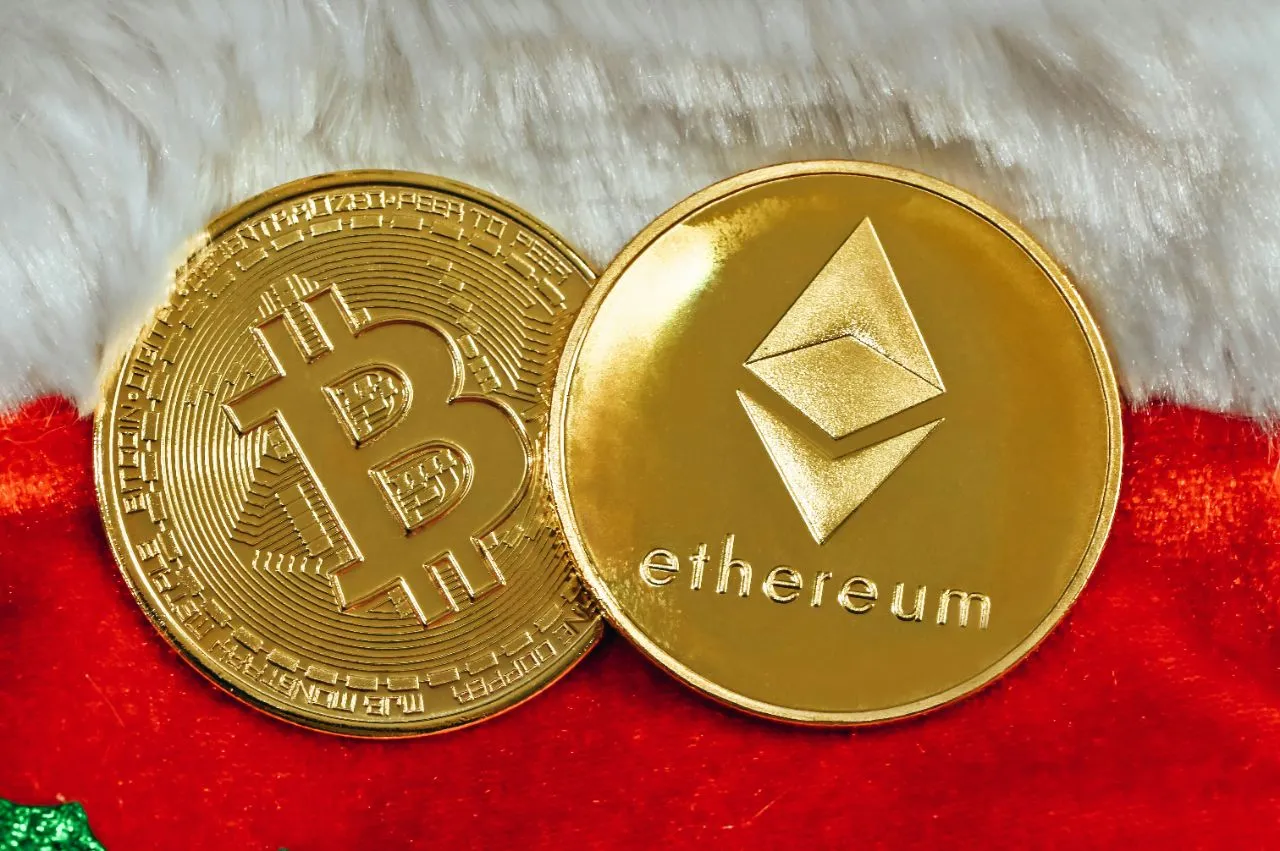
Photo by Traxer on Unsplash

First Chinese bank-affiliated brokerage to add crypto services

The development is significant as it marks the entry of the first brokerage firm directly affiliated with a Chinese bank into the digital assets arena. It takes on further significance due to the importance of its parent company within financial services in Asia.

Recent reports suggest that China Merchants Bank has assets under management (AUM) of RMB 15 trillion, equating to around $2.1 trillion. Headquartered in Shenzhen, the bank is China’s seventh largest in terms of AUM. Compared globally, an S&P Global Market Intelligence report published in 2024 positioned the bank in 25th place by measure of AUM.


CMB International Securities disclosed that it started offering such services on Aug. 18 via a post on the Chinese social media platform WeChat. It explained that the launch followed the company’s acquisition of an upgrade to its existing trading license from Hong Kong’s Securities and Futures Commission (SFC) on July 11, authorizing the brokerage to offer virtual asset trading.


24/7 digital asset trading

The company outlined that it has added virtual asset trading via its mobile application, offering qualified investors 24/7 digital asset trading. Following the launch, eligible investors can now trade Bitcoin (BTC), Ethereum (ETH) and the USDT stablecoin. These professional or eligible investors must open a CMB International Securities cash account before they can commence trading digital assets on the CMB platform.


Given the ongoing ban on crypto trading activity within mainland China, CMB International has to ensure that its product offering doesn’t reach mainland residents. At the time of the company being awarded its virtual assets trading license last month, Hong Kong Web3 Association Co-Chair Joshua Chu spoke to that requirement. He stated:

“By securing this licence, CMBI gains regulated access to Hong Kong’s dynamic crypto market, yet it must operate within strict boundaries that prevent direct mainland participation, reflecting the delicate balance of innovation and legal constraint.”


‘One country, two systems’

“One country, two systems” is a constitutional principle of the People’s Republic of China that enabled the reunification of Hong Kong with China back in 1997. Many believe that while Beijing continues to impose a ban on crypto and hasn’t been vocal in its support of Hong Kong’s embrace of the crypto sector, there is an implied support nonetheless of Hong Kong’s development as a crypto hub.

Hong Kong’s separate system allows China to let it develop as a proving ground for virtual assets. That tacit support has encouraged companies like Beijing-headquartered Tiger Brokers to pursue virtual asset trading licensing within the Chinese autonomous territory. Similarly, Victory Securities, a Hong Kong firm with a significant presence within the mainland Chinese market, has also pursued digital asset-related licensing in Hong Kong.


This isn’t CMB International’s only crypto-related venture. Earlier this month, the company partnered with Singaporean digital asset exchange DigiFT in launching the Hong Kong-Singapore Mutual Recognition Fund. The development marked the first money market fund to be hosted on the Solana blockchain.


 

More to Read
View All
Policy & Regulation·

Aug 24, 2023

China Unveils Blockchain-Powered Data Exchange

China Unveils Blockchain-Powered Data ExchangeChinese government officials have announced the launch of a data exchange leveraging blockchain technology during the 2023 Hangzhou Summit in China on Wednesday.According to local media reports, the Hangzhou Data Exchange, introduced at the summit held in Hangzhou, aims to facilitate seamless buying and selling of Web3 data across enterprises. The event garnered participation from over 300 companies, including tech giants Alibaba Cloud and Huawei, marking a significant step towards embracing decentralized technology for data management.Photo by Xiaolin Zhang on UnsplashEnabling Web3 data tradingIt’s understood that the Hangzhou Data Exchange has been established with the aspiration of revolutionizing the trading landscape for enterprise information technology data by harnessing the capabilities of distributed ledger technology. Officials emphasize that the platform’s implementation will ensure that transactions conducted through the exchange remain unalterable and traceable.Chen Chun, the Director of the National Laboratory of Blockchain and Data Security, provided insights into the exchange’s advanced features, stating that it integrates research blockchain, privacy computing, and other cutting-edge technologies to establish a secure and confidential environment for sharing and utilizing data across departments and regions.Hangzhou’s digital economy sector has demonstrated significant growth, surpassing 500 billion Chinese yuan (equivalent to $69 billion) in 2022. This accounted for nearly 27% of the city’s total GDP. It suggests that the city is putting a strategic focus on technological development and innovation.Complex blockchain strategyChina’s stance on blockchain technology has been complex. While the Chinese authorities have been rigorous in regulating private blockchain enterprises, they have simultaneously championed government-led blockchain initiatives.President Xi Jinping, during the inauguration of the 2023 Shanghai Cooperation Organization Conference (SCO), highlighted the significance of central bank digital currencies (CBDC) in expanding the use of local currencies for settlements among SCO member countries. In a move to stimulate domestic spending, the Chinese government recently distributed over 100 million yuan worth of digital yuan CBDC to its residents.China’s promotion of its digital yuan has been unrivaled. Over the course of recent months, various initiatives have been launched to further the use of the CBDC. These initiatives have included paying state employees with the currency in Changshu, integration of the currency into the education system in Jiangsu province, and the installation of digital yuan ATMs in Hainan, among many other such projects.Likewise, when it comes to metaverse development, a series of initiatives have been established recently. Henan province established a metaverse fund in May to support metaverse-related projects. In the same month, a National Blockchain Center was established to develop talent within the sector. Around the same time frame, the city of Zhengzhou announced proposals geared towards supporting the growth and development of metaverse companies.The unveiling of the Hangzhou Data Exchange underscores China’s ongoing determination to harness blockchain’s potential, in this case relative to enhancing data trading and management within the Web3 ecosystem.

news
Web3 & Enterprise·

Sep 08, 2023

Yes24 Teams Up with KPC to Establish Digital Content Distribution Ecosystem

Yes24 Teams Up with KPC to Establish Digital Content Distribution EcosystemSouth Korean culture and arts content platform Yes24 announced on Thursday that it has signed a business agreement with digital content aggregator Korea Publishing Contents (KPC) to build a digital content distribution ecosystem based on blockchain technology to protect the rights of copyright holders and users alike.Photo by Hal Gatewood on UnsplashYes24 CEO Choi Sera and KPC CEO Lee Joong-ho attended the signing ceremony for the agreement last Tuesday.Collaboration on multiple frontsUnder the new partnership, both parties plan to explore various business models and collaborate on marketing efforts to establish and operate the digital content ecosystem. They also intend to cooperate by leveraging their human resources, technological capabilities, and market networks.“We will do our best to create a secure and fair digital content distribution environment that both protects and grants more rights to copyright holders and users,” Yes24 said in a statement, adding that it would also strive to contribute to the acceleration of the digital content market.Fueling creativity and content consumptionAs a major online book retailer, Yes24 provides a range of services, which include selling books as well as tickets for various concerts and events. KPC is a joint venture established by 65 Korean publishers with the collective aim of discovering sustainable growth drivers for the publishing industry. Currently, the company distributes over 1,000 e-books and audiobooks from various publishers to local and international e-book stores and libraries.

news
Web3 & Enterprise·

Oct 19, 2024

Singapore’s DBS introduces Token Services for institutions

Singapore’s largest bank in terms of assets under management (AUM), DBS Bank, has introduced “DBS Token Services,” an offering it describes as “a new suite of banking services that integrate tokenisation and smart contract-enabled capabilities with its award-winning banking services.” The bank announced details of the new service offering via a press release published on its behalf by PR Newswire on Oct. 18. The product caters towards the needs of DBS Bank’s institutional clients, with the objective of unlocking operational efficiencies and transaction banking capabilities.  The product suite includes DBS Treasury Tokens, conditional payments and programmable rewards, with the latter allowing institutions to program and manage the use of funds. The products run on the bank’s permissioned blockchain, while being Ethereum virtual machine (EVM) compatible.Photo by Shubham Dhage on UnsplashRunning on permissioned blockchainThe bank pointed out the implications of operating the service over a permissioned blockchain network, stating:”Using a permissioned blockchain provides DBS full control over these services, enabling the bank to harness the benefits of blockchain technology while adhering to compliance standards.” Permissioned networks utilize distributed ledger technology (DLT) but they don’t truly embrace decentralization. They’ve proven popular with traditional financial services companies who want to still maintain ultimate control over the network. Conditional paymentsThe bank’s new product suite integrates tokenization and smart contract capabilities with existing conventional services. Those smart contracting capabilities make programmability an accessible feature for institutions relative to fund governance.  With that, conditional payments are likely to lead to an improvement in payment workflows for institutions. The bank believes that this aspect of its latest offering builds upon a recent pilot project that DBS engaged in alongside Enterprise Singapore and the Singapore Fintech Association (SFA). That project involved the utilization of blockchain technology, and in particular smart contracting, for the purpose of distributing government grants. DBS Token Services has been integrated with the bank’s core payment engine and various other banking sector payment infrastructures. Treasury Tokens enable institutional clients to settle multi-currency intra-group transactions across multiple markets instantaneously, 24/7. Back in August DBS partnered with digital payments provider Ant International, an affiliate of Chinese conglomerate Alibaba Group, on a pilot project involving blockchain-based treasury and liquidity management using Treasury Tokens. DBS Bank’s Group Head of Global Transaction Services, Lim Soon Chong, claimed that "by leveraging tokenisation and smart contract capabilities, DBS Token Services enables companies and public sector entities to optimise liquidity management, streamline operational workflows, strengthen business resilience, and unlock new opportunities for end-customer or end-user engagement.” Chong added that the new service is a leap forward in transaction banking, demonstrating “how established financial institutions can leverage blockchain technology to deliver new ground-breaking features and experiences.” Embracing blockchainDBS is an outlier in TradFi relative to blockchain and digital assets insofar as it has delved much deeper into the emerging technology by comparison with the majority of its peers. Last month, the company announced that it plans to introduce over-the-counter (OTC) crypto options trading and structured notes for institutional clients during Q4 2024. Earlier in the year, it participated in a proof of concept for FX payment versus payment (PvP) settlement on the blockchain of Singapore-based unified ledger market infrastructure firm Partior.

news
Loading