Top

World Mobile & Protelindo team up to launch drone-based network

Web3 & Enterprise·August 12, 2025, 1:08 AM

UK-headquartered decentralized mobile network project World Mobile has teamed up with PT Professional Telekomunikasi Indonesia, better known as Protelindo, to launch a blockchain-based 5G mobile network.


Founded in 2003, Protelindo is an Indonesian digital infrastructure firm that specializes in fiber optic networks and telecommunications towers. It owns and operates a large network of these towers in Indonesia, leasing them out to various mobile service operators. 


The two firms acquired Combined Space Technologies (CST) earlier this year as a joint venture. CST had been originally founded in Cambridge in the UK, backed by Deutsche Telekom to the tune of $70 million. Successful demos of its proprietary technology had been completed in conjunction with British Telecom (BT) and Deutsche Telekom before World Mobile and Protelindo decided to purchase the company.
https://asset.coinness.com/en/news/2f79fadec3771b2e588c2e74be04598f.webp
Photo by Alessio Soggetti on Unsplash

World Mobile Stratospheric

In a press release published on Aug. 8, World Mobile outlined that through CST, the two companies have launched World Mobile Stratospheric. 


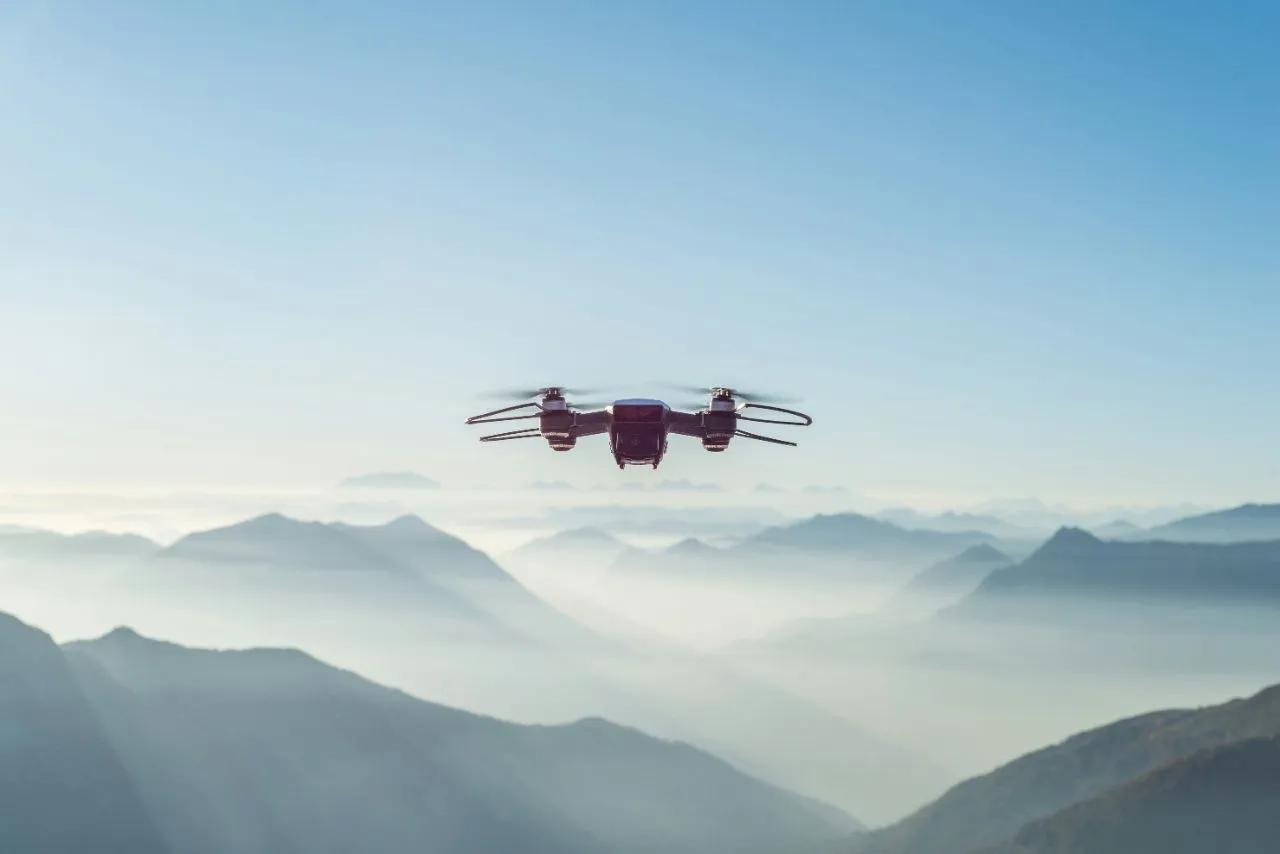
World Mobile asserts that the establishment of this stratospheric connectivity platform is “unprecedented.” The project implicates the use of fixed-wing drone aircraft, which it proposes to use to host 500,000 simultaneous 5G handset connections while flying at altitudes of up to 20,000 meters.


World Mobile Group Chief Business Officer (CBO), Charles Barnett, told Cointelegraph that each drone can provide wireless network coverage over an area of 15,000 square kilometers. Each aircraft will host 450 individually steerable beams in order to deliver the service within a defined geographical area.


Low latency

Barnett outlined that the technology can achieve just six milliseconds of total latency with the service having the capability of providing 5G service up to 18 times cheaper per gigabyte by comparison with other similar technologies.


It’s thought that the service will compete with space/satellite-based telecoms systems such as Elon Musk’s Starlink. While Starlink has brought internet to corners of the globe that were otherwise underserved, it has been criticized in terms of its interference with astronomy, increased space debris and the potential for atmospheric pollution.

Additionally, the low-earth orbit (LEO) satellite-based service has much higher overheads. In comparison with World Mobile Stratopheric’s six millisecond latency, Starlink is much higher at 47 milliseconds. The system delivers directly to the consumer’s device, whereas Starlink is delivered to a satellite dish with significant cost implications for the user.


Stratomast, the hydrogen-powered drone aircraft, can stay up for between six and nine days and produces zero emissions. While Starlink and World Mobile Stratospheric may compete, Barnett believes that Starlink is the better choice when delivering service to remote areas that lack any cellular connectivity at all, whereas Stratospheric is the best option in areas with a higher density of mobile users.


Micky Watkins, CEO of World Mobile, said that the partnership proves how blockchain can unlock new models for global connectivity. He added:

“It aligns infrastructure deployment with community participation and makes decentralized telecom not just possible, but scalable.”


Watkins believes that by combining advanced aerospace technology with token-driven economics, the project is building a network that connects more people, faster, in an economically efficient and environmentally sound manner. 

More to Read
View All
Web3 & Enterprise·

Apr 20, 2023

Koscom Partners with LG CNS to Develop Joint Security Token Platform

Koscom, the technology subsidiary of the nation’s sole securities exchange operator Korea Exchange, has partnered with LG CNS, an information technology service provider, to launch a joint security token platform, according to a Koscom announcement. Task and tech allianceThe collaboration between Koscom and Korean conglomerate LG Group’s affiliate aims to gain a competitive advantage in the increasingly crowded security token market. On Monday, Koscom signed a memorandum of understanding with LG CNS in Seoul to form a task and technology alliance for security token projects.The partnership will combine Koscom’s expertise in building tech-based capital market infrastructure with LG CNS’s blockchain technology to produce fruitful outcomes. The joint project intends to provide distributed ledgers and a joint platform for the issuance and distribution of security tokens. Securities firms operating their own platforms can also choose to use its distributed ledgers. Koscom’s preparationSince last year, Koscom has been conducting research in security token offering and has formed a working group with eight securities firms that have their own security token teams. The working group has been hosting seminars regularly since the second half of last year, and on April 4, Koscom revealed its project plan to 25 other Korean securities firms. LG CNS’s readinessLG CNS has been conducting research and development of security token technologies since last year and has complied with the Korean regulatory framework. The company manages a consortium blockchain network and has completed the development of key technologies for security token services, such as highly secure wallets.Using its corporate blockchain platform Monachain, LG CNS has achieved success in developing multiple projects, such as a pilot for central bank digital currencies involving NH Bank and Woori Bank and a non-fungible token (NFT) trading system for Bithumb Meta, a subsidiary of the major Korean crypto exchange Bithumb.Meanwhile, Koscom will support security token projects of not only securities companies but also fractional investment firms and banks. Currently, Koscom is in talks with relevant entities about building infrastructure.

news
Web3 & Enterprise·

Jul 18, 2023

Survey Reveals Over Half of Korean Financial Firms Eyeing Both Issuance and Distribution of…

Survey Reveals Over Half of Korean Financial Firms Eyeing Both Issuance and Distribution of Security TokensIn a recent survey conducted by fintech solution provider Koscom, it was found that more than half of South Korean financial companies interested in security token businesses are planning to undertake both the issuance and distribution of security tokens. This result reflects the belief of the financial firms that if they engage only in the secondary market, they will experience reduced profitability due to the necessity of lowering transaction fees amidst fierce competition, as per local business newspaper Hankyung.Photo by Shubham Dhage on Unsplash62% of financial firmsAt a seminar held today, Koscom revealed the result of this survey it conducted among a total of 95 entities interested in security tokens, consisting of 30 securities firms, three banks, one asset management company, and 61 token issuers. Among the financial firms that belong to the first three categories, 62% answered that they will conduct both the issuance and distribution of security tokens. 31% expressed a preference for conducting only issuance, while 7% were inclined towards distribution alone.The survey also highlighted that 38% of financial companies hold a positive outlook on the security token market, although they acknowledge insufficient understanding. Additionally, 34% of respondents anticipate that the security token market will rival the exchange-traded fund (ETF) market in terms of size, while only 10% believe it will eventually replace the initial public offering (IPO) market.Cultural contentWhen it comes to the underlying real-world assets (RWAs) for security tokens, cultural content emerged as the most preferred option, with 71% of respondents selecting it. Real estate followed closely at 66%, with energy (55%), artworks (41%), and agriculture and fisheries (21%) also garnering interest. Respondents were allowed to choose multiple options for this section.Similarly, cultural content remained the top choice among token issuers, favored by 21% of respondents. It was followed by real estate (16%), artworks (14%), intellectual property (14%), and agriculture and fisheries (9%).A Koscom official attributed the preference for cultural content and real estate as underlying assets to their accessibility and profitability.This seminar, organized by Koscom, aimed to create a supportive environment for issuers and distributors struggling to promote security token businesses. Hong Woo-sun, CEO of Koscom, said the company will leverage its expertise in the capital market and blockchain technology to collaborate with authorities and relevant organizations in lowering barriers to entry for market participants who need technical infrastructure.

news
Web3 & Enterprise·

Sep 06, 2024

WazirX hack: Hacker launders $10M through Tornado Cash amid legal disputes and partial withdrawals

In the aftermath of the massive $235 million hack of the WazirX cryptocurrency exchange on July 18, users and stakeholders are grappling with its devastating consequences. The breach, which compromised a significant portion of the exchange’s reserves, has led to a series of legal, financial and security-related challenges, leaving millions of users uncertain about the future of their funds. The hack and its aftermathWazirX, once a leading Indian cryptocurrency exchange, lost approximately $235 million due to a breach in one of its multi-signature wallets. This included significant amounts of Shiba Inu (SHIB), Ethereum (ETH) and other assets. The hack crippled the exchange, forcing it to temporarily shut down operations and seek a restructuring process under Singapore's insolvency laws. The WazirX hacker has since begun laundering the stolen assets through Tornado Cash, a crypto mixer known for obscuring transaction details. According to blockchain security firm Cyvers, the hacker transferred over 5,000 ETH (approximately $12 million) to a new wallet and laundered $10 million in Ethereum through Tornado Cash. This mirrors the tactics of the North Korea-backed Lazarus Group, which has used similar methods in past high-profile crypto thefts. Photo by GuerrillaBuzz on UnsplashUsers seeking redress and government interventionAs the victims of the hack face uncertainty, over 4 million active WazirX users are expected to suffer a loss of at least 43% of their funds due to the restructuring process. Frustrated by the lack of action from Indian authorities, many users have sought help from Indian Prime Minister Narendra Modi, who was visiting Singapore at the time. Users took to social media to air their grievances and demand justice, urging the government to intervene. WazirX co-founder Nischal Shetty, who is based in Dubai, added to the confusion by stating that he does not know who is responsible for safeguarding user crypto funds on the platform. His statement has fueled outrage among users, who feel abandoned by the exchange’s management. Legal and ownership disputesAmid the chaos, WazirX is also battling a legal dispute over its ownership with Binance, the world’s largest cryptocurrency exchange. Shetty has repeatedly claimed that Binance acquired WazirX, granting it significant control over the platform's operations. However, Binance founder Changpeng Zhao (CZ) refuted these claims in 2022, stating that the acquisition deal was never completed. The uncertainty surrounding the ownership of WazirX has further aggravated users, many of whom are demanding a clear statement from Binance. So far, Binance has remained silent, neither confirming nor denying its involvement. This ambiguity has intensified calls for clarification, with users fearing that a lack of transparency may worsen their chances of recovering their funds. Partial withdrawals and restructuring effortsIn response to the crisis, WazirX has initiated phased withdrawals for users, allowing them to access 66% of their Indian Rupee (INR) token balances. Initially set for September 9, the withdrawal window was moved forward, offering some relief to users. However, many are dissatisfied with the partial access to their funds and are questioning when full crypto withdrawals will resume. WazirX’s legal team has indicated that users may recover only 55% to 57% of their crypto holdings, sparking further discontent. Meanwhile, the exchange has filed a moratorium application in the Singapore High Court, seeking a six-month reprieve from legal actions as it works on a restructuring plan. Looking aheadAs the WazirX saga unfolds, the future of the exchange and its users remains uncertain. The legal battles, ownership disputes and the ongoing laundering of stolen assets pose significant challenges to the platform's recovery. For now, users can only hope that the restructuring process will bring them closer to recovering their lost funds and that authorities will step in to provide clarity and resolution. 

news
Loading