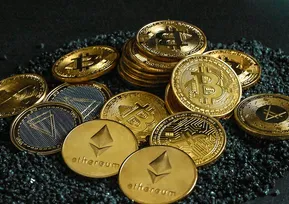
South Korean police boost crypto team in fight against drug trade
South Korea’s National Police Agency will assign all 41 narcotics investigators recruited during the second half of the year to cryptocurrency-related duties, according to News1. The move follows the creation of a dedicated “Virtual Asset Analysis and Investigation Team” aimed at tackling drug offenses that use digital assets. To bolster skills, the agency plans specialist training for investigators from Sept. 29 to Oct. 2.
Of the 41 recruits, 11 will staff an analysis unit and 30 will join field investigations. The analysis team, based at the Seoul Metropolitan Police Agency, will handle crypto-related drug cases nationwide, generate intelligence, and support phishing probes involving digital assets. The investigation group will be deployed to five regional headquarters (Seoul, Busan, Incheon, southern Gyeonggi, and southern Gyeongsang) to target illicit crypto payment processors and the money launderers behind them.

Latest crypto seizure in UK drug case
The push mirrors trends overseas. In the U.K., Devon and Cornwall Police said detectives seized £1.3 million (about $1.76 million) in cryptocurrency from Ryan Coleman, 36, who received a 15-year sentence after admitting to supplying cocaine, ecstasy, cannabis, and ketamine via the dark web. Police indicated the seized assets are expected to fund proactive operations and community initiatives, with half allocated to HM Treasury.
Cartels turn to crypto in North America
North American authorities report similar challenges. In a January 2025 post, blockchain intelligence platform TRM Labs pointed to the growing use of cryptocurrencies by Mexican drug cartels and other transnational groups. It noted that an executive order signed by President Trump earlier this year allows U.S. law enforcement to freeze crypto wallets linked to these organizations. The post also outlined laundering pipelines that rely on Chinese money brokers, who convert U.S. cash into crypto for global transfers or for buying precursor chemicals.
The scale of these flows is underscored by TRM’s September 2024 research, which estimated that Chinese drug-precursor manufacturers took in over $26 million in crypto in 2023, a 600% jump from the year before. In the first four months of 2024, receipts nearly doubled year-over-year. Roughly 60% of these payments were made in Bitcoin, 30% in TRON, and 6% in Ethereum. The analysis also noted that U.S. cryptocurrency ATMs transferred more than $170,000 directly to Chinese precursor vendors in 2023, modest in scale but valuable for investigators.
Freezing stablecoins and tracing Chinese links
While targeted sanctions and blockchain tracing have disrupted parts of the network, traffickers remain agile, TRM noted. It underscored the need for continued vigilance, technological adaptation, and cross-border coordination. Suggested steps include freezing cartel-linked stablecoins, tightening U.S. cash-to-bank laundering controls, and using legal tools like the Patriot Act to trace Chinese firms and accounts involved in laundering. South Korea’s redeployment of personnel reflects this push to align national enforcement with evolving enforcement dynamics.