Top

Korea tightens crypto oversight as major merger targets Nasdaq listing

Policy & Regulation·November 26, 2025, 6:57 AM

South Korea’s cryptocurrency market is moving through a period of stricter oversight and policy debate, while major industry players pursue overseas listings against a backdrop of falling market valuations and weaker investor sentiment.

https://asset.coinness.com/en/news/f1e197170d84049d739664e9e4cdc8fd.webp
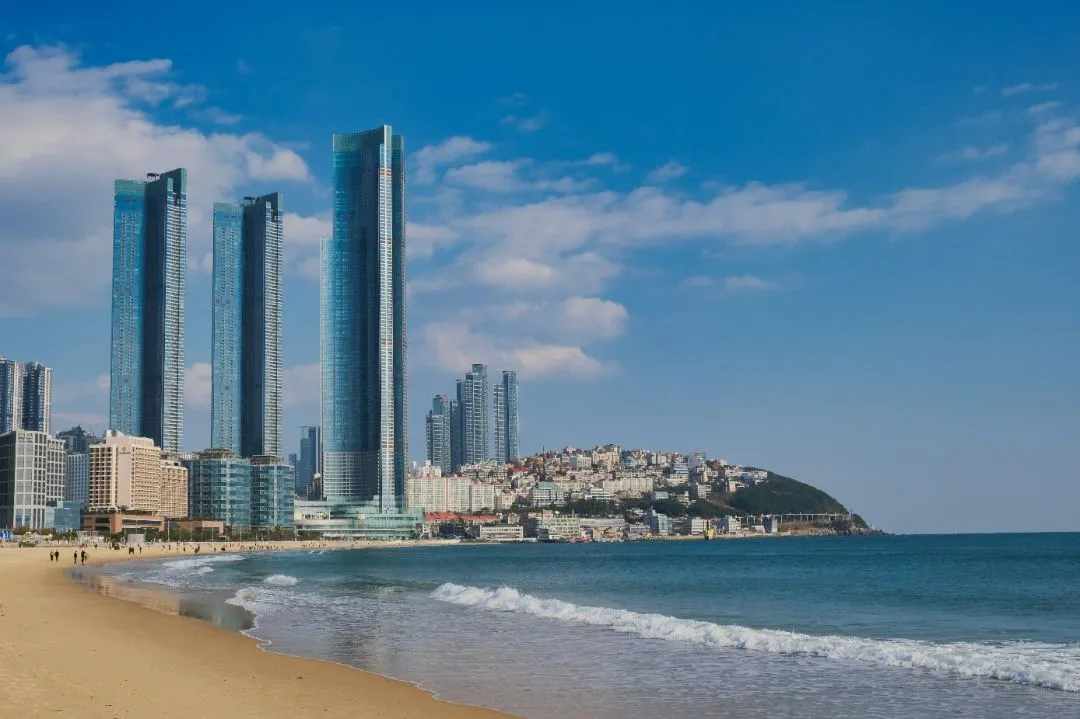
Photo by Ori Song on Unsplash

According to Newsis, financial regulators are close to finalizing penalties for the country’s major crypto exchanges after a wide-ranging review of their compliance systems. The Financial Intelligence Unit (FIU) under the Financial Services Commission (FSC) is preparing to issue sanctions such as institutional warnings, fines, and personnel measures against platforms found to have breached anti-money laundering (AML) rules.


These actions follow a series of on-site inspections that began in August 2024 with Dunamu, the operator of Upbit, and were later extended to Bithumb, Coinone, Korbit, and Gopax. Authorities plan to determine and announce penalties in the order of these inspections, which concluded in April 2025.


Stablecoin debate grows

At the same time, a policy debate is unfolding in the parliament over how far South Korea should go in supporting digital asset innovation. The Maeil Business Newspaper reported that Democratic Party lawmaker Min Byoung-dug has questioned the Bank of Korea’s cautious stance on launching a won-backed stablecoin.


The central bank has identified seven main risks associated with such an asset, including possible de-pegging and threats to monetary policy stability. Min argues that the bank is placing too much weight on these micro-level risks. In a recent report, he contended that delaying innovation could lead to larger, structural economic losses and said the risks identified by the central bank can be managed through oversight and product design rather than by avoiding stablecoins altogether.


Dunamu–Naver deal targets Nasdaq

In the corporate sector, major fintech firms are pushing ahead with international expansion plans. Naver Financial and Dunamu, which operates the Upbit exchange, have endorsed a merger plan involving a comprehensive share swap, according to The Herald Business. The share swap ratio has been set at 1 to 2.54. This development follows earlier reports that the two firms were close to an agreement intended to support a future Nasdaq listing in the United States.


Bitcoin slide persists

These regulatory, legislative, and corporate developments are taking place as market conditions deteriorate. Global data show weakening demand, with spot Bitcoin exchange-traded funds (ETFs) recording about $3.5 billion in net outflows in November, according to Bloomberg, while CoinMarketCap data show Bitcoin prices down roughly 24% over the past month. 


Domestic sentiment reflects this caution. In a weekly survey conducted by CoinNess and Cratos, 59.5% of South Korean investors said over the weekend that they expect Bitcoin prices to fall or crash this week, up from 43.6% a week earlier. Only 12.4% of respondents forecast a price increase.


Views on the broader market cycle are also shifting. In the same survey, 42.9% of participants said they believe the bull market has already ended. Reflecting this sentiment, Alternative.me’s Crypto Fear & Greed Index is at 15, in the “Extreme Fear” zone as of Nov. 26.


 

More to Read
View All
Web3 & Enterprise·

Sep 19, 2023

KSOC to Implement Blockchain-based Athlete Management Platform

KSOC to Implement Blockchain-based Athlete Management PlatformThe Korea Sport and Olympic Committee (KSOC) held an initiation briefing on Monday to develop a blockchain-based career and performance management platform for athletes in collaboration with the Ministry of Science and ICT. This project aims to promote environmental, social, and governance (ESG) management by promoting eco-friendly approaches to sports management.Photo by Sandro Schuh on UnsplashThe KSOC was selected by the Ministry of Science and ICT and the Korea Internet & Security Agency (KISA) in May to participate in a contest focusing on the implementation of blockchain technology in the public sector through the development of new platforms and services. This granted them the opportunity to undertake a blockchain project worth KRW 1.3 billion (approximately $978,000).Representatives from various entities such as the KSOC and KISA and schools like Korea National Sport University and Yongin University attended the briefing on Monday, as well as sporting organizations like the Korea Basketball Association, the Korea Baseball Association, and the Korean University Sports Federation (KUSF).Revolutionizing athlete certificationThe primary focus of the project is to digitize certification for athlete performance, which is one of the documents submitted during the admissions process for special athletes under the KUSF. This document is issued by the respective sports associations and verifies the validity of the performance records of athletes in major competitions. The KSOC currently manages the performance records of nationwide competitions for more than 60 member sports associations, including the Korea Basketball Association, the Korea Baseball Association, and the Korea Taekwondo Association.Embracing digital transformationThe project will thus facilitate a transition from printing and manually submitting paper certificates to a digital format that allows for online submission to involved institutions. This change is expected to reduce paper usage and postal costs as well as save time and simplify processes, thereby contributing to environmental protection and improved ESG management.Additionally, the KSOC said that it would work on providing digital badges for athlete identification through a decentralized identifier (DID) system.These various elements of the project will ensure a more transparent and secure management of performance records and history free from tampering or leaks. The new system is expected to be fully implemented starting at the end of this year.Furthermore, the KSOC plans to continuously strive for the digitization and expansion of the sports sector through the implementation of emerging technologies.

news
Policy & Regulation·

Mar 13, 2024

Hong Kong regulator unveils stablecoin sandbox

Following December's release of proposed fiat-referenced stablecoin regulations, the Hong Kong Monetary Authority (HKMA) has progressed further with the introduction of a stablecoin sandbox.Photo by Nextvoyage on PexelsFormulating a regulatory regimeThe regulatory sandbox, announced through a press release published to the regulator’s website on March 12, encompasses stablecoin currencies beyond the Hong Kong dollar, although the HKMA refrained from specifying particular currencies. Eddie Yue, CEO of the HKMA, emphasized the sandbox's role as a platform for constructive dialogue between the regulatory authority and the industry. Yue stated:"The sandbox arrangement serves as an effective channel for the HKMA and the industry to exchange views on the proposed regulatory regime.”Yue further noted that such engagement is pivotal for formulating regulatory requirements conducive to the sustainable and responsible growth of the stablecoin issuance business. The stablecoin sandbox finds its digital footprint within the International Financial Centre on the HKMA's website. The documentation accompanying the sandbox outlines several key requirements for potential participants. These include demonstrating genuine interest and a feasible plan for issuing fiat-referenced stablecoins in Hong Kong, as well as a concrete strategy for engagement within the sandbox. Additionally, applicants must exhibit a reasonable prospect of compliance with the proposed regulatory framework. Minimum capital requirementsOne notable regulation proposed stipulates that issuers must be Hong Kong-based entities with a minimum capital requirement of HK$25 million ($3.2 million) or 2% of the stablecoin issuance, whichever is higher. The HKMA remains vigilant regarding public announcements by sandbox participants, ensuring that such declarations do not misconstrue endorsement or accreditation from the regulatory authority. In late January, reports suggested discussions between Harvest Global Investment, RD Technologies, Venture Smart Financial Holdings and the HKMA regarding their potential entry into the sandbox. Harvest Global Investment, boasting over $200 billion in assets under management, signifies a significant player in this evolving digital assets space.RD Technologies took to the X social media platform to publicize its approval of the HKMA’s stablecoin sandbox. It also availed of the opportunity to outline that it’s in the process of launching a Hong Kong dollar (HKD)-based stablecoin, which will be known by the short-code HKDR.Hong Kong-based fintech firm AnchorX also chimed in, stating that the sandbox is “a pivotal step forward for the industry, enabling informed dialogue and collaboration between regulators and fintech innovators.” Like RD Technologies, AnchorX is also looking to get involved in the stablecoin business, having developed the AxHKD Hong Kong dollar-based stablecoin, which it is currently beta testing, in collaboration with Conflux Network. Juan Leon, crypto analyst with Bitwise Asset Management, suggested that the move is a great initiative, while calling on the U.S. Federal Reserve Chair Jerome Powell to follow Hong Kong’s example. On the tokenization front, Hong Kong made headlines in 2023 with the issuance of the world's largest native digital bond — a green bond exceeding $750 million. Late last year, it also proposed regulations relative to tokenization of real-world assets.Guidance provided to banks on tokenization, coupled with plans for forthcoming legislation, further solidifies Hong Kong's position as a trailblazer in the realm of digital finance.  

news
Policy & Regulation·

Apr 20, 2023

Singapore Judge Says Crypto Not Money

Singapore Judge Says Crypto Not MoneyIn recent years, legal processes in various jurisdictions worldwide have seen judges comment on whether cryptocurrency is actually money. The latest such determination has been made by Justice Vinodh Coomaraswamy who outlined in a Singapore court that while being a component of financial transactions, cryptocurrencies are not money.The consideration emerged in a recent court hearing at Singapore’s High Court in a case involving the Algorand Foundation and failed Singapore-based hedge fund, Three Arrows Capital (3AC). Justice Coomaraswamy’s comments arose due to a discussion in the midst of the court proceedings involving the Judge and counsel representing the Algorand Foundation.©Pexels/EKATERINA BOLOVTSOVASeashells as moneyIn setting out his rationale for the need for 3AC to be wound up, Daniel Chan, a lawyer for the WongPartnership law firm that was representing the Algorand Foundation in the proceedings, told the judge that despite foreign currencies not being recognized as legal tender in Singapore, or used broadly as a medium of exchange within the city state, those foreign currencies are recognized by Singapore law as money. Using that analogy Chan suggested that by implication, the same scenario should be considered where cryptocurrencies are concerned.The judge provided a counterpoint: “What if you had a [community] in the world that used seashells as its internal medium of exchange? Would the Singapore courts have to recognize that as money.” Chan claimed that the judge had used an extreme example although Coomaraswamy remained steadfast in his view, pointing out that seashells had indeed been used as a form of money in the distant past.Coomaraswamy proceeded to dismiss the Algorand Foundation’s winding up application. He acknowledged that the Foundation did have standing in bringing the application. However, as he determined that cryptocurrency couldn’t be classed as money, on that basis he dismissed the application. In conveying his decision, he stated: “The word indebtedness, in my view, must require a debt which is in fiat currency. Determining whether or not a particular intangible, such as cryptocurrency, is money would require a detailed examination of evidence which is not appropriate in the context of insolvency.”Legal tenderThus far, bitcoin has been recognized as legal tender in two countries — El Salvador and the Central African Republic. In 2020, a French court referred to the leading cryptocurrency as money, agreeing that Bitcoin loans can be recognized as customer loans in the same way as loans denominated in fiat currencies. Earlier that year, an Australian court recognized bitcoin as a legally legitimate form of investment. In the United States, a Federal court recognized bitcoin as “money” or “funds” in a prosecution taken against Silk Road website operator Ross Ulbricht.There have been many similar instances in courts globally where judges have had to grapple with the consideration of whether bitcoin and crypto more generally can be regarded as money. Similar to the difficulty authorities are having in regulating cryptocurrency, it’s an issue that in most cases lacks complete clarity and in which we can expect further discussions on, similar to this most recent consideration in the Singaporean high court.

news
Loading