Top

Korea’s Upbit operator secures renewal amid influx of former regulatory officials

Policy & Regulation·December 26, 2025, 8:05 AM

Dunamu, the operator of South Korea’s largest crypto exchange, Upbit, secured approval to renew its registration as a virtual asset service provider (VASP), ending 16 months of regulatory limbo that had clouded the domestic market.

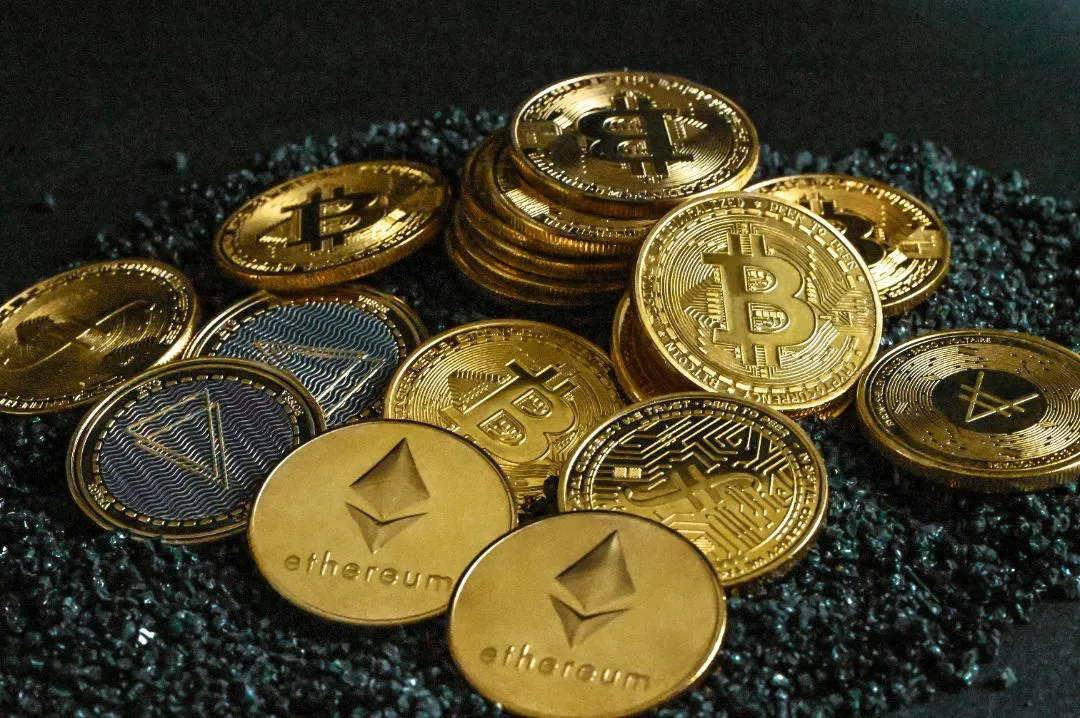
https://asset.coinness.com/en/news/564e24114f1b3b4987374c39400adc25.webp
Photo by Daniel Bernard on Unsplash

According to Newsis, the Financial Intelligence Unit (FIU) under the Financial Services Commission (FSC) granted the approval on Dec. 23. Industry participants view the decision as a stabilizing signal for the sector amid the country’s evolving crypto regulations.


Under South Korean law, VASPs must renew their licenses every three years. Dunamu submitted its application by the statutory deadline of Aug. 21, 2024, but the review faced prolonged delays due to FIU staffing shortages and overlapping sanctions proceedings.


Regulators had flagged Dunamu for alleged violations regarding customer due diligence and transaction restrictions, resulting in a 35.2 billion won ($24.4 million) fine. Prior to the fine, the FIU issued a disciplinary warning to Dunamu’s chief executive and ordered a three-month partial suspension of operations.


Dunamu is currently contesting the suspension and warnings in court, with a fourth hearing scheduled for February 2026. Despite the ongoing litigation, the company stated it has addressed all regulatory issues and implemented measures to prevent recurrence.


Market clarity fuels expansion, IPO ambitions

With uncertainty surrounding the market leader resolved, observers expect other exchanges to feel emboldened to pursue expansion, including new business launches and potential initial public offerings (IPOs).


Bithumb, the country’s second-largest exchange, is weighing a public listing as early as next year. Securing license renewal would bolster market confidence and expand the company’s strategic flexibility. Other major platforms, including Coinone, Korbit, and Gopax, filed renewal applications late last year. Each faces sanctions proceedings for alleged legal violations, leaving the market closely watching for FIU rulings.


Exchanges recruit ex-regulators

With regulatory scrutiny remaining a constant challenge, South Korean exchanges are increasingly recruiting former senior financial regulators to navigate the legal landscape.


Citing data from the FSC and the Financial Supervisory Service (FSS), Segye Ilbo reported that the flow of senior officials into the crypto sector has accelerated. Between January and November, eight former FSS officials at Grade 4 or above moved to crypto firms—well above the historical norm of one or two annually.


Over the past two years, 16 former FSS officials have moved into the crypto industry, with nine joining Dunamu and seven moving to Bithumb. Industry insiders link the trend to the enforcement of the Virtual Asset User Protection Act in July 2024, which brought the sector under a formal regulatory framework. Exchanges are seeking the expertise of retired regulators to manage legal risk and strengthen government relations, particularly ahead of planned phase-two legislation focused on stablecoins.


TradFi enters as systemic risks watched

As digital assets move within official regulatory boundaries, traditional financial institutions are accelerating their entry into the sector. On Dec. 26, Korea Investment & Securities signed a memorandum of understanding (MOU) with Bithumb to collaborate on asset management services, Yonhap News reported. The partnership aims to combine the brokerage's equities expertise with the exchange's digital asset capabilities to offer tailored products.


However, the deepening ties between crypto and traditional finance have drawn the central bank's attention.


In a Financial Stability Report released Dec. 23, the Bank of Korea (BOK) noted that the correlation between Bitcoin and the S&P 500 has increased since 2020. The BOK attributed this to the introduction of crypto-related financial products, such as ETFs, and increased participation by institutional investors and publicly listed companies holding crypto.


Spillover risks in South Korea remain contained given the limited level of corporate participation, despite the government’s move earlier this year to gradually permit corporate crypto holdings. However, the central bank warned that greater institutional participation enabled by regulatory easing could intensify risk transmission. The report underscored the need for safeguards to insulate Korean equities from crypto-market shocks.

 

More to Read
View All
Web3 & Enterprise·

May 22, 2023

Wemade Partners with Etherscan to Enhance Transparency in WEMIX 3.0 Ecosystem

Wemade Partners with Etherscan to Enhance Transparency in WEMIX 3.0 EcosystemWemade, a leading company in the South Korean blockchain gaming industry, announced on Monday a partnership with Etherscan, a renowned block explorer and analytics platform. The objective of this collaboration is to enhance transparency within the WEMIX 3.0 ecosystem.Photo by Shubham Dhage on UnsplashNew block explorerAs part of this partnership, both companies will work together to develop a dedicated block explorer for the WEMIX 3.0 mainnet and Kroma, an Ethereum Layer 2 project developed by Lightscale, a subsidiary of Wemade. The new block explorer will provide advanced functionality, enabling users to access a more transparent transaction history. The explorer is expected to be launched in the first half of this year.InteroperabilityKroma is Lightscale’s Ethereum Layer 2 project whose goal is to establish a layer 2 blockchain based on zero-knowledge rollups. Thanks to Kroma’s interoperability, the WEMIX ecosystem is anticipated to extend beyond the WEMIX blockchain, linking to external blockchains.Etherscan, one of major block explorers for Ethereum, is an established platform offering extensive analytics capabilities. It has previously developed and operated various block explorers, including BscScan for Binance Blockchain, PolygonScan for Polygon Blockchain, and Arbiscan for Arbitrum Blockchain.Through this partnership, Wemade continues its commitment to decentralizing the WEMIX 3.0 mainnet and driving innovative advancements of a transparent mega-ecosystem.

news
Policy & Regulation·

May 13, 2024

Worldcoin resumes services in South Korea after two months of suspended operation 

Sam Altman’s iris-scanning project Worldcoin (WLD) has resumed its service in South Korea following two months of suspended operation, according to Digital Today. The project utilizes a device dubbed “Orbs” to collect personal biometric data from users who agreed to have their iris scanned by the machine.  The service was suspended after a number of complaints were filed against Worldcoin in February for its data collection practices. In the following development, Korea’s Personal Information Protection Committee (PIPC) launched an investigation into Worldcoin to examine if any local privacy law has been violated by Worldcoin. This led to suspension of six Orbs installed in several areas in Seoul, including Yeouido and Yeoksam areas.  While these Orbs have resumed operations, the investigation is still underway. The South Korean regulators are yet to decide what legal measures to take regarding Worldcoin, according to the press. Photo by Amanda Dalbjörn on UnsplashProof of personhood: Crypto tokens for simply being human Meanwhile, Worldcoin argues that it is impossible to identify an individual person by solely relying on the iris bio-data. It claims that the data will be only used in providing “proof of personhood” to distinguish humans from artificial intelligence (AI). The project aims to offer its WLD token to users “simply for being human” as universal basic income, whose jobs will be potentially replaced by artificial general intelligence (AGI) in the future.  A Worldcoin official added that the project has addressed potential privacy concerns by eliminating data custody processes and allowing users to remove their sensitive data at will. However, major countries including France and Spain have issued orders to suspend Worldcoin’s operation within their jurisdictions, citing risks involving personal data tracking and breaches.  A PIPC official stated that the government authority will continue the investigation and take further action in line with the Personal Information Protection Act.  

news
Web3 & Enterprise·

Nov 07, 2023

Okto commits $5 million treasury fund to support Vauld users

Okto commits $5 million treasury fund to support Vauld usersOkto, the self-custody DeFi wallet app offered by Indian crypto exchange CoinDCX, has pledged a $5 million treasury fund to provide support to Vauld users.Vauld, a Singapore-based crypto lending platform, brought a halt to all trading, withdrawal and deposit activities in 2022 as it ran into liquidity issues. The business has been undergoing a process of restructuring under the protection of the courts in Singapore ever since.Photo by Towfiqu barbhuiya on UnsplashIncentivizing user asset transferIn response, Okto has stepped forward with a proactive approach to assist Vauld users in their transition. Okto is offering a 2% bonus to users who opt to transfer their assets from Vauld to Okto.Neeraj Khandelwal, the Founder of Okto, emphasized the company’s overarching mission while unveiling this $5 million initiative. He said: “While this $5 million fund represents one of our initiatives to support the crypto ecosystem, our overarching vision is to empower the Web3 community through cutting-edge technology-backed platforms and apps designed to tackle the broader challenges within the ecosystem.”Self-custody assurance featureIn addition to this incentive, Okto is also offering a self-custody assurance feature. This feature allows users to gain complete ownership of their private keys, ensuring that access to their funds remains exclusively in their hands. Moreover, users can benefit from round-the-clock access to monitor their assets. That delivers a reassuring sense of control and peace of mind regarding the users’ cryptocurrency holdings, against a backdrop of those users having had the experience of being unable to withdraw their funds when the Vauld platform paused trading.The concept of self-custody is central to what crypto was supposed to be about. It grants complete ownership of assets to the user. Khandelwal outlined that Okto was established on the basis that it could strike a balance between security, convenience and custody. In this way, it felt that it could resolve what could be termed as the crypto wallet trilemma. “Okto’s enduring mission has been to provide users with a secure and user-friendly app, and we will persistently strive to achieve this objective,” Khandelwal added.Mitigating riskLaunched globally earlier this year, Okto is a keyless, self-custody Web3 wallet that ensures secure access to DeFi services while prioritizing the safety of users’ funds. This all-in-one Web3 app approach eliminates the cumbersome need to safeguard seed phrases, ensuring users have full control of their funds.Moreover, it mitigates the risk of a single point of failure through its state-of-the-art, custom-built, consensus-driven Multi-Party Computation (MPC) technology. With MPC, private keys required for fund access and control are never fully exposed, guaranteeing the constant security of users’ assets.Vivek Gupta, Chief Technology Officer at Okto, elaborated on the technology behind Okto’s product offering, stating:“Okto uses state of the art Multi-Party-Computation algorithms to create users’ private keys. Our MPC algorithm never produces a complete private key. Our MPC algorithm uses three nodes which communicate with each other under proprietary encryption channels and create a unique sensitive material on each node.”In addition to its security measures, Okto wallet boasts compatibility with multiple Web3 chains such as Polygon, BSC and Avalanche, along with protocols like Stader and WooFi, among others.

news
Loading