Top

EDX Markets plans Asian expansion enabled by additional funding

Web3 & Enterprise·January 26, 2024, 6:19 AM

EDX Markets, a crypto-trading platform backed by Citadel Securities and Fidelity Digital Assets, is planning to establish a new crypto exchange in Singapore.


EDX Clearing

The plan was revealed in a recent Bloomberg article. In tandem with the report, a press release published on Tuesday also provided further detail on its recently-launched digital asset clearinghouse, EDX Clearing. Unlike traditional exchanges, EDX operates its own clearinghouse, following a non-custodial model in collaboration with Anchorage Digital. This approach allows institutional investors to execute trades without the need for pre-funding in fiat currency or crypto, contributing to capital efficiency and risk management.


Since its launch in October, EDX Clearing has cleared more than $3.1 billion of transactions. The recent approval of bitcoin exchange-traded funds has further intensified trading activity, with substantial volumes traded following their launch.


EDX Markets offers a unique platform for institutional investors to directly trade major cryptocurrencies like bitcoin, ether and litecoin. EDX addresses institutional players' needs with a non-custodial model, emphasizing risk management and infrastructure that aligns with traditional market practices.
https://asset.coinness.com/en/news/557aaeb48ecca84b73db895e4b938981.webp
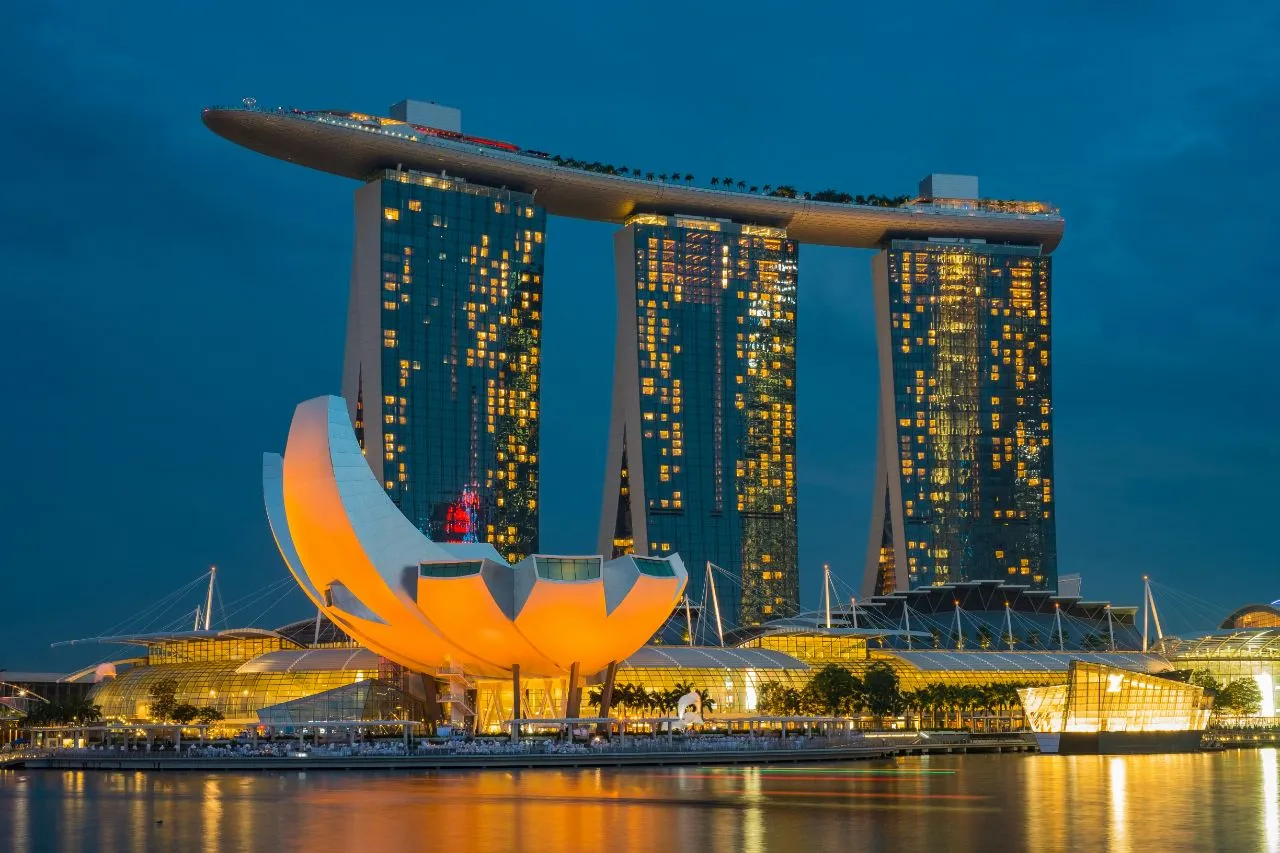
Photo by Julien de Salaberry on Unsplash

Fresh funding infusion

The company is also introducing spot and perpetual futures trading, following a successful additional funding round led by new investor Pantera Capital and existing supporter Sequoia Capital.


The recent funding infusion, the exact size of which was not disclosed, empowers EDX Markets to enhance its technology and expand its global footprint. The firm’s CEO, Jamil Nazarali, highlighted Singapore's strategic significance, citing its favorable environment for trading a diverse range of tokens and perpetual futures, along with its pool of financial talent.


The platform has gained support from traditional finance heavyweights such as Charles Schwab and Miami International Holdings, alongside original backers Citadel Securities, Virtu Financial and Fidelity Investments' digital-asset arm. The recent funding round saw investors buying in at double the initial share prices from 2022.


According to Paul Veradittakit, Managing Partner at Pantera Capital, EDX mirrors traditional market expectations, incorporating speed and capital efficiency while adapting to the unique features of the crypto landscape. Taking to the X social media platform, Veradittakit wrote:

”We believe that EDX markets reduces counterparty risk for institutions through its non-custodial clearing model.”


EDX Markets has witnessed noticeable trading volumes, with over $1.4 billion in notional volume traded in December alone. The company, headquartered in Hoboken, New Jersey, plans to build out its technology independently and transition away from its initial partnership with MEMX (Members Exchange).


Singapore expansion

The expansion into Singapore involves seeking approval from the Monetary Authority of Singapore (MAS) to operate an exchange offering both spot and perpetual futures trading.


In December, EDX's clients traded more than $1.4 billion in notional volume. Following the approval of spot bitcoin exchange-traded funds (ETFs), EDX customers executed trades totaling more than $100 million in a single 24-hour period this month.


While many in the sector welcome the involvement of TradFi in the crypto space, some have concerns with regard to how things play out over the longer term. Community member Joe Kerr took to social media on the subject, stating:

”My concern is that they’ll use the ETFs to buy from public exchanges, custody with Coinbase but when shares sell, the Bitcoin is bought through EDX and locked behind an ‘institutions only’ firewall.”


More to Read
View All
Web3 & Enterprise·

Jun 03, 2023

Bitcoin Miners Likely Selling at $28K Level, Says Matrixport

Bitcoin Miners Likely Selling at $28K Level, Says MatrixportAccording to a report by Singapore-headquartered digital asset financial services provider Matrixport, Bitcoin (BTC) is facing selling pressure at the $28,000 price level, possibly due to miners offloading their newly mined coins.The report, cited by CoinDesk on Friday, suggests that miners are being compelled to liquidate their inventory as profit margins have contracted in recent weeks.Photo by Pixabay on PexelsHashrate all-time highMining has become an intensely competitive and often unprofitable endeavor due to the ongoing rise in Bitcoin miner difficulty. The hashrate, or measure of how easily miners can discover a new block of Bitcoin reached an all-time high earlier this week. Markus Thielen, Head of Research at Matrixport, noted that given the current input cost and potential revenue expectations, most machines produced before 2022 appear to be unprofitable.“At the current input cost and potential output revenue expectations, most of the machines produced before 2022 appear to be unprofitable,” Thielen wrote.Forced sellingConsequently, miners are forced to sell their inventory at the current level rather than holding out for higher prices, which Matrixport anticipates. The report highlights the significant upside potential for miners if Bitcoin prices were to increase by 10% or more, as profitability could quadruple.The narrowing profit margins for miners reflect the challenges they face in a highly competitive market. As mining difficulty continues to rise, miners must allocate more resources and computing power to mine new coins, reducing their profitability. The situation is particularly tough for miners operating older machines, which are less efficient and more costly to run.The selling pressure exerted by miners can have a short-term impact on Bitcoin’s price. However, Matrixport’s analysis suggests that if Bitcoin experiences a notable price increase, miners could see a substantial improvement in their profitability. This potential upside convexity creates an incentive for miners to continue their operations and withstand the current market conditions.Ordinals bring increased feesOn the other hand one recent development that is assisting miners is the increase in transaction fees, with the development of Bitcoin Ordinals and BRC-20 tokens over the course of the past six months. That interest seems to be ongoing, and if anything we’re likely to see further development of tokens running on top of the Bitcoin blockchain. On Thursday, Seychelles-based crypto trading platform OKX proposed a new BRC-30 token standard which would enable staking of those tokens, alongside staking of bitcoin.Singapore-based Matrixport is a portfolio company of crypto investment venture capital firm Foresight Ventures, which is also headquartered in Singapore. The firm provides a suite of products that it is positioning to be innovative and easy to use, offering an all-in-one crypto financial services platform, enabling users to earn, invest, loan, and trade digital assets.The Matrixport report indicates that miners are likely selling their Bitcoin at the $28,000 level due to squeezed profit margins. While this selling pressure may affect short-term price dynamics, the potential for increased profitability if Bitcoin prices rise significantly provides miners with an optimistic outlook for the future.

news
Policy & Regulation·

Jan 10, 2024

Report finds Asian nations strengthening regulatory oversight of crypto

In a global effort to bolster regulatory control over the cryptocurrency sector, Asian nations feature prominently among 17 jurisdictions globally, who have implemented tighter cryptocurrency regulations in 2023. That’s the view expressed by blockchain analytics firm TRM Labs in a report published on Monday.Photo by CARTER SAUNDERS on Unsplash2023 notable for regulatory tighteningThe increased scrutiny comes on the heels of several crypto meltdowns in 2022, including the collapse of major platforms like Terraform Labs, Celsius, BlockFi and FTX, resulting in a market rout that wiped out trillions of dollars in value. The subsequent year witnessed an extraordinary surge in regulatory measures globally, with governments prioritizing consumer protection in the volatile crypto space. TRM Labs' report indicates that the jurisdictions strengthening consumer protection measures accounted for 80% of the 21 studied, representing 70% of global exposure to cryptocurrencies. As the crypto ecosystem grappled with the aftermath of the FTX collapse at the beginning of 2023, regulatory actions surged, shaping a transformative year for the industry. The TRM Labs report emphasizes that nearly half of the jurisdictions tightening crypto regulations in 2023 prioritized increasing consumer protection measures. Additionally, international organizations, including the G20, Financial Action Task Force, Financial Stability Board, International Monetary Fund and the International Organization of Securities Commissions, played a role in shaping global frameworks and policy recommendations for cryptocurrency regulation. While prominent regulatory moves included the European Union's implementation of the Markets in Crypto Assets Regulation (MiCA) in June, Asian countries were particularly active in rolling out regulatory controls and measures relative to digital asset markets.  Stronger measures in SingaporeSingapore, recognized as an early adopter of crypto regulation, took significant steps in November to curb retail speculation in cryptocurrencies. The city-state’s central bank and financial regulator, the Monetary Authority of Singapore (MAS), brought in these restrictions following a year-long public consultation process, together with a review of cryptocurrency platforms. The country set itself apart from other jurisdictions by becoming one of the first to finalize rules governing stablecoins. That regulatory action included the establishment of a comprehensive framework relative to stablecoin operations. South Korea and Australia increased scrutiny of the cryptocurrency sector, contributing to the global trend of regulatory tightening. Hong Kong licensingHong Kong introduced a new licensing regime for centralized crypto exchanges, aligning with its goal to become a global hub for virtual asset businesses. Following its major initiative in October 2022 to support the virtual asset sector, it has since implemented a mandatory licensing regime for centralized crypto exchanges, allowing them to accept retail investors. Eleven companies, including OKX, one of the largest exchanges by trading volume, have submitted applications for the license in the city. In December, Hong Kong followed Singapore’s lead, by proposing stringent rules for stablecoin issuers, prohibiting unlicensed companies from selling stablecoins to the city's retail investors through regulated channels or actively marketing their tokens within the city. These rules are considered challenging for stablecoin issuers and may potentially deter major stablecoin operators like Tether and USDC from entering the city, according to experts. As Hong Kong solidifies its regulatory stance, it positions itself alongside other major players, contributing to the global evolution of cryptocurrency oversight.

news
Policy & Regulation·

Nov 10, 2023

India tightens control with 3,000 police officials trained in crypto investigations

India tightens control with 3,000 police officials trained in crypto investigationsAs the crypto sector continues to develop, authorities continue to get to grips with the new crypto innovation, with India’s law enforcement being the latest entity to look to clamp down.Photo by Naveed Ahmed on UnsplashCrypto forensics and investigation trainingAccording to the Ministry of Home Affairs (MHA) annual report, a comprehensive training initiative was undertaken during the financial year 2022–2023. The initiative, spearheaded by the Narcotics Control Bureau and the Indian Cyber Crime Coordination Centre (I4C), equipped over 2,900 officials with essential skills in cryptocurrency forensics and investigation.Under the aegis of the Narcotics Control Bureau, India’s central law enforcement and intelligence agency, 141 officers underwent specialized training in the investigation of darknet activities, cryptocurrencies and other pertinent areas such as digital footprints.The report stated that workshops were set up that covered techniques for gathering intelligence and evidence from open sources and social media platforms, reflecting a commitment to staying ahead in the ever-evolving landscape of cybercrime.There’s clearly a need for this level of expertise, given an uptick in crypto-related scams in India and the broader Asia region as a whole in recent times. Earlier this week, it emerged that the Indian authorities had arrested eight individuals in relation to a $300 million cryptocurrency scam.Raj Kapoor, the founder of the India Blockchain Alliance (IBA), recently called for greater control when it comes to crypto-related illicit financing. Kapoor stated:”It is a kick on the backside for most governments. All regulatory bodies will take a closer look at crypto regulation. Governments will need to start implementing new rules and regulations.”I4C played a pivotal role in training over 2,800 cyber police officials. The training encompassed crypto forensics, investigations and emerging technologies like anonymization networks. The focus extended to addressing the misuse of mobile applications in the cyberspace realm.Ongoing blockchain tech adoptionAs India proactively prepares to combat potential crypto-related crimes amidst increased adoption, the nation is also delving into mainstream blockchain applications. In a recent stride towards digital transformation, Hindustan Petroleum (HPCL), the state-run oil and gas company, partnered with blockchain software firm Zupple Labs. Together, they launched a blockchain system designed to automate the verification of purchase orders (POs).HPCL’s spokesperson outlined the significance of this implementation to Cointelegraph, stating that the integration helps automate the verification of HPCL POs to external parties, utilizing the blockchain system alongside HPCL’s internal e-PO. This generates tamper-evident, verifiable POs, enhancing efficiency and transparency within industry processes.In a separate development, it emerged on Thursday that India’s Central Bureau of Investigation has appointed Singapore-headquartered digital asset market intelligence outfit Liminal to manage seized digital assets.This holistic approach, combining advancements in law enforcement training and embracing blockchain applications, underscores India’s commitment to navigating the evolving landscape of digital technologies while looking to ensure a secure and transparent future.

news
Loading