Top

Leading Chinese gaming company lines up $100M crypto investment

Web3 & Enterprise·November 18, 2023, 12:37 AM

As yet another indicator of the rising trend of institutional crypto investments, China’s premier board and card game company, Boyaa Interactive, has unveiled plans to invest up to $100 million in cryptocurrency assets, with a focus on Bitcoin (BTC) and Ethereum (ETH).

News of Boyaa’s plans emerged following a disclosure from the Hong Kong Exchanges and Clearing Limited, which stated that the company will distribute notices regarding its crypto investment plans during an extraordinary general meeting (EGM). The relevant details are expected to have been supplied to shareholders on or before Nov. 30. The company has emphasized its intention to ensure transparency while adhering to listing rules throughout this process.
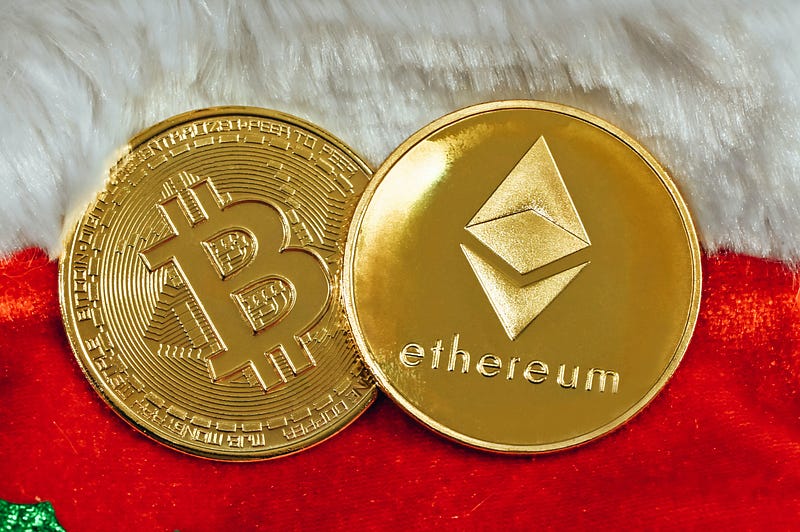
Photo by Traxer on Unsplash


Digital asset acquisition over a 12-month period

The decision to delve into the world of cryptocurrencies aligns with Boyaa Interactive’s commitment to strengthening its presence in the evolving Web3 landscape, as highlighted by the company’s board of directors. The proposal outlines a comprehensive strategy to acquire the assets over a 12-month period, pending approval at the upcoming EGM.

The planned acquisition involves allocating approximately $90 million equally between Ethereum and Bitcoin. The remaining $10 million is earmarked for stablecoins Tether (USDT) and USD Coin (USDC). Boyaa Interactive asserts that the actual acquisitions will depend on open market conditions, with a commitment not to pay premiums exceeding 10% of prevailing market prices. Funding for this initiative will be sourced from the company’s existing cash reserves.

The board will play a crucial role in determining the specific cryptocurrencies to acquire, their allocation ratios and the optimal timing for purchase. The emphasis is on prudent risk management, aligning with Boyaa’s business development strategies.


Diversification strategy

The company justifies its choice of Bitcoin and Ethereum by citing their alignment with its long-term development goals. In the document, Boyaa Interactive highlights the importance of investing in cryptocurrencies with robust market liquidity and substantial market values. Bitcoin, Ethereum, USDC, and USDT, chosen for their high market liquidity, align seamlessly with Boyaa’s strategic vision.

In its stock exchange filing, it justifies these plans on the basis of a desire to diversify its holdings. The document reads:

”[The] purchase of cryptocurrencies is also an important arrangement for the Group’s asset allocation, as allocating part of the Group’s idle reserve funds in cryptocurrencies can serve as a diversification to holding cash in treasury management, and a measure to balance investment risks and returns.”


Growing asset acceptance

The move into the cryptocurrency market comes at a time when institutional investors are increasingly flocking to major assets like BTC and ETH. Reports indicate significant inflows of institutional funds into these cryptocurrencies, setting the stage for what appears to be an extended bull market.

Boyaa first showed an interest in holding crypto on its balance sheet back in August when it proposed allocating $5 million towards cryptocurrency investment. The company following up with a $100 million investment serves as a testament to the growing acceptance and integration of cryptocurrencies within mainstream business strategies.

More to Read
View All
Policy & Regulation·

Oct 25, 2023

China Makes History by Settling Cross-Border Oil Deal with Digital Yuan

China Makes History by Settling Cross-Border Oil Deal with Digital YuanThe digital yuan, China’s central bank digital currency (CBDC), also known as e-CNY, was used for the first time to settle a significant oil transaction.Chinese state-owned media outlet China Daily reported on Saturday that the Shanghai Petroleum and Natural Gas Exchange (SHPGX) revealed on October 20 that PetroChina International, a subsidiary of the China National Petroleum Corporation (CNPC), successfully acquired 1 million barrels of crude.Photo by engin akyurt on UnsplashAdvancing e-CNY use internationallyThis transaction is a response to the call by the Shanghai Municipal Party Committee and Municipal Government to incorporate the digital yuan into international trade, marking a noteworthy stride towards the broader adoption of the digital currency.The exact seller and price details for the deal were not disclosed. This historic crude oil transaction signals not only the increasing use of the digital yuan in global trade but also a noteworthy step in the movement towards de-dollarization. Reports from China Daily suggest that the use of the yuan in cross-border settlements experienced a remarkable 35% year-on-year increase in the first three quarters of 2023, reaching a total of $1.39 trillion.This milestone isn’t the first time the yuan has been utilized in the energy sector. In March, the yuan was first used in a liquefied natural gas (LNG) purchase on the SHPGX, as French TotalEnergies reached an agreement to sell LNG to the China National Offshore Oil Corporation (CNOOC). Recently, another LNG deal was executed between CNOOC and French Engie, although these transactions did not involve the digital yuan.In parallel developments, First Abu Dhabi Bank announced on October 19 that it had established an agreement on digital currency with the Bank of China during the third Belt and Road Forum for International Cooperation. China and the United Arab Emirates, including Abu Dhabi, are participants in the mBridge platform designed to facilitate cross-border transactions using CBDCs. The mBridge platform is expected to launch as a minimum viable product in the coming year.Furthering mass adoptionThe Chinese authorities are taking several distinct approaches in furthering mass adoption of the e-CNY. The Chinese subsidiaries of both Singapore’s DBS Bank and France’s BNP Paribas have recently partnered with the People’s Bank of China to enable their international clients operating in China to use the digital yuan.A long list of initiatives have been taken within mainland China by regional governing authorities to further the use of the CBDC. To further enable mass adoption at home, a new offline SIM card-based digital yuan wallet was developed and launched earlier this year.The successful use of the digital yuan in settling this oil deal represents a significant step forward in the internationalization of China’s currency and the growing influence of CBDCs on the global economic stage. As the world watches these developments unfold, the digital yuan continues to make strides towards becoming a crucial means of exchange in international trade and finance.

news
Policy & Regulation·

Jul 25, 2025

Hong Kong criminalizing promotion of unlicensed stablecoins

The CEO of Hong Kong’s central banking institution, the Hong Kong Monetary Authority (HKMA), has outlined that the introduction of the Chinese autonomous territory’s Stablecoins Ordinance on Aug. 1 will criminalize the unlicensed promotion of stablecoins. In an article published on the HKMA website on July 23, CEO Eddie Yue stated:”According to the Ordinance, starting from the commencement date, it will be illegal for any person to offer any unlicensed fiat-referenced stablecoin (FRS) to a retail investor, or actively market the issue of unlicensed FRS to the public of Hong Kong.”Photo by Manson Yim on UnsplashSubject to fine & imprisonmentIf an individual is found to have promoted an unlicensed stablecoin, they will be subject to a fine of HK$50,000 ($6,400) and imprisonment of up to six months. Yue warned the public to remain vigilant and to exercise caution if they come across marketing material related to an unlicensed stablecoin offering. The HKMA CEO is conscious of the fact that stablecoins are an emerging payment instrument that is being gradually integrated into the mainstream financial system. However, he feels that some discussion on stablecoins has been overly idealistic. Yue outlined that interactions with the few dozen institutions that have reached out to the HKMA with regard to stablecoin licensing have led him to believe that “many proposals remain conceptual.” He claimed that many of the institutions putting forward these proposals “fail to put together viable and concrete plans as well as implementation roadmaps, let alone demonstrate their awareness of risks and competence in managing them.” Limited license issuanceYue believes that in many instances, these institutions would be better served to collaborate with stablecoin issuers rather than becoming stablecoin issuers themselves. It’s on that basis that the HKMA will only grant a handful of stablecoin issuer licenses. Bloomberg reported that in the region of 50 companies have been seeking to apply for stablecoin licensing in the city, with the HKMA likely to approve around 10 licenses. It referenced particular interest from Chinese brokerages and a related move recently by asset management firm ChinaAMC in launching a yuan-denominated tokenized money market fund that facilitates subscriptions via stablecoins.  Significant Chinese businesses such as JD.com and Ant Group have been preparing to acquire stablecoin licensing in Hong Kong. Chinese stablecoin urgencyIn its Asia Morning Briefing, CoinDesk pointed out that in 2021, the Chinese authorities had been critical of the development of global stablecoins, preferring instead to concentrate on their own central bank digital currency (CBDC), the digital yuan. However, it asserts that “Beijing’s caution on stablecoins is giving way to a sense of urgency.” Animoca Group President Evan Ayuang told the publication that China’s interest in stablecoins is on the rise. Ayuang asserted that actions taken by the Trump administration in the U.S. related to stablecoin policy are “pressuring China to act a lot faster.” Developments in Hong Kong are relevant in the context of China’s newfound interest in stablecoins. Lily King, chief operating officer (COO) at crypto custodian Cobo, stated recently that Hong Kong continues to be a testing ground for mainland China.  In keeping with that outlook, analysts at Morgan Stanley recently asserted that yuan-denominated stablecoin projects launched in Hong Kong would potentially serve as a developmental stablecoin sandbox for mainland China.

news
Policy & Regulation·

Aug 29, 2023

Laos Halts Crypto Miners’ Electricity Amid Drought and Debts

Laos Halts Crypto Miners’ Electricity Amid Drought and DebtsLaos, a leading producer and exporter of hydroelectricity, has made the decision to suspend electricity supply to cryptocurrency mining operations within its borders.Photo by Ioana Farcas on UnsplashTackling a perfect stormThe decision comes as a result of a perfect storm of challenges, including a struggle to meet escalating power demands due to drought conditions, impending commitments to export electricity to Thailand, and the mounting debts of cryptocurrency mining companies.In a calculated move in 2021, Laos initiated a public-private pilot program aimed at delving into cryptocurrency mining and trading. The context for this move was China’s sweeping crackdown on mining activities, compelling miners to scout for alternative jurisdictions for their operations.In response, Laos granted authorization to a handful of entities, spanning construction conglomerates and a bank, to partake in the mining and trading of Bitcoin, Ethereum, and Litecoin. This led to a commitment to regulatory collaboration between government ministries, the Bank of Laos, and Electricité du Laos (EDL).Exploiting hydropowerLaos’ abundant and affordable electricity has placed it on the short list of locations for crypto miners to settle in. With an abundance of rivers and waterfalls, hydropower stands as one of the nation’s primary energy sources, offering a renewable source of cost-effective electricity.However, events in 2023 have disrupted that narrative. A persistent drought has hit the country during the first half of the year, which triggered an unprecedented surge in the demand for electricity from sources other than hydro.The dependence on hydropower, constituting 95% of the nation’s energy generation, struggled to keep pace with the demand. As a direct consequence, EDL, a state-owned electricity distributor, announced the cessation of electricity supply to crypto mining operations.The problem has compounded as Laos finds itself committed to exporting substantial quantities of electricity to the Electricity Generating Authority of Thailand (EGET), serving as a lifeline for Thailand’s power grid during the forthcoming dry season. This external commitment has, in turn, further strained the local capacity for electricity supply.Another Asian country, Bhutan, has also gotten involved with crypto mining in an effort to exploit its hydropower resources, where 99% of electricity supply comes from hydropower within the kingdom.Unpaid billsAnother dimension to the saga is the growing debt crisis faced by cryptocurrency mining operations. A representative of EDL cited the inability of these mining businesses to settle their accumulating electricity bills as a key factor in the decision for suspension. The Bank of Laos has further escalated matters by deciding to halt loans to cryptocurrency companies in January.Laos has had bold objectives to transform itself into Southeast Asia’s premier exporter of clean electricity. The nation’s topography, featuring mountainous terrain covering 70% of the country, has immense potential for hydropower, with over 26,000 megawatts of installed capacity and ambitious plans to double this figure.Hydroelectric dams like Nam Theun 2 have become conduits for substantial volumes of low-cost electricity, primarily directed towards neighboring Thailand and Vietnam. Meanwhile, projects like the Luang Prabang dam, boasting an installed capacity of 1,460 megawatts, underscore the country’s ambitions to develop hydropower further.Revenues from power exports have become a vital component in Laos’ gross domestic product (GDP), contributing almost 15%, as per a report from October 2022.

news
Loading