Top

Bithumb Burrito Wallet teams up with Yooldo to expand blockchain gaming network

Web3 & Enterprise·November 08, 2023, 3:54 AM

Rotonda, the operator of the digital asset wallet platform Bithumb Burrito Wallet, and blockchain gaming platform Yooldo said Wednesday (local time) that they have jointly signed a memorandum of understanding (MOU) to expand their respective blockchain ecosystems and secure a global user base.

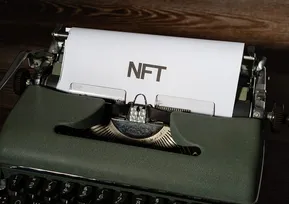
Photo by Christian Wiediger on Unsplash


Service integration

Under the new deal, Rotonda plans to integrate Burrito Wallet into Yooldo’s key decentralized applications (dApps), such as its first in-house developed game Trouble Punk, to build support for the expansion of its web game ecosystem. Users will also be able to use Yooldo’s governance token, YOOL, within Burrito Wallet, thus boosting its utility.

Furthermore, they plan to actively collaborate on marketing endeavors such as events and campaigns to attract users.

Rotonda mentioned its expectations for a successful collaboration with Yooldo as they share a common goal to make their respective services user-friendly. While Rotonda allows wallet holders to conveniently transfer assets and manage numerous cryptocurrencies and non-fungible tokens (NFTs) in one platform, Yooldo is dedicated to building a sustainable Web3 gaming ecosystem that leverages blockchain technology to offer content, rewards and user-friendly UI and UX designs, making the transition from Web2 to Web3 a seamless process for gamers.


Burrito Wallet’s commitment to growing the community

Meanwhile, Burrito Wallet has been at the forefront of expanding the digital ecosystem by promoting the widespread adoption of blockchain and supporting promising startups. The platform recently hosted a hackathon at this year’s Global Blockchain Incheon Conference (GBIC 2023) and is a contributor to Bithumb’s tenth-anniversary project — an entrepreneurship support program that aims to foster young entrepreneurs and startups with groundbreaking ideas.


More to Read
View All
Policy & Regulation·

Aug 25, 2023

Vauld Implements Key Leadership Changes Amid Bankruptcy Proceedings

Vauld Implements Key Leadership Changes Amid Bankruptcy ProceedingsFailed Singaporean cryptocurrency lender Vauld has unveiled a comprehensive overhaul of its board structure.Photo by Yibei Geng on UnsplashOngoing restructuringThe platform, which faced financial turmoil leading to its declaration of bankruptcy last year, is introducing fresh leadership to spearhead its restructuring efforts. The move involves the appointment of a new CEO, a creditor representative, and a scheme manager.The current CEO and Co-Founder of Vauld, Darshan Bathija, announced the proposed changes via a post on X (formerly Twitter) on Thursday. He emphasized that the new appointees would take charge of orchestrating a much-needed bailout.The challenges faced by the company through its ongoing bankruptcy proceedings have prompted Vauld to secure court approval for this new organizational scheme. In his social media post, Bathija stated:“Vauld (Defi Payments Pte Ltd) got its scheme of arrangement passed in Singapore courts. As part of the scheme, the current board will be replaced with a new CEO, a creditor representative, and a scheme manager.” Additionally, Bathija noted that the exchange’s customers are actively updating their Know Your Customer (KYC) details.This announcement comes almost a year after Vauld came under scrutiny due to a money laundering investigation. The cloud of suspicion surrounding the firm at the time led to the freezing of assets worth $46.4 million from its domestic operations by Indian authorities.Nexo acquisition failureIn February of this year, the Singapore High Court granted Vauld an extension until March 24 to formulate a comprehensive strategy for repaying its creditors. The extension became crucial after a potential acquisition deal with Nexo fell through. However, despite this reprieve, the exchange was unable to secure a further extension, fueling discussions within the community about the challenge of meeting creditor obligations within a relatively short time frame.In a step to facilitate the resolution of outstanding amounts, the court established a committee of creditors (CoC). This move was prompted by allegations from a faction of creditors that Vauld was impeding communication and implementing unwarranted corrective measures. Notably, the exchange owes more than $2.2 million to these creditors.Vauld has contracted the services of risk and financial advisory firm Kroll as part of the restructuring efforts. In an isolated instance of good fortune, it appears that Vauld creditors are unaffected by a data breach which occurred recently at Kroll, while creditors of the Genesis, FTX, and BlockFi crypto bankruptcy processes have had their data compromised.Charting a path forwardBathija conveyed that more updates regarding the platform’s path forward would follow soon. Vauld’s financial instability can be attributed to several factors, chief among them being the ripple effect of Terra’s downfall. Further complications arose due to economic issues tied to the Celsius Network and Three Arrows Capital (3AC) defaulting on their loans. These cumulative challenges led to Vauld’s operational suspension.Despite this failure and similar issues relative to crypto lender Hodlnaut and 3AC, which were also based in the city state, Singapore continues as a jurisdiction that effectively balances regulatory control with the drive to foster innovation. Its central bank and financial regulator, the Monetary Authority of Singapore (MAS), recently unveiled a comprehensive framework for stablecoins.

news
Web3 & Enterprise·

Oct 18, 2023

Scroll’s zkEVM Launches on Ethereum Mainnet

Scroll’s zkEVM Launches on Ethereum MainnetScroll, the Seychelles-headquartered project behind the Ethereum layer-2 network of the same name, has officially made its debut on the Ethereum mainnet.Photo by Zoltan Tasi on UnsplashAttempting to solve for scalabilityThe project team announced the development via a press release which was published on Tuesday. The network launch signifies the latest in a series of attempts by various layer-2 projects, including Polygon and StarkWare, to address the persistent challenges of high transaction fees and network congestion that have hindered Ethereum’s usability in recent times. Speaking to layer-2 development, co-founder Sandy Peng stated:“We see a future where the vast majority of value transfer takes place on Layer 2s on Ethereum. What will drive that adoption is improved user and developer experience.”After testing and refinement on its testnet, Scroll believes that it is in a good position to play an active role within the Ethereum ecosystem by providing a general-purpose, zero-knowledge Ethereum virtual machine (zkEVM) roll-up.The project has 900,000 wallet addresses in active use on its testnet, having executed seven million transactions since August. The testnet has seen over 55 million transactions during its year-long operation.At its core, Scroll’s mission is to combine Ethereum’s network security with reduced fees and lower latency, making it an attractive proposition for existing Ethereum projects. According to Peng, Ethereum developers can seamlessly deploy their projects on Scroll and harness the groundbreaking zkEVM technology.Incorporating bytecodePeng emphasized the significance of zkEVM’s ability to batch proofs efficiently, resulting in faster transaction speeds and cost reductions, thanks to its bytecode-level compatibility.Bytecode, in the realm of computer programming, simplifies intricate machine cryptography, making code more accessible for computer hardware. Scroll allows deployed smart contracts to store the bytecode of their transactions, which is then sent to a centralized zkEVM node. This node verifies the transaction’s accuracy without revealing its content. Once verified, the transaction’s status is updated on the Ethereum network, eliminating the need for re-execution. Peng pointed out:“Thanks to this feature, Ethereum devs can leverage all the same tools they are familiar with, ensuring that everything operates seamlessly right from the start.”Scroll’s mainnet code was subject to audits conducted by four major auditing firms, namely Zellic, Trail of Bits, OpenZeppelin, and KALOS, in an effort to ensure robust security and reliability.Efforts towards greater decentralizationWhile Scroll’s current implementation offers compelling features, the team is actively researching ways to further enhance the network’s decentralization. Currently, if the sequencer goes offline, the protocol halts, creating a potential vulnerability. To address this, the Scroll team is working on a protocol upgrade that will enable “forced batches.” This update will allow permissionless publication of batches through the base layer, even in the event of a sequencer halt.Peng elaborated on the team’s vision, stating: “Mid-term, the goal is to minimize the probability of a sequencer halt through decentralization.” This approach aims to bolster the network’s resilience and ensure a smoother user experience.While headquartered in the Seychelles, the project has its origins in China through its Chinese founders, Ye Zhang and Haichen Shen, alongside Peng, with many of its 60-strong project team based in mainland China and Hong Kong.

news
Web3 & Enterprise·

Oct 14, 2025

Circle sticks with dollar, euro stablecoins as Hong Kong’s crypto scene matures

Financial technology firm Circle is taking a measured approach in Hong Kong, favoring focus over expansion. In an interview with the Hong Kong Economic Journal, cited by local financial content provider AAStocks, Yam Ki Chan, the company’s vice president for Asia Pacific, said there are no current plans to issue a stablecoin pegged to the Hong Kong dollar. Still, he noted the company’s openness to partnering with local initiatives, adding that Circle has been in discussions with several firms to share its expertise and insights. The firm hopes the Chinese special administrative region will evolve into a launchpad for stablecoins tied to the local currency alongside other major currencies. Chan said Circle is doubling down on its two core products, the U.S. dollar stablecoin USDC and the euro stablecoin EURC. He pointed out that USDC has been catching on across the region, with more local corporations and professional investors starting to use it. His comments come after the Stablecoins Ordinance came into force on Aug. 1 in the city, setting up a mandatory licensing system for issuers under the Hong Kong Monetary Authority (HKMA). The regulator has said it does not plan to hand out the first licenses until early next year.Photo by tommao wang on UnsplashMoving assets on-chainWhile Circle continues to focus on stablecoins, other firms are finding new ways to bring traditional assets on-chain. DL Holdings, a Hong Kong-headquartered one-stop financial services group, is moving ahead with plans to tokenize about $40 million worth of its non-voting Class B membership interest in ONE Carmel, its luxury real estate investment project in California’s San Francisco Bay Area. The initiative, the firm’s first step into real-world asset (RWA) tokenization, will use blockchain-based smart contracts to automate distributions, transfers, and investor rights, allowing the company to pay out dividends to shareholders and give on-chain investors a chance to participate in ONE Carmel. Insurance is another testbed for blockchain. Anthea Holding Limited, a crypto-fintech licensed by the Bermuda Monetary Authority, raised $22 million in a Series A led by Yunfeng Financial. The proceeds will fund what Anthea says is the world’s first life insurance policy denominated in Ethereum (ETH). Yunfeng Financial, listed in Hong Kong, has close ties to Alibaba founder Jack Ma. Mainland firms deepen crypto exposureMainland companies are stepping into crypto investments. Hangzhou-based Jiuzi Holdings, a Nasdaq-listed operator of new energy vehicle stores, said it completed a private placement transaction settled in 100 Bitcoin. The company plans to allocate the proceeds to building a digital-asset custody platform and developing encrypted storage systems. Separately, China Renaissance is seeking to raise around $600 million for a publicly listed vehicle designed to invest in BNB, the cryptocurrency tied to Binance, according to Bloomberg. Venture firm YZi Labs, formerly Binance Labs, is expected to join the effort. In an August filing, the Beijing-based investment bank said it would commit about $100 million of its own capital to BNB. If completed, the proceeds would establish a U.S.-based crypto treasury company to hold and manage BNB reserves. Back in Hong Kong, momentum in the digital asset sector is now reaching the capital markets. HashKey Group, the financial services firm behind a licensed crypto exchange, has confidentially filed for an initial public offering in the city. Bloomberg reported the plan, citing a source familiar with the matter. The listing could take place as early as this year and raise up to $500 million. Market bounces back on softer trade rhetoricAmid these developments, crypto prices have rebounded from sharp losses linked to trade tensions between Washington and Beijing. The market had tumbled after U.S. President Donald Trump threatened to impose additional 100% tariffs on China. Sentiment shifted when Trump softened his stance on Truth Social, writing, “Don’t worry about China, it will all be fine!” and “The U.S.A. wants to help China, not hurt it!!!” Bitcoin reflected that whiplash. The token dropped to $103,893.3 on Oct. 10 during what Investing.com described as the largest single-day liquidation in crypto history at nearly $19 billion in positions. It has since recovered to $112,608.31 as of publication time. 

news
Loading