Top

OKX announces delisting of 26 trading pairs

Web3 & Enterprise·November 08, 2023, 1:25 AM

Cryptocurrency exchange OKX has made a significant announcement regarding the delisting of more than 20 trading pairs, with a view towards its ongoing maintenance of strict listing criteria and performance monitoring. This decision will impact a considerable number of trading pairs across various cryptocurrencies, with the process scheduled to commence later this week.

OKX outlined details of this recent trading pair purge in a statement published to its website on Monday. Among the trading pairs set for removal are CELO-USDC, AXS-USDC, APE-BTC and the HNT-USDT trading pair, which will be delisted on Nov. 10. Notably, Bytom (BTM), a Chinese crypto project, which has experienced a substantial 46% drop in value since Monday, is also among the tokens to be delisted.

The exchange is advising users to manage their assets accordingly in preparation for the changes. Withdrawals for these tokens will cease on Jan. 10, 2024. During this transitional period, OKX recommends that users cancel any open orders linked to the impacted trading pairs to avoid automatic cancellations, which could result in processing delays.
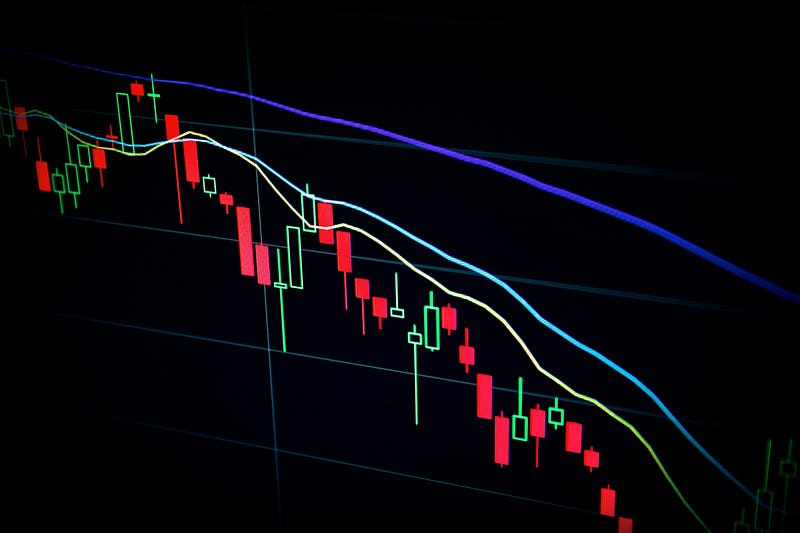
Photo by Maxim Hopman on Unsplash


SAITAMA delisting

Deposits for the affected tokens, including HNT, BTM, and SAITAMA, were halted by OKX on Nov. 3. SAITAMA, an Ethereum-centric ERC20 token, is the primary payment medium on the Saitama platform. There were mixed reactions to the delisting of the coin. One community member took to X, stating:

“I will say I do think it isn’t cool for OKX to delist #Saitama considering we didn’t get on there for the reasons specified of delisting. The listing was won through hours of Spaces and helping people get VPNs to win a contest. Regardless of what the market is doing we won fairly.”

Another Saitama project supporter took a more pragmatic view, stating:

“Delisting Is a tragedy? I don’t think so. What did the OKX listing for the token price? What is the difference between holding or selling with or without okx? Volume was too low, and this isn’t a news, so they will delist. They will relist again….#SAITAMA”

OKX has embarked upon several initiatives over the course of 2023 in an effort to further the user proposition offered by the platform. From a marketing perspective, the company took the decision in October to retire the Okcoin brand, rebranding its various sub-platforms instead to OKX.

The Seychelles-incorporated company indicated in September that it expects to have secured a virtual asset service provider (VASP) license in Hong Kong by June of next year.


Delisting banks

Tokens are not the only items to be delisted by the exchange recently. Alongside competitor Bybit, the company decided to delist sanctioned Russian banks Tinkoff Bank and Sberbank from its peer-to-peer exchange platform.

This move by OKX reflects the exchange’s efforts towards maintaining a high level of integrity and performance. Listing coins that fall below a minimum acceptable level of liquidity and trading volume can leave them much more exposed to the risk of manipulation. By adhering to stringent listing criteria and promptly addressing issues, the company is making a greater effort towards maintaining a position as a trusted and secure trading platform for cryptocurrency enthusiasts and investors.

More to Read
View All
Web3 & Enterprise·

Nov 17, 2023

Binance and Gulf Energy launch digital asset exchange in Thailand

Binance and Gulf Energy launch digital asset exchange in ThailandThe world’s largest cryptocurrency exchange, Binance, has teamed up with Gulf Energy Development, a leading energy company in Thailand, to operate a digital asset exchange in the country.Photo by Than Diep on UnsplashInvitation-only launchThe new platform, Binance.th, aims to capture the growing demand for crypto services in Southeast Asia. Binance.th, which is currently in its beta testing phase, is expected to open to the public in early 2024. A filing on Wednesday by Gulf to the Thai stock exchange demonstrates that the platform has received approval from the Thai Securities and Exchange Commission to offer exchange and brokerage services for cryptocurrencies and digital tokens. The filing states:“Gulf Binance’s digital asset platform will provide digital asset exchange and digital asset broker services for both cryptocurrencies and digital tokens, prioritizing security and compliance with SEC regulations.”The platform is initially available by invitation only, and the plan is to eventually open the exchange to the general public. It’s understood that the platform will strive to provide a “globally standardized” service that will enhance the level of service in Thailand and promote the development of the country’s blockchain ecosystem.Market opportunityBinance.th enters the Thai crypto market at a time when the local leader, Bitkub, holds a dominant share of 75.4%. Bitkub benefited from the global crypto market downturn in 2022, which affected its competitors such as FTX and Zipmex.Although it has extended market share during the downturn and as a consequence of the demise of other platforms, Bitkub has also struggled with market conditions. In July its parent company Bitkub Capital Group, reduced headcount by six percent. Bitkub recorded $28.6 billion in trading volume last year, out of the total $37.94 billion generated by the top four Thai exchanges.Binance.th hopes to challenge Bitkub’s position by leveraging Binance’s global reputation and expertise in the crypto industry.Legal woesThe launch of Binance.th comes amid Binance’s legal and regulatory troubles in the U.S. and Europe. In September, the U.S. Securities and Exchange Commission (SEC) sued Binance, its U.S. subsidiary, and its founder Changpeng Zhao (CZ) for allegedly listing unregistered securities in the form of cryptocurrencies.In June, the SEC also accused CZ and Binance of illegally marketing its international platform to U.S. customers.Binance has been trying to improve its compliance and governance standards in response to regulatory scrutiny. The company has hired former regulators and executives from the traditional finance sector to lead its operations in various regions. Binance has also applied for licenses and registrations in several jurisdictions, such as the U.K., Singapore and Japan.The origins of this deal stem from a memorandum of understanding (MOU) signed between Binance and Gulf Energy in January 2022. The joint venture business which emerged acquired a digital operator license in Thailand in May of this year.By expanding its presence in Southeast Asia, Binance hopes to tap into the potential of the emerging crypto markets and diversify its revenue streams. Binance.th also marks the first bank-backed crypto exchange in Thailand, as Gulf Energy Development is partly owned by the state-owned Krung Thai Bank.

news
Policy & Regulation·

Aug 01, 2023

Energy Theft Results in Crypto Mining Operation Shutdown in Borneo

Energy Theft Results in Crypto Mining Operation Shutdown in BorneoAuthorities in Miri, a city on the island of Borneo in Malaysia, swiftly responded to a tip-off from the public, leading to the successful shutdown of an illegal cryptocurrency mining operation.According to local news source, The Borneo Post, during a well-executed raid, 34 mining servers were confiscated, all of which were illicitly drawing power through cable tapping.Photo by Muhammad Faiz Zulkeflee on UnsplashEnergy thieves turn to miningWhile Borneo offers some of the lowest energy prices in Malaysia, it continues to struggle with the problem of energy theft. That issue has been highlighted via a recent utility announcement. Sarawak Energy, the local energy provider, estimated that the criminal operation caused losses of approximately 6,000 Malaysian ringgits ($1,300) worth of stolen electricity each month.The rise of the Bitcoin mining industry in 2023 has brought about record-high network hash rates and network difficulty. While the growth of miners generally signifies the robustness of the Bitcoin network, smaller operators without the economies of scale enjoyed by larger corporations face challenges.One such challenge is energy generation to power their mining servers. In pursuit of higher profit potential with lower electricity rates, illegal mining operators are drawn to stealing electricity from the grid. By eliminating energy expenses, these illicit miners can accumulate profits and offset equipment costs.Fourth recent instanceThe recent incident marks the fourth major operation in Senadin, where Miri is located, where authorities have cracked down on power theft cases related to cryptocurrency mining in 2023. So far, over 137 Bitcoin mining servers have been seized during these operations.On the other side of the spectrum, legitimate crypto mining companies are actively securing funding to support their mining projects. Riot Platforms, for instance, invested a substantial $162.9 million to acquire 33,280 state-of-the-art equipment from MicroBT, a leading producer of mining machinery.In another example, Coinbase extended a $50 million credit line to Canadian cryptocurrency firm Hut 8 Mining, facilitating its operations. Furthermore, Volcano Energy, a public-private partnership in El Salvador, secured an initial funding of $250 million for its ambitious Bitcoin mining venture.Appropriate mining activityThe spate of recent instances of illegal mining in Borneo acts as a reminder of the importance of regulatory compliance and adherence to the law within the cryptocurrency industry. While the allure of lucrative profits may tempt some to engage in illegal activities, the consequences can be severe. Mining can be a positive societal force when applied within appropriate circumstances.A move by the President of Kyrgyzstan last week to harness crypto mining in order to utilize energy that is otherwise being wasted at the central Asian country’s Kambar-Ata-2 hydropower plant serves as a recent example of a positive use case for the activity.In Texas in the United States, crypto miners are collaborating with those that manage the local energy grid, turning off miners at times when the state is on the brink of suffering blackouts.As the crypto mining landscape continues to evolve, it is essential for both authorities and legitimate operators to work together in finding sustainable solutions that ensure the industry’s growth while maintaining the integrity of the energy infrastructure.

news
Policy & Regulation·

Dec 22, 2023

Putin approves inclusion of digital ruble within Russian tax code

Putin approves inclusion of digital ruble within Russian tax codeRussian President Vladimir Putin has given his approval to a new law that incorporates the digital ruble into Russia’s tax code, marking a significant step in the country’s push towards digital currency adoption.Photo by Egor Filin on UnsplashAuthority to recover fundsThe development was reported by Russian news outlet Telesputnik on Tuesday. The legislation introduces terms such as “digital ruble” and “digital ruble wallet” into the tax code. It outlines the legal framework for these digital assets. Notably, the law grants bailiffs and court-appointed individuals the authority to recover central bank digital currency (CBDC) funds from wallets in cases where taxpayers lack sufficient fiat in their bank accounts.Moreover, the law empowers tax authorities to suspend transactions on digital ruble wallets and request documentation from platform operators to confirm fund withdrawals from a taxpayer’s account. In a move aimed at streamlining the process, confiscated digital coins can be transferred directly to the Russian Treasury.This legislation, the second major CBDC-related law passed in 2023, signals Russia’s interest in fast-tracking the implementation of its digital ruble. Despite conflicting statements, the Ministry of Finance anticipates that all Russians will have the opportunity to use digital ruble wallets for payments by 2024. However, the Central Bank has indicated a potentially delayed national roll-out, stating it may not occur before 2025.Key provisions outlined in the new law include defining the Central Bank’s role as the “operator of the digital ruble platform” and establishing liability procedures if the bank fails to fulfill these obligations. Additionally, the law addresses the taxation of transactions involving digital rubles, with exemptions for Value Added Tax (VAT) on account opening and holding.Working around sanctionsAs Russia edges closer to the digital ruble roll-out, the nation faces economic challenges due to ongoing U.S. and EU sanctions. Moscow views the CBDC as a strategic tool in international trade, aiming to leverage it to navigate economic restrictions. Government officials believe the digital ruble will play a crucial role in reducing costs and risks for domestic firms engaged in foreign trade.The Eurasian Economic Union (EAEU), a five-member economic bloc including Russia, Belarus, Kazakhstan, Armenia and Kyrgyzstan, is exploring the potential for cross-border CBDC functions. Belarus and Kazakhstan are also expediting their CBDC projects, with a focus on cross-border trading capabilities.Earlier this month, a Russian politician could begin to use their respective CBDCs for bilateral trade deals as early as next year. Even before sanctions hit, both Russia and China had been working towards de-dollarization for some time.Ongoing pilot programThe Central Bank is actively piloting the digital ruble in 11 Russian cities alongside 13 partner commercial banks. Earlier this month, the bank stated that “the pilot will continue at least until the end of 2024 and, if necessary, will be extended.” The Central Bank added that “only after the completion of the pilot will the digital ruble be introduced into mass circulation.”A group of 16 banks is set to join the trial in the coming year. The finance ministry aims to utilize the digital ruble for government subsidies and welfare payments, with plans for implementation in 2024.

news
Loading