Top

Bithumb to Launch Entrepreneurship Support Program

Web3 & Enterprise·October 25, 2023, 9:26 AM

South Korean cryptocurrency exchange Bithumb announced on Wednesday (local time) the launch of an entrepreneurship support program to commemorate its upcoming 10th anniversary. The initiative aims to discover and nurture promising young entrepreneurs with innovative ideas to grow the industry and drive business augmentation. It is divided into two parts: an entrepreneurship competition and an investment of KRW 30 billion (approximately $22 million) to support early-stage startups.

“It is time for us to support startups and bring them one step closer to success,” said the exchange’s CEO Lee Jae-won.

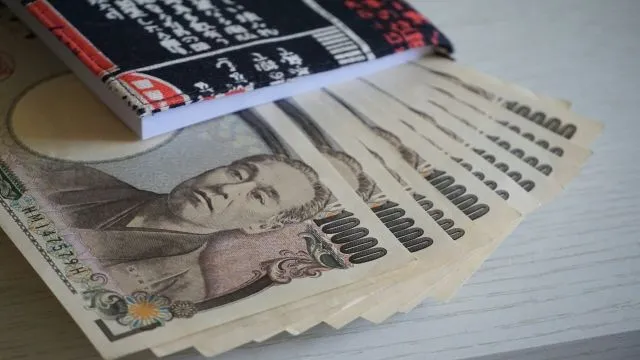
Photo by Hunters Race on Unsplash


Program details

The entrepreneurship competition is open to individuals, groups, and small and medium-sized enterprises (SMEs) based in Korea that are planning to start a business or have been in operation for less than three years. Participants in any and all fields of business are eligible to enter. It offers startup grants of KRW 100 million ($74,000) for one first-place winner, KRW 70 million for three second-place winners, and KRW 30 million for six third-place winners. Winners will also receive investor relations (IR) consultations and marketing opportunities to attract future investments.

Meanwhile, the KRW 30 billion investment project is open to local startups in any field that have been in operation for less than three years. Evaluators will place emphasis on how innovative or profitable the businesses are deemed, Bithumb said.

“Our entrepreneurship support program is not limited to one-time support. We will strive to contribute to society by supporting entrepreneurship in various fields — not just the crypto industry — for sustained mutual growth,” Lee added.


Application process dates

The application period is from November 1 to 30, and the results of the first round of applications will be announced on January 4. Those who pass the first round will be called in for an on-site evaluation. The final pool of applicants chosen for participation and investment will be announced in February.

More to Read
View All
Web3 & Enterprise·

Apr 02, 2025

Metaplanet surpasses 4K Bitcoin following stock split

Metaplanet, the Tokyo-headquartered Bitcoin corporate treasury firm, has purchased an additional 696 BTC, following a stock split, bringing its total Bitcoin holding to 4,046 BTC.Photo by Kanchanara on Unsplash$341 million in BitcoinThe company publicized details of its latest Bitcoin purchase on X on April 1. It outlined that funding of this purchase was enabled through the allocation of cash held by the firm as a consequence of the sale of put options.  The average purchase price of the 696 BTC was 14,586,230 yen ($97,694). The average price the firm has paid per Bitcoin in relation to its entire holding of the leading digital asset is 12,943,181 yen ($86,689). Its overall Bitcoin holding has a total value of approximately $341 million. Taking to X, the firm’s CEO, Simon Gerovich, said that Metaplanet’s Bitcoin Income Generation business achieved 770 million yen ($5.2 million) in Q1 revenue, while year-to-date its Bitcoin yield has reached 95.6%. Stock split & bond issuanceThis purchase follows both a stock split and the issuance of bonds worth 2 billion yen ($13.3 million). On March 31, Metaplanet filed a disclosure outlining details of the bond issuance. The company issued the zero interest bonds via its Evo Fund. Buyers will be permitted to redeem the newly issued bonds at face value by Sept. 30. In an X post, Gerovich suggested that the bond issuance was being implemented in order to facilitate the company “buying the dip,” taking advantage of a downturn in the Bitcoin unit price over recent weeks. In a notice filed on Feb. 18, Metaplanet outlined details of its 10-to-1 stock split. The company described how it executed a reverse 10-to-1 stock split last August. This has created a problem for investors as in the interim, the stock price has increased significantly. Consequently, the share price is unwieldy, placing a substantial financial burden on investors. On that basis, the latest stock split will enable greater investor accessibility and improved liquidity. Arising from that, Metaplanet expects that it will gain a broader investor base. On March 30, Gerovich reported that Metaplanet stock is now a component within Betashares’ Crypto Innovators ETF. Betashares is an Australian asset manager with over $50 billion in assets under management.  The Metaplanet CEO suggested that the development pointed towards “growing interest from institutional investors,” while expressing his satisfaction with Australians now having access to Metaplanet’s Bitcoin First Strategy via the Australian Securities Exchange (ASX). The ‘Asian MicroStrategy’Metaplanet is being regarded by many industry commentators as the “Asian MicroStrategy,” referring to the American Bitcoin treasury firm that recently rebranded to Strategy, having pioneered a particular approach to building a position in Bitcoin within a corporate treasury. Metaplanet appears to have adopted the same Bitcoin playbook. In an appearance on the Coin Stories Podcast recently, Metaplanet’s Gerovich said that he encourages his friends to put “100% of their net worth into Bitcoin.” Last month, the company confirmed that it was pursuing a strategy to accumulate 10,000 Bitcoin in 2025 and 21,000 Bitcoin by 2026. The firm is now ranked ninth in the world as a corporate Bitcoin holder. Within Asia, it is the leading corporate holder of the world's largest digital asset.

news
Web3 & Enterprise·

Sep 30, 2023

BIS Collaborates with Singapore’s MAS, Bringing CBDC Pilot to a Close

BIS Collaborates with Singapore’s MAS, Bringing CBDC Pilot to a CloseThe Bank for International Settlements (BIS) has recently signified the culmination of Project Mariana, a pilot initiative centered on exploring the cross-border trading and settlement of wholesale central bank digital currencies (CBDCs).Photo by Pixabay on PexelsUpdating financial market infrastructureThe bank of central banks published the findings of the project on Thursday. Conceived in partnership with the Monetary Authority of Singapore (MAS) alongside the central banks of France and Switzerland, the endeavor could have profound implications for the future landscape of financial market infrastructure.Project Mariana, conducted under the patronage of the BIS, harnessed principles gathered from the emerging world of DeFi to probe the viability of employing automated market makers (AMMs) for CBDC trading and settlement.The project involved three key facets:DeFi Ingenuity: Project Mariana took inspiration and cues from the DeFi universe, particularly AAMs, to streamline foreign exchange trading and settlement. This approach was designed to bolster market efficiency while curtailing settlement risks.Cross-Border CBDC Transactions: Hypothetical wholesale versions of the Swiss franc, euro, and Singapore dollar in CBDC form were tested for cross-border trading and settlement. The central banks of France, Singapore, and Switzerland orchestrated simulated transactions via AAMs to gauge feasibility.Interoperability and Token Standards: The project showcased the practical application of a standardized technical token format offered by a public blockchain, enabling seamless interoperability across various currencies. This interoperability element played a pivotal role in facilitating cross-border CBDC transactions.While the project represents a significant move forward for the BIS in its consideration of decentralized technology, the organization is still mindful that these decentralized tools are in their infancy and in need of further scrutiny and experimentation.With that, the BIS Innovation Hub has outlined its intent to further explore the prospective advantages and obstacles associated with DeFi-infused solutions within pertinent use cases going forward.Proof of conceptWhile the BIS and participating central banks were happy with the outcome of the project, the exercise was still a proof of concept and doesn’t mean there will be any immediate adoption of CBDCs by the participating nations.Rather, it spotlights the potentials of CBDCs and DeFi in streamlining financial transactions and enhancing efficiency. Central banks can oversee wholesale CBDCs without necessarily exerting control over the underlying infrastructure, thereby furnishing commercial banks with a potent tool for instantaneous FX trading and settlement while simultaneously mitigating credit and settlement risks.The project also shone a spotlight on certain challenges, including the logistical intricacies arising from the 24/7 availability of wholesale CBDCs. Nevertheless, the manifold advantages of instant foreign exchange trading and settlement appear to outweigh these hurdles.Central bankers are likely to want a different outcome from the use of this technology by comparison with those who are currently knee-deep in building out DeFi. One commentator on X had a cynical take on the project, stating: “Intermediaries attempting to justify their existence in an age with bitcoin.”Notwithstanding that, FX is the largest financial market in the world, where $7.5 trillion in value is traded every day. To utilize DeFi technology in that context would likely be profound, regardless of the nature of the application of the technology.

news
Web3 & Enterprise·

Jan 23, 2024

Terraform Labs files for bankruptcy in wake of $40 billion crash

Singapore-based Terraform Labs, the company behind the failed algorithmic stablecoin TerraUSD, has officially filed for Chapter 11 bankruptcy protection in the United States. It appears that the crypto space is not finished with dealing with the excesses and mismanagement that emerged at the end of the last market cycle. This move from Terraform comes in the wake of a $40 billion cryptocurrency crash and ongoing legal scrutiny, with the firm stating its intention to continue operations and support for the Terra community.Photo by Melinda Gimpel on UnsplashBusiness plan executionTerraform Labs was co-founded by Do Kwon, who is currently under investigation for its alleged wrongdoing relative to the failure of TerraUSD. The bankruptcy filing, submitted on Sunday to the Bankruptcy Court for the District of Delaware, aims to facilitate the company's business plan execution while navigating ongoing legal proceedings, including representative litigation in Singapore and the United States involving the Securities and Exchange Commission (SEC). In a statement, Chris Amani, CEO of Terraform Labs, commented on the decision, stating:"The Terra community and ecosystem have shown unprecedented resilience in the face of adversity, and this action is necessary to allow us to continue working toward our collective goals while resolving the legal challenges that remain outstanding." Amani reassured stakeholders that the decision ensures the company can maintain its commitment to working with the community on infrastructure, innovative tools, products and other ecosystem support. Amani became CEO of the company in July of last year, having been acting as Terraform’s COO prior to that. He acknowledged the challenges faced and expressed optimism about overcoming them, highlighting the resilience of the ecosystem after previous hurdles. Liabilities and assets in $100M to $500M rangeThe company emphasized that the Chapter 11 filing is designed to allow it to meet all financial obligations to employees and vendors without requiring additional financing. The estimated liabilities and assets fall within the range of $100 million to $500 million, as indicated in the filing. The SEC has initiated a civil trial against Terraform Labs and Do Kwon, accusing them of orchestrating a $40 billion cryptocurrency fraud through the TerraUSD algorithmic stablecoin and its sister token Luna. The SEC alleges that Terraform Labs and Kwon raised billions of dollars from investors through unregistered transactions, leading to the collapse of TerraUSD and Luna in May 2022. Both the SEC and Terraform have unsuccessfully filed for summary judgment in the case. Far-reaching consequencesThe crash had far-reaching consequences, impacting several crypto firms, including Singaporean crypto hedge fund Three Arrows Capital, Singaporean crypto lender Hodlnaut, Voyager Digital and Celsius Network. Do Kwon, a South Korean national, faces additional criminal charges in the United States related to fraud and market manipulation. His arrest in Montenegro in March 2023 and pending extradition requests from South Korea and the United States underscore the global legal challenges confronting him. The U.S. District Court for the Southern District of New York has scheduled the SEC trial against Terraform Labs and Kwon for late March, accommodating Kwon's extradition process. Meanwhile, in South Korea, Terraform Labs co-founder Daniel Shin has denied wrongdoing in the collapse as part of separate proceedings taken against him.  

news
Loading