Top

Korean Crypto Market Outpaces Stock Exchange Amid Bitcoin ETF Optimism

Markets·October 25, 2023, 7:59 AM

The anticipation is building around the potential approval of BlackRock’s Bitcoin exchange-traded fund (ETF) in the United States. As the world’s largest asset manager is anticipated to obtain a green light, Bitcoin’s price has surged by more than 17% just this week, capturing the keen interest of investors.

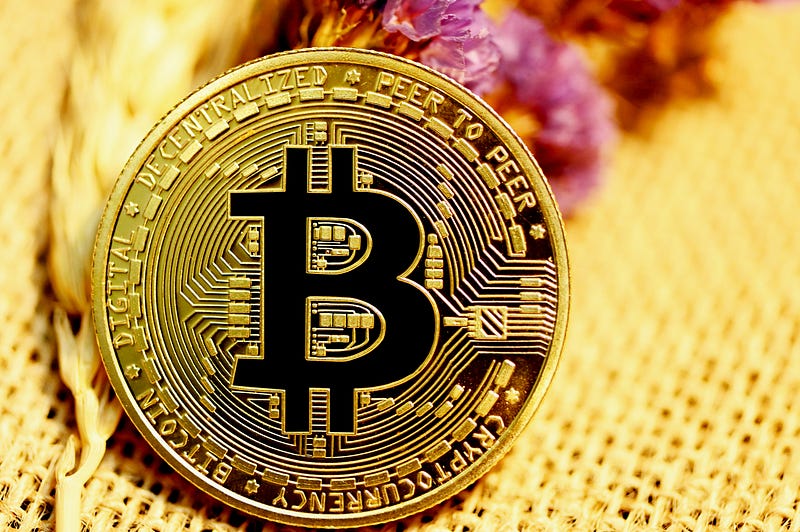
Photo by Kanchanara on Unsplash


Crypto surpassing stocks in daily trading volume

It’s worth highlighting the surge in the Korean cryptocurrency market, where the daily trading volume has recently eclipsed that of the Korean Composite Stock Price Index (KOSPI).

According to local news outlet Maeil Business Newspaper, on October 24, KOSPI recorded a trading volume of KRW 7.83 trillion ($5.8 billion). Yet, in a 24-hour span from 9 a.m. (KST) on October 23 to 9 a.m. on October 24, the combined trading volume of the top five Korean cryptocurrency exchanges reached KRW 8.44 trillion.

Breaking it down by exchange, Upbit had a 24-hour trading volume of KRW 6.97 trillion, followed by Bithumb with KRW 1.36 trillion, Coinone with KRW 87.6 billion, Korbit with KRW 18.8 billion, and Gopax with KRW 2.2 billion.


Retail investors leaving the stock market

The surge in the Korean crypto market is largely due to retail investors shifting their focus away from the Korean stock market. This move comes in response to challenges the stock market has been grappling with, such as monetary tightening in the US and increased volatility stemming from the Israel-Hamas war.

More to Read
View All
Web3 & Enterprise·

Apr 23, 2025

WazirX moves closer to trading comeback

Beleaguered Indian crypto exchange WazirX took to social media on April 21 to clarify to the company’s creditors that it is moving closer towards restarting the platform. While the company hasn’t gone into bankruptcy following a $230 million platform hack which occurred in July of last year, it is going through a restructuring process via the Singapore High Court. Posting on the X social media platform, the company addressed concerns surrounding the restarting of operations.  It said that it understood that users were keen to see the platform restart, while reminding stakeholders that from the outset of the process, it had forecasted a first distribution of user funds and a restart of the platform within the April to May 2025 timeframe. Photo by matthew6910 on UnsplashMay court hearingThe firm outlined that its parent company, Zettai PTE Limited, has accomplished all steps to date, in order to bring about the re-emergence of the platform. It has put forward a scheme of arrangement to the court to distribute assets available to it to creditors and bring the trading platform back online.  It identified a May 13 court date as being pivotal to these plans, when the Singapore High Court will hold a sanction hearing and determine whether it confirms the company’s restructuring plan. WazirX added: “While we’ve worked to stay aligned with the previously shared timelines, court proceedings operate independently, and we respect that process. After the Scheme is sanctioned, the First Distribution and restart will follow within 10 business days from the Effective Scheme Date, as outlined earlier.” 85% payoutEarlier this month, 93% of WazirX creditors, accounting for 94.6% of the overall funds owed, voted in favor of the company’s restructuring plan. As part of the plan, users would be compensated with a payout over several distributions of 85% of the overall funds they held on the platform as of July 18, 2024. The company also plans to issue creditors with a recovery token, in an effort to provide them with further value over time. This communication from the company followed the announcement of a court judgement last week by India’s Supreme Court dismissing a lawsuit filed by 54 WazirX users who have lost funds due to the 2024 hack. While the action was dismissed, one of the plaintiffs pointed out on X that the Supreme Court hadn’t indicated that their action lacked merit. He added:”Our criminal writ petition against #WazirX & Nischal Shetty & others was dismissed on jurisdictional grounds.” On that basis, it would appear that the company may still have to deal with such a complaint if brought via a different forum. Over the course of the past 12 months, the WazirX hack stands out alongside an almost $1.5 billion hack at Bybit. In both cases, fingers have been pointed at notorious North Korean hacking group, Lazarus. According to a report published by Chainalysis last December, $2.2 billion had been stolen from crypto platforms in 2024.

news
Web3 & Enterprise·

Oct 27, 2023

Memeland Coin Launch Secures $10M for the Project

Memeland Coin Launch Secures $10M for the ProjectMemeland, a Web3 venture studio, made headlines on Thursday as its token sale for MEME tokens reached $10 million in commitments just after going live. The people behind the project are the Hong Kong-based team that is also associated with the popular meme-sharing site, 9GAG.Memeland represents a collection of 9,999 utility-enabled profile pictures (PFPs).9GAG is a meme-centric Hong Kong-based entertainment website that gained a significant following since its launch in 2008. With millions of followers across various social media platforms, 9GAG’s foray into the Web3 space through Memeland was eagerly awaited. Memeland had already introduced several NFT projects, including Captainz, Potatoez, and MVP, prior to launching its native token on Thursday.Photo by Nattanan Kanchanaprat on Pixabay42 minute sell-outSupporters of the project had joined a waitlist prior to them being granted access to the sale. Earlier in the week, the project had tweeted out that the MEME tokens that it was gearing up to sell had “No utility. No roadmap. No promises. No expectation of financial return. Just 100% memes.” In fact, this mantra has been etched into the project’s whitepaper from the outset. “$MEME is completely useless and for entertainment purposes only,” the whitepaper clarifies.Even though the sale had already sold out in record time, it was scheduled to continue until Friday morning. During this extended period, those who have previously joined the waitlist can gain access to the tokens.The team behind Memeland, having clocked up experience previously via 9GAG, has made them no strangers to the world of online humor and entertainment. The Memeland project introduces an array of non-fungible tokens (NFTs) and innovative applications that fuse elements from the metaverse, gaming, and NFTs.Project pipelineMemeland is gearing up to launch various additional platforms in the near future. These include Holders.com, a travel service; GMGM.com, a video-sharing platform; Stakeland, which will be a crypto staking application; and Petsland, a service centered around pets.MEME tokenomicsThe MEME token has a total supply of 69,000,000,000 MEME, with an initial price per token set at US$0.001. According to the Memecoin team, 2.75% of the total supply will be unlocked on the first day, with the remaining amount unlocked daily over the next 18 months.The token distribution breakdown is as follows:Private sale: 6,900,000,000 (10%) — Exclusively for Memeland Captainz holdersContributors: 13,800,000,000 (20%) — Partners and team members contributing to the Memeland projectFire sale: 8,280,000,000 (12%) — Reserved for the allowlist and certain waitlist participantsAirdrops: 17,250,000,000 (25%)Ecosystem fund: 22,770,000,000 (33%)Those who possess specific NFTs from the Memeland ecosystem have received varying allocations during the Fire Sale, depending on the type, rarity, and quantity of their holdings.With a strong foundation rooted in meme culture and a team experienced in delivering internet humor to millions, Memeland’s potential development going forward may be as exciting as the memes that inspired it.

news
Policy & Regulation·

Apr 21, 2025

South Korean central bank eyes P2P transaction tests for CBDC pilot in October

South Korea’s central bank, the Bank of Korea (BOK), plans to begin testing peer-to-peer (P2P) transactions with its central bank digital currency (CBDC) in October, according to the Seoul Economic Daily. This will mark the second phase of its ongoing CBDC pilot, Project Hangang, which currently allows 100,000 citizens to use digital tokens for payments at both online and offline stores. In the fourth quarter, the pilot will also introduce voucher programs enabling local governments to distribute welfare benefits.Photo by Mathew Schwartz on UnsplashSandbox deadline pressureThe BOK originally planned to gather feedback from participants in the first phase and refine the system before proceeding. However, the central bank decided to speed up the timeline, as the broader project is operating under a regulatory sandbox program that provides two years of regulatory flexibility. A BOK official noted, “Since the current test ends in June, we can’t wait too long to move forward. Also, the fourth quarter timeline is still tentative.” While the BOK focuses on its CBDC, Korean commercial banks are accelerating efforts to develop stablecoin infrastructure and launch related pilot projects, Edaily reported. These initiatives reflect growing expectations that stablecoins will become a key tool for cross-border payments. Banks see this as an opportunity to attract new customers and earn fees from crypto exchanges by facilitating stablecoin transfers through their own networks. One example is Project Pax, a joint initiative involving Shinhan Bank, Nonghyup Bank and Kbank, which is testing stablecoin transfers between South Korea and Japan. Led by Japan’s digital asset platform Progmat, along with Korea’s Fair Square Lab and Korea Digital Asset Custody, the project enables Korean banks to send won-based stablecoins to Japanese financial institutions and receive yen-pegged stablecoins in return. Rising stablecoin useAn executive at a local bank expressed concern that South Korea is falling behind in stablecoin adoption. He predicted faster uptake, noting that consumers can save time and money by avoiding traditional foreign exchange processes. He also cautioned that, without action, the private sector could take the lead in building cross-border payment networks, bypassing the traditional SWIFT system. Another banker urged financial authorities to establish clear regulations for stablecoins, stressing the need for oversight as stablecoins are increasingly used to move foreign currencies out of Korea. Contrasting perspectivesHowever, BOK Governor Rhee Chang-yong remains skeptical of stablecoins, arguing that CBDCs offer far greater transparency. He pointed to the volatility of unregulated stablecoins and warned that their widespread use—especially if issued by private financial institutions—could undermine the central bank’s role as the sole issuer of legal tender. That said, financial authorities appear to be exploring a regulatory framework where CBDCs and stablecoins can coexist. Sharing his personal view, one official noted that while the future of stablecoins is uncertain, it’s important to remain open to various possibilities. He added that agencies are also reviewing recent changes in U.S. federal law, along with regulations in Japan and the EU. 

news
Loading