Top

China Makes History by Settling Cross-Border Oil Deal with Digital Yuan

Policy & Regulation·October 25, 2023, 1:40 AM

The digital yuan, China’s central bank digital currency (CBDC), also known as e-CNY, was used for the first time to settle a significant oil transaction.

Chinese state-owned media outlet China Daily reported on Saturday that the Shanghai Petroleum and Natural Gas Exchange (SHPGX) revealed on October 20 that PetroChina International, a subsidiary of the China National Petroleum Corporation (CNPC), successfully acquired 1 million barrels of crude.

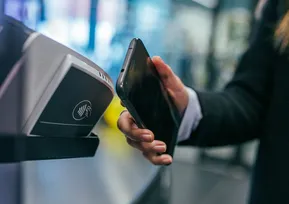
Photo by engin akyurt on Unsplash


Advancing e-CNY use internationally

This transaction is a response to the call by the Shanghai Municipal Party Committee and Municipal Government to incorporate the digital yuan into international trade, marking a noteworthy stride towards the broader adoption of the digital currency.

The exact seller and price details for the deal were not disclosed. This historic crude oil transaction signals not only the increasing use of the digital yuan in global trade but also a noteworthy step in the movement towards de-dollarization. Reports from China Daily suggest that the use of the yuan in cross-border settlements experienced a remarkable 35% year-on-year increase in the first three quarters of 2023, reaching a total of $1.39 trillion.

This milestone isn’t the first time the yuan has been utilized in the energy sector. In March, the yuan was first used in a liquefied natural gas (LNG) purchase on the SHPGX, as French TotalEnergies reached an agreement to sell LNG to the China National Offshore Oil Corporation (CNOOC). Recently, another LNG deal was executed between CNOOC and French Engie, although these transactions did not involve the digital yuan.

In parallel developments, First Abu Dhabi Bank announced on October 19 that it had established an agreement on digital currency with the Bank of China during the third Belt and Road Forum for International Cooperation. China and the United Arab Emirates, including Abu Dhabi, are participants in the mBridge platform designed to facilitate cross-border transactions using CBDCs. The mBridge platform is expected to launch as a minimum viable product in the coming year.


Furthering mass adoption

The Chinese authorities are taking several distinct approaches in furthering mass adoption of the e-CNY. The Chinese subsidiaries of both Singapore’s DBS Bank and France’s BNP Paribas have recently partnered with the People’s Bank of China to enable their international clients operating in China to use the digital yuan.

A long list of initiatives have been taken within mainland China by regional governing authorities to further the use of the CBDC. To further enable mass adoption at home, a new offline SIM card-based digital yuan wallet was developed and launched earlier this year.

The successful use of the digital yuan in settling this oil deal represents a significant step forward in the internationalization of China’s currency and the growing influence of CBDCs on the global economic stage. As the world watches these developments unfold, the digital yuan continues to make strides towards becoming a crucial means of exchange in international trade and finance.

More to Read
View All
Policy & Regulation·

Feb 07, 2024

Hong Kong’s SFC appeals to digital asset investors to verify licenses

As Hong Kong approaches the culmination of the Securities and Futures Commission's (SFC) deadline for cryptocurrency exchanges to seek licenses, the regulator issued a reminder to investors about the potential risks associated with trading on unlicensed platforms.Photo by Jarrod Erbe on UnsplashUrging cautionIn a notice released on Monday, the SFC emphasized the importance of engaging exclusively with SFC-licensed virtual asset trading platforms (VATPs) to ensure investor protection. With only one month remaining for exchanges to apply for a license under the city's virtual asset regulation, the SFC urged investors to exercise caution when dealing with platforms that have not yet received approval.The SFC suggested that investors check the list of regulated platforms, which it maintains on its website. Within the notice, the regulator outlined that in the past, some platforms have claimed to be regulated entities when they were not compliant platforms and not adhering to existing regulations within the Chinese autonomous territory. The advisory comes after the fallout from a high-profile fraud incident involving the JPEX trading platform last fall, resulting in substantial losses of $192 million. Growing list of VATP license applicantsLast month, four additional crypto exchanges, including the KuCoin-affiliated HKVAEX and Singapore-based Bybit, joined the list of official VATP license applicants. The SFC began publishing this list in response to the JPEX scandal, underscoring the importance of regulatory compliance in the cryptocurrency sector. Hong Kong's virtual asset regulation, enacted as an amendment to the Anti-Money Laundering and Counter-Terrorist Financing Ordinance last year, stipulates that companies engaged in selling or marketing cryptocurrencies to Hong Kong residents must apply for a license by Feb. 29. Those failing to do so must cease business operations in the city by May 31. Currently, OSL and HashKey are the only licensed exchanges in Hong Kong, having received an earlier voluntary license that was later upgraded to include retail investors. These exchanges are operating under an interim solution permitted by the SFC, allowing retail investors to trade on their platforms. Setting a high barWhile 14 companies have formally submitted license applications to date, Patricia Ho, General Counsel for blockchain company Scroll, told the South China Morning Post (SCMP) that the stringent requirements set by Hong Kong have led to a selective process. Ho explained that the city has intentionally set a high bar for application submission, resulting in only the most committed and resourceful entities progressing to the application stage. Last month, it emerged that the SFC had acted to bolster investor protection by introducing a minimum insurance requirement of 50% for licensed crypto exchanges that handle customer funds. It is also planning to introduce a regulatory framework relative to crypto over-the-counter (OTC) trading desks. The SFC is also monitoring individual crypto projects, as last week, the regulator issued a stern warning to those behind the offering of the Floki and TokenFi staking programs. As the deadline approaches, Ho anticipates potential enforcement actions against smaller platforms operating in legal gray areas. Larger platforms, on the other hand, have already begun restricting access from Hong Kong. 

news
Web3 & Enterprise·

Jul 15, 2023

Dtcpay Looks to Extend Crypto Payment Services to Hong Kong

Dtcpay Looks to Extend Crypto Payment Services to Hong KongDtcpay, a Singapore-based payment processor catering to both fiat and cryptocurrencies, has set its sights on expanding into Hong Kong by the end of this year. The company also has plans to establish an office in Dubai, another prominent crypto hub, by 2024.Photo by Jonas Leupe on UnsplashNorth Asia potentialIn an interview with Tech in Asia, Kanny Lee, the group CEO of Dtcpay, expressed optimism about the North Asia market, citing clear regulations and rules for digital assets and the recent opening up to retail participants. Lee believes that the region holds significant potential for growth over the course of the coming years.Dtcpay generates revenue through crypto conversion rates on transactions and has already acquired approximately 12 merchants. The company aims to onboard up to 100 merchants by the end of 2023. Since the beginning of this year, the firm has experienced a fourfold increase in transaction volume.Seamless regional paymentsLee acknowledged that most consumers view tokens primarily as investments. Dtcpay’s objective is to unify various payment methods across different countries, including Indonesia, Malaysia, India, Vietnam, and Singapore, providing a seamless experience for both merchants and consumers.As an example, Dtcpay enables users to purchase cars using cryptocurrencies, significantly reducing transaction fees from approximately 4% to just 0.5% compared to cash payments. Notable partnerships in Singapore include Cars and Coffee and DM Autohaus.In June, Dtcpay secured a pre-series A funding round, raising $16.5 million from Kwee Liong Tek. Tek, the chairperson of the Pontiac Land Group, which owns renowned hotels such as the Ritz-Carlton and Conrad Hotels in Singapore, has enabled Dtcpay to target the hospitality sector. At the time Lee said that there are an increasing number of businesses expressing interest in collaborating with regulated entities in the digital assets space and combined with an increase in the adoption of digital payments, that’s turbocharging DTCpay’s business.RebrandThat focus on digital payments led to the company rebranding back in April from Digital Treasures Center to Dtcpay. It appears that Hong Kong was already on the company’s radar back then as Lee stated at the time that “in Asia, particularly the key tier 1 financial capitals such as Singapore, Hong Kong and Tokyo, [they] have experienced a rapid rate of digital adoption primarily due to transparent regulatory frameworks for digital financial inclusion.”Additionally, Dtcpay obtained a major payment institution license from the Monetary Authority of Singapore in August 2022. The company plans to launch a debit card in Q4 2023. That product will allow cardholders to convert their cryptocurrencies into multiple currencies without incurring foreign exchange fees.The company was co-founded in 2019 by Sam Lin, Band Zhao, and Alice Liu, with Lee joining the company earlier this year with a view towards expanding its area of operations beyond Singapore.With its expansion plans into Hong Kong and its focus on innovation, Dtcpay is certainly aiming to establish itself as a leading player in the crypto payment services industry, catering to the evolving needs of merchants and consumers alike.

news
Policy & Regulation·

Aug 23, 2023

Oman’s Crypto Mining Expansion Signals Further Economic Diversification

Oman’s Crypto Mining Expansion Signals Further Economic DiversificationOman has recently unveiled a state-of-the-art digital asset mining facility, as it continues in its quest to diversify its economy beyond oil exports.$150 million facilityThis cutting-edge mining facility was recently inaugurated, valued at around 135 million Omani rials, approximately $150 million, as a result of collaboration between Exahertz, an Omani company, and Moonwalk Systems, a Dubai-based blockchain solutions firm.Situated within the Salalah Free Zone, a hub that offers tax benefits to corporate entities, the facility is powered by mining hardware provided by leading Chinese mining equipment manufacturer Bitmain Technologies and is primed to house 2,000 machines, making for an 11-megawatt facility.Photo by Anusree Mohan on UnsplashExpansion plansSam Ferdows, the CEO of Moonwalk Systems, hailed the project, emphasizing the company’s dedication to expanding the facility’s capacity. Ferdows shared that plans are already in motion to increase the mining operation’s capacity to accommodate 15,000 miner units by October, with aspirations to expand to multiple cities. Recognizing the importance of corporate social responsibility relative to sustainability, Moonwalk Systems aims to train citizens through dedicated programs, further promoting the growth of the digital asset sector.Engineer Said Hamoud, Oman’s Minister of Transport, Communications, and Information Technology, who led the inauguration of the project, underscored its significance as a pivotal step in the nation’s digital transformation. He expressed confidence that the new mining facility would contribute to Oman’s growing digital economy.Second mining projectThis marks Oman’s second major move into the cryptocurrency mining space within nine months. Back in November 2022, the country inaugurated its first mining facility with a price tag of approximately $389 million. The combined investment in these ventures totals $740 million, which aligns with the broader regional push toward embracing the opportunities presented by blockchain and Web3 technologies.In the Middle East, several governments are actively investing in blockchain-related infrastructure. The United Arab Emirates, a neighbor to Oman, has notably begun to accept applications from Web3-related companies. The Virtual Assets Regulatory Authority (VARA), the local regulator in Dubai, has rolled out comprehensive regulatory directives that govern licensing requirements, company operations, and compliance.Oman, for its part, is not just focusing on infrastructure. It is also addressing regulatory aspects by requiring registered digital asset firms to establish a presence within the country. Evidence of those efforts emerged earlier this month when the Omani regulator, the Capital Market Authority (CMA), invited public feedback on a consultation paper that feeds into the development of a virtual asset regulatory framework in Oman. This versatile approach suggests that the Sultanate is making a conscious commitment to fostering a thriving blockchain ecosystem within the country.As Oman attempts to position itself as a regional blockchain hub, it recognizes the transformative power of cryptocurrencies and blockchain technology in propelling its economy forward. On that basis, the Middle Eastern country is making a resolute pivot from its oil-based past to a blockchain-enabled future.

news
Loading