Top

Uzbekistan Revamps Crypto Mining with New Regulatory Framework

Policy & Regulation·October 06, 2023, 12:51 AM

Uzbekistan is ushering in a reset on its approach to cryptocurrency mining with the implementation of a new regulatory framework by the central Asian country’s National Agency of Perspective Projects (NAPP).
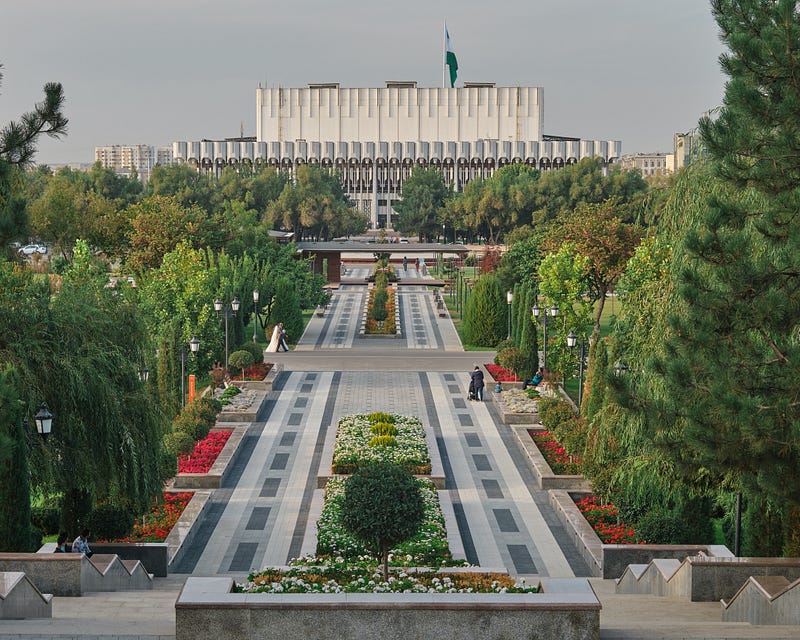
Photo by Farhodjon Chinberdiev on Unsplash


Focusing on solar power

These freshly endorsed rules were announced earlier this week. They establish stringent guidelines for cryptocurrency mining operations within the country, reserving mining exclusively for registered legal entities and mandating the use of solar power.

Under the sweeping regulations, individual miners are barred from participating in cryptocurrency mining activities, a move aimed at bringing structure and oversight to the expanding crypto mining sector within Uzbekistan’s borders.

A key feature of the framework is the requirement for cryptocurrency miners to harness electricity generated by solar photovoltaic means. This environmentally conscious approach mirrors global endeavors to promote sustainability and clean energy sources in the crypto mining sector. Miners are also permitted to connect to the national electrical power grid, but only under specific conditions as outlined in the legislation.


Safeguarding the power grid

In this respect, Uzbekistan is likely to be learning from the experiences of its northern neighbor, Kazakhstan. Following a ban on crypto mining in China in 2021, Kazakhstan suddenly became the second largest global center for Bitcoin mining. Unprepared for this eventuality, this mining activity caused major problems for the country’s power grid, resulting in blackouts and unrest.

The NAPP underscores the necessity for mining operations and service providers to adhere to these newly established rules. To engage in cryptocurrency mining legally, entities must secure the requisite permits and licenses. These permits, valid for five years, come with strict reporting obligations, ensuring transparency and regulatory compliance.

Moreover, cryptocurrency miners must prioritize the technical integrity of their electrical supply systems, emphasizing safety and reliability to prevent electrical accidents and maintain secure operating environments.

In a bid to nurture a controlled and regulated cryptocurrency ecosystem, Uzbekistan’s crypto watchdog has already issued licenses to several entities, including a cryptocurrency exchange, a crypto depository, and ten other crypto trading platforms. Encouragingly, discussions have taken place with global exchanges like Binance, Huobi, and Bybit, signaling Uzbekistan’s ambitions to establish itself as a cryptocurrency hub.


Ban on individual miners

The NAPP’s latest framework also outlaws the mining of anonymous cryptocurrencies designed to enhance transaction privacy, such as Monero (XMR). This measure aligns with international efforts to combat illicit activities linked to anonymous digital currencies.

It’s worth noting that these new regulations represent the latest in a series of decrees by the Uzbek government, reiterating the ban on individual miners and the use of cryptocurrencies for domestic payments. Consequently, the full impact of these recent regulations on the nation’s cryptocurrency mining landscape remains to be seen.

Uzbekistan’s decision to confine cryptocurrency mining to legal entities employing solar power reflects a growing understanding of the opportunity the activity provides to effectively exploit excess renewable power. In July, the President of eastern neighbor Kyrgyzstan put forward an ambitious project to use crypto mining to exploit the country’s hydro-electric power resources.

More to Read
View All
Policy & Regulation·

Oct 23, 2023

Bithumb Live Files for Bankruptcy

Bithumb Live Files for BankruptcySouth Korean cryptocurrency exchange Bithumb’s live commerce platform Bithumb Live — an attempt at business diversification — has filed for bankruptcy. The platform entered bankruptcy proceedings last year, brought on by business difficulties and various suspicions of embezzlement involving its CEO.Photo by Melinda Gimpel on UnsplashAccording to legal sources on Monday, the Seoul Bankruptcy Court declared Bithumb Live’s bankruptcy last Monday. The court plans to hold creditor meetings and inspections on November 28 to incorporate creditors’ opinions into the bankruptcy proceedings and assess the status of the company. Major companies like LG Uplus, SK Telecom, SK Magic, and Lotte Card are among the platform’s creditors.Bithumb Live’s backgroundBithumb Live was founded in September 2021 by Bithumb and Bucket Studio, who each invested KRW 6 billion (approximately $4.4 million). Bucket Studio is a content distribution company that gained considerable attention with the global success of the Netflix original series “Squid Game” last year because it holds a 15% stake in Artist Company, an entertainment planning agency co-founded by “Squid Game” lead actor Lee Jung-jae and actor Jung Woo-sung. In particular, Bucket Studio’s CEO Kang Ji-yeon is the sister of Kang Jong-hyun, who is embroiled in allegations related to the ownership of Bithumb.Bithumb and Bucket Studio each hold a 37.5% share of Bithumb Live, making a combined ownership of over 75%. Bithumb Live, led by Kang Ji-yeon, had been established with the intent to create a commerce platform with various features like a metaverse, non-fungible tokens (NFTs), and cryptocurrency payments. After its establishment, it announced that it would challenge its key competitor Naver’s prominent live shopping platform by preparing to sign deals with 15 different companies.Financial hardshipsHowever, the platform hit a roadblock just one year after its establishment and found itself unable to escape financial difficulties. According to last year’s business report, Bithumb Live’s liabilities exceeded its assets by approximately KRW 248 million and the platform recorded a net loss of KRW 10.2 billion. Unable to withstand such losses, it announced an indefinite temporary closure via its internal messenger to employees in October of last year. The employees ended up working only four hours a day, resulting in a more than 50% reduction in working hours. Subsequently, the number of employees, which was 73 in September, plummeted to just four in January of this year, essentially signaling a total stop to business operations. In the first half of this year, Bithumb Live’s net loss amounted to almost KRW 1.1 billion.Management entanglementsOn top of these financial strains, the company was also plagued by Kang Ji-yeon and her brother Kang Jong-hyun’s owner’s risk, which encompassed allegations of embezzlement and misappropriation. In July of this year, Kang Ji-yeon was sent to trial on charges of embezzlement and misappropriation at Bucket Studio. Along with her brother and former Chorokbaem (CRB) Group Chairman Won Young-sik, she was accused of granting call options on convertible bonds held by Bithumb affiliates Vidente and Bucket Studio for free to companies controlled by Won’s children between December 2021 and July 2022, inciting damages worth approximately KRW 58.7 billion to the respective companies. In the process, she was also found to have received KRW 32.2 billion in acquisition payments. Kang Jong-hyun had been detained and on trial since February of this year.Bithumb Live’s largest shareholder, Bucket Studio, is also in a tight spot. Back in June, the Korea Exchange imposed a penalty of three points on Bucket Studio for reversing its disclosure. The company had been penalized five points the previous month after withdrawing its decision to issue convertible bonds. In particular, the studio also recorded an operating loss of KRW 7 billion and a net loss of KRW 195.6 billion last year based on consolidated financial statements. In the first half of this year alone, it suffered an operating loss of KRW 896 million, raising red flags for its management.

news
Web3 & Enterprise·

Nov 09, 2023

Korean and Indonesian firms join forces to tokenize shipping assets

Korean and Indonesian firms join forces to tokenize shipping assetsCentralized decentralized finance (CeDeFi) platform NEOPIN said Wednesday that it has signed a business agreement with the Klaytn Foundation, South Korean juggernaut Kakao’s Layer 1 public blockchain, and Pelayaran Korindo, the shipping arm of Southeast Asian conglomerate Korindo, to tokenize real-world assets (RWAs).Photo by Andy Li on UnsplashRevolutionizing shipping financeThe three companies will first tokenize shipping-related assets owned by Pelayaran Korindo. This integration of digital assets into the maritime industry — which up until now has been under the umbrella of traditional finance — is expected to increase accessibility to shipping investments not only for institutional investors but also for individual investors.Pelayaran Korindo specializes in comprehensive shipping logistics mainly in Indonesia. Under the newest collaboration, the company plans to enhance the accessibility of its RWAs to Web3 companies as well as share its knowledge on localization and partner networks. It aims to play an essential role in the joint venture by leading the decentralization of traditional finance and promoting the widespread adoption of RWA tokenization.On the other hand, NEOPIN, along with the Klaytn Foundation, plans to leverage its expertise in CeDeFi to help Pelayaran Korindo digitize and liquify their assets while optimizing the plaform’s user inferface.Ushering in an era of RWA tokensThe partnership is also a part of the Klaytn Foundation’s efforts to expand its ecosystem through RWA-related endeavors. By tokenizing RWAs and producing certifications of digital ownership, the enterprise hopes to popularize blockchain and create value through real-world use cases. To achieve this, the foundation will work with RWA tokenization experts both in Korea and overseas to build a business model that is profitable, technologically feasible and regulatory compliant.“The Klaytn blockchain enables the construction of a digital asset trading platform with fast processing speed and low fees that can satisfy both token issuers and also regular users,” explained Seo Sang-min, Representative Director at the Klaytn Foundation. “The foundation has accumulated practical experience in the entire service construction process, from discovering promising RWA tokenization projects to launching real services. Moving forward, we will collaborate with Pelayaran Korindo and NEOPIN to actualize various global RWA tokenization initiatives, starting with maritime finance.”NEOPIN’s CEO Ethan Kim also mentioned the company’s intent to work with Pelayaran Korindo and the Klaytn Foundation to introduce attractive RWA investment products that are easy to navigate and have strong factors of appeal, thus leading the global RWA market in maritime finance.

news
Web3 & Enterprise·

Jul 12, 2023

GameFi-Oriented MARBLEX Decides to Burn 670M MBX Tokens

GameFi-Oriented MARBLEX Decides to Burn 670M MBX TokensMARBLEX, the blockchain subsidiary of South Korean gaming company Netmarble, is going to burn 670 million of its native token MBX on July 19, according to a press release. This move is part of MARBLEX’s plan to overhaul the MBX tokenomics, which was announced last month.This token burn event involves the elimination of 67% of the total distribution of 1 billion MBX tokens. The tokens earmarked for burning have no designated purpose.Photo by Cullan Smith on Unsplash99% support for burning tokensTo determine the fate of these tokens, MARBLEX conducted a voting process from July 4 to 10, allowing Marbleship NFT holders and MBX token holders to participate. The outcome of the vote revealed that 99% of the participants supported burning the tokens.In preparation for the token burn, MARBLEX plans to share information about the event on cryptocurrency data tracking websites CoinMarketCap and Xangle.Moving forward, MARBLEX intends to introduce an improved token burn policy in the second half of this year. The revision of its tokenomics will enhance the utility of the MBX token, contributing to the establishment of a sustainable and trustworthy ecosystem.MBX token usesAccording to CoinMarketCap, the MBX token is traded on centralized exchanges Bithumb, Huobi, Bybit, Gate.io, MEXC, and Indodax, as well as on the decentralized exchange KLAYswap. Token holders can use MBX to buy items in marketplaces, trade MBX for in-game tokens, and exchange MBX with other game players. Notable MBX games include A3: Still Alive, a battle royale MMORPG; Ni no Kuni: Cross Worlds, a fantasy MMORPG; The King of Fighters ARENA, a fighting game; and Meta World: My City, a Web3 property management game.

news
Loading