Top

Police Crack Down on JPEX Continues with Millions Recovered

Policy & Regulation·September 30, 2023, 12:49 AM

Hong Kong authorities are intensifying their efforts to deliver justice to victims of the JPEX cryptocurrency exchange fraud, a scandal that has left thousands of investors in distress.

According to recent reports in the South China Morning Post (SCMP) on Wednesday and Friday, more arrests have been made, with the recovery of more assets. The pursuit of those responsible for orchestrating this massive scam is in full swing.

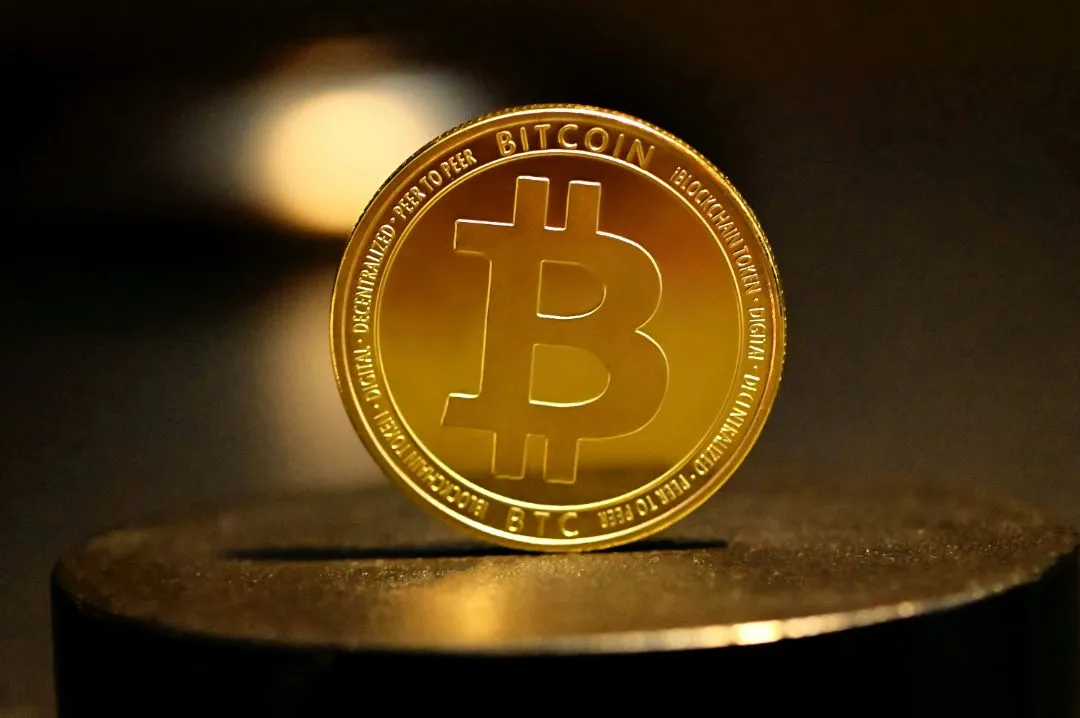
Photo by RJ Joquico on Unsplash


Largest digital asset fraud in Hong Kong history

The Dubai-headquartered JPEX crypto exchange, an unauthorized platform, stands accused of defrauding more than 2,400 individuals of nearly $200 million, marking it as the largest digital asset fraud case in Hong Kong’s history. During a recent press conference, the Secretary for Security of Hong Kong, Chris Tang Ping-keung, expressed his commitment to ensuring justice prevails for the victims.

Tang revealed that among the assets seized by the police were more than HK$8 million ($1 million) in cash and assets valued at HK$77 million ($9.8 million), including real estate and digital currency. These significant seizures mark a pivotal step in the ongoing investigation. Furthermore, the police have apprehended 12 individuals connected to the JPEX scheme, including three employees of JPEX Technical Support Company and two YouTubers.

The first signs of trouble emerged when JPEX users faced difficulties in withdrawing their funds on September 15. In response to mounting complaints and regulatory warnings, JPEX infamously raised its withdrawal fees to 999 Tether in a desperate attempt to discourage users from withdrawing funds. This maneuver raised suspicion and intensified the scrutiny on the exchange.


Ongoing investigation

Local authorities in Hong Kong have been inundated with 2,369 complaints from victims who lost their investments in the unregulated exchange. The estimated total monetary loss is HK$1.4 billion ($178 million). While the police continue towards bringing those responsible to justice, they are also collaborating closely with regulators to implement measures aimed at preventing the emergence of such fraudulent schemes in the future.

Recent developments have seen the net tighten around the individuals connected to JPEX. Additional arrests have been made in Hong Kong and Macao. Hong Kong police apprehended two individuals who were caught attempting to destroy documents with paper shredders and bleach. In addition, they seized almost HK$9 million ($1.15 million) in cash and gold from three apartments.

Meanwhile, Macao authorities apprehended two more individuals and confiscated over HK$14 million ($1.8 million) in cash and valuables. The suspects had made multiple visits to Macau this month, which may be linked to their illicit activities.

Hong Kong’s Securities and Futures Commission (SFC) had issued a prior warning, stating that JPEX operated without the necessary licenses and had maliciously frozen users’ funds. Last week, the SFC took a step further, blocking access to web and mobile versions of the platform with JPEX responding by encouraging users to sidestep the measure through the use of VPN.
More to Read
View All
Policy & Regulation·

Aug 10, 2023

$120M Crypto Ponzi Scheme Exposed in India

$120M Crypto Ponzi Scheme Exposed in IndiaIn a recent crackdown, local authorities in the state of Odisha in India, have dismantled a massive $120 million cryptocurrency Ponzi scheme.That’s according to a report by local news agency ANI earlier this week. The operation led by the Economic Offences Wing (EOW) of the state police has resulted in the arrest of key individuals orchestrating the fraudulent endeavor. This latest development underscores the growing concerns around cryptocurrency scams and their detrimental impact on investors.Photo by Ayiman Mohanty on UnsplashSTA crypto tokenThe mastermind behind the Ponzi scheme had adeptly evaded capture by frequently changing locations. The scheme, operating across India, revolved around the STA crypto token, a digital asset at the heart of the fraudulent activities.Similar to the infamous OneCoin scandal, where billions were swindled from unsuspecting investors, the STA token scheme exploited victims who had invested in the token and then recruited others under the guise of a multi-level marketing initiative. Promised bonuses and extravagant returns were used as bait to lure individuals into the scheme, which eventually unraveled, leaving numerous investors financially devastated.Unregulated token offeringReports highlight that the STA token was not authorized by any regulatory body. This glaring absence of oversight enabled the scammers to continue their operations unchecked. The nature of the scheme involved recruiting victims in various Indian states who were promised substantial returns. These victims, in turn, were enticed to bring in new investors, creating a vicious cycle of recruitment and investment.The investigation into the scheme revealed that the STA token offering attracted individuals through aggressive promotional strategies. This allowed the scheme to establish a vast network across India, involving approximately 200,000 individuals. The victims were led to believe that their investments would yield significant bonuses and returns, a tactic that echoes the tactics used by OneCoin promoters.False claimsThe STA token was introduced in September 2021 and rapidly established a presence on social media platforms, presenting itself as a legitimate cryptocurrency. It falsely claimed to be a blockchain-based platform connecting users with local farmers. This facade lent an air of legitimacy to the scheme, effectively deceiving unsuspecting investors.The scheme’s audacity was further highlighted by a grand event hosted by STA criminal promoters in a luxurious hotel in Goa. This extravagant affair aimed to further legitimize the project and attract more victims.This incident adds to a series of cryptocurrency-related scams that have plagued India. The GainBitcoin scam, which came to light last year, led to the loss of over $1.25 billion for around 100,000 victims. The Indian authorities have responded by issuing public advisories warning citizens against falling victim to such schemes that promise quick wealth through cryptocurrency investments.In a recent parliamentary session, Minister of State for Finance Pankaj Chaudhary revealed that the Enforcement Directorate (ED) is actively investigating multiple instances of cryptocurrency-related fraud. These investigations have uncovered proceeds of crime amounting to over $130 million.

news
Markets·

Apr 12, 2023

NVT Ratio Signals Overvalued BTC

NVT Ratio Signals Overvalued BTCThe network value to transaction (NVT) ratio of Bitcoin, which has been staying at a high level since the beginning of the year, has signaled its overvaluation, according to Yonhap Infomax.However, some argue that this will not necessarily lead to a crypto winter, considering that the nature of Bitcoin as an asset has changed and there is no sign of overheating in other indicators.©Pexels/PixabayPrice and NVT ratio correlationYonhap Infomax found out that the correlation between the NVT ratio and the price of Bitcoin over the past six years is -0.35. A value of 1 represents a completely positive correlation, while a value of -1 represents a completely negative correlation.Extending this period to 2010 makes the correlation close to 0, but during the early years, NVT ratios showed high volatility, shooting up to four digits. Such a high volatility doesn’t suggest much correlation. Until 2021, there was a high correlation of up to -0.44.The NVT ratio is calculated by dividing the market cap by the transacted volume. Conceptually, it is similar to the price-to-earnings ratio for the stock market.In 2017, when the crypto market was bullish, the average Bitcoin NVT ratio was 7.3. This number became 8.7 in 2021 when the market experienced a similar pattern. In retrospect, single-digit NVT ratios usually hint at bullish markets.This year so far, Bitcoin has been relatively overvalued, given that the average NVT ratio is 23.6.BTC price recoveryWhen the crypto market sentiment lost its confidence due to the FTX bankruptcy last year, the price of Bitcoin went down to $15,000. It later recovered to the near $30,000 level. The Bitcoin price once had reached an all-time high in 2021, surpassing $65,000.The years that manifested similar patterns as this year were 2018 and 2019. In those years, the Bitcoin NVT ratio plateaued around 20.Uncertain outlookThe NVT ratio itself could point to a possible crypto winter, but researchers say it’s hard to say.Jang Kyung-pil, a research analyst at crypto data platform Xangle, said that people now consider Bitcoin as a store of value rather than a means of transactions, pointing out that BTC’s market value to realized value (MVRV) ratio has hit the bottom at 0.84 and now reached 1.4. According to Jang, MVRV values under 1 indicate undervaluation and those above 3 indicate overvaluation.Jung Seok-moon, head of the research center at crypto exchange Korbit, said that the current NVT ratio signals BTC overvaluation. He added that the Fed is likely to turn dovish in its monetary policy, which would prompt a strong BTC uptrend.

news
Policy & Regulation·

Apr 28, 2025

Russian exchange raided against backdrop of cash-to-crypto ban proposal

Mosca, a cash-to-crypto exchange headquartered at the Moscow International Business Center, was subject to a raid carried out by the Russian authorities on April 23. The raid occurred in the immediate aftermath of a call from a member of the commission of the Public Chamber (OP) of the Russian Federation to ban crypto exchanges from facilitating the purchase of cryptocurrencies using cash.Photo by Egor Filin on UnsplashInvestigating fraudWhile attending the Blockchain Life 2025 event in Moscow, Mosca’s Head of Development, Dmitry Titarenko, confirmed to Cointelegraph that the rationale provided for the raid was that it was in connection with fraud perpetrated by one of its platform users. Titarenko added: “Law enforcement agencies have carried out a standard procedure of checking our customer data.” The raid occurred during the company’s attendance at the Blockchain Life conference. Mosca was a key conference participant, having established two stands at the event and winning an award for the best crypto exchange service. Reporting on the raid, local media outlet Baza said that it had been carried out in relation to fraud perpetrated against the former head of the Samara Region Development Corporation, Olga Serova. It explained that Serova had been conned into handing over 350 million rubles ($4.24 million) and $800,000 to the scammers.  Seven arrestsShe withdrew these funds from her bank at the end of last year, despite bank officials having tried to persuade her against the withdrawal for this purpose. The news outlet added that to date, seven people have been arrested in connection with the alleged fraud. The Mosca exchange service may be proving to be attractive to scammers as the platform allows users to buy up to 100,000 USDT per day using cash. Titarenko couldn’t confirm that the raid was carried out in connection with the Serova fraud case. He said that “maybe it was [in relation to] another client.”The exchange executive also confirmed that the company had been in the process of putting in place more resources to carry out anti-money laundering (AML) and know-your-customer (KYC) checks, together with a blacklisting system related to suspicious platform users. Cash-to-crypto ban proposalThe raid occurred within 24 hours of Yevgeny Masharov, a member of the commission of the Public Chamber (OP) of the Russian Federation, putting forward a proposal to ban crypto exchanges from receiving cash, making services like Mosca’s cash-to-crypto exchange illegal. According to state-owned Russian news agency TASS, Masharov said that such a move would “cause a large-scale blow to scammers, because it’s no secret that telephone scammers use crypto exchangers to withdraw cash.”Sergey Mendeleev, a well-known figure within crypto circles in Russia, told attendees at the Blockchain Life conference that such a cash-to-crypto ban would be an unwelcome development for the sector. If such a ban were to materialize, Mendeleev suggested that it would be an indication that the Russian authorities were turning away from the greater development of cryptocurrency in Russia. Last week, it emerged that Russia’s Ministry of Finance, in collaboration with the country’s central bank, plans to launch a crypto exchange for qualified investors. The central bank also confirmed plans to launch a digital ruble payment network in 2026.

news
Loading