Top

Crypto Exchange Korbit Raises Daily KRW Deposit Limits From 300K to 5M

Web3 & Enterprise·September 26, 2023, 5:15 AM

Korbit, one of the leading cryptocurrency exchanges in South Korea, raised the daily deposit limit for its customers as of 16:00 KST on September 25. This move aligns with the early implementation of the operation guidelines of real-name bank accounts for cryptocurrencies, which is scheduled to be introduced in January next year. Korbit collaborates with Shinhan Bank, utilizing its real-name accounts to facilitate Korean won transactions.
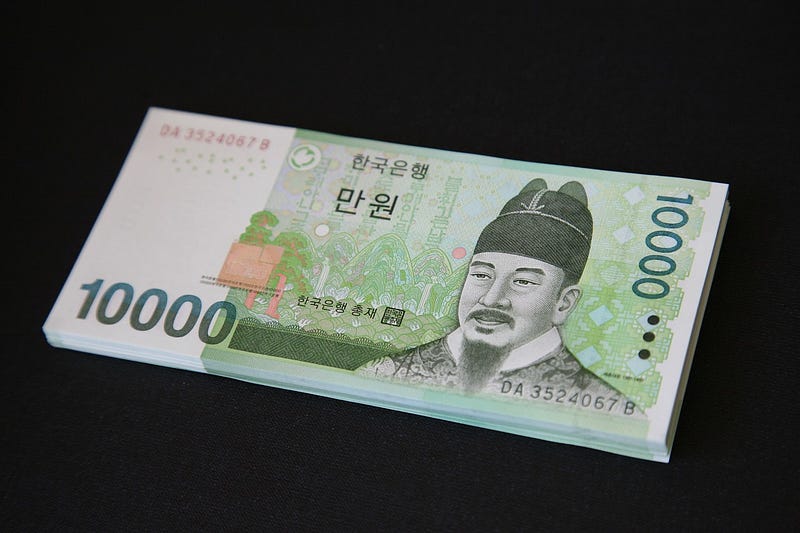
Photo by manseok Kim on Pixabay


User protection and AML

The operation guidelines have been established to fortify the protection of virtual asset users and to bolster efforts against money laundering. Financial authorities, the Korea Federation of Banks, and cryptocurrency exchanges have collaborated to initiate these measures at every local exchange starting next January. Meanwhile, exchanges are obliged to maintain reserves in their banks beginning this month, ensuring they are poised to provide compensation for involuntary losses in the event of hacking incidents or system failures.


Investor inconvenience and market confusion

Since the introduction of the real-name bank account system in 2018, banks and crypto exchanges have had different terms of use and user protection measures, leading to varied deposit and withdrawal limits as well as reserve levels across different exchanges. These inconsistencies have resulted in inconvenience to customers and have sown confusion in the market. In response, the entities in question have agreed to implement a shared set of guidelines for real-name bank accounts from January next year.


Daily limit of KRW 300K to KRW 5M

With the implementation of these guidelines, Korbit has elevated the current daily deposit limits from KRW 300,000 (approximately $222) and KRW 1.5 million to KRW 5 million. Moreover, once the bank authenticates the user’s transaction purpose — for instance, purchases of KRW 5 million or more in virtual assets in a month following the initial KRW deposit — and verifies the source of the funds, the constrained account can transition to a standard account. This adjustment allows the daily deposit and withdrawal limit of up to KRW 500 million.

The limitations associated with constrained and standard accounts apply solely to fund transfers between the crypto exchange and the bank. When holders of Shinhan accounts initiate fund transfers to accounts in other banks, the limitations imposed by Shinhan continue to apply.

Oh Sejin, CEO of Korbit, expressed enthusiasm that the higher deposit limit enabled by the new guidelines would improve investor convenience and draw in new customers. He added that the crypto exchange is committed to collaboration with Shinhan Bank, aiming to enhance user protection and anti-money laundering (AML) measures.


More to Read
View All
Markets·

Feb 07, 2024

Positive market sentiment ahead of Bitcoin halving

Seychelles-incorporated crypto exchange platform Bitget recently released findings from a study on Bitcoin's upcoming halving, revealing that the vast majority of surveyed investors predict bitcoin will achieve a new all-time high (ATH) in 2024. Separately, other market commentators and analysts appear to be bullish on bitcoin ahead of the scheduled cut in Bitcoin mining rewards.Photo by Kanchanara on Unsplash84% anticipate new bitcoin ATHThe study, based on anonymized data from 9,748 participants worldwide, focused on investor perceptions surrounding the halving's impact on their investment decisions. 84% of participants anticipate a new ATH for bitcoin during the next bull run, with only East Europe showing a percentage lower than 80%. Over 50% predict bitcoin's price to be between $30,000 and $60,000 by the time the halving occurs in April. Meanwhile, 30% foresee the bitcoin unit price going higher than $60,000. Off the back of the data that has arisen via the study, Bitget managing director Gracy Chen suggested that it is indicative that 2024 will be a significant year for the bitcoin market. Crypto investment plansApproximately 70% express plans to increase their crypto investments, with the highest conviction in the Middle East and North Africa (MENA) and East Europe regions. Western European investors are characterized as "short-term cautious" and "long-term optimistic." In addition to the Bitget study, many market commentators appear to have arrived at a similar conclusion. In July of last year, Standard Chartered Bank forecasted a 2024 unit price for bitcoin of $120,000. The bank reaffirmed that view last month, going further still in stating that by 2025, it expected bitcoin to reach a price of $200,000, largely due to capital inflows into spot bitcoin exchange-traded funds (ETFs), which were approved in the United States in January. Broader market sentimentTaking to social media on Monday, crypto analyst Charles Edwards of Capriole Investments proposed a potential 500% price return for bitcoin if a bullish halving pattern plays out. Edwards envisions bitcoin reaching $280,000 in 2025. Like Standard Chartered, he cites the January bitcoin ETF launch as the driving force, likening it to a "second halving." He argues that major technological developments have historically seen quicker rates of adoption. Crypto trading analyst Michaël van de Poppe predicts a pre-halving surge to $48,000 and an eventual breakout toward an all-time high in Q3/Q4 of 2024. The next Bitcoin halving is expected in April 2024, historically associated with increased scarcity and subsequent price surges. Pseudonymous macroeconomist @Micro2Macr0 took to the X social media platform on Monday, stating:"Only 2.5 months till the #Bitcoin #Halving. The world is getting more unstable and you have the greatest hedge ever invented sitting in front of you. What are you waiting for?"  Meanwhile, "British HODL" warned that recent developments may result in a break from previous trading patterns. He stated:"Everyone says 12 months after the halving the shock starts for #Bitcoin price. . . . I think there is a high likelihood that the ETF’s change the cycle you’re expecting. Be aware of that.”

news
Markets·

Jan 24, 2024

Mt. Gox edging closer to BTC payouts sparks market fears

The trustee of the failed Japanese cryptocurrency exchange Mt. Gox is preparing to initiate repayments of bitcoin (BTC) and bitcoin cash (BCH), prompting fears of a market sell-off among traders and investors.Photo by Dmytro Demidko on UnsplashConfirming repayment detailsThe crypto community on the /mtgoxsolvency subreddit disclosed that the Tokyo-based bitcoin exchange has initiated the process of verifying creditors' addresses for forthcoming repayments. Emails have been sent to creditors, confirming that their repayment details have been validated with relevant cryptocurrency exchanges. The communication from Mt. Gox appears to be staggered, with users on different platforms receiving emails at varying times. Some Bitstamp users reported receipt of the email, while several Kraken customers mentioned that they were still awaiting the confirmation. Mt. Gox, cautioning creditors, clarified that users with disabled or frozen accounts would not be able to receive repayments using the provided addresses. Additionally, the emails specifically pertain to payments in bitcoin and bitcoin cash. This recent communication follows Mt. Gox's announcement in November, where it committed to returning approximately 142,000 bitcoin, 143,000 bitcoin cash and 69 billion Japanese yen, valued at over $5.67 billion at the announcement date and approximately $6.46 billion at the present moment. During the November announcement, Mt. Gox assured creditors that repayments would commence in the following months and weeks. Creditors with payment methods deemed "effective at this time" were earmarked to receive their assets first. Towards the end of December, some creditors reported the addition of yen-denominated balances to their PayPal accounts by Mt. Gox, signaling progress in the repayment process. Market fearsThe fear among market participants of a distribution of bitcoin from the Mt. Gox estate has cast a shadow over the sector over the course of a number of years. With this latest development, it appears that the estate is finally on the cusp of executing on that distribution. If distribution is achieved in the short term, it will come at a time when bitcoin has experienced a major unit price pullback already. Since the approval of spot bitcoin exchange-traded funds (ETFs) in the United States earlier this month, it appears that another bankrupt crypto exchange, FTX, has sold $1 billion worth of Grayscale Bitcoin ETF shares into the market. That move is believed to have been responsible for a dramatic drop in bitcoin’s unit price. In tandem with that event, some commentators believe that a pullback at this point is healthy for the market. That’s the view of Charles Edwards, founder of Capriole Investments. Taking to social media, Edwards wrote:”We're still not here yet. This pullback is very overdue and lower is healthier.” At the time of writing, bitcoin has a unit price of $39,884, down from a high earlier this month of $48,494. Confirmation emails have been reported by several Reddit users, with Bitstamp confirming for most, and a few Kraken users also acknowledging receipt. Nevertheless, a significant number of Kraken users mentioned they are yet to receive the confirmation email. Mt. Gox officially closed its doors in February 2014, almost a decade ago, after succumbing to an exploit in 2011.  

news
Policy & Regulation·

Nov 08, 2024

Japan to fine-tune crypto regulations to protect investors

Japan's Financial Services Agency (FSA) is proposing new legislation in an effort to prevent the assets of Japanese investors held on crypto exchanges from being transferred overseas. According to local news outlet Jiji Press, the Japanese regulator recently put forward the idea of drafting such a bill. It’s thought that the move suggests that the Japanese regulators have learned from the collapses of cryptocurrency exchanges Mt. Gox and FTX. Photo by Jaison Lin on UnsplashLearning from past failuresWhile Japan already had a higher standard of regulation in place prior to the FTX collapse, likely as a consequence of the authorities having experienced the downfall of Mt. Gox in February 2014, there is still room for improvement.  While funds had been ring-fenced for FTX Japan users, those who accessed services advertised in Japan through the FTX app were deemed to have been accessing a service which fell under an international jurisdiction, denying them the same protections otherwise offered to FTX Japan platform users as a consequence of the regulations that had been put in place. Incorporating a holding orderJapanese media outlet Nikkei described this latest move by the Japanese FSA as follows: “The Financial Services Agency is moving towards creating a new ‘holding order’ in the Payment Services Act, which regulates cryptocurrency exchanges, that will order them not to take domestic assets entrusted to them by customers overseas.” Consequently, the regulator is looking to add this as the latest proposed amendment to the Payment Services Act. Back in September it emerged that amendments to that existing legislation were being looked at with a view towards making it easier for businesses to incorporate digital assets into their service offerings. The regulator has also been mulling over the reclassification of crypto as a financial instrument by amending the Payment Services Act accordingly. Additionally, a more generous tax policy is being proposed. Currently, the Japanese authorities impose a tax rate of up to 55% on cryptocurrency-related revenues. Corporate holders of digital assets have to apply a 30% tax rate, irrespective of income or profits. With that, a 20% tax rate is being considered. The matter became a political issue prior to the East Asian nation’s recent elections, with the leader of the Democratic Party for the People (DPP) backing the application of a 20% crypto tax rate. The application of a holding order has applied previously to companies that have been registered under the Financial Instruments and Exchange Act. This proposed amendment would see it applied to virtual asset trading platforms as part of the Payment Services Act. Guarding against bankruptcy lossesIf applied, the amendment would prevent loss of Japanese investor funds in circumstances where a crypto exchange platform goes into bankruptcy. Legal precedent set in the FTX bankruptcy in the United States means that if a user’s funds go into a non-individually segregated hot wallet belonging to an exchange, any property rights, even if explicitly outlined in the terms of service, are lost.  A company can make a case to go into bankruptcy in any international jurisdiction, which means that this precedent has potential implications for all market participants. The proposed amendment from the Japanese FSA would serve to protect investors from such an eventuality.

news
Loading