Top

Japan’s GMO Coin Announces Special SGB Airdrop for XRP Holders

Web3 & Enterprise·September 23, 2023, 12:05 AM

GMO Coin, a prominent cryptocurrency exchange operating as part of the Japanese IT conglomerate GMO Internet Group, has unveiled a unique opportunity for XRP holders. Eligible GMO Coin clients who have previously invested in XRP will receive an exclusive airdrop of Songbird (SGB) tokens.
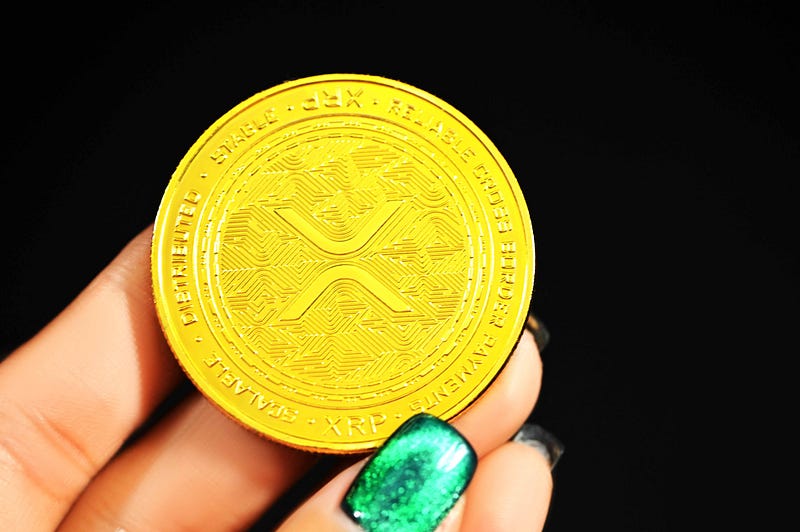
Photo by Kanchanara on Unsplash


SGB token distribution

The distribution of these SGB tokens is slated for completion by September 29, offering a promising opportunity for XRP enthusiasts. To qualify for this airdrop, customers must have held XRP in their GMO Coin accounts at 09:00 on December 12, 2020. The airdrop is also being extended to those utilizing crypto asset lending services on the platform.

To take advantage of the opportunity, eligible clients will need to provide a snapshot of their XRP holdings. While the exact pricing mechanism for the distribution remains undisclosed, it will be revealed at a later date. Presently, SGB is trading at approximately $0.0045, according to Malaysian cryptocurrency data aggregator CoinGecko.

GMO Coin has assured its clients that they are free to manage their XRP holdings as they see fit after submitting the necessary proof. The distributions will ultimately be converted into Japanese yen and made available to clients by the end of the month.


Ripple’s mixed fortunes

This development comes in the wake of a roller-coaster year for XRP holders. Ripple’s native token experienced substantial price fluctuations in response to various developments and events.

One noteworthy instance occurred in mid-July when XRP surged by more than 70%. This surge followed a favorable ruling in a legal dispute between Ripple and the United States Securities and Exchange Commission (SEC).

While regulatory pushback has featured strongly in the US, Ripple has sought to expand its business elsewhere with the Asian region featuring within that strategy. In June, the blockchain-based payments firm obtained in-principle approval from the Monetary Authority of Singapore (MAS) to offer its services within the city-state.

Earlier this month, Ripple struck a deal with SBI Remit Co., a subsidiary of Japanese financial services conglomerate SBI Group, to enable the remittance company to utilize Ripple’s XRP cryptocurrency as a bridge currency, connecting bank accounts in the Philippines, Vietnam, and Indonesia.


Songbird network

The Songbird network serves as a canary blockchain on the Flare layer one network. Essentially, the blockchain plays a crucial role in allowing the facility to enable network architecture testing on the Flare network, including the Flare Time Series Oracle, F-Asset systems, and StateConnector.

GMO Financial Holdings, the parent company behind GMO Coin, bought a 10% stake in AWR Capital, a multi-strategy crypto hedge fund, in April. Following that investment, AWR became a market maker at GMO Coin. The Japanese exchange business is ranked ninth on Forbes Digital Assets’ list of the world’s largest crypto exchanges.

As GMO Coin prepares to distribute SGB tokens to eligible XRP holders, this airdrop marks a great opportunity for relevant stakeholders. It showcases the platform’s willingness to reward its customers and foster engagement within the crypto community.

More to Read
View All
Web3 & Enterprise·

Nov 17, 2023

Binance and Gulf Energy launch digital asset exchange in Thailand

Binance and Gulf Energy launch digital asset exchange in ThailandThe world’s largest cryptocurrency exchange, Binance, has teamed up with Gulf Energy Development, a leading energy company in Thailand, to operate a digital asset exchange in the country.Photo by Than Diep on UnsplashInvitation-only launchThe new platform, Binance.th, aims to capture the growing demand for crypto services in Southeast Asia. Binance.th, which is currently in its beta testing phase, is expected to open to the public in early 2024. A filing on Wednesday by Gulf to the Thai stock exchange demonstrates that the platform has received approval from the Thai Securities and Exchange Commission to offer exchange and brokerage services for cryptocurrencies and digital tokens. The filing states:“Gulf Binance’s digital asset platform will provide digital asset exchange and digital asset broker services for both cryptocurrencies and digital tokens, prioritizing security and compliance with SEC regulations.”The platform is initially available by invitation only, and the plan is to eventually open the exchange to the general public. It’s understood that the platform will strive to provide a “globally standardized” service that will enhance the level of service in Thailand and promote the development of the country’s blockchain ecosystem.Market opportunityBinance.th enters the Thai crypto market at a time when the local leader, Bitkub, holds a dominant share of 75.4%. Bitkub benefited from the global crypto market downturn in 2022, which affected its competitors such as FTX and Zipmex.Although it has extended market share during the downturn and as a consequence of the demise of other platforms, Bitkub has also struggled with market conditions. In July its parent company Bitkub Capital Group, reduced headcount by six percent. Bitkub recorded $28.6 billion in trading volume last year, out of the total $37.94 billion generated by the top four Thai exchanges.Binance.th hopes to challenge Bitkub’s position by leveraging Binance’s global reputation and expertise in the crypto industry.Legal woesThe launch of Binance.th comes amid Binance’s legal and regulatory troubles in the U.S. and Europe. In September, the U.S. Securities and Exchange Commission (SEC) sued Binance, its U.S. subsidiary, and its founder Changpeng Zhao (CZ) for allegedly listing unregistered securities in the form of cryptocurrencies.In June, the SEC also accused CZ and Binance of illegally marketing its international platform to U.S. customers.Binance has been trying to improve its compliance and governance standards in response to regulatory scrutiny. The company has hired former regulators and executives from the traditional finance sector to lead its operations in various regions. Binance has also applied for licenses and registrations in several jurisdictions, such as the U.K., Singapore and Japan.The origins of this deal stem from a memorandum of understanding (MOU) signed between Binance and Gulf Energy in January 2022. The joint venture business which emerged acquired a digital operator license in Thailand in May of this year.By expanding its presence in Southeast Asia, Binance hopes to tap into the potential of the emerging crypto markets and diversify its revenue streams. Binance.th also marks the first bank-backed crypto exchange in Thailand, as Gulf Energy Development is partly owned by the state-owned Krung Thai Bank.

news
Policy & Regulation·

Jun 05, 2023

South Korea to Revive Tech Exports with Metaverse, Blockchain

South Korea to Revive Tech Exports with Metaverse, BlockchainThe South Korean Ministry of Science and ICT revealed today a strategy to enhance the country’s tech exports. The plan includes leveraging the potential of the metaverse and blockchain as promising export items.Photo by Pixabay on PexelsEmphasis on the digital sectorIn response to the recent decline in exports, the strategy seeks to establish new sources of growth by prioritizing the digital sector, which has historically been a key driver of Korea’s exports. Recognizing the complex challenge posed by the global economic slowdown and other factors, all government ministries are collaborating to counteract the export slowdown.The plan leverages South Korea’s digital capabilities and implements proactive measures to adapt to evolving export trends, including the recent advancement of generative artificial intelligence (AI) tools and the acceleration of digital transformation. By tapping into emerging markets and nurturing innovative companies, the government strives to diversify its export portfolio and strengthen its position in the global market.Despite achieving a record high of $248.8 billion in tech exports in 2022, Korea has faced year-on-year declines since July 2022 due to the global economic downturn. The semiconductor sector, which accounts for more than half of the nation’s tech exports, has been particularly sluggish. Nevertheless, the rise of new tech markets driven by significant technological advancements, such as ChatGPT, and the global push for digital transformation offer opportunities to overcome the current export slump.Emerging marketsAgainst this backdrop, the government is committed to backing the development of products that resonate with the evolving export landscape. It is eyeing emerging markets, notably the Middle East, Southeast Asia, and Latin America, recognizing their fertile grounds for the swift adoption of evolving tech trends, fueled by their substantial youth populations. Furthermore, the government plans to provide policy-level support to tech companies.Government supportUnder this plan, the government will identify promising companies and offer assistance, including consultation and guidance on product commercialization. It will also support metaverse companies participating in overseas projects by covering localization development costs.In the blockchain field, comprehensive support, including technology verification, consulting, and marketing, will be provided to those working towards international standardization for NFTs and their overseas commercialization.As part of this initiative, exhibition rooms will be established on metaverse platforms like ZEPETO and IFLAND in September. These platforms will provide opportunities for innovative firms to showcase their products. At the same time, the plan will facilitate interaction between Korean companies and overseas buyers through online and offline events to boost exports.

news
Web3 & Enterprise·

Dec 12, 2023

SBI and Saudi Aramco to explore digital asset business partnerships

SBI and Saudi Aramco to explore digital asset business partnershipsJapanese financial services conglomerate SBI and Saudi Arabia’s state-controlled energy giant Saudi Aramco have jointly announced their exploration of potential collaboration in the realms of digital assets and semiconductors.Photo by Chris Liverani on UnsplashDigital asset portfolio co-investingThe partnership, which was publicly disclosed last week, aims to delve into co-investing in each other’s digital asset portfolios. Such an arrangement will leverage SBI’s substantial holdings and the formidable position of Aramco as the world’s second-largest company by revenue, boasting a staggering $604 billion figure. The partnership will mark a strategic alliance that goes beyond geographical boundaries, underscoring the global impact of digital asset investments.The collaboration between SBI and Aramco extends beyond mere investment, with SBI actively seeking to identify Japanese digital asset startups keen on expanding their operations into Saudi Arabia. The joint effort aims to provide comprehensive support to these startups, facilitating their integration into the Saudi market and contributing to the growth of the digital economy.SBI Middle EastIn addition to this venture, SBI is set to establish “SBI Middle East” in Riyadh, serving as a central hub for its operations in the Middle East. This move aligns with SBI’s recent announcement of a $100 million joint fund with Standard Chartered, based in Dubai, solidifying its commitment to fostering financial partnerships in the region.When contemplating cryptocurrency activities in the Middle East, Saudi Arabia might not be the first destination that comes to mind, given Turkey’s significant crypto adoption rate and the UAE’s well-established crypto regulatory authorities, such as Dubai’s VARA and Abu Dhabi’s ADGM.However, Chainalysis data reveals that Saudi crypto activity is steadily gaining ground, experiencing the most significant year-on-year growth (12%) to June 2023. Additionally, the country’s Vision 2030 initiative involves efforts to diversify its economy. With that, blockchain and Web3 are being embraced.TokenizationWhile lacking a formal crypto regulatory regime, recent reports suggest that Saudi regulators are warming up to the idea, indicating a shift in approach. A recent collaboration has emerged between the central banks of Saudi Arabia and Hong Kong which will explore tokenization and payments infrastructure.It is noteworthy that both SBI and Aramco explicitly referred to “digital assets” in their collaboration, avoiding the mention of cryptocurrencies. This emphasis raises the possibility that the focus might extend to tokenization, an area where SBI has a robust presence, notably through the establishment of the Osaka Digital Exchange (ODX), set to commence trading tokenized securities later this month.As part of its digital asset investments, Saudi Aramco has previously engaged in blockchain initiatives, including investments in VAKT, a post-trade solution for the oil sector. Additionally last year Aramco invested in blockchain startup Data Gumbo, which utilizes blockchain in order to bring about operational efficiencies. The collaboration extends to the approval of electronic bill of lading (eBL) providers like TradeGo.In February, Aramco signed an agreement with droppGroup to build out a range of Web3 technologies. Furthermore, Aramco’s investments in companies like Red Date Technologies and IR4LAB underscore its interest in developing blockchain-based services, including document and supply chain solutions.

news
Loading