Top

Zodia Custody Expands Its Custodial Services to Singapore

Web3 & Enterprise·September 13, 2023, 2:33 AM

Developing crypto business hub Singapore has added another player to its list of local crypto sector participants with the arrival of digital asset custodial services provider Zodia Custody.

The London-headquartered institution-first digital asset custodian is setting up shop in Singapore. Zodia Custody is backed by Japan’s SBI Holdings, alongside prominent financial services firms Standard Chartered and Northern Trust. Through this move, outlined in an article published by CNBC on Monday, it’s now targeting financial institutions in Singapore for the digital asset custody services it offers to that cohort.

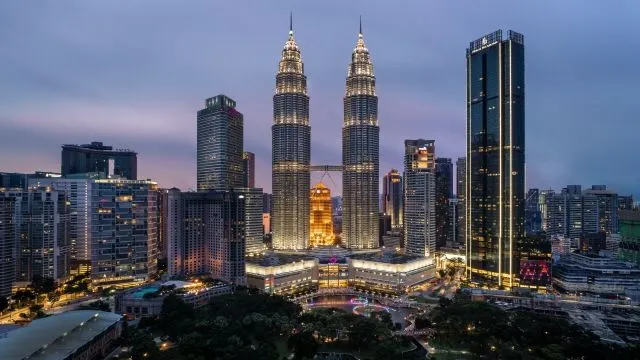
Photo by Kin Pastor on Pexels


Well-timed expansion

It’s understood that Zodia has ambitious growth plans relative to the Asia-Pacific (APAC) region. In May, the firm entered the Middle Eastern market, establishing a presence in Dubai. The firm’s timing is prescient relative to Singapore, as the custodian is responding via its Singapore expansion to an increasing demand coming from institutions seeking robust digital asset custodianship services.

The expansion also coincides with the Monetary Authority of Singapore’s (MAS) recent efforts to foster a well-defined digital asset ecosystem. Of late, the MAS introduced a comprehensive framework that encompasses the use of digital currencies, including central bank digital currencies and stablecoins. Moreover, MAS has proposed draft legislation that outlines the safeguarding of digital assets, signaling the pivotal role custodial services are set to play in Singapore’s evolving digital asset landscape.

The firm has established a specific local entity, Zodia Custody (Singapore) Pvt. Limited, appointing Kai Kano, the former Managing Director of rival digital assets custodian Bitgo, as the new company’s CEO.

Speaking on the subject of the firm’s Singapore market entry, Julian Sawyer, the CEO of Zodia Custody, stated:

“Singapore is no stranger to digital assets, having long been a hub for financial technology innovation. But even in a mature market, challenges remain. Having been created by Standard Chartered Ventures, we have a deep understanding of institutional needs and requirements not just to enter the space but thrive within it. As we engage with the local ecosystem, we’ll be providing market participants with cutting-edge technology, bank-level compliance, and governance to accelerate their digital asset adoption journeys.”


Strategic partnerships

In the past year, Zodia Custody has established strategic partnerships with industry leaders such as LMAX Digital, Hidden Road, BlockFills, and Blockdaemon. These collaborations are driven by Zodia’s market-leading Interchange offering, which equips institutions with enhanced risk management, secure custody, and solvency protection.

The expansion into Singapore marks the latest milestone in Zodia Custody’s global growth strategy. Over the past year, the custodian has expanded into Japan through a joint venture with SBI Digital Asset Holdings and into Luxembourg, where it operates as a registered virtual asset service provider (VASP). This move into Singapore follows a successful US$36 million Series A fundraising round.

Meanwhile, its sister company Zodia Markets, which is totally segregated from Zodia Custody, made the news in crypto circles earlier this month when it achieved in-principle approval in Abu Dhabi for a broker-dealer license.
More to Read
View All
Web3 & Enterprise·

Oct 03, 2023

SBI Holdings and TradeFinex Partner to Create a Trade Finance JV in Japan

SBI Holdings and TradeFinex Partner to Create a Trade Finance JV in JapanJapanese financial services conglomerate SBI Holdings has joined forces with UAE-based TradeFinex to establish a dynamic joint venture. The objective of the partnership is to propel the widespread adoption of the XDC Network within Japan’s trade finance sector.Details of the agreement between the firms emerged last Friday. The strategic collaboration represents a move toward harnessing blockchain technology to infuse transparency, efficiency, and accessibility into the fabric of trade finance and supply chain management.At its core, the XDC Network stands as an enterprise blockchain platform which is compatible with the Ethereum virtual machine (EVM). In recent times, the XDC Network has cultivated partnerships with several international organizations, including the World Trade Organization (WTO) and the International Chamber of Commerce (ICC). It has pioneered solutions aimed at cost reduction, transaction acceleration, and transparency augmentation within the trade finance sphere.Photo by Timelab on UnsplashBuilding upon related partnershipSBI Holdings, deeply ingrained in Japan’s financial services sector, has taken significant strides to embrace the potential of blockchain technology. Earlier this year, its subsidiary, SBI VC Trade, partnered with the XDC Network, becoming the inaugural Japanese exchange to facilitate the cryptocurrency asset XDC. Building upon this previous collaboration, SBI VC Trade has been proactive in championing the expansion of the XDC Network’s presence in Japan.The freshly minted joint venture between SBI Holdings and TradeFinex has the potential to serve as a catalyst for further XDC Network growth in Japan. A central goal is to localize XDC Network-related information, thereby rendering it more accessible to Japanese businesses and investors.Additionally, the venture is actively scouting for cryptocurrency exchanges who are prepared to use and promote the XDC network, further amplifying its adoption. Exploring collaborations with subnet and layer-2 enterprises forms an integral part of their strategy.Japan’s evolving stance on blockchainThe timing of this collaboration coincides with Japan’s evolving stance on blockchain technology and cryptocurrencies. Emerging reports indicate the Japanese government’s contemplation of allowing startups to raise capital through cryptocurrency tokens, marking a seismic shift away from conventional stock listing processes.In April the Japanese government released a whitepaper on Web3, in its efforts to explore ways to foster innovation in the emerging sector. Furthermore, Japan’s National Tax Agency has made adjustments to its cryptocurrency-related tax code, underscoring a proactive stance toward regulating the cryptocurrency industry. Related to that, the country’s Financial Services Agency (FSA) has been exploring tax exemptions relative to unrealized crypto gains.Japan has become known historically as a center of technological innovation. There have been soundings recently that it can rediscover its abilities in that respect through the development of Web3.The strategic alliance between SBI Holdings and TradeFinex charts a promising trajectory for the XDC Network within Japan’s trade finance sector. Anchored in a project that aspires to offer innovation, transparency, and operational efficiency, this joint venture offers considerable potential to spearhead the adoption of blockchain technology within one of the world’s most prominent financial markets.

news
Web3 & Enterprise·

Jul 05, 2023

OPNX Enables Margin Trading via oUSD

OPNX Enables Margin Trading via oUSDCrypto futures and bankruptcy claims trading exchange OPNX has unveiled a credit currency called “oUSD” for margin trading.The company announced the new currency via a statement to Cointelegraph by OPNX Co-Founder Mark Lamb on Wednesday. The initial phase of oUSD requires users to deposit crypto assets into the exchange to acquire the currency. In the subsequent phase, OPNX plans to enable users to obtain oUSD by depositing crypto into on-chain contracts, allowing for potential “bankruptcy remoteness,” according to Lamb.Photo by Krišjānis Kazaks on UnsplashSolving three problemsThe currency’s litepaper identifies three problems that oUSD aims to solve. Firstly, lenders are hesitant to trust platforms to hold cash loans backed by crypto collateral. Secondly, exchanges and lending platforms are wary of lending cash to margin traders due to the multiple bankruptcies witnessed during the bear market of 2022. Lastly, crypto derivatives traders seek “portfolio margin” to borrow and trade based on their crypto holdings rather than stablecoin holdings.To address these concerns, oUSD is designed as a “credit currency.” It can be obtained at a 1-to-1 ratio with Tether (USDT) or used to measure profit and loss when users utilize Bitcoin or other cryptocurrencies as collateral. Users with negative oUSD balances are subject to an interest rate determined by holders of the platform’s native token, OX. Those with a positive balance can redeem oUSD for USDT.Future plansLamb discussed future plans with Cointelegraph, explaining that users will eventually be able to acquire oUSD by staking cryptocurrencies within smart contracts outside the platform. This mechanism aims to provide bankruptcy remoteness, safeguarding users from potential exchange insolvency.One of the co-founders of OPNX, Kyle Davies, along with Su Zhu, also co-founded the failed hedge fund Three Arrows Capital (3AC), leading to controversy surrounding the exchange. OPNX’s CEO, Leslie Lamb, admonished investors for allegedly misleading the public by disassociating themselves from the exchange. Responding to criticism, Mark Lamb argued that the mistakes made by Davies and Zhu have contributed to improving OPNX as an exchange.Lamb stated: “I think Kyle and Su kind of portrayed the zeitgeist of the last crypto bull market well, and they lost the majority of their net worth, but they are building back, and that’s what I am doing as well, and that’s what everyone should do… just build back.”Appearing on a Twitter Spaces recently, the founders of the bankrupt Singapore-headquartered 3AC said that they are committed to donating future earnings from OPNX to the creditors of the collapsed crypto hedge fund. Goodwill has been largely lacking for the duo following the 3AC collapse yet undeterred, they are putting all their energies behind their new venture, OPNX.OPNX’s launch of oUSD as a credit currency offers potential solutions to the challenges faced by lenders, exchanges, and margin traders in the crypto space. By introducing oUSD, OPNX aims to provide a safer trading environment, provable solvency, and custody on-chain, giving users protection for their assets and promoting trust in the exchange. Trust might be in short supply for the start-up’s founders although there’s no doubt that they have acquired a lot more experience in the wake of the 3AC collapse.

news
Web3 & Enterprise·

Feb 22, 2024

Marking its 10th anniversary, Coinone’s cumulative trading volume hits $339B

Coinone, one of the leading cryptocurrency exchanges in South Korea, unveiled an infographic on Monday that captures the company’s decade-long history, according to local newspaper Busan Ilbo. Founded on Feb. 20, 2014, the exchange platform commemorates its 10th anniversary this year. As of Feb. 20 of this year, Coinone’s cumulative trading volume stands at KRW 452 trillion ($339.4 billion) with a total of 213 employees. The business significantly grew in size compared to 2015: its aggregate trading volume has increased by 645,000 times, while its user base and workforce have expanded by 944 and 25 times, respectively. Photo by m_____me on UnsplashVision for the future: Prioritizing investor protection and blockchain innovationCoinone is dedicated to continuing its pursuit of investor protection and blockchain innovation over the next 10 years. Since its establishment, Coinone operated its service without experiencing any security-related accidents. The company has proven its security capacity by winning the top prize at “the 22nd Information Protection Award.” The company further solidified its commitment to security by enrolling in “Personal Information Protection Reimbursement Insurance” in 2017 and has been renewing it annually. From the Wild West to the leading crypto exchange The exchange began to offer an Ethereum trading service in 2016 and a virtual asset staking service in 2018, suggesting a new way of investment back in the days when the market centered around trading.  Cha Myeong-hun, CEO of Coinone, said, “The cryptocurrency market was deemed the Wild West a decade ago. It fills me with pride to see how Coinone navigated the market and witnessed all the ups and downs of the crypto industry until it positioned itself as a well-established industry in Korea. In particular, 2024 marks the inaugural year of the Virtual Asset Act’s implementation. We are committed to leading a healthy virtual asset market by focusing more on investor protection and regulatory compliance.” 

news
Loading