Top

CJ ONE to Sell 3,000 NFTs for New Membership Service

Web3 & Enterprise·September 01, 2023, 4:48 AM

CJ ONE, a lifestyle membership service operated by digital service company CJ OliveNetworks of South Korean conglomerate CJ Group, announced on Tuesday that it will sell 3,000 digital membership NFTs for its new lifestyle service, PRISM ONE. This comes as part of efforts to enhance brand value and boost customer benefits.
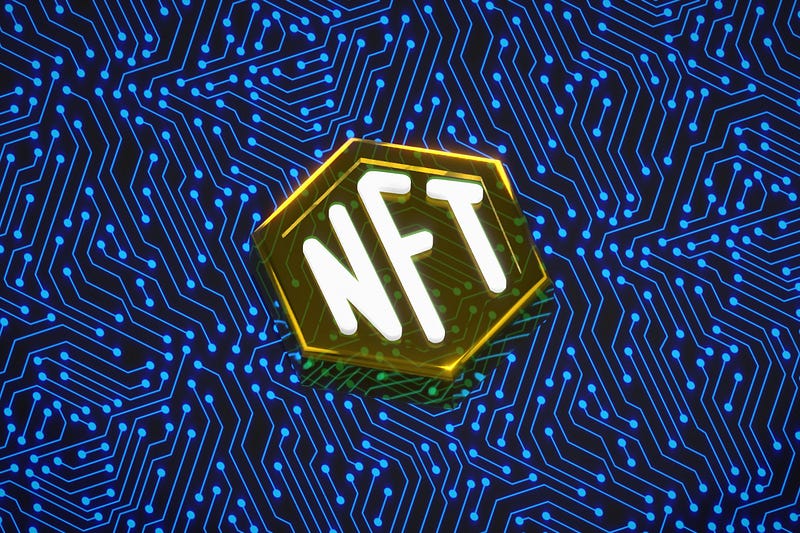
Photo by Choong Deng Xiang on Unsplash

“The PRISM ONE Membership NFT is an important milestone that reflects changes within CJ ONE. As a lifestyle membership, our brand will strive to provide unique experiences in all aspects of our members’ lives,” said Ha Jae-young, Head of Data Marketing at CJ OliveNetworks.


Tier benefits

The NFTs are categorized into four tiers — Basic, Special, Premium, and Prestige — with higher tiers offering more benefits. Depending on the tier, which will be decided randomly, customers can receive up to 10,000 CJ ONE membership points per month and eight times the number of points that they accumulated the previous month over a period of half a year.

CJ ONE points can be used like cash at various CJ Group subsidiaries that offer services in culture, dining, shopping, and entertainment, as well as over 30 brand partners such as cafe Mega MGC Coffee, convenience store CU, and refinery company Hyundai Oilbank.

10 customers with the Prestige NFT will also be chosen to receive benefits worth KRW 1 million, including welcome packages from CJ The Market, CJ Group’s online grocery shopping mall, and accommodation vouchers to use at Starville, a luxury “glamping” — a portmanteau of “glam” and “camping” — site.


Limited sales and resell opportunities

Minted with a new brand identity design, the NFTs will be sold for KRW 45,000 each on the NFT trading platform Pala starting from 7 PM (Korea Standard Time) on September 13. Customers who participate in an event until September 3 can win a chance to purchase them at a discounted price of KRW 42,000 prior to the public sale. Payments can be made with Polygon tokens (MATIC) or Korean won, and digital wallets Klip and MetaMask are also supported, the company said. In particular, the NFTs can be resold on trading platforms like Pala.

More to Read
View All
Policy & Regulation·

Nov 24, 2023

Singapore proposes additional rules to safeguard retail crypto investors

Singapore proposes additional rules to safeguard retail crypto investorsSingapore announced on Thursday its intention to implement new regulations aimed at protecting individuals by limiting their ability to trade cryptocurrencies.Photo by Daniel Welsh on UnsplashRules follow public consultation processIn a press release published to its website on Thursday, the Monetary Authority of Singapore (MAS), the city-state’s central bank and financial regulator, finalized these measures following a yearlong public consultation and review of cryptocurrency platforms, also known as digital payment token (DPT) service providers.Effective in phases from mid-2024, one key measure will prevent operators from accepting purchases through locally issued credit cards. Along the same lines, the regulator wants operators to discourage the use of margin and leverage transactions, or borrowing to facilitate trading activity. Market commentators, such as Custodia Bank Founder and CEO Caitlin Long, have long warned of the havoc that leverage has played in the crypto sector. Last year Long commented:”SO MUCH of the garbage in #crypto during this cycle was just leverage dressed up as tech innovation.”Additionally, incentives that encourage individuals to trade digital tokens will be banned. Such incentives could include providing free trading credits or digital assets as rewards during sign-ups or referrals.Curbing speculationWhile the MAS acknowledges the speculative and highly risky nature of cryptocurrency trading, it asserts that these regulations aim to help cryptocurrency operators protect customer interests. However, the MAS emphasizes that the regulations “cannot insulate customers from losses associated with the inherently speculative and highly risky nature of cryptocurrency trading.”Ho Hern Shin, the Deputy Managing Director for Financial Supervision at the MAS, urged consumers to exercise caution, stating:“We urge consumers to remain vigilant and exercise utmost caution when dealing in DPT services and to not deal with unregulated entities, including those based overseas.”The MAS expanded the scope of these measures to include all retail customers, regardless of their residency, following public feedback. This includes individuals who are not accredited investors or institutional investors. Accredited investors are those with over $1 million in net financial assets, among other criteria.Responding to crypto platform failuresThese regulatory steps come in response to the increasing access of individuals to the risky asset class, driven in part by the collapse of several unlicensed cryptocurrency companies in Singapore such as Hodlnaut and Vauld last year. The resulting calls for greater oversight prompted the MAS to initiate a feedback-gathering exercise in October, seeking input from industry players on proposed measures and other framework-establishing proposals.The bankruptcy filing of cryptocurrency group FTX the following month further accelerated the need for regulatory action globally, including in Singapore. In July, the MAS published the initial set of measures based on the consultation, requiring operators to keep customer assets in a trust and limiting their lending and “staking” of digital payment tokens.Staking, a process enabling investors to earn yields by depositing crypto assets for use in blockchain transactions, is among the activities facing restrictions. MAS Managing Director Ravi Menon criticized cryptocurrencies recently, stating that they have “failed the test of digital money,” citing poor performance as a medium of exchange or store of value and susceptibility to sharp speculative swings, leading to significant losses for many investors.

news
Policy & Regulation·

Dec 06, 2023

Taiwan to review crypto ETFs amid developments overseas

Taiwan to review crypto ETFs amid developments overseasThe Financial Supervisory Commission (FSC) in Taiwan has disclosed its close examination of foreign cryptocurrency futures products and exchange-traded funds (ETFs), signaling a potential shift in its regulatory approach.According to a report in Chinese-language financial newspaper, Taiwan’s Commercial Times, the FSC aims to gradually ease restrictions, aligning its stance with global market conditions.Photo by bordercollie 1712 on UnsplashResponding to crypto ETF activity internationallyThe Taiwanese regulator is carrying out this exploration against the backdrop of significant global developments. The possibility of the Federal Reserve cutting interest rates and the upcoming review by the U.S. Securities and Exchange Commission (SEC) of the spot bitcoin ETF in January next year are key factors influencing the FSC’s considerations.The anticipation surrounding the Bitcoin halving in April, combined with speculation that a spot bitcoin ETF approval is imminent in the U.S., have contributed to a 145% surge this year in Bitcoin’s unit price, adding momentum to that regulatory contemplation in Taiwan. There has been speculation that BlackRock, the world’s largest fund manager, is already preparing for the approval of its iShares Bitcoin Trust ETF.Recognizing the potential impact of a Bitcoin index stock fund, contingent on SEC approval and subsequent public investment permission, the FSC is closely monitoring global trends.Closer to home, it emerged last month that Hong Kong’s Securities and Futures Commission (SFC) is actively exploring the possibility of permitting retail participation in a spot crypto ETF. Domestic investment banks in Taiwan, attuned to these developments, have expressed longstanding interest in introducing similar crypto products.The FSC draws parallels with global counterparts, citing the proliferation of cryptocurrency futures products and ETFs in various markets.Cautious regulatory reviewAdopting a phased approach, the FSC emphasizes self-discipline and standards in relaxing regulations around crypto ETFs. This cautious strategy aligns with Taiwan’s historical prudence, previously observed in the delayed approval of cryptocurrency ETFs and blockchain ETFs due to concerns over volatility and speculative nature.As Taiwan contemplates a significant move into the cryptocurrency ETF domain, industry players remain cautiously optimistic. While some had considered private placements for overseas cryptocurrency ETFs, challenges such as tightened regulatory supervision and concerns over errors and price lags prompted a reevaluation.Earlier this month, ETF issuer ProShares launched its short Ether-linked ETF product on the New York Stock Exchange’s Arca, using the ticker symbol SETH. Spot bitcoin ETFs have been launched in Canada, Germany, Australia and Brazil. The products have also been made available via tax havens such as the Cayman Islands, Jersey, Liechtenstein and Guernsey.The regulator in Taiwan hints at a potential strategy involving “cryptocurrency concept ETFs.” These funds could invest in cryptocurrency-related software and hardware vendors, offering investors exposure to the industry without direct linkage to cryptocurrency price fluctuations.

news
Web3 & Enterprise·

Aug 17, 2023

Uzbekistan’s New Private Bank Joins National Crypto Card Initiative

Uzbekistan’s New Private Bank Joins National Crypto Card InitiativeIn a step towards enhancing its cryptocurrency ecosystem, the Republic of Uzbekistan has given the green light to include another private bank in its ongoing national crypto card project. The development was announced through an official press release earlier this week by the National Agency of Perspective Projects (NAPP), the country’s regulatory authority for digital assets.Photo by engin akyurt on UnsplashBuilding upon a crypto frameworkUnder the provisions outlined by the Uzbekistan Ministry of Justice on December 30 of last year, the Special Regulatory Sandbox Regime was established. This unique framework empowers specific entities within Uzbekistan’s crypto sphere to provide specialized services. JSV Ravnaq Bank has now been registered as a member of this regime, enabling its active participation in the pilot phase of the nation’s crypto card project.Virtual bank cardThis initiative is poised to introduce a virtual bank card named “CRYPTO CARD — UzNEX.” The card’s standout feature is its ability to facilitate automatic fund addition to users’ primary accounts. This is achieved by swiftly converting crypto assets from a digital wallet on a partner crypto exchange platform.A vital aspect of the crypto card’s development lies in its compatibility testing with various financial systems, including the widely used Mastercard payment platform. According to NAPP’s statement, the participant bank within the special regulatory regime will be rigorously testing the integration of the automated banking system, crypto-exchange information system, bank processing center, and the MasterCard international payment system.December launchNotably, the addition of Ravnaq Bank marks the second entrant into the project, with Kapital Bank being the first participant approved in May. While Kapital Bank’s testing phase commenced at the end of June 2023, Ravnaq Bank is set to initiate its test launch by the end of October 2023. Both banks are expected to launch the full project by late December, in accordance with NAPP’s timeline.Beyond these private banks, the Special Regulatory Sandbox Regime also includes UZINFOCOM, a company authorized to develop NFT certificates based on distributed data registry technology.

news
Loading