Top

Binance Takes P2P Service Measures in Response to Sanctioned Russian Banks

Policy & Regulation·August 26, 2023, 1:37 AM

Global crypto exchange Binance has removed the option for users to conduct transactions via sanctioned Russian banks on its peer-to-peer (P2P) platform, a decision that comes on the heels of a Wall Street Journal exposé published earlier this week, shedding light on the platform’s involvement in facilitating the movement of funds for Russian users.

Previously, Binance’s peer-to-peer service featured five Russian banks under sanctions as a method for ruble transfers between users. However, the company swiftly acted to address potential compliance concerns. Fittingly, this latest news was also broken by the Wall Street Journal on Friday.
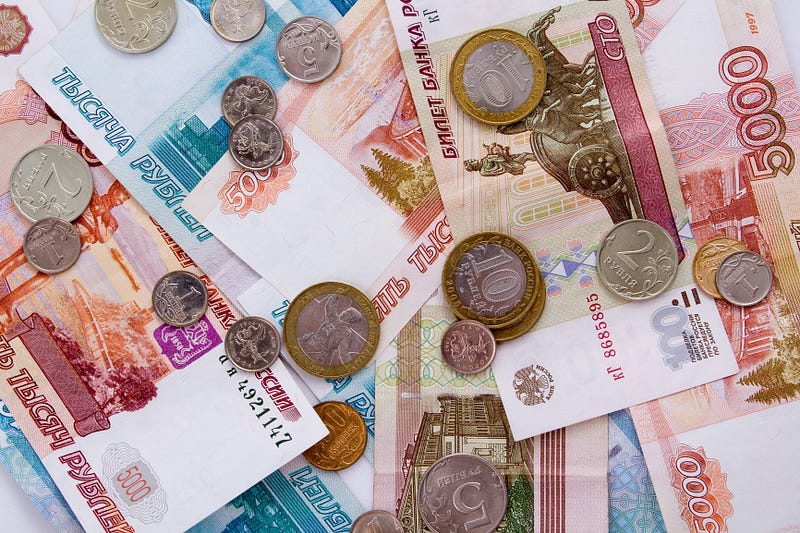
Dmitry Sidorov on Pexels


Sailing too close to the wind

When approached regarding the omission of these banks, a Binance spokesperson stated: “We regularly update our systems to ensure compliance with local and global regulatory standards. When gaps are pointed out to us, we seek to address and remediate them as soon as possible.”

The Wall Street Journal’s article outlined how Binance’s peer-to-peer platform facilitated ruble-to-crypto trades that frequently involved the sanctioned Russian banks, with Rosbank and Tinkoff Bank being prominent examples.

These trades often utilized layers of intermediaries to convert funds from these banks into Binance balances, as detailed by various company resources, user screenshots, and messages in official chat groups. Despite these revelations, Binance’s exchange had continued to handle significant volumes of ruble trading, according to data compiled by digital asset research firm CCData.


US DoJ probe

Binance’s activities in Russia could potentially contribute to its ongoing legal challenges in the United States. The US Justice Department (DoJ) has been probing the company’s actions for potential violations of American sanctions on Russia. In response to such concerns, the Binance spokesperson emphasized:

“Binance aims to diligently comply with the global sanctions rules and enforces sanctions on people, organizations, entities, and countries that have been blacklisted by the international community, denying such actors access to the Binance platform.”


Workarounds

Traders, however, had reportedly found workarounds to the bank removals, as observed in the official Telegram chat group for Russian clients. Many shared that they could still engage with sanctioned banks by selecting alternative payment methods and then manually inputting their Rosbank or Tinkoff bank details.

Earlier this year, an investigative report by CNBC alleged that employees of the company had told it that Binance staff regularly helped Chinese customers to bypass Know Your Customer (KYC) controls in order to access the platform. More recently, another report, once again by the Wall Street Journal, found that business in China was booming, which surprised many given that China banned crypto trading within the country in 2021.

It’s apparent that the company is reacting to regulatory and legal pressures in taking the decision to make these changes to its P2P service. Perennial crypto critic US Senator Elizabeth Warren took to X (formerly Twitter) on Friday, stating:

“I rang the alarm about sanctions evasion by Russia using the crypto platform Binance — and urged [the DoJ] to investigate potentially false statements it made to Congress. We need stronger crypto regulations to rein in illicit finance.“


More to Read
View All
Web3 & Enterprise·

Nov 07, 2023

Okto commits $5 million treasury fund to support Vauld users

Okto commits $5 million treasury fund to support Vauld usersOkto, the self-custody DeFi wallet app offered by Indian crypto exchange CoinDCX, has pledged a $5 million treasury fund to provide support to Vauld users.Vauld, a Singapore-based crypto lending platform, brought a halt to all trading, withdrawal and deposit activities in 2022 as it ran into liquidity issues. The business has been undergoing a process of restructuring under the protection of the courts in Singapore ever since.Photo by Towfiqu barbhuiya on UnsplashIncentivizing user asset transferIn response, Okto has stepped forward with a proactive approach to assist Vauld users in their transition. Okto is offering a 2% bonus to users who opt to transfer their assets from Vauld to Okto.Neeraj Khandelwal, the Founder of Okto, emphasized the company’s overarching mission while unveiling this $5 million initiative. He said: “While this $5 million fund represents one of our initiatives to support the crypto ecosystem, our overarching vision is to empower the Web3 community through cutting-edge technology-backed platforms and apps designed to tackle the broader challenges within the ecosystem.”Self-custody assurance featureIn addition to this incentive, Okto is also offering a self-custody assurance feature. This feature allows users to gain complete ownership of their private keys, ensuring that access to their funds remains exclusively in their hands. Moreover, users can benefit from round-the-clock access to monitor their assets. That delivers a reassuring sense of control and peace of mind regarding the users’ cryptocurrency holdings, against a backdrop of those users having had the experience of being unable to withdraw their funds when the Vauld platform paused trading.The concept of self-custody is central to what crypto was supposed to be about. It grants complete ownership of assets to the user. Khandelwal outlined that Okto was established on the basis that it could strike a balance between security, convenience and custody. In this way, it felt that it could resolve what could be termed as the crypto wallet trilemma. “Okto’s enduring mission has been to provide users with a secure and user-friendly app, and we will persistently strive to achieve this objective,” Khandelwal added.Mitigating riskLaunched globally earlier this year, Okto is a keyless, self-custody Web3 wallet that ensures secure access to DeFi services while prioritizing the safety of users’ funds. This all-in-one Web3 app approach eliminates the cumbersome need to safeguard seed phrases, ensuring users have full control of their funds.Moreover, it mitigates the risk of a single point of failure through its state-of-the-art, custom-built, consensus-driven Multi-Party Computation (MPC) technology. With MPC, private keys required for fund access and control are never fully exposed, guaranteeing the constant security of users’ assets.Vivek Gupta, Chief Technology Officer at Okto, elaborated on the technology behind Okto’s product offering, stating:“Okto uses state of the art Multi-Party-Computation algorithms to create users’ private keys. Our MPC algorithm never produces a complete private key. Our MPC algorithm uses three nodes which communicate with each other under proprietary encryption channels and create a unique sensitive material on each node.”In addition to its security measures, Okto wallet boasts compatibility with multiple Web3 chains such as Polygon, BSC and Avalanche, along with protocols like Stader and WooFi, among others.

news
Policy & Regulation·

Nov 10, 2023

Suspects emerge in Taiwan in ongoing JPEX scandal fallout

Suspects emerge in Taiwan in ongoing JPEX scandal falloutIn the ongoing saga surrounding the collapse of Dubai-headquartered cryptocurrency exchange JPEX, Taiwanese prosecutors have identified new suspects, marking a significant development in the case.The Taipei District Prosecutors Office (TDPO) has requested the custody of Chang Tung-ying, chief partner at JPEX’s Taiwan office, over allegations of fraud. That’s according to a report by local TV channel TVBS News on Thursday.Photo by Ricky Zeng on UnsplashMoney laundering and Banking Act violationsThis latest development brings a new twist to the scandal, which has largely been playing out in the Chinese territory of Hong Kong. The TDPO reportedly conducted searches at nine locations linked to the JPEX investigation. Chang, along with three other individuals, including JPEX lecturer Shih Yu-sheng (also known as Shi Yu), was summoned by the authorities. Chang and Shih are being investigated for violations of the Banking Act and the Money Laundering Control Act.During the investigation, JPEX salespersons Liu Chien-fu and Niu Keng-sheng were released, with Liu being granted bail of 50,000 New Taiwan dollars ($1,550). Niu, the registered person in charge of JPEX Taiwan, was released after questioning.Celebrity promoter focusThe report also revealed that Nine Chen, a Taiwanese celebrity and singer who previously served as a brand ambassador for JPEX, was summoned by prosecutors. He has cooperated with law enforcement in the role of a witness to the alleged fraud who has testified to illicit activity carried out by the platform. However, it is now understood that recent events have developed such that Chen is now being treated as a defendant.This action resonates with actions taken by the authorities in Hong Kong some weeks ago in the earlier stages of investigation into this affair. In September, one of the first actions taken by Hong Kong law enforcement was the arrest and detention of social media influencer and former lawyer Joseph Lam, known to followers as “Jolamchok” on the Instagram platform.Alleged liquidity crisisJPEX, once a successful crypto exchange, abruptly halted some services in mid-September, citing a liquidity crisis triggered by alleged “unfair treatment” from institutions in Hong Kong. The sudden implosion led to accusations of misleading investors regarding the application for a crypto trading license and other issues.The scandal surrounding JPEX has escalated into a major industry concern, prompting investigations by Hong Kong authorities. Over 2,000 complaints from JPEX users, reporting losses of nearly $180 million, have triggered significant regulatory attention.As investigations progressed in Hong Kong, the authorities took the decision to block access to the platform, with the platform responding by advising customers to circumvent this restriction through the use of a virtual private network (VPN).As of September 25, law enforcement has arrested at least 11 alleged suspects in the JPEX case, while the alleged masterminds remain at large. At that time, Hong Kong’s Securities and Futures Commission (SFC) pledged to renew its efforts to combat unregulated crypto platforms in Hong Kong.A survey conducted by the Hong Kong University of Science and Technology (HKUST) business school has indicated that the affair has had a negative impact on public sentiment towards crypto more recently.

news
Web3 & Enterprise·

Jan 12, 2024

CoinGecko security breach latest threat within crypto space

The crypto space continues to suffer a disproportionate share of hacks and scams that were further exacerbated on Wednesday, with Malaysian crypto data aggregator the latest to succumb to a security breach. Serving as yet another stark reminder of the persistent threats plaguing the sector, a phishing scam targeted CoinGecko's X account, leading to a brief compromise that raised concerns about the safety of user information.Photo by GuerrillaBuzz on UnsplashPhishing scamDuring this incident, hackers posted a phishing link on CoinGecko's X account, falsely advertising a token airdrop for a cryptocurrency named GCKO. The deceptive post claimed that GCKO could be used for API services, including the cryptocurrency ANKR. Swift action by CoinGecko involved the removal of the fraudulent post and a public warning urging users to avoid interacting with any suspicious links or content. In an X post, CoinGecko wrote:”Our Twitter accounts @CoinGecko and @GeckoTerminal have been compromised. We're taking immediate steps to investigate the situation and secure our accounts. Please DO NOT click on any links or engage with suspicious content. Your security is our top priority.” Employee errorThe firm followed up with an update on Thursday, attributing the breach to a team member inadvertently clicking on a fraudulent Calendly link, granting unauthorized access to the hacker. Despite having two-factor authentication (2FA) enabled and employing robust security measures, CoinGecko emphasized that the inadvertent click allowed unauthorized access. The compromised accounts were then exploited to disseminate misleading information and potentially engage in malicious activities. CoinGecko expressed sincere apologies for any confusion or inconvenience caused by the incident. The company reiterated its commitment to platform security and continuous improvement of internal controls, assuring users that corrective measures were promptly implemented. SEC incompetenceCoinGecko's security incident occurred within 24 hours of a similar occurrence involving the U.S. Securities and Exchange Commission (SEC). The SEC's X account was compromised, with scammers posting a false message from Chair Gary Gensler about the approval of spot bitcoin exchange-traded funds (ETFs). While CoinGecko identified a vulnerability in its security regimen, the SEC later confirmed that the breach in its case was far more basic. It was not due to infrastructure attacks but rather the lack of 2-factor authentication (2FA) tied to the SEC's account, the most basic form of operations security. Gensler and the SEC have come in for major criticism from the crypto community in the U.S. due to a policy of regulation by enforcement that has been pursued. With that, the Commission came in for swift and harsh criticism in the immediate aftermath of its X account hack. Many pointed out the irony of Gensler advising consumers to secure their accounts back in October when the SEC itself had failed to do so. Others queried who would be responsible for what some interpreted as an episode of market manipulation, something that the SEC has perennially associated the crypto markets with. During the time that the account was compromised, millions of dollars of value were liquidated in short and long trading positions. CoinGecko's quick response serves as a valuable lesson in the importance of vigilance and proactive security measures amid the growing threats facing the cryptocurrency community.

news
Loading