Top

BIT Exchange Unveils XRP Options Trading

Web3 & Enterprise·August 18, 2023, 2:16 AM

BIT Exchange, a cryptocurrency derivatives platform, has announced the introduction of XRP options trading in a move that provides for more advanced trading dynamics within the digital assets space.

The development, disclosed via a blog post published to the company’s website on Thursday, offers users the unprecedented opportunity to engage in XRP options trading without the need to possess the actual cryptocurrency.
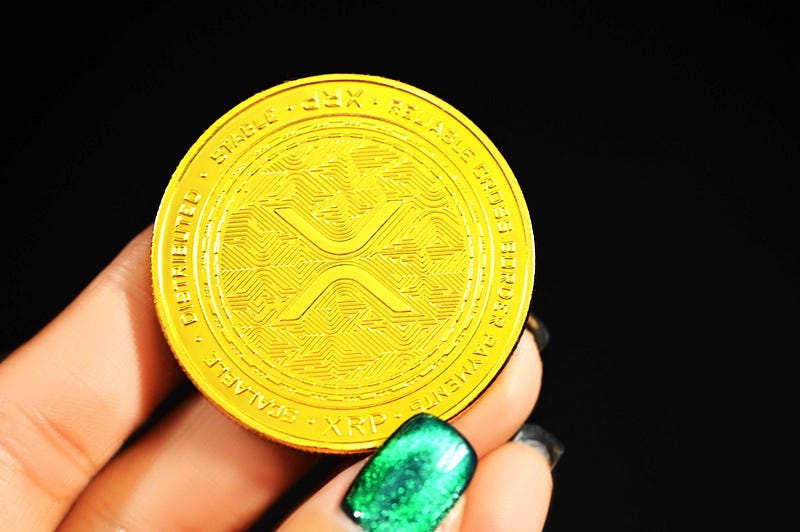
Photo by Kanchanara on Unsplash


US dollar settlement

A distinguishing feature of this initiative is that profit and loss settlements will be conducted in US dollars. To ensure a seamless experience, BIT Exchange has partnered with OrBit Markets to maintain robust order book liquidity. This expansion of offerings complements the exchange’s existing suite, which already includes stalwarts like Bitcoin (BTC), Ether (ETH), Cardano (ADA), Toncoin (TON), and Milady (LADYS).


Facilitating hedging

For the uninitiated, options are derivative contracts that empower the holder with the right to buy or sell the underlying asset at a predetermined price before a specified date. Call options grant the holder the buying privilege, while put options provide the selling prerogative. Typically deployed for hedging purposes, options play a pivotal role in mitigating bullish or bearish risks, and they can also act as a supplementary revenue source when traders “write” options alongside their spot market holdings.

Justin Buitendam, BIT Exchange’s Global Head of Institutional Sales, remarked on the milestone, stating: “We’re excited to be among the early platforms offering XRP options trading to institutional and retail traders, providing both long and short options trading opportunities.”


XRP boost

As of now, XRP boasts a market capitalization of $26.5 billion, positioning it as the world’s fifth-largest cryptocurrency. Notably, XRP, akin to several other alternative cryptocurrencies, exhibits greater volatility compared to the more established Bitcoin and Ether.

The native token of the Ripple global payments network has experienced a market resurgence in recent weeks, following a positive outcome to a lawsuit taken by the Securities and Exchange Commission (SEC) against Ripple Labs in the United States. In the wake of that decision, many cryptocurrency exchanges that had delisted the token immediately reinstated it. BIT Exchange’s strategic move to introduce XRP options aligns with those recent legal developments.

Ripple, as the issuer of the XRP token, garnered a partial victory in its ongoing legal battle against the SEC. The court ruled that XRP is not classified as a security when traded on centralized exchanges. However, a different classification may apply when XRP is directly sold to institutions.

The matter is far from settled, however. More recently, the SEC has sought permission to challenge the court’s verdict, underscoring the dynamic and evolving landscape of cryptocurrency regulations.

BIT Exchange was spun out of Singapore-based crypto financial services platform, Matrixport. Both have been co-founded by Jihan Wu, better known for having founded leading Chinese crypto mining outfit Bitmain.

More to Read
View All
Web3 & Enterprise·

Oct 06, 2023

CoinDCX Expands Okto Wallet’s Global Reach with Transak Integration

CoinDCX Expands Okto Wallet’s Global Reach with Transak IntegrationIndian cryptocurrency exchange CoinDCX has moved to broaden the accessibility of its self-custody wallet, Okto. The exchange recently announced the addition of Transak, a major on-ramp platform that enables a fiat-to-crypto payment gateway integration, to enhance the wallet’s global capabilities.Photo by Kanchanara on UnsplashBuilding on OktoThat’s according to a report published by Cointelegraph on Thursday. Okto was introduced by CoinDCX in August 2022, and the firm swiftly moved to expand its services. The integration with Transak represents a pivotal step in this direction.This strategic integration immediately expands the reach of the Okto wallet from supporting 60 countries to an impressive 155 jurisdictions. Neeraj Khandelwal, Co-Founder of both CoinDCX and Okto, emphasized the significance of this move, stating that it allows users in numerous countries to engage with cryptocurrencies directly through Okto.While Transak supports approximately 160 tokens, Okto goes above and beyond by allowing users to store more than 1,000 tokens across multiple blockchain networks, including Polygon, Fantom, Avalanche, and others. According to an Okto spokesperson, the wallet can accommodate up to 3,000 tokens, providing ample flexibility for cryptocurrency enthusiasts.Seamless fiat-to-crypto conversionKhandelwal also spoke to the value add that a more seamless asset conversion process will bring. He stated:“The integration of Transak now allows users to seamlessly convert fiat to crypto right within the app. Prior to this integration, users had to transfer funds from another decentralized wallet, such as MetaMask.”Transak’s integration brings a key feature to Okto — the ability for users to purchase cryptocurrencies like Bitcoin (BTC) directly within the wallet. Notably, this functionality accepts a wide range of fiat currencies, including the US dollar, euro, Hong Kong dollar, and others. Prior to the Transak integration, users were required to transfer digital assets from external wallets like MetaMask. With this development, Okto streamlines the process, enabling users to seamlessly convert fiat into crypto within the app itself.Months-long integration processIt’s worth noting that although the announcement of Transak’s support on Okto was made on Thursday, the integration process began several months earlier. As early as August, some Indian users reported encountering Transak while Okto was in the testing phase. The integration process itself commenced in April, with the official roll-out to all customers occurring in mid-September.Transak, a global Web3 payment and onboarding infrastructure provider, plays a crucial role in bridging the gap between traditional finance and the digital asset ecosystem. It is a well-established on-ramp solution in the cryptocurrency industry, with platforms like MetaMask, Coinbase, and PancakeSwap among its clientele.In recent days, Okto has also announced a partnership with ReHold, a multi-chain protocol which has been developed to enable users to maximize their crypto earnings. In the coming weeks, Okto and ReHold will work towards integrating Okto’s wallet with ReHold.The Okto-Transak integration is in line with Transak’s mission to facilitate crypto adoption by providing easy access to digital assets. Earlier this week, Transak also announced its integration with The Open Network’s (TON) wallet, known as Tonkeeper. This collaboration opens up Toncoin (TON) purchases directly with fiat currencies to users in more than 150 countries, marking a significant milestone in expanding the TON ecosystem.

news
Policy & Regulation·

Nov 04, 2025

Hong Kong SFC opens door to global order book integration for digital assets

At Hong Kong FinTech Week 2025, Securities and Futures Commission (SFC) Chief Executive Julia Leung outlined plans to link Hong Kong’s crypto market with global liquidity. She announced that licensed virtual asset trading platforms (VATPs) will be allowed to share a global order book with their overseas counterparts. According to a statement published on the SFC’s website, this step will enable local investors to access international markets more efficiently, improving price discovery and competitiveness. Leung added that more initiatives are on the way to connect local brokers directly to global liquidity networks. This latest connectivity push comes as Hong Kong considers new guardrails for crypto holding companies such as digital asset treasuries (DATs), which hold cryptocurrencies as strategic assets.Photo by Manson Yim on UnsplashSFC points to regulatory gaps for digital asset treasuriesThe state-owned newspaper Wen Wei Po reported that Securities and Futures Commission (SFC) Chairman Kelvin Wong noted the current lack of regulations governing listed companies operating as DATs and the limited understanding of such entities. Chairman Wong added that firms seeking to list in Hong Kong as DATs would need to persuade both the SFC and the Hong Kong Stock Exchange (HKEX) of their suitability. For companies already listed, he urged investors to remain alert to the potential risks involved. This regulatory concern over crypto investing companies emerges as Hong Kong simultaneously presses ahead with its ambition to become a leading hub for digital finance. City advances on e-HKD and tokenizationIn line with that ambition, the Hong Kong Monetary Authority (HKMA) unveiled its e-HKD Pilot Programme Phase 2 Report in an Oct. 28 press release. The report outlines the potential benefits of its central bank digital currency (CBDC), the e-HKD, and tokenized deposits, noting that public feedback on both concepts has been broadly positive. The program's second phase involved 11 pilot projects led by various consortiums. These projects explored retail use cases, emphasizing the e-HKD’s commercial viability and scalability. Key focus areas included the settlement of tokenized assets, programmability, and offline payments. Participants in the program included Aptos Labs, the Boston Consulting Group (BCG), Hang Seng Bank, Standard Chartered, and BlackRock. Based on the report's findings, the HKMA stated it would initially prioritize the e-HKD’s application in wholesale or large-value payments, leveraging its credit risk–free nature as a central bank liability. Concurrently, the authority plans to continue studying potential retail and corporate applications, aiming to lay the groundwork for broader implementation by the first half of 2026. Survey shows strong investor appetiteAmong the program’s participants, Aptos Labs, Boston Consulting Group (BCG), and Hang Seng Bank reported accelerating interest in tokenized funds. A survey they conducted found that 61% of retail investors in Hong Kong and mainland China planned to double their exposure. Held between May and June 2025 among more than 500 retail fund investors, the survey tracked sentiment and appetite for tokenized products. Mainland participants showed particularly strong demand for cross-border access. The findings also detailed differing motivations among Hong Kong investors. Active traders expect to lift tokenized fund allocations from 10% to 26%, attracted by round-the-clock trading and greater flexibility. Wealth transfer planners indicated an expected expansion from 5% to 16%, highlighting programmable fund structures for tailored trusts and transparent oversight. Long-term investors aim to raise exposure from 8% to 25%, citing instant liquidity and the ability to use tokenized assets as loan collateral. Mainland investors projected their allocations would climb from 11% to 24%, reportedly viewing tokenized funds as a practical route around capital restrictions. The survey noted that programmable features could support dynamic allocation across Hong Kong products, the onshore use of profits, and smoother cross-border transfers. BCG commented that the survey outcomes align with Hong Kong's measured advance in crypto oversight, pointing to the city’s stablecoin regime that came into force in August. The Hong Kong Monetary Authority (HKMA) has signaled, however, that licensing under that regime will not begin until early next year. The ongoing development of the e-HKD and the prospective regulation of digital-asset treasuries point to Hong Kong’s broader strategy of integrating digital finance into its mainstream economy. Together, these initiatives underscore a cautious yet steady effort to position the city as a global center for digital finance. 

news
Policy & Regulation·

Aug 27, 2025

Japan’s finance minister acknowledges crypto investment merits

Katsunobu Katō, a Liberal Democratic Party politician and Japan's Minister of Finance under Prime Minister Shigeru Ishiba's government since October 2024, has said that cryptocurrency assets can play a role in a diversified investment portfolio. Katō made the remarks while speaking at an event that was held in Tokyo related to the subject of crypto assets on Aug. 25, according to Bloomberg. Katō stated:''Crypto assets run the risk of high volatility, but if an appropriate investment environment is created, they can become targets for diversified investment.''Photo by JJ Ying on UnsplashGrowing crypto user baseKatō acknowledged that there is a growing user base in Japan related to digital assets. With that, he intends to work towards the provision of a healthy trading environment in Japan for stakeholders within the digital assets sector. The finance minister added that he has been trying to balance regulation with a need to leave the digital assets sector with sufficient freedom so as to enable the development of innovation. Crypto tax reformIt emerged over the weekend that the Japanese financial regulator, the Financial Services Agency (FSA), intends to include tax reform measures in respect of the crypto sector in 2026 tax revision proposals that it will bring to the Japanese government. It’s expected that the proposals, scheduled for submission by the end of this month, will call for a separate taxation category for digital assets and the implementation of a flat 20% tax rate. Under Japan’s existing tax regimen, crypto trading gains must be reported under the categorization of “miscellaneous income,” with those gains subject to tax rates of up to 55%. The move would bring taxation on crypto trading gains in line with the tax treatment that’s currently in place for equity trading gains. Equities have been given their own category and are taxed at a flat rate of 20%. Reclassifying cryptocurrenciesAdditionally, the FSA plans to propose legislation next year that would result in the reclassification of cryptocurrencies, removing them from their current treatment as a means of payment under the Payment Services Act. The regulator wants crypto to come under the Financial Instruments and Exchange Act, reclassifying it as a financial product. Katō has outlined his party’s commitment to the consideration of reviewing crypto asset taxation. That item was incorporated into his government’s tax reform plan for 2025, while the Japanese cabinet approved a proposal to amend the Payment Services Act back in March. As part of plans to have digital assets categorized as financial products, the FSA is also understood to be interested in broadening the scope of insider trading restrictions. Kato’s remarks are being interpreted as positive for the crypto sector. According to International Monetary Fund (IMF) data, Japan is the world’s fifth-largest economy, with a gross domestic product (GDP) exceeding $4.1 trillion.Source: World Economic Outlook (April 2025)In further positive news for the sector in Japan, it was reported on Aug. 18 that the FSA is likely to approve the issuance of JPYC, a Japanese yen-backed stablecoin, over the course of the coming months.

news
Loading