Top

Bitstamp Raises Funds to Enable Asian Market Expansion

Web3 & Enterprise·August 09, 2023, 3:38 AM

Bitstamp, one of the world’s oldest cryptocurrency exchanges, is embarking on an ambitious endeavor to expand its services within the Asian market through a fresh funding round.

Bloomberg reported on Monday that the firm’s CEO Jean-Baptiste Graftieaux, stated that “our current and exclusive priority is to raise money through strategic investors to accelerate Bitstamp’s growth by providing new products and services to retail and institutional crypto customers.”

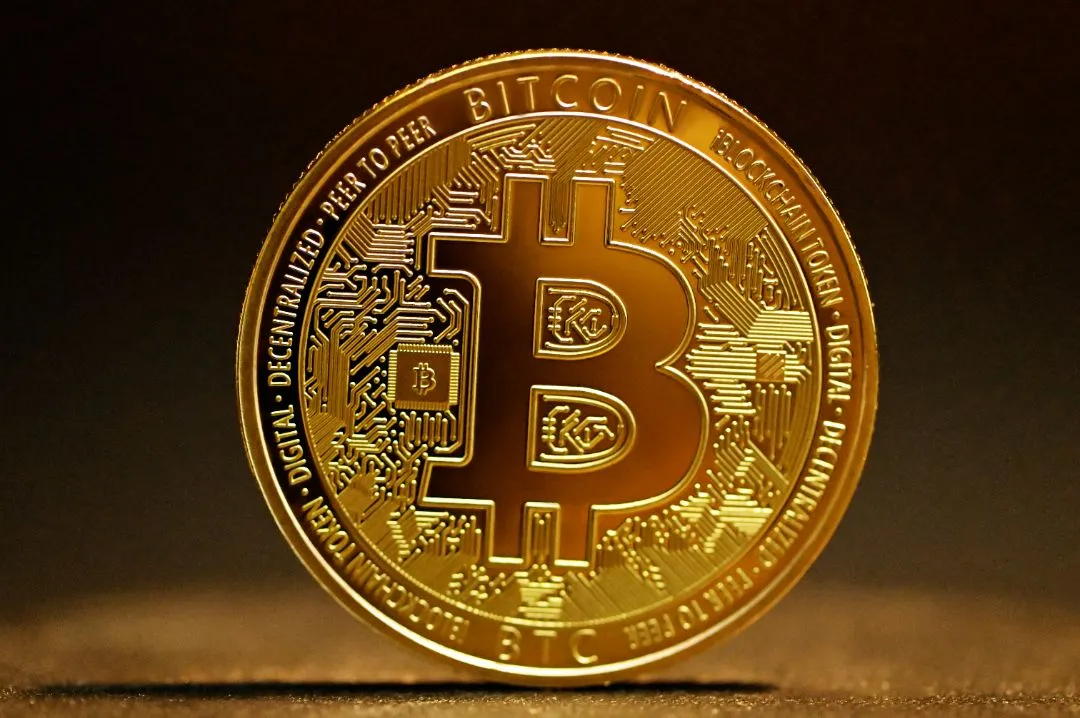
Photo by Markus Winkler on Unsplash


Derivatives trading and Asian expansion

In accomplishing the funding round, the company is being guided by Mike Novogratz of Galaxy Digital Holdings. Bitstamp initiated its fundraising efforts in late June. The objective behind these efforts is to secure the capital required for launching derivatives trading in Europe by 2024 and to extend the platform’s reach across various markets in Asia. Moreover, Bitstamp has its sights set on fortifying its presence in the United Kingdom, seeking to establish a more robust footing there.

Bitstamp’s current endeavors to amplify its operational scale are aligned with the company’s broader ambitions announced in 2018. This was the year when the firm was acquired by NXMH, a South Korean-backed entity.


Not for sale

Back then, Nejc Kodrič, one of Bitstamp’s co-founders, asserted that the intention was not to sell the company or actively seek investment. Nevertheless, the acquisition was realized, and Kodrič opted to cash out a majority of his Bitstamp stock while retaining a 10% stake and continuing as the CEO.

Graftieaux was emphatic in clarifying Bitstamp’s intentions, stating that the company is not actively seeking to be acquired or to sell itself. This news arrives just a few months after Ripple acquired a minority stake in Bitstamp during the first quarter of 2023. Galaxy Digital played an instrumental role as an adviser throughout that transaction, which was publicly disclosed in late May.

Coinciding with this news, Bitstamp has unveiled some trading restrictions for its US user base. Effective from August 29, the exchange will temporarily halt trading for tokens such as Axie Infinity (AXS), Chiliz (CHZ), Decentraland (MANA), Polygon (MATIC), NEAR Protocol (NEAR), The Sandbox (SAND), and Solana (SOL).

This pause in trading activities has been attributed to “recent market developments,” with assurances that the ability to hold and withdraw these tokens will remain unaffected. All of the projects behind the tokens that Bitstamp is planning to halt the trading of have been named by the US Securities and Exchange Commission (SEC) as unregistered securities in its lawsuit against Coinbase.


Slovenian roots

Having originated in Slovenia in 2011, Bitstamp gradually evolved into a prominent force in the cryptocurrency trading landscape. Once an alternative to the then-dominant Bitcoin exchange, Mt. Gox, Bitstamp’s reach and influence have grown substantially. It currently stands as one of the world’s largest crypto exchanges, boasting a trading volume of approximately $127 million over a recent 24-hour period, according to data published by crypto data aggregator CoinGecko.

The developments at Bitstamp demonstrate that the firm continues to refine its global strategy, extending its services and product offerings to various markets globally.

More to Read
View All
Web3 & Enterprise·

Apr 15, 2025

Avalon integrated with Bybit to offer Bitcoin yield

Dubai-headquartered global crypto exchange Bybit has integrated the Avalon Finance protocol within its platform to offer users greater opportunities to earn yield on Bitcoin. Avalon Finance is a decentralized lending protocol that offers a range of financial services on the Merlin Chain, a Bitcoin layer-2 network. It facilitates users to borrow stablecoins using their Bitcoin as collateral, while also providing opportunities to earn yield by contributing to digital asset liquidity pools.Photo by Kanchanara on UnsplashCeFi to DeFi bridgeAvalon Labs, the driving force behind the Avalon Finance protocol, took to X on April 14 to outline that the protocol had gone live on Bybit. It stated:”By integrating with Bybit Earn, Avalon unlocks new yield opportunities for Bitcoin holders by arbitraging our fixed-rate institutional borrowing layer — delivering predictable, enhanced returns through a seamless CeFi-to-DeFi bridge.” Avalon claims to offer a mechanism which brings Bitcoin into DeFi. It accepts FBTC, an omnichain digital asset with $1.25 billion in total value locked (TVL), pegged 1:1 with Bitcoin, as collateral, while lending it out at fixed interest rates. USDT stablecoin borrowed on the strength of that Bitcoin can then be deployed by platform users to execute high-yielding DeFi strategies via the Ethena Labs synthetic dollar protocol, implicating the use of Ethena USD (USDe) and Ethena Staked USD (sUSDE). In this way, the Avalon Finance protocol is providing a conduit between centralized finance and decentralized finance. Avalon Labs claims that the offering turns Bitcoin into a productive asset. It stated: “Returns are stable, secure, and passed back to Bybit Earn users—making Bitcoin a productive asset while maintaining simplicity and risk control.” More exchange collaborations plannedIt’s understood that Avalon plans to collaborate similarly with other crypto exchanges in the future. Towards the end of 2024, the firm raised $10 million in Series A funding, with the funding round having been led by Framework Ventures, with participation from UXTO Management, Presto Labs and Kenetic Capital. At the time, Avalon Labs asserted that the funding would be used to expand its Bitcoin-centric ecosystem.  BTC-backed public debt fundTaking to X in February, the project outlined that after years of research, it was working towards the launch of a Bitcoin-backed public debt fund that would fall within the parameters of the U.S. Securities and Exchange Commission’s (SEC) regulatory framework. The firm stated:”By exploring regulated investment structures, we aim to bridge the gap between traditional finance and crypto, opening new opportunities for Bitcoin-backed financial products.” Regulation A is an exemption offered by the SEC enabling a company to sell securities to the investing public without full registration. Should it eventually take this path forward, the project would pioneer this approach to launching a public debt fund as little progress has been made by others in taking such a Bitcoin-related product forward to date. Towards the end of last month, Avalon Labs announced that it has added support for BlackRock’s “BUIDL” fund, a tokenized fund created by the world’s largest asset manager, which invests in short-term U.S. Treasury bills.

news
Web3 & Enterprise·

May 08, 2023

Japan’s Hokkoku Bank to Launch Local Digital Currency in Summer

Japan’s Hokkoku Bank to Launch Local Digital Currency in SummerEarlier this month, Hokkoku Bank, a Kanazawa-based bank in Japan, announced its collaboration with Suzu City, local community-based credit union Kono Shinkin Bank, and blockchain service provider Digital Platformer to launch a local digital currency in Suzu, Ishikawa Prefecture this summer, according to CNET Japan.Promoting cashless transactionsThe digital payment system aims to promote cashless transactions in the local area and digitize Suzu’s customer rewards program, enhancing capital flow and productivity. The local digital currency service for citizens, Suzu Tochituka, and the retail customer rewards program, Suzu Tochipo, are set to launch in the summer of 2023.By winter 2023, Hokkoku Bank plans to issue the stablecoin Suzu Tochika for use within Suzu. Retail stores will be charged a 0.5% fee for transactions made with Suzu Tochika.Photo by Ivan Samkov on PexelsFrom city to prefectureFollowing its services in Suzu, Hokkoku Bank intends to form an alliance with towns in Ishikawa and leverage blockchain interoperability to introduce Ishikawa Tochika, a digital currency for use across the entire prefecture. This project’s goal is to establish a payment system that encompasses all financial institutions. In Suzu and Okunoto, both Kono Shinkin Bank and Hokkoku Bank will cooperate to distribute and promote the payment system.Other regionsTowns and local financial institutions in other regions are also committed to collaborating on local digital currency promotion to enhance residents’ convenience, streamline administrative work, and boost productivity. To ensure security, Digital Platformer’s new blockchain-powered payment system Shiki will record and manage transaction data, offering high traceability and protection against forgery and counterfeit.

news
Web3 & Enterprise·

Nov 21, 2025

Grab joins hands with StraitsX to enable stablecoin retail payments across Asia

Grab, the Nasdaq-listed Southeast Asian superapp, has signed a strategic memorandum of understanding (MOU) with StraitsX, a Singapore-based stablecoin payment infrastructure provider, to develop Web3 wallets and a payment network powered by stablecoins. A Nov. 18 press release said Web3 wallets will be added to the Grab app, allowing merchants in Asia to accept stablecoin payments from local and overseas customers.Photo by Grab on UnsplashXSGD and XUSDUnder the partnership, Grab users may be able to hold and use stablecoins like XSGD and XUSD, which are pegged to the Singapore dollar and U.S. dollar respectively, and convert between fiat and other stablecoins in-app, provided they meet regulatory compliance requirements. Grab expects the integration to facilitate real-time cross-border settlement with transparent foreign-exchange rates, improving efficiency through faster, cheaper, and compliant transactions. The superapp operator seeks to create a single, interoperable Web3 payment framework that eliminates the need to switch between country- or method-specific systems. Merchants are expected to benefit from enhanced liquidity and capital management via programmable settlement features enabled by smart contracts and on-chain treasury tools. ASEAN’s regulatory gapsThis industry development comes amid growing interest in digital finance among intergovernmental organizations. In a blog post, Yasuto Watanabe, Director of the ASEAN+3 Macroeconomic Research Office (AMRO), noted the private sector’s growing involvement in stablecoins, outlining their advantages and risks. He said stablecoins offer greater accessibility and enable faster, cheaper transactions compared with traditional banking.  Stablecoins are widely used for remittances in Southeast Asia, particularly in the Philippines and Vietnam, and are also a common tool for small businesses engaged in cross-border trade. Watanabe also warned of risks such as anonymity-driven money laundering and capital control evasion. He also pointed to concerns that the rise of U.S. dollar–denominated stablecoins could undermine monetary sovereignty. In this context, the AMRO Director underscored the importance of the ASEAN+3 region addressing existing gaps through concerted action. 12M USDT seized in Thailand crackdownGovernment concerns are reflected in recent crypto-related crimes making headlines. In a recent case, Thai authorities, in coordination with the U.S. Secret Service, detained 73 individuals and confiscated assets valued at more than 522 million baht. About 400 million baht of that total was in USDT (12 million USDT). Tether said in an announcement that it supported law enforcement in the operation. The emergence of stablecoins is clearly transforming the traditional financial landscape. Companies are racing to harness new technologies, while regulators focus on combating illicit activity and strengthening consumer protections. As the sector evolves, new opportunities and risks will surface, and the balance between innovation and safety will be a key question moving forward. 

news
Loading