Top

Japan’s Hokkoku Bank to Launch Local Digital Currency in Summer

Web3 & Enterprise·May 08, 2023, 7:22 AM

Earlier this month, Hokkoku Bank, a Kanazawa-based bank in Japan, announced its collaboration with Suzu City, local community-based credit union Kono Shinkin Bank, and blockchain service provider Digital Platformer to launch a local digital currency in Suzu, Ishikawa Prefecture this summer, according to CNET Japan.


Promoting cashless transactions

The digital payment system aims to promote cashless transactions in the local area and digitize Suzu’s customer rewards program, enhancing capital flow and productivity. The local digital currency service for citizens, Suzu Tochituka, and the retail customer rewards program, Suzu Tochipo, are set to launch in the summer of 2023.

By winter 2023, Hokkoku Bank plans to issue the stablecoin Suzu Tochika for use within Suzu. Retail stores will be charged a 0.5% fee for transactions made with Suzu Tochika.

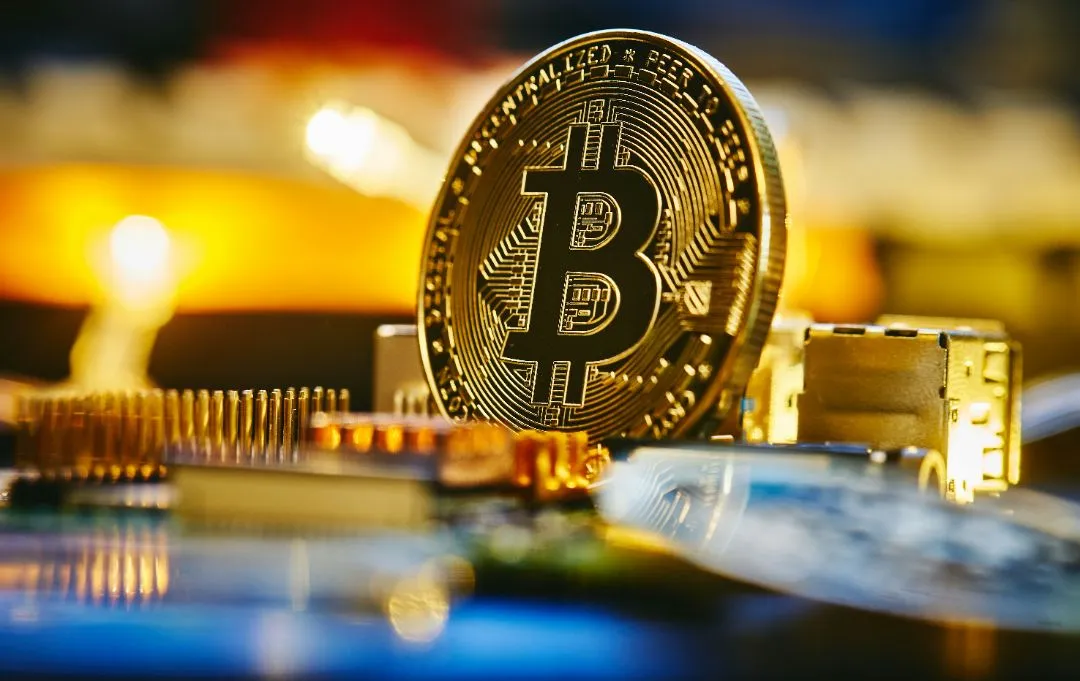
Photo by Ivan Samkov on Pexels


From city to prefecture

Following its services in Suzu, Hokkoku Bank intends to form an alliance with towns in Ishikawa and leverage blockchain interoperability to introduce Ishikawa Tochika, a digital currency for use across the entire prefecture. This project’s goal is to establish a payment system that encompasses all financial institutions. In Suzu and Okunoto, both Kono Shinkin Bank and Hokkoku Bank will cooperate to distribute and promote the payment system.


Other regions

Towns and local financial institutions in other regions are also committed to collaborating on local digital currency promotion to enhance residents’ convenience, streamline administrative work, and boost productivity. To ensure security, Digital Platformer’s new blockchain-powered payment system Shiki will record and manage transaction data, offering high traceability and protection against forgery and counterfeit.

More to Read
View All
Policy & Regulation·

Jun 09, 2025

Pakistan’s crypto minister pursues talks & partnerships in the U.S.

Pakistan’s newly appointed Minister of State for Crypto and Blockchain, Bilal bin Saqib, has been spending time in the United States recently with a view towards collaborating with the Trump administration and Wall Street on matters related to digital assets and digital asset regulation. Pakistani TV channel 24 News HD reported on June 4 that bin Saqib met with Bo Hines during a visit to the White House in Washington, D.C. Hines was appointed by U.S. President Donald Trump earlier this year as the executive director of the President’s Council of Advisors on Digital Assets. Ways to broaden cooperation between Pakistan and the U.S. with regard to the digital assets sector were a primary topic covered during their meeting. Consideration was given to the potential for future partnerships between the two nations, with a particular emphasis on strategic alignment on digital asset policy.Photo by Kanchanara on UnsplashStrategic Bitcoin ReserveBitcoin was also a topic of conversation during the meeting. Last week, bin Saqib, who also heads up the South Asian nation’s newly formed Pakistan Crypto Council (PCC), appeared at the Bitcoin 2025 conference in Las Vegas to announce that “the Pakistani government is setting up their own government-led Bitcoin Strategic Reserve.” In his keynote address, he stated that Pakistan would hold Bitcoin in a national wallet and would “never ever sell them.” Following his meeting with Hines, bin Saqib took to X, stating:”We’re building strong bridges with the U.S. on Bitcoin reserves, stablecoins, and digital asset frameworks.” Responding to bin Saqib’s X post, Faizan Siddiqi, a Pakistani expat and COO of Canadian advertising services firm, MonetizeMore, underscored the importance of the meeting for an emerging generation in Pakistan inspired “to believe in a brighter, decentralized future.” In addition to meeting with Hines, bin Saqib also met with officials from the White House Counsel’s office, engaging with them on blockchain governance and legal framework matters. New York meetingsFollowing his meeting in Washington, D.C., bin Saqib moved on to New York. A video clip posted by the PCC to the X social media platform on June 6 showed bin Saqib meeting with New York City Mayor Eric Adams. The Pakistani minister thanked Adams for all he is doing for the crypto ecosystem, while inviting him to visit Pakistan and to consider a partnership between New York and the PCC. While in New York, bin Saqib also met with Brandon Lutnick, chairman of global financial services firm Cantor Fitzgerald and son of former Cantor Fitzgerald Chairman Howard Lutnick, who was appointed by U.S. President Donald Trump to the position of secretary of commerce back in February.  While Cantor Fitzgerald is a well-established traditional finance (TradFi) firm founded in 1945, the company has embraced digital assets more recently. Cantor has taken on leading stablecoin issuer Tether as a client, having also invested in the company. Last month, the firm launched its first Bitcoin fund. It’s understood that bin Saqib discussed tokenization, Bitcoin mining, the future of Web3 in Pakistan and potential for collaboration with Lutnick. Last month, Pakistan allocated 2,000 MW of surplus electricity to Bitcoin mining and AI data centers.

news
Policy & Regulation·

Aug 17, 2023

Korea and Japan Collaborate to Develop Accounting Standards for Virtual Assets

Korea and Japan Collaborate to Develop Accounting Standards for Virtual AssetsThe Korea Accounting Institute (KAI) announced today that it held a bilateral meeting yesterday with the Japanese Financial Accounting Standards Foundation (FASF) to discuss devising accounting standards for virtual assets. Among the attendees were high-level officials of the FASF, including Yasunobu Kawanishi, Chair of the Accounting Standards Board of Japan.Photo by Shubham’s Web3 on UnsplashConsensus on establishing standardsBoth parties agreed on the importance of establishing accounting standards for virtual assets. These standards should be practical and easy to follow, ensuring that they offer sufficient information to readers of financial statements.Reciprocal sharing of progressKAI is in the process of revising the Korean version of the International Financial Reporting Standards (K-IFRS) to require companies to disclose information related to virtual assets within the annotations of their financial statements. This mandatory disclosure of virtual asset-related details was announced by the Korean Financial Services Commission last month, with implementation scheduled for January of next year. This significant update was a topic of discussion in the meeting. Similarly, the FASF reciprocated by sharing its own progress and advancements.This meeting was arranged in light of the deepening relations between the two nations. The close collaboration between the two groups is poised to give Korea momentum to broaden its global presence. Moving forward, the accounting bodies of both countries are committed to continuing their cooperative efforts.

news
Web3 & Enterprise·

Oct 12, 2023

Blockchain Meat Marketplace MOOxMOO Achieves $30m in Distribution Volume

Blockchain Meat Marketplace MOOxMOO Achieves $30m in Distribution VolumeMOOxMOO, the blockchain-based meat marketplace platform operated by South Korea’s Life In Commerce, has surpassed a cumulative distribution volume of KRW 40 billion (approximately $30 million) since its launch in February of last year.Photo by Kyle Mackie on UnsplashRevolutionizing the meat industryLife In Commerce attributed this significant achievement to the use of blockchain technology on the platform. By leveraging smart contract and soulbound token (SBT) technology, MOOxMOO provides a supply and transactional platform that streamlines business-to-business (B2B) and business-to-consumer (B2C) transactions among participants of local meat supply chains, volume retailers, and retail customers.The platform essentially embeds wholesale and retail transaction information into smart contracts, which are impossible to tamper with once minted into immutable and non-transferrable SBTs.This makes MOOxMOO a transparent and decentralized distribution platform that offers various benefits like increased liquidity, faster transaction settlement times, and boosted security. It also addresses the issue of price deviations caused by market practices.In addition, MOOxMOO has its own utility token, MOOX, that can be used for deposits and transactions.The platform’s application of blockchain technology has revolutionized the meat distribution industry by breaking away from common problems such as unfair pricing. As a result, it has not only enhanced price competitiveness but also built a reputation for trustworthiness among consumers.Future plansLife In Commerce has ambitious plans to enhance the platform further. They are currently developing a new B2B platform that will utilize the weight of transaction credits using SBT in the trade of raw materials required for meat processing and distribution. This will offer additional benefits to suppliers and buyers.

news
Loading