Top

Crypto Trading Surges in South Korea While Global Trends Decline

Markets·August 04, 2023, 7:25 AM

Despite a global decrease in cryptocurrency trading on centralized exchanges, South Korea has witnessed a significant increase in trading activities. Upbit, the nation’s largest crypto exchange, climbed to the second spot in global spot trading volume for July.
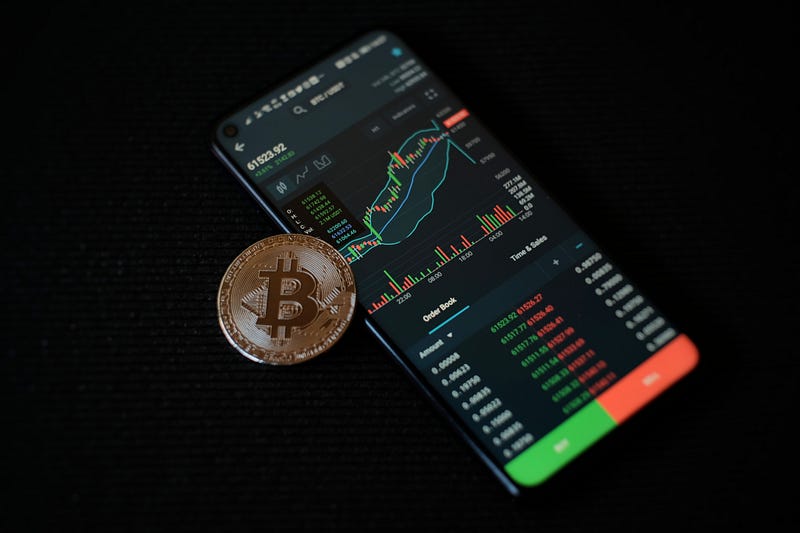
Photo by Viktor Forgacs on Unsplash


Plunges in global trading volumes

According to an Exchange Review for July 2023 by CCData, a virtual asset data provider, the total global spot trading volumes on centralized exchanges dropped to $515 billion in July, a 10.5% decrease compared to the previous month, marking the second lowest level since 2019. Additionally, derivative trading volumes fell by 12.7% to $1.85 trillion, the second-lowest since December 2020.

Experts attribute these declines to increased regulations on cryptocurrencies worldwide, such as legal crackdowns on exchanges like Binance and Coinbase by the US Securities and Exchange Commission.

Binance, the world’s largest cryptocurrency exchange, recorded a trading volume of $208 billion with a market share of 40.4% in July, marking a five-month consecutive decline, although it still maintained its title as the largest platform worldwide for crypto spot trading.

Coinbase — the largest cryptocurrency exchange in the US — and global exchange OKX also saw a decline in trading volume of 11.6% and 5.75% to $28.6 billion and $29 billion, respectively.


Crypto exchanges flourish in Korea

Contrarily, the majority of major crypto exchanges in Korea experienced significant growth in trading volume. Upbit’s trading volume skyrocketed by 42.3% to $29.8 billion in July, surpassing Coinbase and OKX for the first time to claim the second spot in global cryptocurrency exchanges behind Binance.

Other Korean exchanges also saw remarkable increases in trading volume. Bithumb recorded $6.09 billion, a surge of 27.9%, while Coinone’s volume rose by 4.72% to $1.39 billion.

These spikes in trading volume can be accredited to an increased interest in cryptocurrencies and blockchain technology among citizens throughout the country, despite global regulatory challenges impacting the market. As the cryptocurrency industry continues to evolve, Korean exchanges are showing resilience and maintaining their competitive positions on the global stage.

More to Read
View All
Markets·

Aug 16, 2023

QCP Capital: Bitcoin Has $34K Price Potential

QCP Capital: Bitcoin Has $34K Price PotentialBitcoin’s potential for a significant price rally toward $34,000 has been discussed recently by analysts at QCP Capital, the Singapore-headquartered crypto asset trading firm. Despite Bitcoin’s recent lack of major volatility catalysts, QCP’s analysis suggests that a classic support rebound might trigger the return of the highest Bitcoin prices in over a year.Photo by Kanchanara on UnsplashCrucial price action time-frameAccording to QCP Capital’s latest market update on Tuesday, the upcoming weeks are poised to be crucial for Bitcoin’s price action. The cryptocurrency has been range-bound for months, leaving market observers speculating about the emergence of a new market trend.QCP Capital highlights September as a pivotal month due to the completion of a rising wedge pattern that started during the end of the 2022 bear market. This pattern has guided Bitcoin’s price movement, with the wedge reaching its first termination point at the beginning of September. The specific level of interest is $29,300, which aligns with the current focal point of the Bitcoin spot price.Rally potentialThe analysis ponders whether there will be a sharp rally that pushes the price to the $34,000 resistance level. This scenario has occurred three times this year, as the price kissed the support trendline. The report acknowledges that it might take a few more quiet weeks before the outcome becomes clear. The analysts expressed their intention to buy back their end of September short calls and anticipate going long on end of December volatility in due course.QCP Capital’s perspective aligns with other optimistic views on Bitcoin’s short-term price strength. Some projections even suggest that the 2023 Bitcoin bull market might return by October, although the market sentiment is varied, with some cautioning about the possibility of new lows before a broader recovery.Macroeconomic trendsTurning to macroeconomic trends, QCP Capital indicates that significant change is not on the immediate horizon, echoing the status quo in the crypto space. Comparing the current situation to the compressed trading environment of the crypto winter in 2018 and 2019, the analysis suggests that a macroeconomic shift would be required to reinvigorate the market, similar to what has happened in the past.Bitcoin’s volatility has reached historic lows, as illustrated by data just published by on-chain market intelligence firm, Glassnode. While a game-changing macro environment shift isn’t imminent, there are short-term catalysts on the crypto calendar for the upcoming months.These include events like Mt. Gox creditor payouts, the GBTC vs. Securities and Exchange Commission (SEC) lawsuit, potential SEC decisions on Blackrock/Fidelity’s Bitcoin spot ETF applications, and potential news related to centralized crypto exchanges and stablecoins.The September deadline for comments on the initial Bitcoin spot price exchange-traded fund (ETF) applications is particularly noteworthy, as it’s widely seen as a turning point for the industry. Europe’s first Bitcoin spot ETF, which began trading on Tuesday, is being custodied by Fidelity Investments, marking another step in the maturation of the cryptocurrency market.

news
Policy & Regulation·

Nov 01, 2023

Terraform Labs seeks summary judgment to dismiss SEC allegations

Terraform Labs seeks summary judgment to dismiss SEC allegationsLawyers representing bankrupt Singaporean crypto firm Terraform Labs and its co-founder, Do Kwon, have requested a summary judgment from a New York judge in their legal battle against the United States’ Securities and Exchange Commission (SEC).If granted, such a dismissal could potentially spare them from a full-blown trial. In their motion, the legal team argued vehemently that they are innocent of the SEC’s allegations, maintaining that the regulator has failed to provide any compelling evidence of wrongdoing.Photo by Bermix Studio on UnsplashDefining a securityThe motion, which was filed last Friday in the U.S. District Court for the Southern District of New York, asserts that the implicated cryptocurrencies of Terra Classic (LUNC), TerraClassicUSD (USTC) and Mirror Protocol (MIR), together with its Mirrored assets (mAssets), are not securities as claimed by the SEC in its complaint.The heart of the matter revolves around the SEC’s assertion that Terraform Labs offered or sold securities, a claim vehemently denied by the defendants. The SEC initially brought the case in February, referencing algorithmic stablecoin TerraUSD, which famously collapsed in May 2022.Lawyers claim case is unsubstantiatedBoth Kwon and Terraform Labs’ attorneys argued that despite over two years of investigation, more than 20 depositions, and the exchange of a staggering two million pages of documents, the SEC’s case remains unsubstantiated.The SEC’s original complaint in February accused Kwon and Terraform of raising substantial sums from investors by offering and selling an inter-connected suite of crypto asset securities, many of which were unregistered transactions. SEC Chair Gary Gensler added that Terraform and Kwon had failed to provide investors with full disclosures, notably concerning LUNA and TerraUSD.A key element of the dispute centers on the SEC’s allegation that Kwon and Terraform moved millions of dollars into Swiss bank accounts for personal gain. According to the agency’s complaint, the company and Kwon transferred 10,000 bitcoins to a financial institution based in Switzerland. The legal team representing Kwon and Terraform vehemently denies this allegation, characterizing it as baseless and unfounded.Flawed stablecoin designAlgorithmic stablecoins, such as TerraUSD, operate using market incentives via algorithms to maintain a stable price. Terra was tied to Luna, a governance token, in an attempt to stabilize prices. Unfortunately, the collapse of TerraUSD in 2022 destroyed in excess of $40 billion in value held by investors. It also had a domino effect, leading to a series of other crypto platform collapses later in 2022.Judge Jed Rakoff, presiding over the case in the Southern District of New York, had previously denied an attempt by Terraform Labs and Kwon to have the case dismissed. This new motion for summary judgment represents their latest effort to put an end to the legal proceedings.In a separate but related action, lawyers representing Terraform Labs Co-Founder Daniel Shin asserted that Shin played no role in the collapse of TerraUSD. In a Seoul district court, they emphasized that Shin had nothing to do with the collapse despite being indicted in South Korea in April on various charges, including fraud.

news
Web3 & Enterprise·

Dec 23, 2024

IOTA co-founder meets with Philippine Secretary of Trade to further adoption

Dominik Schiener, the co-founder of distributed ledger technology (DLT) project IOTA, outlined on X on Dec. 12 that he had met with Cristina Aldeguer-Roque, Secretary of Trade of the Philippines. Commenting further, Schiener wrote: “We are looking forward to expand IOTA and our trade infrastructure TWIN across South East Asia in 2025.” Photo by iSawRed on UnsplashCutting through trade barriersTWIN refers to IOTA’s Trade Worldwide Information Network, a continuation of another longstanding IOTA project, the Trade and Logistics Information Pipeline (TLIP). The objective of TWIN is to cut through trade barriers and improve connections between disparate national trading systems. In rolling out the network, IOTA has formed a consortium which includes organizations such as TradeMark Africa, the Global Alliance for Trade Facilitation and the Chartered Institute of Export & International Trade. TWIN seeks to optimize trade processes by merging physical goods with digital infrastructure, eliminating inefficiencies and boosting transparency. Schiener anticipates that once participants place data on the network, they will ultimately tokenize assets on it. In turn, this will result in utility for the IOTA token, once TWIN is released on the IOTA mainnet. The TWIN project is currently staffed by 28 people but Schiener believes that this will grow to 100 people over the course of the next two years. The project originally emerged in Germany, with the IOTA Foundation having its headquarters in Berlin. Initially, IOTA concerned itself with European blockchain initiatives in trying to find its place in the industry. Earlier this year, its Web3 identity authentication solution was chosen by the European Commission for inclusion within the European Blockchain Sandbox Initiative (EBSI). In August, the IOTA Foundation completed the final stage of the European Union’s blockchain pre-commercial procurement (PCP) program. Strategic expansionHowever, over the course of the past year, the project has expanded towards searching for product market fit within emerging markets. In November 2023, the project established the IOTA Ecosystem DLT Foundation within the Abu Dhabi Global Market (ADGM) financial center in the United Arab Emirates (UAE). This marked the first DLT foundation to have established itself within the ADGM.  $100 million in funding was provided with the objective of nurturing the IOTA ecosystem and accelerating the growth of the IOTA protocol. Since then, the TON Foundation and the Aptos Foundation have moved to register under the ADGM’s DLT Foundations framework. East Africa has been ground zero for IOTA’s attempts to enhance cross-border processes related to trade documentation, where it has been working with TradeMark Africa and local regulators. In Singapore, the IOTA Foundation has collaborated with global innovation ecosystem Tenity to establish the IOTA Accelerator, a 12-week initiative aimed at assisting early-stage startups concerned with real-world asset (RWA) tokenization within the IOTA ecosystem. Schiener’s meeting in the Philippines would suggest that the project is making greater efforts still in terms of bringing about the adoption of the technology in Southeast Asia. In his X post, Schiener wrote: “Let's connect the world with sovereign digital infrastructure.”

news
Loading