Top

Binance Expands Crypto Offering in Dubai with New License

Policy & Regulation·August 01, 2023, 1:05 AM

Dubai has welcomed one of the biggest players in the crypto sector, Binance, with the Virtual Asset Regulatory Authority (VARA) awarding the firm a new trading license.
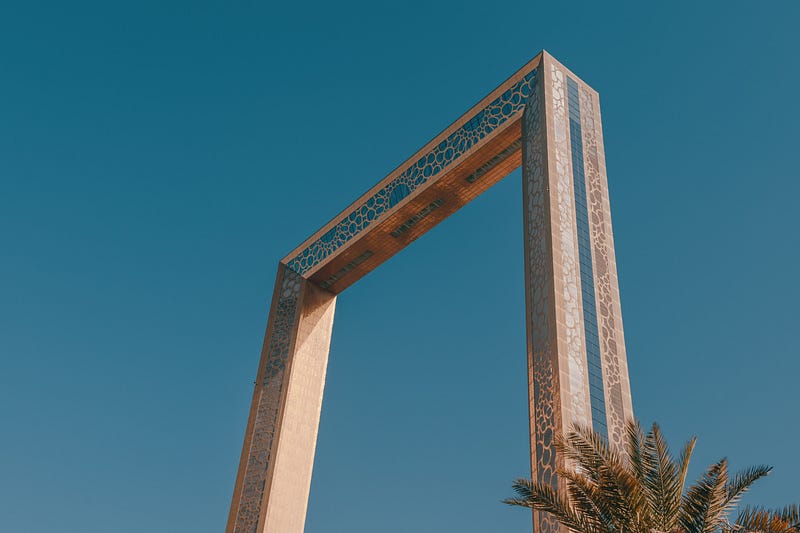
Photo by Petar Avramoski on Unsplash


Serving qualified investors

According to an announcement made by the company on Monday, Binance’s Dubai-based subsidiary, Binance FZE, has secured the operational Minimum Viable Product (MVP) license from VARA.

Eligible investors in Dubai, deemed as “qualified retail clients,” will now have access to authorized services such as compliant crypto-to-fiat exchanges, adhering to the guidelines set by the Financial Action Task Force (FATF). To qualify, investors must meet specific criteria, including being at least 21 years old and possessing a minimum of 500,000 United Arab Emirates dirhams ($136,000) in net liquid assets, supported by relevant documentary proof like bank statements and proof of funds.

Additionally, qualified investors are required to provide valid identification documents, including passports and visas, along with proof of a valid UAE address and contact details. This comprehensive verification process ensures compliance with regulatory requirements and enhances security measures for all parties involved.


Expanded service offering

The move is a significant development as it allows Binance to offer cryptocurrency exchange and virtual asset broker-dealer services to institutional and qualified retail investors in Dubai.

With the new license, Binance’s Dubai entity can now offer crypto-to-fiat exchange, conversions, transfer and custody solutions, brokerage facilities, as well as virtual asset payments and remittance services. The development builds upon Binance’s previous progress, having received the provisional MVP license in March 2022, followed by the preparatory MVP license in September 2022.


Licensing challenges

It’s worth noting that some crypto exchanges have faced challenges operating with preparatory MVP licenses due to limited capabilities, only serving a restricted set of accredited investors. Bybit CEO Ben Zhou had previously highlighted this concern. That said, Zhou still came to the conclusion recently that the regulatory approach in the UAE is superior by comparison with many other jurisdictions.

The news of Binance’s successful licensing comes shortly after VARA suspended the operational license of another crypto exchange, BitOasis, for not meeting required conditions within the set timeframes. BitOasis assured its commitment to fulfilling the remaining conditions in collaboration with VARA.

In April 2023, VARA sought additional information from Binance, aiming to tighten regulatory standards in the emirate. Binance promptly provided all requested information and looked forward to further collaboration with VARA as it prepared for the next phase of licensing.

Compliance with VARA’s framework includes adherence to compulsory rulebooks related to general operations, compliance, and market conduct requirements. The regulator has published key highlights of the regulations in 2023, underscoring its efforts to create a robust and well-regulated crypto market in Dubai.


Regulatory headwinds

Binance’s latest regulatory achievement indicates the exchange’s dedication to expanding its services and offerings in the region. It could potentially lead to something even more significant for the company in the Middle East as Binance has suggested that it would be more likely to expand in places such as Dubai, given an adverse regulatory approach elsewhere.

Over the course of the past three months, the company has been forced out of key markets such as Germany, Canada, Belgium, the Netherlands, and Cyprus, due to regulatory pushback.
More to Read
View All
Web3 & Enterprise·

Jul 12, 2023

Circle CEO Sees Role for Yuan-Backed Stablecoins in Hong Kong

Circle CEO Sees Role for Yuan-Backed Stablecoins in Hong KongJeremy Allaire, the Co-Founder and CEO of Circle, the USDC stablecoin operator, expressed his acceptance of mainland China’s ban on cryptocurrencies. However, he remains optimistic about the development of Web3 technology in Hong Kong and the city’s monetary authority’s move towards regulating stablecoins.Photo by Mitchell Luo on UnsplashYuan internationalizationAllaire believes that Hong Kong must embrace digital assets to remain relevant in the global financial market. While he acknowledges that China is unlikely to open up its markets to cryptocurrencies, he sees potential for stablecoins to contribute to Beijing’s goal of yuan internationalization.During an interview with the South China Morning Post (SCMP), Allaire highlighted that major financial markets worldwide are embracing digital assets and that the biggest financial institutions are adopting them. He mentioned that there is Chinese government support for stablecoins, but he clarified that it doesn’t imply opening up crypto trading on the mainland. Allaire emphasized that stablecoins could be a more immediate solution to the Chinese government’s aim of internationalizing the yuan compared to the central bank digital currency (CBDC) e-CNY.Allaire cited the example of a stablecoin pegged to the offshore yuan (CNH) as a potential tool to facilitate the RMB’s use in global trade and commerce. He mentioned the existence of CNH Coin, a stablecoin team that also offers HKD Coin, pegged to the Hong Kong dollar.Virtual asset hubHong Kong is positioning itself as a global virtual asset hub by focusing on the regulation of stablecoins. The Hong Kong Monetary Authority (HKMA) has committed to implementing stablecoin regulations by 2024, recognizing the potential impact of such assets on financial markets. Additionally, the Securities and Futures Commission (SFC) is working on complementary regulations for stablecoins following the recent implementation of licensing rules for sellers of other cryptocurrencies.Circle’s USDC, the second-largest US dollar-backed stablecoin by market capitalization after Tether (USDT), is considered a “stored-value instrument” in the United States. Allaire expressed Circle’s encouragement regarding the HKMA’s plans and highlighted the positive motivation to expand their business in Hong Kong.While central banks worldwide have expressed concerns about stablecoins’ impact on financial stability, the HKMA has proposed that the value of reserve assets should match the outstanding stablecoins at all times. The HKMA has also been researching the possibility of a digital Hong Kong dollar and is part of a cross-border trial for the e-CNY using a blockchain known as the mBridge.CBDCs alongside stablecoinsRegarding the future role of stablecoins in a well-regulated environment alongside CBDCs, Allaire believes that CBDCs and private coins are complementary. He sees CBDCs as an upgrade to central banks’ systems and views the private sector’s work on innovation in distributed ledger technology as distinct and valuable.Allaire noted that Circle conducts significant business activity in Asia, particularly in Hong Kong, which is its largest non-US market, employing around 125 individuals.While mainland China maintains its ban on cryptocurrencies, Allaire remains optimistic about Hong Kong’s regulatory stance on stablecoins and believes they could contribute to the internationalization of the yuan. Allaire emphasized the importance of digital assets in the global financial market and expressed Circle’s support for Hong Kong’s initiatives.

news
Web3 & Enterprise·

Dec 10, 2024

GRVT snags license to become world’s first regulated DEX

GRVT, a hybrid cryptocurrency exchange platform that bases its operations in Singapore, has secured a trading license in Bermuda which the project claims, makes it the first regulated decentralized exchange (DEX).  In a press release published on the project’s behalf by PR Newswire on Dec. 6, the project, which aspires to be “Goldman Sachs on blockchain,” announced the acquisition of a Class M Digital Asset Business License from the Bermuda Monetary Authority (BMA). Photo by GuerrillaBuzz on UnsplashAiming for further licensingThe license puts the firm on a path to operate as a fully regulated DEX. Securing this Class M license isn’t the end of the project’s regulatory compliant endeavors, however. Class M confers a “modified” exchange license under the Bermuda Digital Asset Business Act (DABA). Class M covers pre-operational activities while the service remains within a sandbox environment. The company hopes to have acquired Class F or “Full” licensing designation by mid-2025. At that point, GRVT will be in a position to take its service from a sandbox environment to full launch of its institutional-grade perps DEX in a regulatory compliant manner. On X GRVT suggested that this licensing is pivotal in the movement of decentralized finance (DeFi) towards mainstream adoption. “With this milestone, DeFi evolves - safer for users and institutions alike,” the project wrote. Hybrid approachAs a hybrid DEX, GRVT combines the decentralization of DeFi with the structure and compliance required for the participation of institutional investors. Commenting on this latest development, GRVT CEO Hong Yea stated:”We've always believed compliance should be the foundation for crypto and DeFi, not an afterthought. Without it, earning institutional trust—and bringing revolutionary technologies to the mainstream—becomes nearly impossible." Yea told Cointelegraph that in two weeks time, the project will officially launch its mainnet to all users. “Our trading volume will then be available through major external data providers,” he added. In preparation for that mainnet launch, the project announced in September that it had partnered with 16 market makers including Galaxy Trading, Amber Group, QCP and others, in order to ensure that the platform has sufficient liquidity in place to enable a smooth launch. Users have been testing the platform following its Open Beta Testnet launch in August. The GRVT CEO believes that the project can “unify cryptocurrency and mainstream finance, creating a system where assets move freely and all forms of value coexist in one integrated ecosystem.”   A regulated yet decentralized offeringReferring to the two main components baked into the GRVT offering, he said that “decentralization distributes control away from central authorities, promoting transparency, security, and user empowerment.” Meanwhile, “regulation establishes standards to protect users, ensure market integrity and promote fair practices.” In successfully pursuing licensing in Bermuda, GRVT joins a list of more than 30 firms in the digital assets sector who have obtained licensing in the British overseas territory. In October global cryptocurrency exchange platform Kraken launched a Bermuda-based derivatives trading business having obtained licensing from the BMA. USDM stablecoin issuer Mountain Protocol received a Class F license from the BMA in July. Other entities successfully licensed by the BMA include Coinbase, HashKey, Circle, Bittrex and Zero Hash.

news
Policy & Regulation·

Feb 22, 2024

Busan signs MOU with BDX Consortium to launch Busan Digital Asset Exchange

South Korea’s southeastern port city of Busan signed a memorandum of understanding (MOU) on Wednesday with the BDX Consortium led by ITCEN GROUP, a Seoul-based tech company specializing in system integrations. This marks the beginning of the establishment of the Busan Digital Asset Exchange (BDX). Photo by Minku Kang on UnsplashPlans to establish BDX CorporationFollowing the MOU signing, Busan and the BDX Consortium plan to join forces to set up and operate BDX successfully. The two entities are also dedicated to swiftly establishing a private entity, “BDX Corporation,” within the blockchain regulation-free zone in Busan, as part of their ambitious plan to make Busan into a global blockchain hub.  ITCEN GROUP is known to have extensive experience in trading real-world assets (RWAs) such as gold, silver and copper. Other participants of the BDX Consortium include Hana Securities, Hana Bank, OCON and Barunson, who are set to provide RWAs and intellectual properties (IP) to BDX in cooperation with ITCEN GROUP. Following the founding of BDX Corporation, the BDX Consortium is required to provide investment capital to the city of Busan until April, in accordance with its business plan.  A blockchain exchange with its own mainnet based on decentralized governanceThe decentralized governance upon which BDX will operate is an independent framework capable of handling securities settlements, listing assessments and market monitoring. It also serves as an investor protection measure through its mutual check and balance system.  BDX plans to support 24/7 transactions of various assets including commodities, jewelry, IP and carbon credit, all of which will be tokenized into small units for convenient trade.  “This partnership lays the foundation for the BDX launch, which will serve as a cornerstone of the city’s plan to foster the blockchain industry. In close cooperation with local enterprises, Busan will do its best to build and operate the exchange and contribute to the city’s economic growth,” stated Park Hyeong-joon, the mayor of Busan. 

news
Loading