Top

Energy Theft Results in Crypto Mining Operation Shutdown in Borneo

Policy & Regulation·August 01, 2023, 12:47 AM

Authorities in Miri, a city on the island of Borneo in Malaysia, swiftly responded to a tip-off from the public, leading to the successful shutdown of an illegal cryptocurrency mining operation.

According to local news source, The Borneo Post, during a well-executed raid, 34 mining servers were confiscated, all of which were illicitly drawing power through cable tapping.
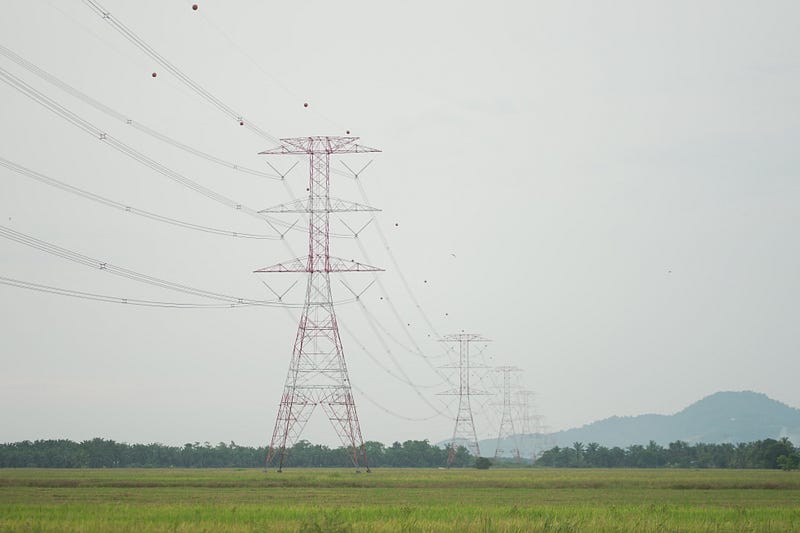
Photo by Muhammad Faiz Zulkeflee on Unsplash


Energy thieves turn to mining

While Borneo offers some of the lowest energy prices in Malaysia, it continues to struggle with the problem of energy theft. That issue has been highlighted via a recent utility announcement. Sarawak Energy, the local energy provider, estimated that the criminal operation caused losses of approximately 6,000 Malaysian ringgits ($1,300) worth of stolen electricity each month.

The rise of the Bitcoin mining industry in 2023 has brought about record-high network hash rates and network difficulty. While the growth of miners generally signifies the robustness of the Bitcoin network, smaller operators without the economies of scale enjoyed by larger corporations face challenges.

One such challenge is energy generation to power their mining servers. In pursuit of higher profit potential with lower electricity rates, illegal mining operators are drawn to stealing electricity from the grid. By eliminating energy expenses, these illicit miners can accumulate profits and offset equipment costs.


Fourth recent instance

The recent incident marks the fourth major operation in Senadin, where Miri is located, where authorities have cracked down on power theft cases related to cryptocurrency mining in 2023. So far, over 137 Bitcoin mining servers have been seized during these operations.

On the other side of the spectrum, legitimate crypto mining companies are actively securing funding to support their mining projects. Riot Platforms, for instance, invested a substantial $162.9 million to acquire 33,280 state-of-the-art equipment from MicroBT, a leading producer of mining machinery.

In another example, Coinbase extended a $50 million credit line to Canadian cryptocurrency firm Hut 8 Mining, facilitating its operations. Furthermore, Volcano Energy, a public-private partnership in El Salvador, secured an initial funding of $250 million for its ambitious Bitcoin mining venture.


Appropriate mining activity

The spate of recent instances of illegal mining in Borneo acts as a reminder of the importance of regulatory compliance and adherence to the law within the cryptocurrency industry. While the allure of lucrative profits may tempt some to engage in illegal activities, the consequences can be severe. Mining can be a positive societal force when applied within appropriate circumstances.

A move by the President of Kyrgyzstan last week to harness crypto mining in order to utilize energy that is otherwise being wasted at the central Asian country’s Kambar-Ata-2 hydropower plant serves as a recent example of a positive use case for the activity.

In Texas in the United States, crypto miners are collaborating with those that manage the local energy grid, turning off miners at times when the state is on the brink of suffering blackouts.

As the crypto mining landscape continues to evolve, it is essential for both authorities and legitimate operators to work together in finding sustainable solutions that ensure the industry’s growth while maintaining the integrity of the energy infrastructure.

More to Read
View All
Policy & Regulation·

Oct 10, 2023

HTX Hacker Returns Funds

HTX Hacker Returns FundsThe hacker responsible for the nearly 5,000 ETH exploit on the Seychelles-headquartered cryptocurrency exchange HTX (formerly known as Huobi) last month has decided to return the stolen funds.Towards the end of last month, the exchange fell victim to a hack, resulting in a loss estimated at around $8 million. According to on-chain data, the hacker has repatriated the pilfered cryptocurrency, marking a significant development in the aftermath of the cyberattack.Photo by Shubham Dhage on UnsplashHacker rewardedThe returned funds were sent back in two separate transactions, one consisting of approximately 4,000 ETH and the other totaling around 1,000 ETH. HTX advisor and Tron Founder, Justin Sun, took to X (formerly Twitter) to officially confirm the recovery. In his statement, Sun revealed that HTX had not only received all the stolen funds as promised by the hacker but had also extended a gesture of goodwill. HTX rewarded the responsible party with a “white hat bonus” amounting to 250 ETH, equivalent to a substantial $400,000.Sun expressed his satisfaction with the hacker’s decision, stating:“We have confirmed that the hacker has fully returned all funds, as promised, and we have also paid the hacker a white hat bonus of 250 ETH. The hacker made the right choice. We would like to express our gratitude to everyone in the industry for their help.”Hacker advisory messageDuring the return of the funds, the hacker conveyed a message on-chain, shedding light on the reason behind this act of restitution. The message read:“Received your message. White hat bonus to0x1Fc8674A51D6b97C968BE384337519CE7003152B. Your system hot wallet private key leak, you should change system hot wallet address and reduce the system hot wallet rate.”HTX, in response to the hacker’s decision to return the funds and in accordance with its commitment, promptly sent the white hat bonus to the specified address. The exchange also requested the hacker to provide a detailed security vulnerability analysis report to the email address htxsafe@htx-inc.com.This request aims to prevent similar incidents in the future, with assurances that the hacker’s privacy will be safeguarded.Justin Sun had confirmed the original hack in September, at the time reassuring the community that HTX had covered all losses arising from the attack and resolved associated issues satisfactorily.While acknowledging the severity of the hack, Sun pointed out that the stolen amount represented a relatively small fraction of the $3 billion in assets held by HTX’s users. To incentivize the return of the funds, HTX had even offered a reward of 5%, which equated to $400,000.However, Sun also emphasized that if the funds had not been returned within a seven-day window, the company would have been compelled to involve law enforcement authorities.Thankfully, it did not come to that, and the cryptocurrency exchange can now move forward with the confidence that its users’ assets are secure. This incident highlights the importance of cooperation and ethical choices within the crypto community, as well as the potential for resolution even in the face of cyberattacks.

news
Markets·

Mar 04, 2024

Bitcoin rally significantly benefits online-only Kbank in Korea

Following the recent bitcoin boom, transactions in cryptocurrencies among Korean investors have surged, significantly benefiting local banks that have made contracts with Korean crypto exchanges to offer real-name accounts for crypto investors. As the price of bitcoin soared to as high as KRW 90 million ($67.6 million) in Korea on Thursday, online-only bank Kbank saw an uptick in trading fee revenue, according to local media outlet The Seoul Economic Daily. Kbank is a partner with crypto exchange Upbit, which accounts for 70% of the Korean crypto market.  Under the current law, Korean crypto exchanges offering trading against Korean won must secure real-name accounts from a bank. These banks typically earn fees of KRW 300 to KRW 1,000 per transaction. Currently, other than Kbank, NongHyup Bank offers real-name accounts to Bithumb, Kakaobank to Coinone, Shinhan Bank to Korbit and Jeonbuk Bank to Gopax.Photo by Kanchanara on UnsplashCrypto trading volume up 68.2% in a monthAccording to Xangle, a crypto data intelligence platform, the total crypto trading volume in Korea rose by 68.2% between the last week of January and the last week of February, rising from KRW 2.39 trillion to KRW 40.2 trillion. During the same period, the daily average trading volume also grew from around KRW 4 trillion to KRW 5.7 trillion.   In particular, the bitcoin trading volume on Upbit surged to 19,254 BTC on Feb. 28, reaching the second-highest level since Nov. 10, 2022, when the asset’s trading volume stood at 20,710 BTC. After signing the real-name account contract with Upbit in 2020, Kbank raked in KRW 29.2 billion in fees during the last bull market of 2021, which was equivalent to 14% of its annual interest income of KRW 198 billion and exceeded its net income for the year, which stood at KRW 22.5 billion. Increased bank deposits from exchange usersKbank also saw a substantial rise in its balance sheet, with Upbit users depositing around KRW 2.94 trillion into their real-name accounts. The sum is six times greater than the deposits made into NongHyup Bank by Bithumb users, which stood at KRW 547.1 billion.  Experts see that the surge in Kbank’s user base, which recently surpassed 10 million users, is largely attributed to growing excitement surrounding bitcoin. One crypto insider said that crypto trading fees, which have been on the decline for the past 2 years, could take a turn this year, signaling further gains for the affiliated banks.  

news
Web3 & Enterprise·

Aug 04, 2023

FTX Seeks Exclusion of Dubai Unit from Bankruptcy Proceedings

FTX Seeks Exclusion of Dubai Unit from Bankruptcy ProceedingsFailed crypto exchange FTX, which filed for bankruptcy in November, is now aiming to exclude its Dubai unit from the ongoing restructuring proceedings unfolding in the United States.Photo by Roman Logov on UnsplashNo previous business activityThe motion, filed with the bankruptcy court in Delaware on Wednesday, comes as FTX contends that its Dubai branch had not engaged in any business activities prior to the bankruptcy declaration, making its participation in the rehabilitation efforts unlikely.In the recent court filing on August 2, FTX put forth its argument that its Dubai unit, FTX Dubai, held a balance sheet that was solvent. Consequently, the exchange proposed that initiating a voluntary liquidation process in line with the laws of the United Arab Emirates (UAE) would expedite the distribution of its positive cash balance, settling liabilities, and liquidating assets.FTX Dubai, a wholly-owned subsidiary of FTX’s European arm, holds a sum of approximately $4.5 million across various accounts. However, $4 million of this amount remains restricted by the Virtual Assets Regulatory Authority (VARA) of Dubai, serving as a security measure for its license as a virtual asset service provider.Expired licensingFTX Dubai was originally awarded a license by VARA in July 2022, although it never got to a point where it offered any crypto-related services based on that license. On May 31 of this year, FTX Dubai management was informed by VARA that the regulator would not seek to renew the license if FTX Dubai didn’t act to terminate it. The license was subsequently suspended on July 12 by VARA.Licensing could have been useful to a new operator coming in to run the business. Earlier this week, the FTX Debtor filed a restructuring plan that leaves a path open towards relaunching the FTX International business outside of the United States. It’s clear that the current regulatory environment in the US is such that it’s simply not an attractive option to establish a restructured FTX business there.The FTX Debtor and its advisors are engaging with bidders for the business. In establishing a business on the right footing, it may be just as well that licensing will start afresh. To settle market doubts, the new entity will need to achieve a high level of compliance and industry-leading customer protections.FTX Dubai is now anticipated to collaborate with the designated liquidator to carry out essential administrative procedures, ensuring a systematic and efficient execution of the liquidation process. The company’s decision to file for bankruptcy on November 11, 2022, initiated bankruptcy proceedings for a total of 102 associated entities worldwide, reflecting the substantial impact of its financial turmoil.The matter is scheduled to be addressed in the court’s first hearing on August 23, shedding light on how the court will respond to FTX’s motion to remove its Dubai unit from the overarching bankruptcy proceedings in the US. This development underscores the complexities of a cross-border crypto bankruptcy, highlighting the intricacies of global regulatory frameworks in this evolving sector.

news
Loading