Top

The Sandbox Adds Singapore Virtual Neighborhood Lion City

Web3 & Enterprise·June 29, 2023, 1:49 AM

Metaverse platform The Sandbox has announced the launch of Lion City, Singapore’s virtual neighborhood, during its inaugural Singapore Partner Day event.

In a blog post published on Tuesday, The Sandbox project team outlined that Lion City is set to debut in September 2023 and will feature 512 plots of virtual land. With over 40 partners and 10+ studios, Lion City aims to showcase global and regional brands, along with established Web3 natives, representing Singapore’s culture in sports, fashion, entertainment, and technology within The Sandbox metaverse.
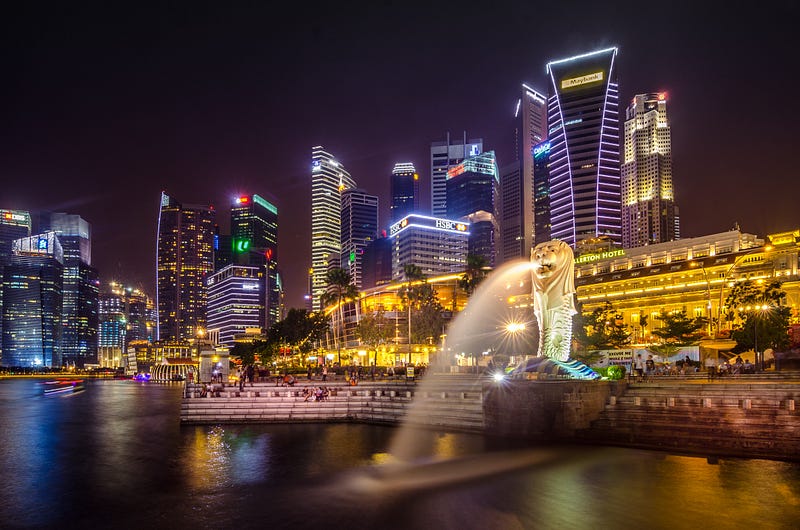
Photo by Kin Pastor on Pexels


Regional brand partnerships

The Sandbox has attracted a range of local partners for Lion City, including MM2 Asia, ONE Championship, Mighty Jaxx Group, Spa Esprit Group, METAVI, Technology Development Centre (TDC) of ITE College Central, UKISS, Bandwagon, Renovi, Affyn, 8sian, The Engineers, Metaskull by Jacky Tsai x Froyo Games, Fabric of Reality, CreativesAtWork, Memotics, FXMedia, Kappou, The Parlour, Manifest, Vaniday, PengWine, LOFI, and Zodium. These partners represent various industries and will contribute to the diverse offerings and experiences within Lion City.


Studio partners

Moreover, studio partners catering to the Singapore market will be an integral part of the Lion City experience. These studios include Smobler Studios, CGame Studio, Oceanus Media Global, and iCandy Interactive subsidiaries Lemonsky Studios and Hashcode Studio, New Moon Studios, Pangu by Kenal, and Clevereen. Collaborative ecosystem partners such as OKContract, Pinnacle, DIFY, and Peatix are also contributing to the development of the metaverse.


Unlocking Web3 opportunities

The Sandbox emphasized the significance of Lion City as a gateway and launchpad for Southeast Asia. With over 400 global brands, including Singapore’s DBS Bank, already on board, Lion City has the potential to unlock new Web3 possibilities in the region. The supportive and collaborative ecosystem in Singapore will provide companies with opportunities to explore digital frontiers and test decentralized technologies.

The project also announced the milestone during the Singapore Partner Day event held at the Marina Bay Sands Expo & Convention Centre. The event served as a platform for networking and sharing insights among The Sandbox’s partners.

Keynotes were delivered by Sébastien Borget, the Co-Founder and COO of The Sandbox, and George Wong, the project’s Head of Singapore. They discussed the vast opportunities within the metaverse, and panel discussions with ecosystem partners took place, covering topics like intellectual properties (IPs) and the metaverse’s future, as well as the development of the open NFT metaverse.

During the event, Borget highlighted Singapore’s regulatory environment, as being conducive to emerging technologies. He also emphasized Singapore’s position as an innovation hub for Web3 advancements.

The metaverse faces new challenges in 2023, with the crypto market gravitating towards a more institutional-friendly approach, and questions surrounding its relevance. Recently, Borget had a clash with the SEC in the United States, disagreeing with the regulator’s classification of the project’s native $SAND token as a security.

No doubt that experience has helped to underscore his appreciation for Singapore’s regulatory setup. Nevertheless, Wong described 2023 as an important and pivotal year for metaverse growth.

More to Read
View All
Policy & Regulation·

May 18, 2023

Ripple Collaborates with Hong Kong Regulator in RWA Tokenization

Ripple Collaborates with Hong Kong Regulator in RWA TokenizationIn a demonstration of an extended use case, Ripple, the real-time gross settlement system, currency exchange, and remittance network, has announced that it has been selected by the Hong Kong Monetary Authority (HKMA) to showcase a real world asset (RWA) tokenization solution.Photo by Redd F on UnsplashReal world asset (RWA) tokenizationIn a press release published on Thursday, the San Francisco-based firm outlined that the objective of its participation in the HKMAs inaugural e-HKD Pilot Program is to showcase a particular approach to real estate tokenization. In principle the e-HKD project is a central bank digital currency (CBDC) scheme.Ripple is one of sixteen firms that will participate in the program. Among the other participants are HSBC, one of the largest banking and financial services institutions in the world, British multinational bank Standard Chartered, and Bank of China (Hong Kong).For its part, Ripple will partner with Fubon Bank, a subsidiary of one of the largest financial holding companies in Taiwan. The e-HKD Pilot Program will feature a series of pilots conducted through several industry players with a view towards carrying out in-depth research into application, implementation, and design issues relative to the e-HKD.Real estate tokenization is a leading example of RWA tokenization, which overall is anticipated to become a multi-trillion dollar industry by the end of this decade. Its plan is to build the solution on a private and secure ledger, guided in principle by the same technology that the company has utilized for XRP, the native token of the Ripple ecosystem.Illiquid assetsThe company points out that people’s homes are usually one of their primary assets. Notwithstanding that, unlocking value in real estate can be problematic, having considerable friction. The idea is that this illiquid wealth can be unlocked through tokenization. It’s a concept that is seeing a lot of interest from competing projects. Start-ups like Securitize and Provenance Blockchain would be among a long list of start-up firms that see the potential in the tokenization of RWAs.In Asia, Japanese trading and investment firm Mitsui has gotten involved in the tokenization of real estate through its Alterna investment platform. Tokeny and CoFund offer other examples of innovators that are pioneering real estate tokenization.In its press release, Ripple outlined that it aims to use its technology in this particular instance to enable Hong Kong citizens to experience the faster and more efficient release of equity relative to real estate.James Wallis, Ripple’s VP of Central Bank Engagements & CBDCs, expanded on this idea further:“The Asia Pacific region has many forward-looking regulators such as the HKMA, who are looking to leverage the capabilities of blockchain and crypto technology. It’s a huge honor for Ripple to be one of the select few organizations participating in the HKMA’s e-HKD Pilot Programme. We now have the opportunity to demonstrate how real estate asset tokenization could be brought to the citizens of Hong Kong, and are confident that our fully integrated solution will be an industry-first use case demonstrating the power of leveraging a CBDC for real estate equity asset release.”

news
Web3 & Enterprise·

Aug 18, 2023

Japanese Crypto Exchange Zaif Adds KLAY/JPY and KLAY/BTC Trading Pairs

Japanese Crypto Exchange Zaif Adds KLAY/JPY and KLAY/BTC Trading PairsJapanese cryptocurrency exchange Zaif added the KLAY token to its list of supported cryptocurrencies on August 16. Following in the footsteps of BITPoint Japan, which introduced KLAY trading in August 2022, Zaif has become the second trading platform in Japan to facilitate the trading of the KLAY token.Zaif’s inclusion of KLAY presents traders with the opportunity to engage with the token using the Japanese yen and Bitcoin (BTC). With this addition, the total number of tokens hosted on Zaif’s platform has now reached 21, bolstering its diverse selection.Photo by Nicholas Cappello on UnsplashKLAY’s path to Green ListKLAY presently requires an additional listing on a Japanese cryptocurrency trading platform to fulfill the requirements for being included in the “Green List” of the Japan Virtual and Crypto Assets Exchange Association (JVCEA). Cryptocurrencies that have achieved green-listed status are exempt from undergoing individualized approval procedures across various exchanges. As stipulated by the JVCEA’s criteria for the Green List, a virtual asset must be featured on a minimum of three member exchanges and exhibit a trading track record of no less than six months on one of these select platforms.As of August 8, the number of green-listed virtual assets is 25, including prominent cryptocurrencies such as BTC, Ether (ETH), and Bitcoin Cash (BCH).Zaif’s upcoming listing of MBXAlong with this development, Zaif is reportedly engaged in discussions with MARBLEX, a blockchain subsidiary belonging to South Korean gaming giant Netmarble. The aim of these talks is to list MBX, the native token of MARBLEX, on the Japanese exchange in October.KLAY is the native token of the Klaytn blockchain, which was created by GroundX, a blockchain-focused arm of Kakao. Kakao is a South Korean tech giant recognized for its widely used messaging app, KakaoTalk. The company has also been expanding its presence in Japan through its subsidiary, Kakao Piccoma, which operates an online comics platform called Piccoma.

news
Policy & Regulation·

Jun 22, 2023

Ripple Receives In-Principle Approval From Singaporean Regulator

Ripple Receives In-Principle Approval From Singaporean RegulatorRipple, the blockchain-based payments firm, has obtained in-principle regulatory approval from the Monetary Authority of Singapore (MAS) to offer digital asset payments and token products in Singapore.Photo by Dids on PexelsODL service expansionThe approval, announced on Wednesday, will enable Ripple’s subsidiary, Ripple Markets Asia Pacific, to expand its On-Demand Liquidity (ODL) service. ODL facilitates the seamless transfer of the XRP cryptocurrency across borders without the involvement of traditional banking intermediaries.Ripple had applied for an institutional payment license under Singapore’s Payment Service Act to secure the regulatory green light. In response to the approval, Ripple CEO Brad Garlinghouse praised the MAS for its pragmatic and innovation-driven approach to cryptocurrency-related services.He expressed confidence that Singapore would serve as a prominent gateway for Ripple’s business operations in the Asia Pacific (APAC) region. On Twitter, Garlinghouse wrote: “As a major global financial center, Singapore led the way in taking a pragmatic, innovation-first approach to crypto — we’re incredibly proud @Ripple is one of a handful of firms (<20) to receive in-principle approval for a MAS MPI license for digital payment token services!”Stuart Alderoty, Ripple’s Chief Legal Officer, explained that the regulatory approval from MAS would enhance Ripple’s ability to support forward-thinking customers who are exploring the potential of blockchain and crypto technologies to create a more inclusive and borderless financial system.Growing APAC presenceRipple’s presence in Singapore has already been growing significantly. In 2022, the company doubled its number of employees at its Asia Pacific headquarters, with Singapore becoming a major hub for ODL transactions. The MAS, recognizing the potential of fintech firms in the digital money services sector, published its Purpose Bound Money (PBM) white paper on Wednesday, proposing standards for such firms operating in Singapore.While Ripple has made progress with regulatory compliance in Singapore, it has faced legal challenges in other jurisdictions. Since December 2020, Ripple’s legal team has been dealing with a lawsuit filed by the US Securities and Exchange Commission (SEC), accusing Ripple of conducting an unregistered securities offering with its XRP token.The case is expected to reach a verdict in the coming months. While the speculation is that the case has gone well for Ripple, it remains to be seen to what extent it can get the upper hand in taking on a cornerstone institution of the US establishment like the SEC.Either way, Ripple is moving to develop on a global basis. It has recently pursued further development in the Middle East via a Dubai expansion. In Hong Kong, it is collaborating with local regulators in trialing the use of its technology relative to real-world asset tokenization.The company has also established partnerships with central banks in Montenegro and Thailand, as well as numerous regional banks and financial institutions worldwide.The regulatory approval from MAS marks a significant milestone for Ripple, expanding its customer reach and positioning the company for further growth in the digital asset payment sector. Digital asset innovation is truly global and as many organizations are demonstrating, just as Ripple is in this instance, innovative curtailment in one region will simply manifest itself as greater development in another.

news
Loading